REVIEW · JAIPUR
Jaipur@Twilight Guided Heritage City walk tour with Food Tasting
Book on Viator →Operated by Seagull Jaunt · Bookable on Viator
Twilight makes Jaipur move. This guided heritage walk times the big sights for that sweet spot when day traffic fades and market lights take over. I like two things most: you get to see the full marble statue process, and you also get a proper food tasting built into the route.
One heads-up: this is a walking tour through busy bazaar lanes, so you’ll want comfy shoes and a little patience for crowds after dark, especially near shopping streets.
In This Review
- Key highlights you’ll actually notice
- Jaipur twilight on foot: why this timing is the whole point
- Meeting at Raj Mandir and keeping a good 2.5 to 3 hour rhythm
- Khajane Walon Ka Rasta: where marble statue work shows up close
- Tripolia Bazar and Thakur Uday Singh Ji Haveli after dark
- Maniharon ka Rasta: lac bangles, bridal jewelry, and the lighted street effect
- Johri Bazaar, sweet tasting, and the pickle stop with a 195-year shop
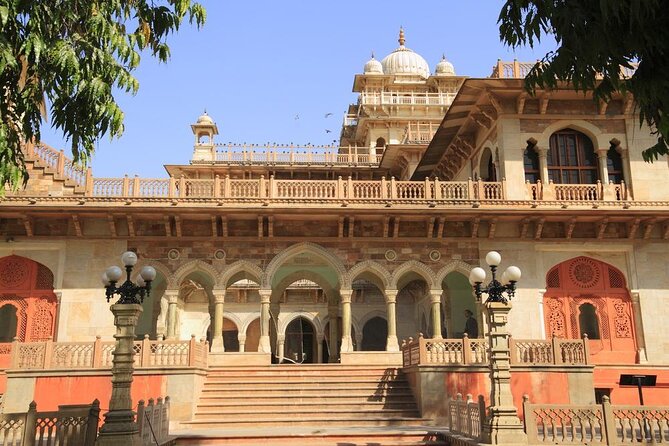
- Albert Hall Museum at night: ending with a big-picture light show
- Food tasting that actually fits the route
- Price and value: does $29.96 make sense?
- A note on the guide: Umesh and flexible pacing
- Who should book this Jaipur twilight heritage walk
- Should you book it or pass?
- FAQ
- How long is the Jaipur twilight heritage city walk tour?
- What is the price per person?
- Is Albert Hall Museum admission included?
- Where do I meet and where does the tour end?
- How many people are in the group?
- Is food tasting included?
- What if the weather is poor?
Key highlights you’ll actually notice
- Sketch-to-marble statue work with idol artisans, including marble painting details
- Thakur Uday Singh Ji Haveli with miniature wall paintings and British-era gas lamps
- Maniharon ka Rasta bangle-making focus plus bridal jewelry and attire shopping street energy
- The pickle legend stop linked to the Pickle Man of India and a 195-year-old pickle shop
- Albert Hall Museum at night reached by e-rickshaw for an easy end to the walk
- Small group (up to 10 people) that keeps the pace and conversation manageable
Jaipur twilight on foot: why this timing is the whole point
I love tours that understand timing, and this one leans into it. In Jaipur, evening means cooler air, more lights, and markets that feel like they’re on camera even when you’re just standing on the pavement. The plan is built around the shift from daylight details to nighttime glow, so you see different sides of the same streets.
You’ll also feel why a heritage walk works better at twilight than as a quick daytime checklist. Many of the textures matter when the lighting changes: marble artwork, painted surfaces, and jewelry sparkle all read differently once the sun starts to drop.
If you’re the kind of traveler who likes a route with a storyline (rather than just “stop, photos, next”), this fits. You’re not only moving through Jaipur’s old lanes, you’re watching how crafts and shopping traditions flow in real time.
You can also read our reviews of more walking tours in Jaipur



Meeting at Raj Mandir and keeping a good 2.5 to 3 hour rhythm
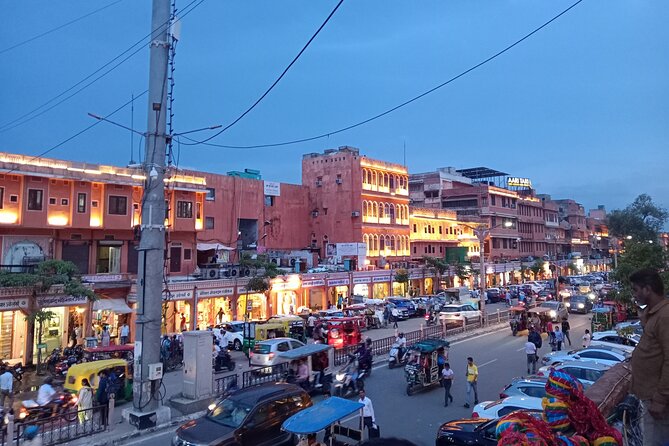
You’ll meet at Raj Mandir Cinema on Bhagwan Das Road, in the Panch Batti area, and you’ll end at Albert Hall Museum in Ram Niwas Garden. The tour is about 2 hours 30 minutes to 3 hours, which is long enough to feel like a proper evening plan but short enough to not blow up your night.
I also like the small-group setup: up to 10 travelers means the guide can keep the pace, help you navigate tight lanes, and still pause for the craft moments that matter. If you’re traveling solo, it’s a nice way to avoid the “large group herding” vibe.
Practical note: the route is near public transportation, so even if you want to arrive early or adjust plans, you usually have options. And since you get a mobile ticket, you’re not fumbling with paper in the middle of crowds.
Khajane Walon Ka Rasta: where marble statue work shows up close
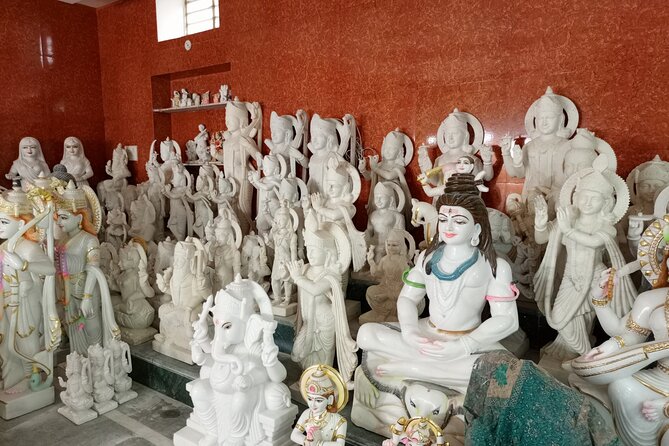
This is where the tour starts turning from sightseeing into hands-on craft storytelling. You’ll head toward Khajane Walon Ka Rasta, with the wider area known for statue making artistry. The big draw here is watching how the work moves from a plan into a finished marble piece.
You’ll be able to view the full process described as starting from sketch work and continuing through to final painting on marble statues. That’s the part I’d recommend you slow down for. In a normal market stop, you only see the finished product. Here, you get the middle steps, which makes the craftsmanship feel real instead of decorative.
You’ll also get exposure to the contrast in styles: the tour highlights the difference between Indian and European art styles in the way artisans work. And you may also see gold work on marble statues and artifacts, which is exactly the kind of detail that tends to look better in softer evening light.
Potential drawback: this is a working-craft environment mixed with market movement. If you dislike close-up crowd conditions, you might want to keep one hand free and move with the group rather than wandering for photos on your own.
Tripolia Bazar and Thakur Uday Singh Ji Haveli after dark
Next you’ll reach Tripolia Bazar and visit Thakur Uday Singh Ji Haveli. This stop is valuable because it gives you a “cultural pause” inside a district that’s otherwise all shopping lanes and street scenes.
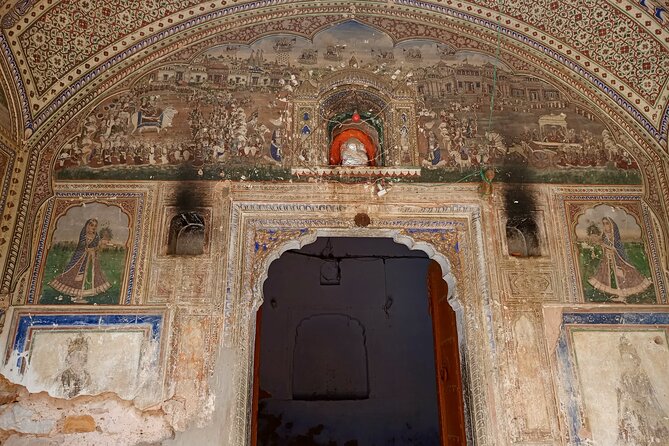
At the haveli, you’ll see miniature art wall paintings, plus lighting details tied to the British empire era, including gas lamps designed for nighttime illumination. There’s also mention of a vintage car inside the space, which sounds unusual until you’re there and realize it’s part of the way the property mixes old-world architecture with curated presentation.
Why I like this stop for twilight: haveli spaces help you reset your senses. Markets can be loud, crowded, and visually busy. The haveli gives you a calmer frame to notice textures, small artwork, and the idea of how affluent households lived around crafted details.
A small practical note: the time in this stop is brief (about 15 minutes). If you want deeper time inside, bring the right mindset. Treat it as a focused taste, then let the outside streets do the rest.
Maniharon ka Rasta: lac bangles, bridal jewelry, and the lighted street effect
Then the walk leans fully into Jaipur’s signature shopping scene. Maniharon ka Rasta centers on bangle makers, and the street is known for colorful bangles and artificial jewelry that connects strongly to bridal shopping.
You’ll see the market energy at its best during twilight, with lights and color doing the work of turning a shopping street into an evening spectacle. This is also where the experience calls out the lac bangle-making process, so you’re not only browsing finished bangles. You’re watching a craft step that many visitors otherwise miss when they focus only on buying.
The tour also points to bridal jewelry and attire collections. Even if you’re not shopping, it helps to understand the cultural purpose behind all those displays. Bangles are not just accessories here; they’re part of ceremonies and identity, and seeing that connection in context makes the market feel purposeful.
Possible drawback: if you’re easily overwhelmed by dense crowds, plan to keep close to your guide. The market is described as colorful and busy, and that’s exactly when moving in a cluster helps.
You can also read our reviews of more food & drink experiences in Jaipur






Johri Bazaar, sweet tasting, and the pickle stop with a 195-year shop
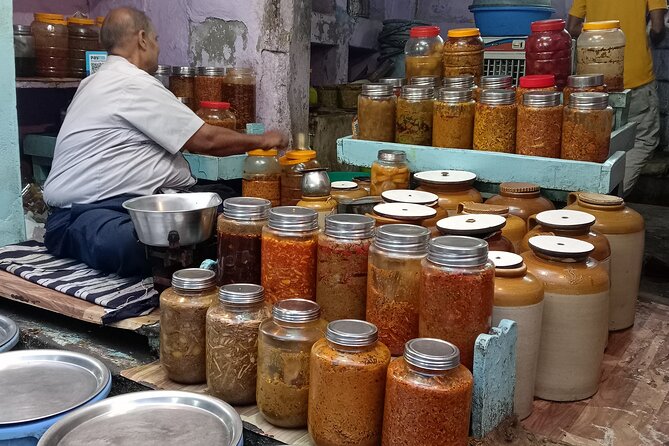
After the craft-heavy segments, the tour shifts toward flavor and street legends. You’ll start with tasting sweet dishes and then move through more lanes, including Gopal Ji Ka Rasta and Achar Wali Gali.
This is where the tour gets specific, which I appreciate. You’ll visit a famous Pickle Man of India shop, linked to being awarded by Discovery Channel, and it’s described as a 195-year-old pickle shop. When a place has that kind of longevity, it usually means consistent sourcing, learned taste preferences, and recipes that families have kept refining instead of constantly changing for trends.
Why it works after dark: food stops are a great way to manage pacing during a walking tour. You get a break from moving, your senses reset, and the smells and displays around the shop add extra atmosphere without requiring you to cover more ground.
If you have food allergies, you’ll want to check carefully with your guide before you eat. The tour promises authentic Indian flavors, but the specific items aren’t listed here, so confirm ingredients on the spot.
Albert Hall Museum at night: ending with a big-picture light show
The finale moves by e-rickshaw to Albert Hall Museum, located in Ram Niwas Garden. I like this structure because it gives you a soft landing. After walking through tight streets, the ride feels like a breather, and you arrive for the museum experience with calmer energy.
You’ll enjoy the night views of Jaipur markets along the way, plus the atmosphere and lighting in the garden area and around Albert Hall Museum. Even if you’re not planning a deep museum visit, the setting helps you connect the evening streets to a more monumental, open space.
Admission for the museum isn’t included, so you’ll want to decide in advance if you want to pay for entry there. If you’re happy with the exterior and gardens, you can still end the night feeling like you saw the city’s grand endcap.
Food tasting that actually fits the route
The food tasting is a key part of why this tour feels more like an experience than a photo walk. The plan includes authentic Indian flavors, and it specifically calls out sweet dishes before moving into the pickle lanes.
Here’s what I think you should watch for: the tasting is timed so you’re not stuck eating at an awkward moment, and it’s placed right in the flow of markets. That matters because it keeps you from waiting around after you’ve already seen the sights.
Also, your guide’s job is to match you with the right bites at the right time. If you’re someone who hates surprises with food, tell your guide your preferences early and ask what to expect before each tasting.
Price and value: does $29.96 make sense?
At $29.96 per person, this isn’t a luxury add-on, and it shouldn’t feel like one. What makes the price feel reasonable is the mix of free access stops (most parts are listed with admission ticket free) plus the craft-focused guide attention that you don’t get if you DIY the route.
The route covers multiple themed areas: statue making, haveli architecture, bangle-making street craft, bridal jewelry shopping lanes, and a famous pickle shop. That’s a lot of ground and topic switching for a 2.5 to 3 hour walk.
The main value trade-off is that Albert Hall Museum admission is not included, so your total “evening spend” may rise a bit if you choose entry. Still, the tour gives you enough at the garden and exterior light setting to enjoy the ending even without going inside.
If you’re comparing options, I’d look at two things: how much craft context you want (statue process, lac bangles, artisan styles) and whether you want food tasting built into the plan. If both are on your list, this price is easier to justify.
A note on the guide: Umesh and flexible pacing
The guide name Umesh shows up in the experience feedback, including a story where he accommodated a request to start later when someone booked last minute. That kind of flexibility matters on twilight tours, because evening traffic and your own day plans can shift.
Even if you don’t need schedule changes, having a guide who manages timing helps the walk feel smoother. In narrow market lanes, small delays can turn into big crowd pressure. A good guide keeps the group moving while still giving you time at the craft points that count.
Who should book this Jaipur twilight heritage walk
This tour is best for you if you want:
- Handcraft detail, not just monuments and forts
- A route that links markets to culture (art styles, bridal jewelry context, long-running pickle shop)
- An evening plan that’s short enough to still enjoy your own dinner plans afterward
It’s also a strong fit for first-timers who feel overwhelmed by Jaipur’s scale. The meeting and ending points are easy to anchor, and the small group size helps you stay oriented.
If you only want major ticket sights, you may find this tour more market-and-craft focused than museum focused. But if you care about how Jaipur actually works in the evening, this is exactly the kind of walk that gives you that feeling fast.
Should you book it or pass?
Book it if you’re excited by artisan processes, want to see Jaipur’s bangle market street life at twilight, and like the idea of pairing food tasting with market culture. The craft stops and the specific pickle-shop story make it feel more intentional than a generic “evening walk.”
Consider passing (or at least setting expectations) if you strongly prefer wide, quiet streets, or if crowds after dark stress you out. This tour trades calm for color and closeness, and it’s at its best when you’re comfortable moving through busy lanes.
If you do book, wear comfortable shoes and treat Albert Hall Museum as a flexible ending: enjoy the gardens and lights, and only add museum entry if it fits your time and budget.
FAQ
How long is the Jaipur twilight heritage city walk tour?
The tour runs about 2 hours 30 minutes to 3 hours.
What is the price per person?
The price is $29.96 per person.
Is Albert Hall Museum admission included?
Albert Hall Museum admission is not included, so you may need to pay the museum ticket separately.
Where do I meet and where does the tour end?
You meet at Raj Mandir Cinema on Bhagwan Das Road (Panch Batti, C Scheme, Ashok Nagar area) and the tour ends at Albert Hall Museum in Ram Niwas Garden.
How many people are in the group?
The experience has a maximum of 10 travelers.
Is food tasting included?
Yes. The tour includes a food tasting experience, and sweet dishes are part of the tasting during the walk.
What if the weather is poor?
This experience requires good weather. If it gets canceled due to poor weather, you’ll be offered a different date or a full refund.