REVIEW · JAIPUR
Cultural Walk and Food Tasting In Jaipur
Book on Viator →Operated by Rajasthan Cultural Tours · Bookable on Viator
Jaipur tastes best on a guided stroll. I like how this walk links street food with the day-to-day market life of the Pink City, and I like that masala chai plus a traditional dessert are built into the tasting. You’re not just sampling bites—you’re learning why these places and flavors fit into Jaipur’s old trading routes.
The main catch is simple: this is a walking experience and it runs on good weather, so bring comfortable shoes and expect a steady pace in busy lanes. Also, there’s no hotel pickup, so you’ll meet at Golcha Cinema and finish near Choti Choupar.
In This Review
- Key highlights before you go
- Jaipur on foot: why markets beat a bus tour for food culture
- The route: Golcha Cinema to Choti Choupar
- Stop 1: Utensils, textiles, and furniture shopping streets
- A tower story stop: history you can picture while you walk
- Maniharo Ka Rasta: bangles, especially lac bangles
- Bhagat Jaipur: a sweet shop stop that fits the walk
- Spice market lanes and the marble-and-stone detail
- What you actually get in the tasting package
- Guide quality: the difference between tasting and understanding
- Price and value: is $22.37 reasonable?
- Who this tour suits best (and who might want another plan)
- Quick practical tips to make the most of it
- Should you book Cultural Walk and Food Tasting In Jaipur?
- FAQ
- How long is the Cultural Walk and Food Tasting tour?
- Where do I meet the guide?
- Where does the tour end?
- How large is the group?
- Is the guide English speaking?
- What food and drinks are included?
- Is hotel pickup included?
- Do I get a mobile ticket?
- Is there any admission fee at the stops?
- What’s the weather and cancellation situation?
Key highlights before you go
- Up to 10 people keeps the pace friendly and the guide easy to hear
- Masala chai and a traditional dessert are included, not optional add-ons
- Maniharo Ka Rasta focuses on bangles—especially lac bangles—and the maker culture behind them
- Bhagat Jaipur gives you a classic sweet-shop stop during the walk
- Spice-market lanes pair food with visual art, including stone-cut sculptures and marble work
- English-speaking food guide makes the stories land clearly while you eat
Jaipur on foot: why markets beat a bus tour for food culture
This tour works because it treats food as part of the street scene. You’ll walk through old bazaars and shopping lanes, not just stand at a single stall for snacks. That matters in Jaipur, where flavors and routines are tied to trade, neighborhood makers, and shopkeepers who’ve been doing the same things for generations.
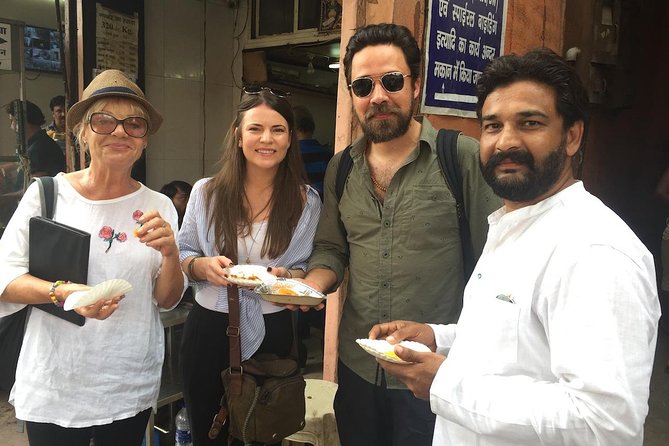
The tasting portion is also the point. You’ll get bottled water plus multiple food tastings along the way, plus masala chai at local tea shops and a traditional dessert. In other words, you’re not paying for a quick hit of food—you’re getting a sequence of tastes that fits the locations you’re walking through.
You can also read our reviews of more walking tours in Jaipur



The route: Golcha Cinema to Choti Choupar

You start at Golcha Cinema on Chaura Rasta Road, near the New Gate area of Bapu Bazar in the Pink City. The walk finishes at Choti Choupar, off Kishanpole Bazar Road. That end point is useful because it drops you back into another dense market zone, so you’re not forced into a dead-end spot after the last bite.
You’ll be near public transportation, but still plan for the “market-walking” part. Narrow streets, short stops, and quick transitions are part of the experience style here. If you like to see where people actually shop and eat—more than what’s photographed on a postcard—this route does that job.
Stop 1: Utensils, textiles, and furniture shopping streets
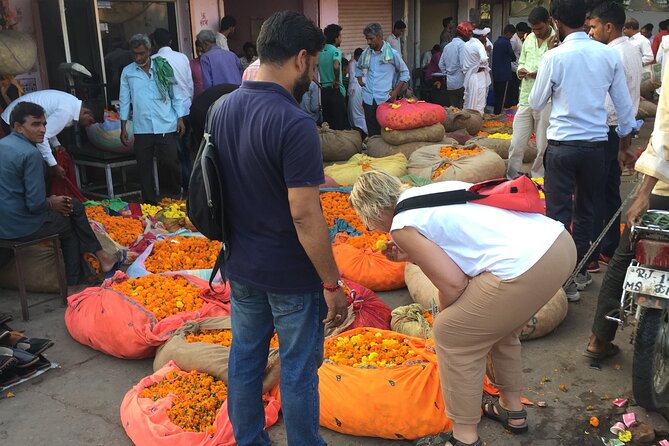
One of the early stops isn’t about food at all. You’ll pause in a section that’s known for buying brass, iron, and stainless steel utensils, plus shops that sell textiles and furniture. It’s a good warm-up because it sets the theme: Jaipur is a place of crafts and trades, and the food you eat is supported by that same market economy.
What I like about this approach is that it gives context fast. Even if you don’t plan to buy anything, you’ll understand why old bazaars feel the way they do—busy, specialized, and built around repeat customers. The downside is that this part can feel more “shopping-focused” if you’re only here for snacks. But it also makes the food stops feel earned.
A tower story stop: history you can picture while you walk
Between market streets, you’ll get an explanation about a tower and the history/story behind it. No, you don’t need to be a Jaipur scholar to enjoy this part. The value is that it turns a random skyline detail into something you can recognize later when you look at the Pink City from street level.
This is one of those small segments that makes the whole walk feel less like a checklist. You’ll keep moving, but you’ll also carry a mental map—how architecture connects to life, not just how it looks in photos.
Maniharo Ka Rasta: bangles, especially lac bangles
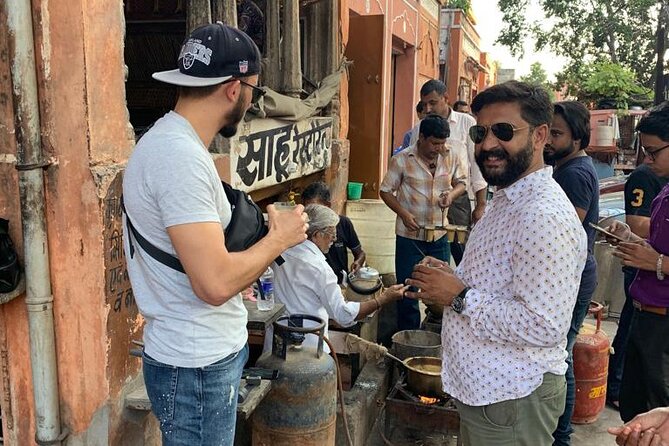
Next comes Maniharo Ka Rasta—a market street where the word “Manihar” points to makers and sellers of bangles. This stop is especially associated with bangles made using lac, and the focus is hands-on craft culture rather than mass-market souvenirs.
What to watch for while you’re here:
- The variety of bangles and materials, because that’s what this street is known for
- The shop rhythm—quick conversations, display work, and small details that show serious trade experience
- How the guide links the craft to Jaipur’s broader market identity
Admission for this part is free, which keeps the stop simple. If you’re the type who likes to look closely at materials and workmanship, this is a standout moment because it’s specific.
You can also read our reviews of more food & drink experiences in Jaipur






Bhagat Jaipur: a sweet shop stop that fits the walk
You’ll then hit Bhagat Jaipur, a well-known sweet shop in Jaipur. The tasting theme continues here, but the purpose shifts: sweets act like a flavor anchor. They’re also part of Jaipur’s daily pattern, where tea, desserts, and festival-style foods often share the same shop streets.
This stop includes admission, so you’re not juggling extra entry steps. If you’re sensitive to very sugary foods, take small bites and pace yourself—tea and desserts can stack quickly after multiple tastings.
Spice market lanes and the marble-and-stone detail
The walk finishes with a spice market area, and here’s the twist: the street is also known for delicately designed stone cut sculptures and marble artwork. That means you’re not just eating in a utilitarian lane—you’re walking past craft and design details while you taste.
This part pays off if you slow down a bit. Let your eyes move as you go: notice the way the stonework is laid out, then connect it back to what you saw earlier in the craft-focused utensil and market segments. Jaipur isn’t only about food; it’s about the aesthetics of trade.
What you actually get in the tasting package
From the included items, the tour’s value is easy to calculate:
- Food tasting (multiple samples across the walk)
- Bottled water
- Traditional dessert
- Masala chai at local tea shops
- English speaking food tour guide
- Mobile ticket
What’s not included: food and drinks outside the specified tastings. So if you’re hungry in between, you may need to purchase extra snacks on your own. The good news is that the included chai and dessert help prevent the classic food-tour problem of leaving you thirsty or underfed.
Also, timing matters. The total time is listed as about 3 hours, and the experience description emphasizes a walking route through the bazaars. Plan for a steady pace rather than “slow strolling.”
Guide quality: the difference between tasting and understanding
The strongest part of this experience is the storytelling style of the guide. Names that come up often include Vivek and Raj, and both are described with the same theme: turning street food into culture you can explain afterward.
What that looks like in practice:
- You’ll hear the history behind places, not just the sales pitch
- The guide helps you move through old lanes without feeling lost
- The group size stays small, so you can ask questions during stops
One extra plus from guide-led walks is pacing control. If you’re slower, it tends to stay manageable. If you want more explanations, a good guide can stretch the story without dragging the group.
Price and value: is $22.37 reasonable?
At $22.37 per person, you’re paying for a guided walking route plus a package of consumables. When I look at the math, the price isn’t just about food samples. You’re also getting:
- An English speaking guide
- Masala chai from local tea shops
- Traditional dessert
- Bottled water
- A route through major Pink City market streets and craft lanes
If you were to do this on your own, you’d still spend money on chai and sweets, and you’d still likely pay for guidance if you want the stories. This tour’s value comes from the structure: the tastings are tied to what you’re seeing, including crafts like bangles and utensils, not just random roadside bites.
Who this tour suits best (and who might want another plan)
This works especially well if you:
- Like walking and seeing the real market pace
- Want food plus context—why it’s eaten, where it fits, what makes the stalls special
- Enjoy small-group experiences (the max size is 10 people)
It may be less ideal if you:
- Need hotel pickup (there isn’t one)
- Have mobility issues that make a street-walking format hard
- Are traveling in conditions where the weather is poor (the experience requires good weather)
Since it ends near Choti Choupar, it’s also a nice choice if you plan to keep exploring on your own afterward rather than needing a ride immediately.
Quick practical tips to make the most of it
- Wear shoes you can walk in for about 3 hours in market streets.
- Bring a curious mindset. If you only chase flavors, you’ll still have fun, but you’ll miss half the point.
- Eat at a human pace. There are tastings, chai, and dessert, so don’t treat it like a snack parade.
Should you book Cultural Walk and Food Tasting In Jaipur?
If you want Jaipur in bite-sized pieces—food, tea, crafts, and short history stops—this is a strong option. The included chai and traditional dessert make it feel complete, and the small group size keeps it comfortable. I’d book it when you’re staying in the Pink City area and you don’t mind meeting at Golcha Cinema and walking the market lanes to Choti Choupar.
If you’re short on time, very sensitive to walking, or you strongly prefer restaurants over street stalls, you might be happier with a sit-down-focused food experience. But for most people who want a grounded, street-level first look at Jaipur, this one fits well.
FAQ
How long is the Cultural Walk and Food Tasting tour?
It lasts about 3 hours (approx.).
Where do I meet the guide?
You meet at Golcha Cinema, Chaura Rasta Rd, New Gate, Bapu Bazar, Pink City, Jaipur, Rajasthan 302003.
Where does the tour end?
The tour ends at CHOTI CHOUPAR, Kishanpole Bazar Rd, Pink City, Jaipur, Rajasthan 302002.
How large is the group?
The tour has a maximum of 10 travellers/people.
Is the guide English speaking?
Yes, the tour includes an English speaking food tour guide.
What food and drinks are included?
Included items are food tasting, bottled water, a traditional dessert, and masala chai at local tea shops.
Is hotel pickup included?
No. Hotel pickup and drop are not included.
Do I get a mobile ticket?
Yes, the tour uses a mobile ticket.
Is there any admission fee at the stops?
Maniharo Ka Rasta lists free admission, and Bhagat Jaipur includes admission. Other stops are part of the walk as described.
What’s the weather and cancellation situation?
The experience requires good weather. Cancellation is free up to 24 hours in advance for a full refund, and if the experience is canceled due to poor weather, you’ll be offered a different date or a full refund.