REVIEW · JAIPUR
Jaipur: Private Sightseeing Day Tour with Guide by Car
Book on GetYourGuide →Operated by Jaipur tour taxi cab · Bookable on GetYourGuide
Jaipur comes at you fast and gorgeous. This private 8-hour day turns the Pink City into a clear story, with an air-conditioned private car and stops that feel timed for real viewpoints. I also love how UNESCO Jantar Mantar makes ancient astronomy feel practical, not just impressive.
One thing to plan for: monument entry tickets and any snacks beyond lunch are not included, so your day budget needs a little extra cash. And because Jaipur is Jaipur, traffic can shift the exact pacing.
In This Review
- Key things that make this Jaipur day tour worth it
- A full day that actually fits Jaipur’s distances
- Price and value: how this $5 tour makes sense
- Pickup, private transport, and guide languages that help fast
- Hawa Mahal: the quick look that rewards patience
- Amber Fort and Palace: Rajput and Mughal in one fortress
- Panna Meena Ka Kund: the stepwell’s symmetry trick
- Jal Mahal on Man Sagar Lake: short stop, big visual payoff
- City Palace and Royal Gaitor Tumbas: royal spaces with a quieter mood
- Jantar Mantar: UNESCO observatory that makes time feel physical
- Lunch break and arts-and-crafts market time without losing your day
- Who this private Jaipur tour is best for
- Should you book this private Jaipur sightseeing day?
- FAQ
- What’s the duration of the Jaipur private sightseeing day tour?
- Is pickup and drop-off included?
- Are monument entry tickets included?
- What’s included in the private vehicle?
- Do you provide guides in multiple languages?
- What should I bring, and is anything not allowed?
- Is free cancellation available?
Key things that make this Jaipur day tour worth it
- Private A/C car with door-to-door pickup so you can actually move between far-apart sights
- Expert guide in multiple languages (English, French, German, Hindi, Italian, Spanish)
- Amber Fort + Jal Mahal for the classic royal visuals, plus photo-friendly timing
- Jantar Mantar (UNESCO) with nineteen massive instruments, including the huge stone sundial
- Flexible pace so you can slow down for photos or adjust priorities
A full day that actually fits Jaipur’s distances
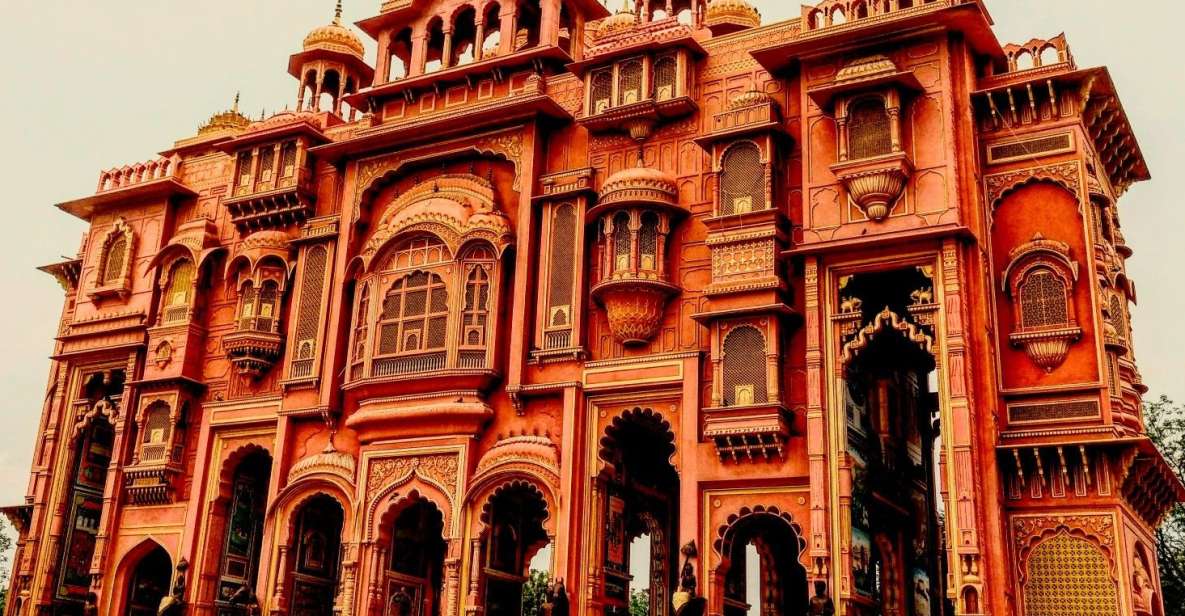
Jaipur sights aren’t close together in the way some cities are. This is a car day, which matters because it saves you from guessing bus routes, paying for random taxis, or losing daylight to transit delays. You get a smooth arc through the city’s most famous landmarks in one shot.
What I like most is the mix of “big postcard” places and “stand close and look” places. You’ll get landmarks like Hawa Mahal, but you’ll also pause at places such as Panna Meena Ka Kund, where the details are the point. Then you finish with Jantar Mantar’s instruments, which reward your attention more than your feet.
This is also a good format if you want structure without feeling trapped. Many days run tight, but private guiding makes it easier to keep your pace comfortable, especially when Jaipur traffic surprises everyone.
You can also read our reviews of more guided tours in Jaipur


Price and value: how this $5 tour makes sense
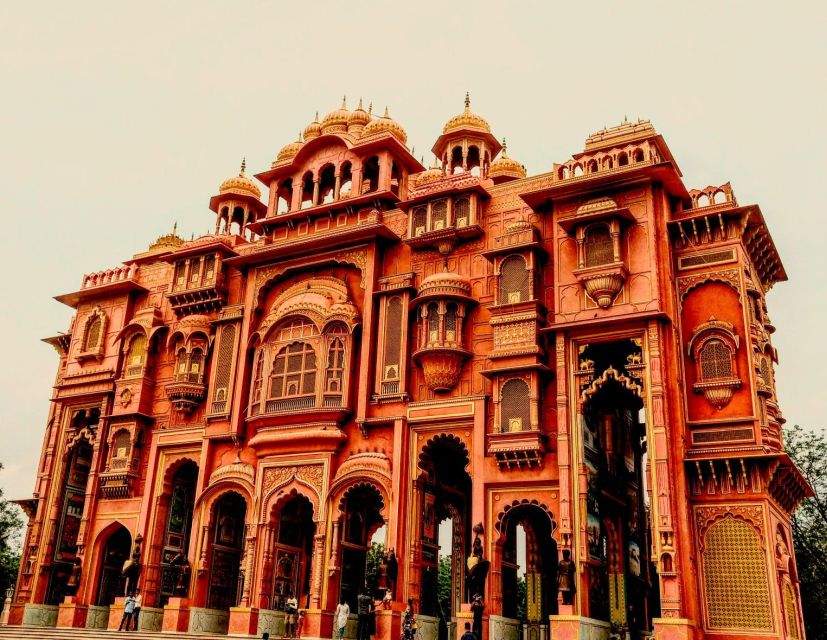
On paper, $5 per person sounds almost too good to be true. In reality, the value comes from what’s included: a private vehicle with air conditioning, a professional guide, pickup and drop-off, bottled water, parking fees, fuel, and all government taxes including GST.
Here’s the trade-off. Monument entry tickets and meals are not included. So your final cost depends on what you pay at each site and what you choose for lunch and any extras. If you’re someone who hates paying separate fees, this is the one part to factor in before you go.
You’re also paying for convenience. In Jaipur, “time” is the hidden cost. A guided car day can be cheaper than stacking multiple taxis, paying for a separate guide for only one attraction, or losing half a day to getting from place to place.
Pickup, private transport, and guide languages that help fast
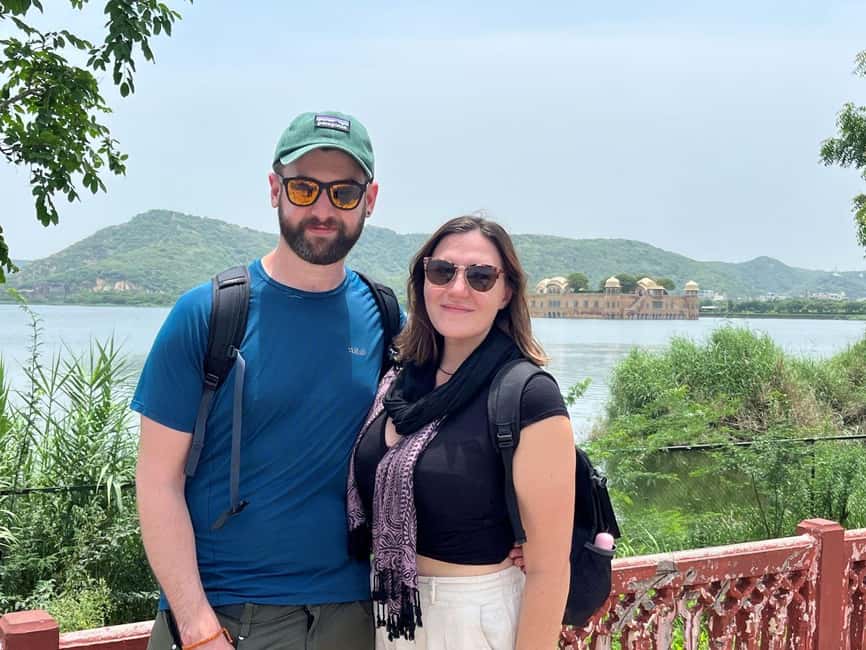
Your day starts with pickup from your booked location in Jaipur, usually your hotel. The driver waits at the pickup point, and if you want pickup from the airport or railway station, they hold a sign with your name and wait for your arrival.
The vehicle is air-conditioned and chosen by group size:
- 1–3 people: 5-seater sedan
- 3–6 people: 8-seater SUV
- 7–14 people: 10-seater van
In practice, that matters for comfort on a full-day schedule. You’ll be in the car enough that AC and space feel like part of the sightseeing, not a nuisance.
Guides come in a range of languages—English, French, German, Hindi, Italian, and Spanish—so you’re not stuck with awkward explanations. I’ve seen guide names come up repeatedly, like Pushpendra, Ravi, Hitesh, Shoaib, and Ajay, and a common theme is that they manage the day so you’re not constantly asking where to go next.
Hawa Mahal: the quick look that rewards patience
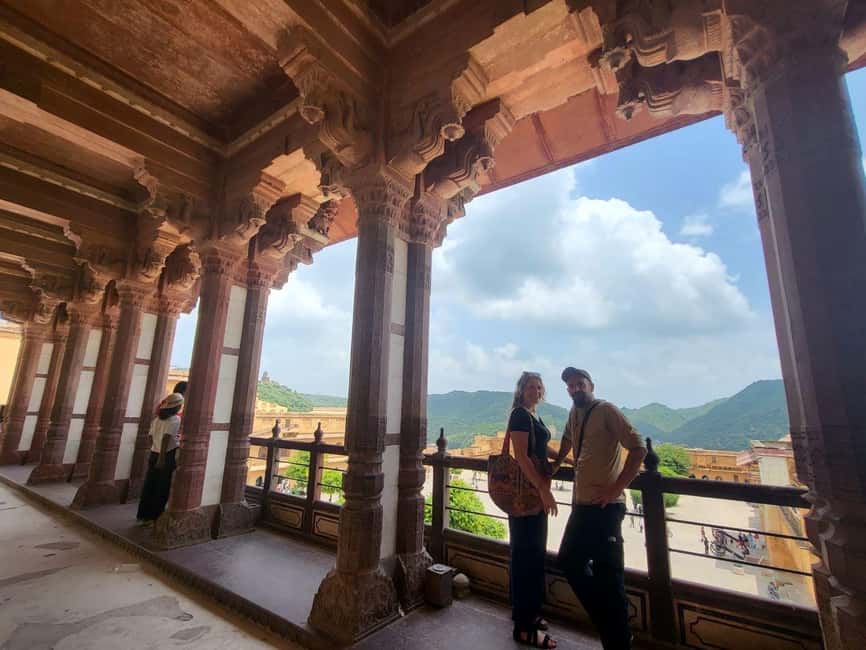
You’ll stop at Hawa Mahal, the famous Palace of Winds. It was built by Maharaja Sawai Pratap Singh, and the whole design is built around those many small windows and arches. The idea: royal women could watch the city while staying hidden.
This is a place where timing helps. Even a 1-hour block can feel too short if you’re rushing. So use your time in two steps: first, walk around for the big exterior views; second, slow down long enough to notice the window rhythm and how the façade feels layered from different angles.
You’ll also get a photo stop here, and guides often help you set up shots quickly. One guide—Hitesh—has been specifically praised for fast, accurate picture timing, which is great if you want memories without losing your whole day to camera fiddling.
Amber Fort and Palace: Rajput and Mughal in one fortress
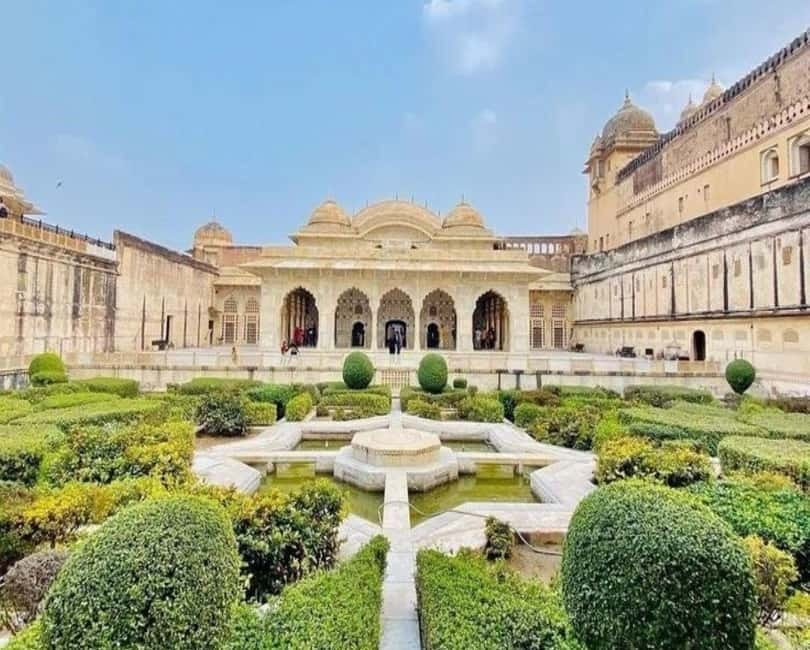
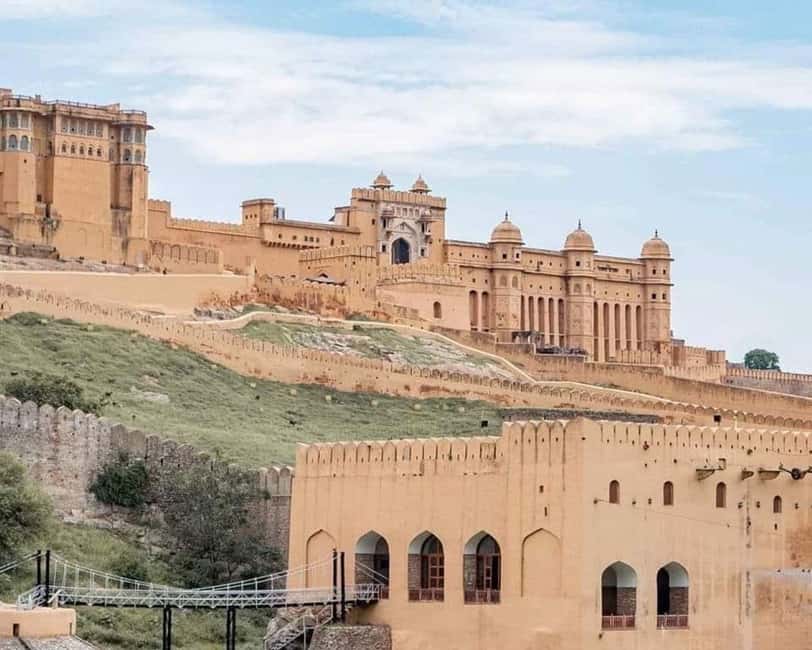
Then comes the heavy hitter: Amber Fort and Palace. It sits on the rugged Aravalli hills and mixes Rajput and Mughal design in a way you can see right away in the textures and layout. This 16th-century fortress uses red sandstone and white marble, and it’s the kind of place where your eyes keep finding new details as you move.
This stop takes about 2 hours, so plan to stay present. If you want photos, tell your guide early so you can sequence viewpoints without wasting time. If you want story, ask for the connections between Rajput power and Mughal influence—guiding here tends to explain why these design choices exist, not just what you’re looking at.
A practical note: this is also where the day’s walking and standing time stacks up. The tour builds in enough time to pause, but you’ll still want sunscreen and sunglasses. Those small items you bring (the tour recommends them) are genuinely useful in Jaipur sun.
You can also read our reviews of more private tours in Jaipur




Panna Meena Ka Kund: the stepwell’s symmetry trick
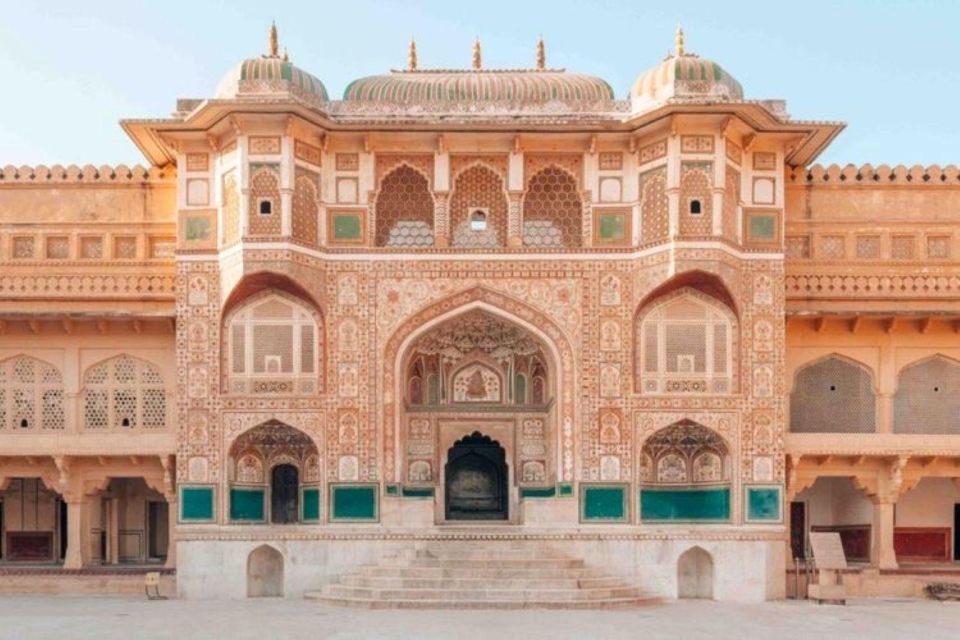
Next is Panna Meena Ka Kund, an ancient stepwell known for its symmetrical stairways and clever water-harvesting design. It dates back to the 16th century and sits near Amber Fort, so it’s an efficient add-on that doesn’t feel like a detour.
This is the kind of place that can be missed if you treat it like a quick photo. The payoff comes from looking carefully at how the steps create balance and how water storage was engineered into everyday life. If you like architecture that solves a problem, this stop will click.
The tour gives you about 30 minutes here, including time to stroll and take photos. Use it for close-up details and wider framing from a couple angles. It’s one of the stops where your guide’s explanations can turn a “pretty old structure” into a “wait, that makes sense” moment.
Jal Mahal on Man Sagar Lake: short stop, big visual payoff
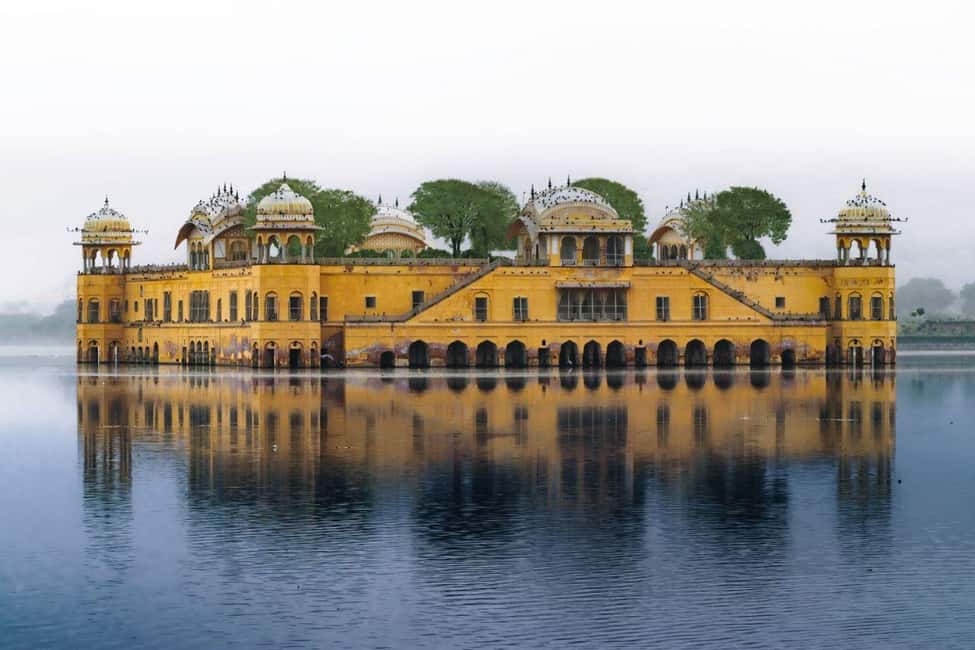
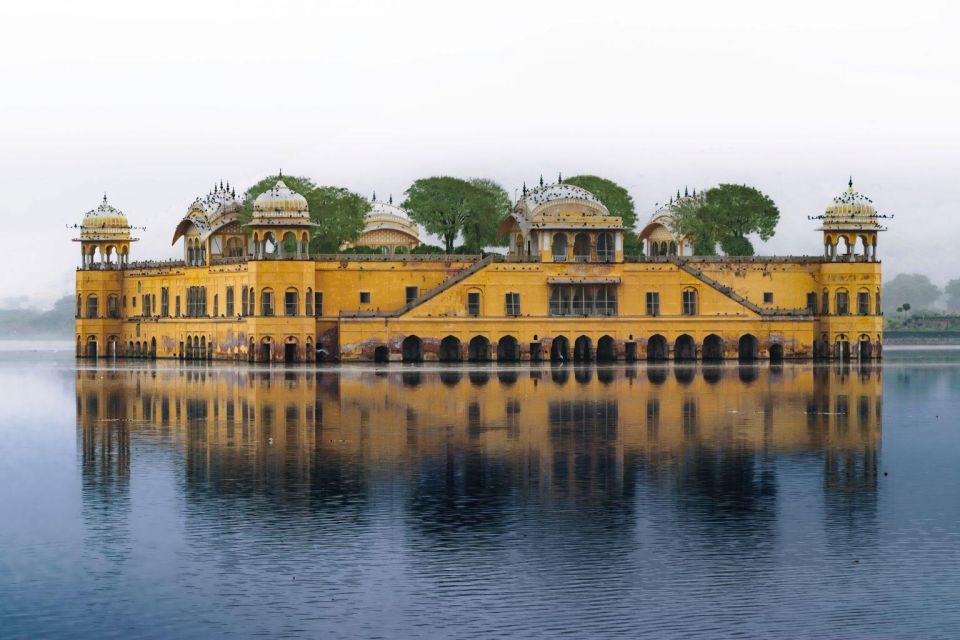
Jal Mahal is the Water Palace, sitting on the shimmering Man Sagar Lake. It was built in the 18th century, and the façade is red sandstone. Even when your time here is brief, the setting is strong enough to make it memorable.
The tour keeps this to roughly 30 minutes, with a shorter walk. That’s fine because Jal Mahal is a view-based stop. You’re mostly there to frame the palace against the water and catch the light. If you’re visiting during a bright part of the day, sunglasses matter a lot.
This is also a nice contrast after Amber Fort. The fort asks for attention to craftsmanship and scale. Jal Mahal asks for calm: slow looking, short breaks, and photos you don’t have to force.
City Palace and Royal Gaitor Tumbas: royal spaces with a quieter mood
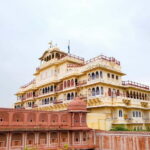
City Palace is next, a former royal residence of Jaipur’s Maharajas. It was commissioned by Maharaja Jai Singh II and includes ornate courtyards, regal halls, and museums. You’ll have about 1 hour for a guided visit, which is enough time to understand the layout and see the main interiors without rushing through everything.
What I like here is the shift from fortress energy to residence elegance. City Palace helps you understand how power lived day to day—through rooms, rules, and the way public and private space blend.
Later, you’ll visit Royal Gaitor Tumbas (Gaitor Ki Chhatriyan). This site is calmer, with beautifully carved marble memorials at the base of the Nahargarh hills. The guide experience here matters because the mood is quieter, and explanations help you connect the memorials to the rulers they honor.
This stop takes about 1 hour including walking. It’s a good segment if you want a break from crowds and shopping noise.
Jantar Mantar: UNESCO observatory that makes time feel physical
Jantar Mantar is an 18th-century astronomical observatory and a UNESCO World Heritage site. It features nineteen colossal instruments, including the world’s largest stone sundial. That single fact already tells you this isn’t a small museum.
You’ll typically spend around 30–60 minutes here depending on pace. The key is to let your guide point out what each instrument measures and how the designs work. Once you understand that, the scale becomes less abstract.
This is also one of the reasons a guided day helps. Ancient science can look like heavy rock artwork if no one explains the purpose. With a good guide, the observatory feels like a working system built with serious logic.
If you care about photos, ask for the quickest angles first. Many guides are good at guiding you from instrument to instrument without you wandering off and losing time.
Lunch break and arts-and-crafts market time without losing your day
Your schedule includes a local restaurant stop for brunch or lunch with free time for about 1 hour. Meals aren’t included, so you can choose what fits your appetite and budget. This break is useful because it recharges you before the afternoon forts-and-science rhythm continues.
There’s also a shopping stop for arts and crafts, roughly 30 minutes. This can be a fun chance to browse textiles, local crafts, and souvenirs without turning the day into a shopping spree.
One thing to keep in mind: some days include additional store stops connected to selling specific products. If you’re not into that, be direct with your guide early. In some cases, guides have been praised for avoiding pressure and keeping the day smooth, so you’ll want to use that expectation as your “tell me what you’ll do” checklist.
Who this private Jaipur tour is best for
I’d recommend this tour if you want:
- A full-day plan that covers Jaipur’s must-see landmarks without juggling taxis
- A guide who can explain what you’re looking at, in your preferred language
- A comfortable pace that still hits big names like Amber Fort, City Palace, and Jantar Mantar
It also works well for first-timers who want a complete overview, but it’s not limited to them. If you’re short on time—one day in Jaipur—this tour helps you see more than just the skyline. You’ll also get quieter cultural architecture like Panna Meena Ka Kund and Royal Gaitor Tumbas.
If you’re traveling with kids, this is still workable because the stops are broken into manageable chunks. Just expect that you’ll spend real time walking at forts and between monuments.
Should you book this private Jaipur sightseeing day?
If you’re deciding between DIY sightseeing and a guided day, I’d book this if your priority is efficiency plus clear context. The included private A/C car, pickup/drop-off, guide, parking, and water make the day feel structured without turning rigid. And Jantar Mantar plus Amber Fort gives you both spectacle and substance in the same 8-hour block.
Skip it only if you’re planning to spend a lot of extra time at monuments beyond what a guided day allows, or if you hate paying separate entry fees. Also, if privacy is critical, double-check your confirmation details because at least one booking note has described sharing with another person unexpectedly. A quick message before departure solves that kind of uncertainty.
Overall: this is a smart value choice for a one-day Jaipur hit list, especially if you want the city’s big landmarks explained in plain language and transported in comfort.
FAQ
What’s the duration of the Jaipur private sightseeing day tour?
The tour lasts 8 hours. Starting times can vary, so you’ll want to check availability for the slot you want.
Is pickup and drop-off included?
Yes. Pickup and drop-off are included from your booked location in Jaipur, such as your hotel. Airport or railway station pickup is also supported with a name sign.
Are monument entry tickets included?
No. Entry tickets for monuments are not included, though the tour includes guided help to manage time at sites.
What’s included in the private vehicle?
You’ll travel in a private air-conditioned vehicle (sedan/SUV/van depending on group size) with bottled water, parking fees, fuel, and GST included.
Do you provide guides in multiple languages?
Yes. The live tour guide is available in English, French, German, Hindi, Italian, Spanish.
What should I bring, and is anything not allowed?
Bring passport or an ID card, plus sunglasses and sunscreen. Pets, alcohol, and drugs are not allowed.
Is free cancellation available?
Yes. You can cancel up to 24 hours in advance for a full refund, and you can often reserve now and pay later for flexibility.