REVIEW · JAIPUR
Jaipur Heritage Walking Tour – Local life, Havelis and Temples
Book on Viator →Operated by Bagheera Adventure · Bookable on Viator
Jaipur’s old lanes tell stories fast. This walk through the Pink City mixes street life, major landmarks, and real rituals—plus time for snacks and crafts with a local guide. You’ll see the exterior of Hawa Mahal, wander near old havelis, watch the flower-and-vegetable wholesale market at work, and catch an aarti ceremony at Govind Devji Temple.
I especially like the small-group feel, which keeps things personal and helps you move at a comfortable pace. I also like the practical touches: free bottled water and included snacks and tea/coffee so you’re not constantly hunting for basics mid-walk.
One heads-up: the Hawa Mahal stop includes only a look from outside—its admission ticket is not included—so plan on that cost if you want more than photos.
In This Review
- Key Highlights at a Glance
- Why Jaipur’s Old Streets Make This Tour Click
- Getting Oriented: Where You Start and How the Timing Works
- Hawa Mahal Exterior: The Wind Palace Story You’ll Actually Remember
- City Palace Area and Old Havelis: Seeing Courtyards Without Getting Lost
- Pink City Market Time: The Wholesale Flower and Vegetable Experience
- Govind Devji Temple and Aarti: When Timing Changes Everything
- Tripolia Bazar and Craft Demos: Where Souvenirs Become Skill
- Snacks, Tea/Coffee, and Water: Small Inclusions That Save Your Energy
- Price and Value: $16 for What You’re Actually Buying
- The Guide Factor: Why Viru’s Style Is a Big Part of the Success
- Who This Tour Fits Best (and Who Might Want a Different Plan)
- Should You Book This Jaipur Heritage Walk?
- FAQ
- How long is the Jaipur Heritage Walking Tour?
- What is included in the price?
- Is a mobile ticket used?
- Where does the tour start and end?
- Do I need to pay for admission at the stops?
- Will I have private transportation?
- What if the weather is bad?
- Can I cancel for a refund?
Key Highlights at a Glance

- Local-guide pacing that adapts to your group, including families (Viru is a standout name here)
- Street snacks + included drinks that keep your energy steady on foot
- A working wholesale market for flowers and vegetables, seen at the source
- Govind Devji aarti timing matters, and the tour suggests aiming for the morning ceremony
- Tripolia Bazar craft demos like lac bangles, marble carving, and brass utensil making
- Mostly free stops along the route, with one key exception (Hawa Mahal ticket)
Why Jaipur’s Old Streets Make This Tour Click
Jaipur can feel overwhelming at first—big sights, more people, and a maze of lanes that all look the same from a distance. This tour is designed to solve that problem by keeping you moving with a guide who knows where to turn and what to notice.
What I like is that it’s not just a sightseeing loop. You’re walking through the places where Jaipur’s daily life still shows up in a very direct way. Markets feel like markets, not photo backdrops. Temples feel like temples, with ceremonies you can actually pay attention to. And the craft demos at Tripolia Bazar turn the usual shopping-pitch rhythm into something more hands-on.
The whole format is also a smart fit for a short trip. In about 3 hours, you get a layered snapshot: royal-era architecture nearby, living commerce in the lanes, and artisan work that makes the city’s goods famous.
You can also read our reviews of more walking tours in Jaipur



Getting Oriented: Where You Start and How the Timing Works
The tour starts at Hawa Mahal Road in the Pink City area, and it ends back at the meeting point. That matters because old Jaipur roads can be confusing if you’re trying to navigate alone, especially if you’re also dodging motorbikes, bicycles, and the occasional surprise detour.
You’ll also want to treat this as a guided walking route, not a sit-and-stare tour. The pace is built for short stops and quick context. Expect enough movement that you’ll feel like you’ve covered ground, but not so much that it becomes a punishment.
A couple practical notes from how the experience is set up:
- Mobile ticket: you won’t need to print anything.
- Near public transportation: if you’re combining this with other plans, it’s easier to plug into your day.
- Small group: this helps with questions and with keeping the group together in tight lanes.
And yes, bring your feet. Old-city sidewalks can be uneven, and you’re walking in an area where people are moving in every direction. Good shoes help.
Hawa Mahal Exterior: The Wind Palace Story You’ll Actually Remember
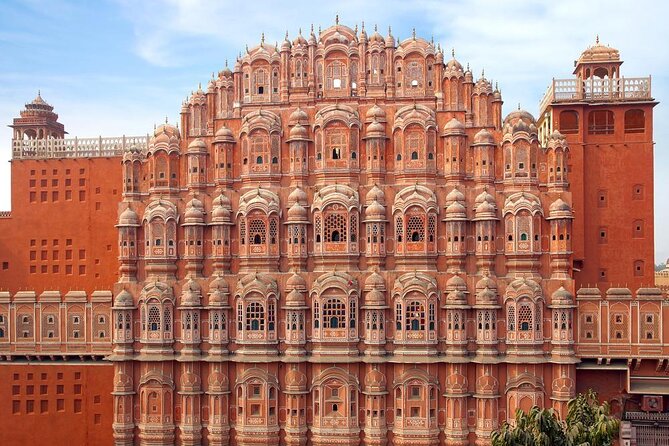
You start with the exterior view of Hawa Mahal—Palace of Wind—from a stop designed for quick orientation rather than a long museum-style visit.
Here’s the payoff: you’ll learn what the building was meant to do. Hawa Mahal was built by King Sawai Pratap Singh in 1799, and it was designed so women of the royal court could watch processions in the markets below. So when you look at those distinctive windows, you’re not just seeing decoration. You’re seeing an architectural solution to daily life and status.
A realistic consideration: the stop is 10 minutes, and the admission ticket is not included. So you can still get photos and context, but if you want to go inside (or see more than exterior viewing), you’ll need to plan for that extra ticket cost.
If you’re someone who likes photography, this is a great setup because it gives you a landmark first—then the rest of the walk makes more sense when you see the markets and temple area that sit in the same urban world.
City Palace Area and Old Havelis: Seeing Courtyards Without Getting Lost
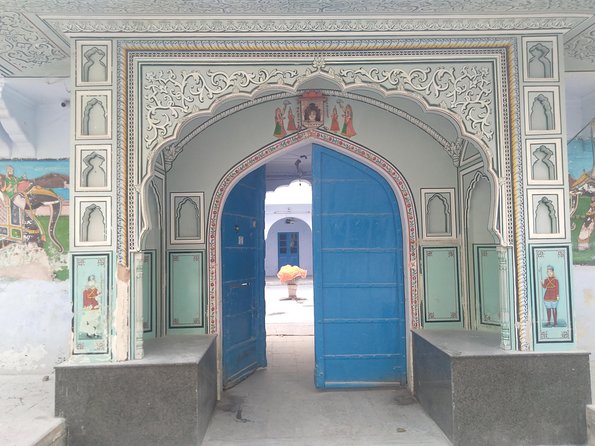
Next comes the City Palace area, where you’ll walk through old lanes and see traditional havelis—Jaipur’s heritage homes—with their architecture, frescoes, and courtyards.
This stop is valuable for one main reason: it helps you understand scale and style. Jaipur’s big palaces get all the headlines, but the havelis show the day-to-day refinement of earlier eras—how families lived, hosted, and displayed art and craftsmanship.
Two strengths here:
- It’s free (no admission required), so you can spend time looking without feeling like you’re racing a timer.
- The narrow lanes make the walk feel like Jaipur, not a theme park. With a guide, you also get help sorting what you’re looking at.
The only drawback is that because it’s street-level sightseeing, you’ll want to stay aware of your surroundings. Lanes can get crowded, and people are working nearby. Keep your phone ready for photos, but keep your eyes up for foot traffic.
Pink City Market Time: The Wholesale Flower and Vegetable Experience
Then you get to the part that’s pure Jaipur in the most practical way: the wholesale flower and vegetable market in the Pink City.
This is described as the only wholesale flower and vegetable market in Jaipur, and the point of bringing you here is not just the color. It’s to show the city’s supply chain—the system behind the garlands at temples, the produce on carts, and the trades that feed daily life.
Expect a 30-minute stop. That gives enough time to:
- notice how flowers and produce are handled at scale
- watch the rhythm of workers and buyers
- understand how markets shape the visual identity of the city
What you should consider: this is a market environment, so it can be busy and sometimes dusty. You’ll probably smell spices and fresh plant material more than you expect. If you’re sensitive to strong smells or want a calmer experience, this is still doable, but you’ll want to keep a comfortable distance and follow your guide’s lead on where to stand.
You can also read our reviews of more historical tours in Jaipur




Govind Devji Temple and Aarti: When Timing Changes Everything
At Govind Devji Temple, you’ll see an aarti ceremony. The tour focuses on one of the seven ceremonies, and the key practical point is that morning is best.
The tour specifically advises aiming for the morning ceremony if you can. That’s smart because aarti is a ritual that depends on timing. If you’re there at the wrong moment, you might miss the full flow or not get the same atmosphere.
This stop is 15 minutes and admission is free. The value isn’t in paying for entry—it’s in the experience of watching a Hindu ritual respectfully, with context from your guide. You’ll likely understand the purpose of the ceremony more clearly than if you were just standing there and trying to guess what comes next.
A consideration: temples can have rules about behavior and movement. Keep your voice down, follow instructions, and dress in a way that feels comfortable for a religious site (shoulders and knees generally covered is a good baseline idea, though the tour details don’t spell out dress code).
Tripolia Bazar and Craft Demos: Where Souvenirs Become Skill
Tripolia Bazar is where the tour shifts from “look at things” to “watch how things are made.”
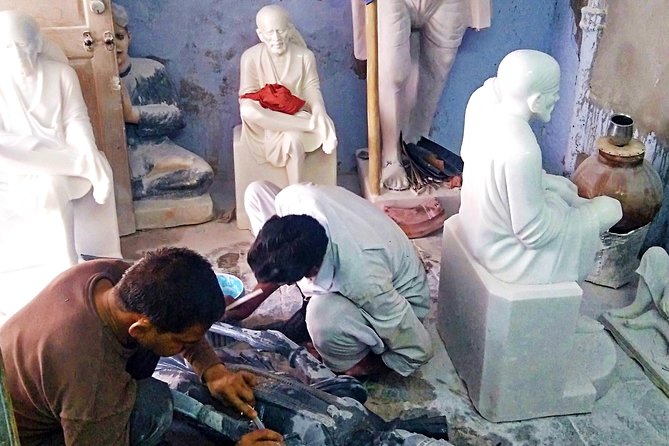
You’ll see live demonstrations of traditional crafts, including:
- lac bangle making
- marble carving
- brass utensil crafting
The stop is long enough—about 1.5 hours—that it doesn’t feel rushed. This also means you can ask questions without the guide rushing you onward. And if you do buy something, you’ll have a better sense of the craft behind it, which usually leads to more satisfying souvenirs (and fewer regret purchases).
This is also where the tour makes room for street food snacks. The idea is simple: you’re not just walking; you’re fueling yourself with local bites from reliable vendors.
A realistic drawback: bazaar areas can be crowded, and some selling can happen alongside demonstrations. Your guide can help you judge what’s worth trying, and you can choose snacks that fit your comfort level.
Snacks, Tea/Coffee, and Water: Small Inclusions That Save Your Energy
One reason this tour feels like good value is that it gives you support for the walk.
Included items:
- snacks
- bottled water
- coffee and/or tea
- plus time to try local street food snacks from reliable vendors
That combo matters because old Jaipur walking can drain you fast—sun, walking pace, and constant visual stimulation. Without water and a quick break, it’s easy to lose momentum.
Here’s the practical tip I’d give you: treat snack time as part of the schedule, not as random stops. If you wait too long, you’ll end up eating whatever is easiest rather than what sounds best. With included drinks and set snack moments, you get choices while you’re still fresh.
Price and Value: $16 for What You’re Actually Buying
At $16 per person for roughly 3 hours, this tour is positioned as an affordable, high-impact city primer. The real question isn’t whether it’s cheap. It’s what you get for the price.
What you get:
- a local guide who explains the “why” behind buildings and rituals
- market time where you can see how the city functions
- temple ceremony viewing at Govind Devji
- craft demonstrations at Tripolia Bazar
- included snacks, tea/coffee, and bottled water
What you don’t get:
- private transportation
- Hawa Mahal admission ticket
So if you already planned to travel by foot or public transit and you’re okay with walk-and-watch pacing, this is strong value. The tour also runs on a mobile ticket, which usually makes it easier to show up without admin stress.
If you were hoping for a museum-heavy, ticket-heavy itinerary, this might feel lighter. But if you want an authentic slice of Pink City life at a reasonable price, this tour is the kind of deal that works well.
The Guide Factor: Why Viru’s Style Is a Big Part of the Success
A lot of walking tours live or die by the guide’s ability to make people slow down. In this case, Viru comes up again and again for one simple reason: he’s happy to go at your pace.
That matters if you’re:
- traveling with kids
- moving slower due to heat or crowds
- the type who wants explanations rather than constant headlong walking
Viru is described as thorough, informative, and friendly, and the practical bonus is adaptability—one family even noted how he managed the experience well with an 8-year-old. That’s the difference between a tour that feels like a checklist and a tour that feels like you’re actually being hosted.
If you like your walking tours with real context and a relaxed rhythm, this is a big plus.
Who This Tour Fits Best (and Who Might Want a Different Plan)
This is a good fit if you want:
- a short intro to Jaipur’s old city without renting a private vehicle
- hands-on culture moments: markets, rituals, craft demos
- a guide who helps you understand what you’re seeing
- included food and drinks so you don’t derail your day
It’s also a smart option for first-timers who feel intimidated by the sheer complexity of the Pink City streets.
Who might want to reconsider:
- If you strongly prefer indoor monuments only, this is more street-and-temple focused than museum focused.
- If you want to include Hawa Mahal fully with an inside visit, you’ll need to add that admission since it’s not included.
- If you hate crowds, you’ll still be able to enjoy it, but you should expect busy market and bazaar moments.
Should You Book This Jaipur Heritage Walk?
I’d book this if you want a real-feeling Jaipur mix in a short time and you appreciate walking tours that explain what’s happening around you.
Skip it if your ideal day is mostly ticketed monuments and long indoor galleries, or if you need private car transport to avoid walking any distance.
If your schedule allows, I’d treat the morning slot as your default because the tour recommends aiming for the morning aarti ceremony. That one detail can turn a good stop into the kind of memory that stays with you long after the photos.
FAQ
How long is the Jaipur Heritage Walking Tour?
It lasts about 3 hours.
What is included in the price?
The tour price is $16 per person, and it includes snacks, bottled water, and coffee and/or tea.
Is a mobile ticket used?
Yes, you’ll receive a mobile ticket.
Where does the tour start and end?
It starts at Hawa Mahal Road (near the Pink City area) and ends back at the same meeting point.
Do I need to pay for admission at the stops?
Hawa Mahal’s admission ticket is not included. The other listed stops—City Palace area, Pink City market, Govind Devji Temple, and Tripolia Bazar—are listed as free.
Will I have private transportation?
No. Private transportation is not included.
What if the weather is bad?
This experience requires good weather. If it’s canceled due to poor weather, you’ll be offered a different date or a full refund.
Can I cancel for a refund?
Yes. You can cancel for a full refund up to 24 hours before the experience’s start time. If you cancel within 24 hours, the amount paid is not refunded.