REVIEW · JAIPUR
Heritage Walk & Street Food Tasting in Jaipur
Book on GetYourGuide →Operated by Rajasthan Cultural Tours · Bookable on GetYourGuide
Jaipur tastes better when you walk. I love the off-limits alleys that take you beyond the main routes, and I love that every stop ties street food to local culture. The one trade-off: this is real walking, so you’ll want comfy shoes.
I also like how the tour stays human-sized, with a small group (up to 10) and an English live guide. In my kind of travel style, it helps to have a steady presence like Vivek does on the ground, especially when you’re threading through older neighborhoods.
Then there’s the mix of food and what you actually see: Chaura Rasta tea and snacks, old bazaar lanes, a temple visit, a peek at the Thatheras metal-beater community, and bangle-making using sealing wax. If you hate surprises, the streets will still keep things orderly and guided.
In This Review
- Key highlights to look for
- Starting at Golcha Cinema: the Pink City, on foot
- Chaura Rasta: tea first, then the first serious bites
- Badi Chaupar and Tripolia Bazar: architecture and appetite in the same lane
- Choti Chaupar and Chhoti Chopad: finishing with more than just snacks
- Thatheras, temple time, and the community well
- Bangle making with sealing wax: a craft stop you’ll remember
- What you actually eat: samosa, kachori, sweets, chai, and more
- Price and value: $21 for food plus city context
- How to prepare so the walk feels easy
- Who should book this, and who should skip
- Should you book the Heritage Walk & Street Food Tasting in Jaipur?
- FAQ
- Where do I meet for the tour?
- How long is the Heritage Walk & Street Food Tasting in Jaipur?
- What food is included?
- Is hotel pickup and drop-off included?
- Can I take photos during the tour?
- Is this tour suitable for wheelchair users?
Key highlights to look for
- Small group (up to 10) means you get time to ask questions and keep pace
- Street food sampling like samosa, kachori, famous sweets, and masala chai at local shops
- Old-town walking route through Jaipur’s lanes and market areas, away from tourist crowds
- Cultural stops beyond food including a Hindu temple, a community well, and Thatheras metal beaters
- Craft contact with bangle making using sealing wax
- English-speaking guide with lots of real local context, often including guests extending their day
Starting at Golcha Cinema: the Pink City, on foot
The tour kicks off at the entry gate of Golcha Cinema. That matters more than it sounds. In old Jaipur, a clear meeting spot helps you start smoothly, instead of wasting time wandering for your group.
You’re set up for a 3-hour heritage walk, and it’s designed around getting you into the feel of the old city. Think: narrow lanes, busy market edges, and those quieter byways where local life looks normal, not staged. With a small group, the guide can keep things moving without rushing you through every doorway and corner.
Practical tip: wear shoes you’d be happy in for 90 minutes, not just 20. This tour is listed as involving a lot of walking, and the itinerary keeps you on your feet between multiple food stops and cultural moments.
Also, bring a passport or ID card. It’s a small line item, but it’s the kind that saves time when you’re already in Jaipur.
You can also read our reviews of more walking tours in Jaipur



Chaura Rasta: tea first, then the first serious bites
The first main stop is Chaura Rasta, where you get tea plus early street food. This is a smart setup. Starting with masala chai gives you a warm landing, and it also calibrates your spice tolerance for what comes next.
From there, you’ll sample street snacks from local shops. The tour’s core food list includes samosa and kachori, plus famous sweets and other items you’ll hear about as the guide explains what to look for and why each stall is worth stopping.
What makes this section work is the rhythm: walk a bit, eat a bit, and learn while your feet are still fresh. If you’ve been worried about street food hygiene, this kind of guided sampling is exactly the point. You’re not left guessing which counter is legit.
And yes, you’ll probably notice how much local choice is built into daily routines. Tea sellers, snack counters, sweet shops—these aren’t tourist displays. They’re part of the city’s workflow.
Badi Chaupar and Tripolia Bazar: architecture and appetite in the same lane
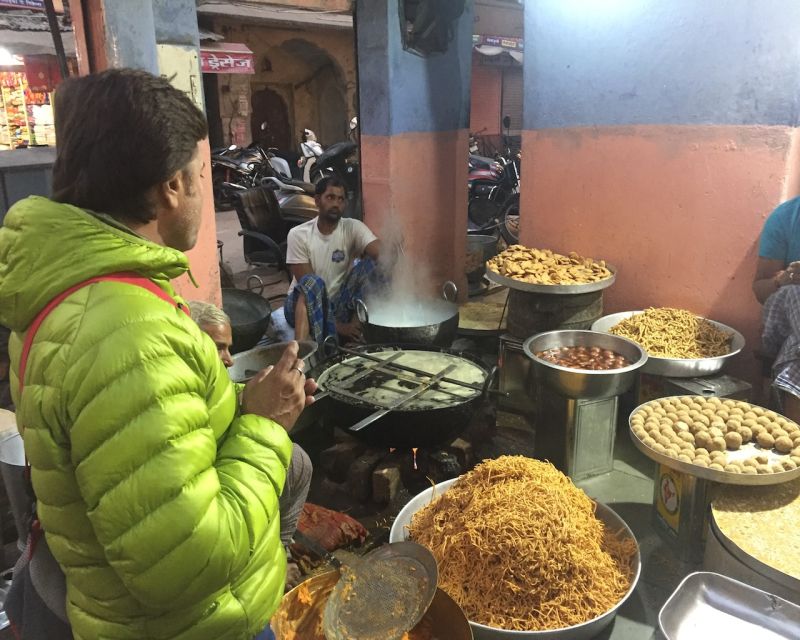
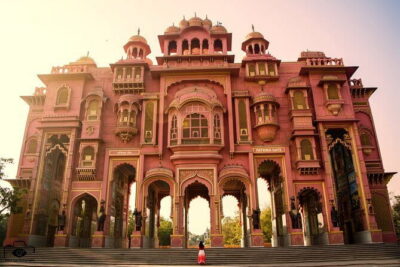
Next up is Badi Chaupar. You’ll get more tea and local snacks while the guide points out what’s around you—especially the way old Jaipur is built with entry gates and precise geometry. That’s not just trivia. It helps you read the city as a designed place, not random streets.
From Badi Chaupar you continue toward Tripolia Bazar. This stretch is where the tour starts to feel less like a food stop parade and more like a guided walk through how Jaipur’s old markets function. You pass through market space and you get explanations that make the scale of trade make sense: who sells what, where people gather, and how the neighborhood moves.
One practical drawback to keep in mind: market areas can be crowded, and you’ll be walking through that density. If you get anxious in busy places, it helps that your guide sets the route and keeps you together. You’re not trying to out-navigate the crowds alone.
Choti Chaupar and Chhoti Chopad: finishing with more than just snacks
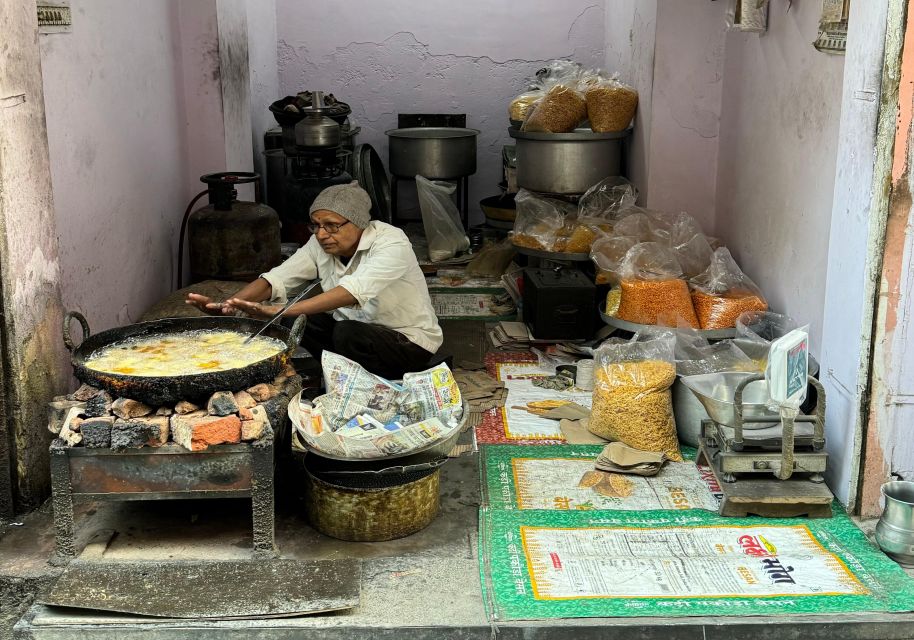
Choti Chaupar is another food-focused stop. You’ll likely sample more local snacks here—again with that same guiding approach of choosing items that make sense for the group.
The tour finishes at Chhoti Chopad. This gives your walk a clear endpoint and keeps it structured. It’s also a good moment to pause and assess what you loved most, because Jaipur can tempt you into extending your day.
A detail that showed up again and again in guest experiences is how flexible the guides can be. Some people went on to explore major sites afterward, like City Palace and Jantar Mantar, after the walk helped them get oriented. That’s a real value-add: you start with old-town context, then you’re better equipped to enjoy the big-ticket monuments afterward.
Thatheras, temple time, and the community well
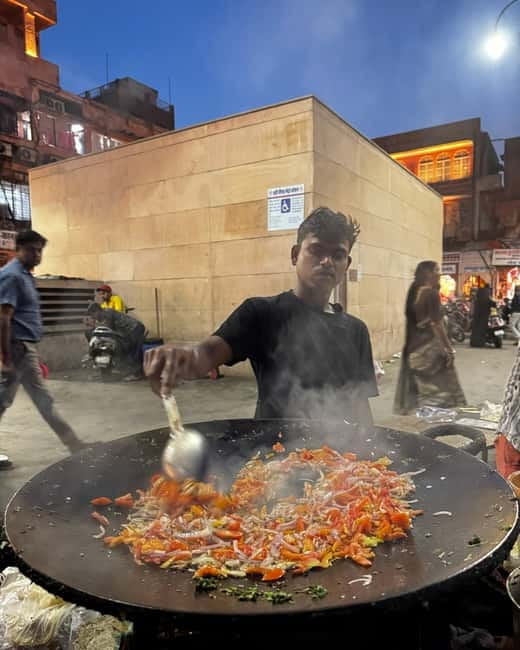
This is the part of the tour that most clearly separates it from a standard food crawl.
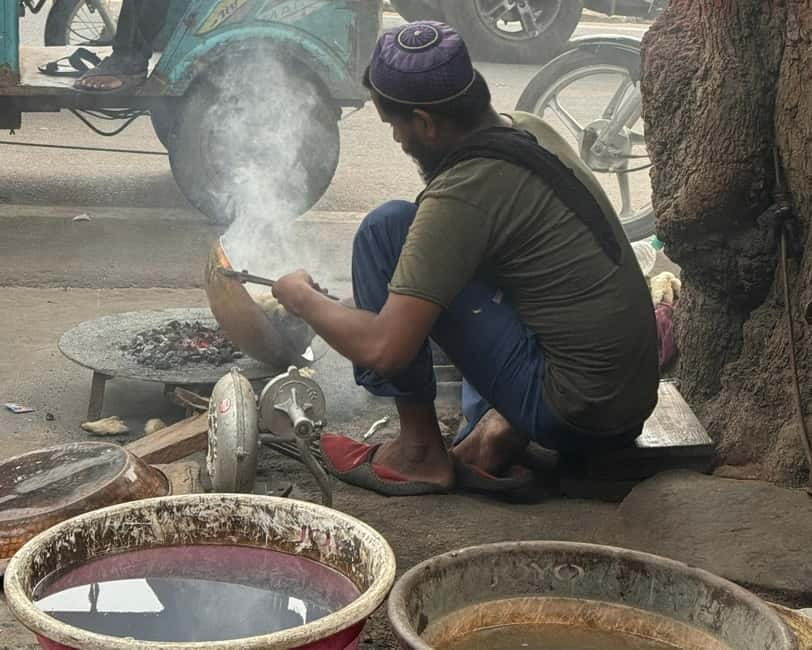
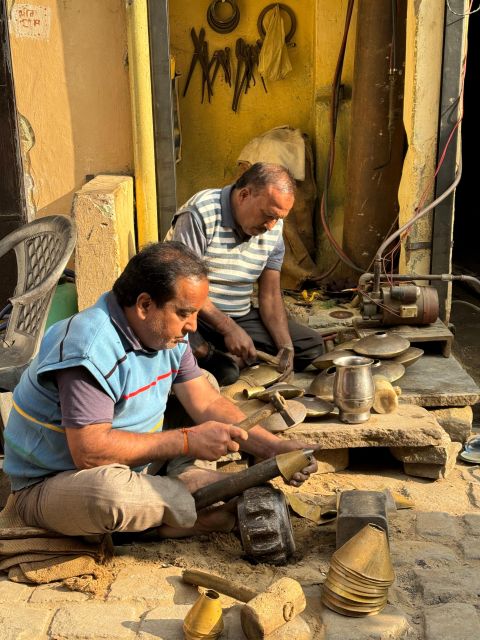
You’ll visit a street inhabited by Thatheras, a community connected with metal beating. You’re not just eating while someone points at photos. You’re seeing craft life in motion—hands at work, tools in use, and the kind of community trade that keeps neighborhoods humming.
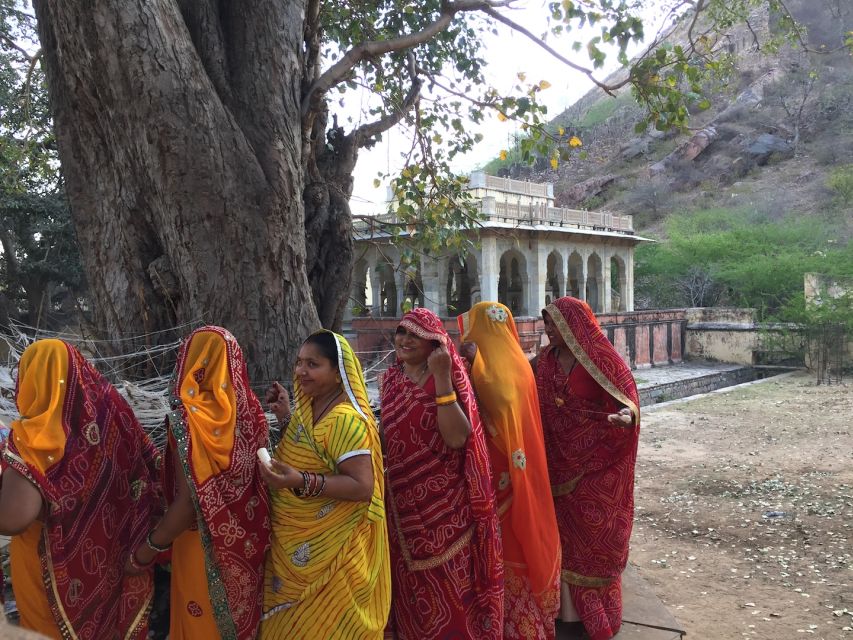
Then you go to a Hindu temple. The tour keeps this respectful and simple, and photography rules are clear: photography is allowed, but avoid flash inside temples. Dress modestly here, too. If your outfit is borderline for temples, this is the moment to pull it together.
You’ll also witness a community well. It’s a quiet stop, but it adds a practical layer to your understanding of how daily life historically depended on shared water sources. When you watch locals use space like that, you understand why markets and neighborhoods cluster the way they do.
You can also read our reviews of more food & drink experiences in Jaipur






Bangle making with sealing wax: a craft stop you’ll remember
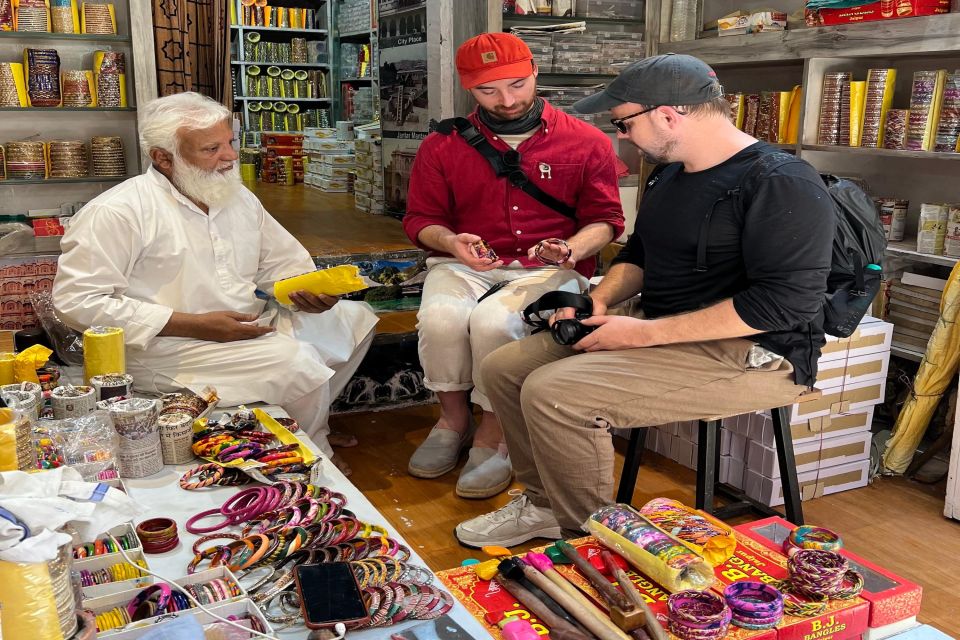
Another standout is the chance to observe bangle making through sealing wax. This is the kind of stop that makes the tour feel grounded in real technique, not just “culture for culture’s sake.”
You’ll see how small materials and careful steps connect to a finished product people wear for celebrations and daily life. And because bangle making is visual, it’s easier to appreciate even if you don’t speak the local language.
This also ties back to the walking part. The guide isn’t only showing you food. They’re connecting you to the craft economy that supports the city’s visual identity.
What you actually eat: samosa, kachori, sweets, chai, and more
The tour includes street food such as samosa, kachori, famous sweets, and masala chai at local shops, plus more snacks along the route. The exact items can vary by day and what’s available, but the theme stays consistent: local staples you’d never prioritize on your own first day.
One big advantage, based on how guests describe the experience, is that the guide can work with different comfort levels. If you’re a picky eater or spice-shy, the tour still works because you aren’t forced into an all-or-nothing approach. You get enough variety to find what you like, and you have guidance on what to try and in what order.
If you’re worried about stomach issues, I’d take the guide’s role seriously here. You’re tasting in a controlled, guided way, and you’re not picking random street stalls with no context. That doesn’t eliminate risk in any food situation, but it’s a smart way to reduce guesswork.
Also: if you’re a sweet lover, you might want to pace yourself. One common note from guests is that sweet items can come with enough sugar that you’ll feel it later. The tour includes both savory and sweet, so eat with intention, not in panic. You want to enjoy the experience, not rush it.
And don’t skip water. A bottle of water is included, and you’ll likely want more if the weather is hot.
Price and value: $21 for food plus city context
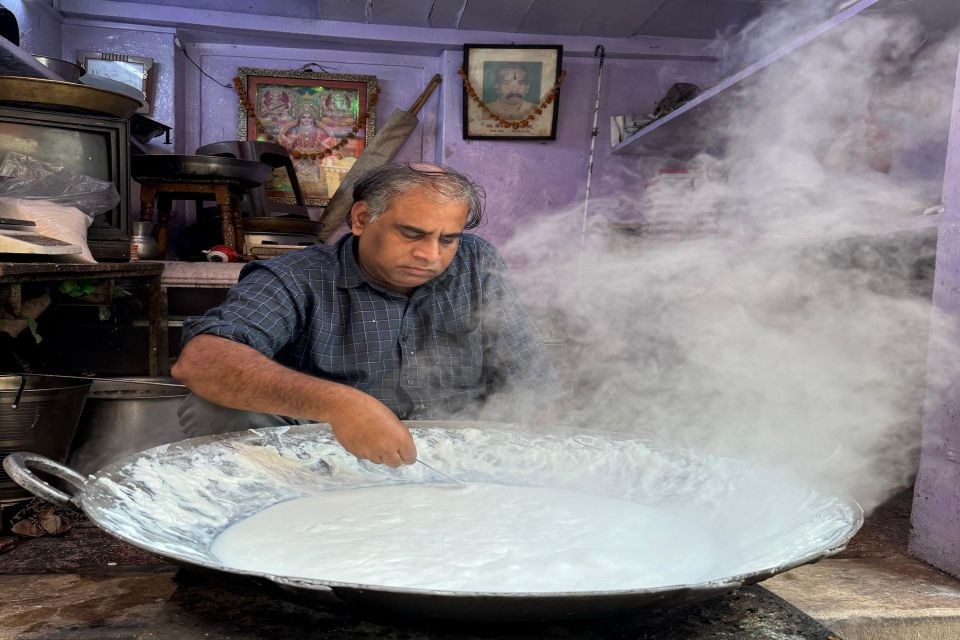
At about $21 per person for a 3-hour guided walk, this is strong value for two reasons.
First, you’re not paying only for food. You’re paying for access—access to side lanes, craft areas, temple context, and the explanations that make street scenes meaningful. Walking in Jaipur without help can feel like you’re always one turn away from the wrong direction. With a guide, the walking becomes part of the learning.
Second, the tour is structured around multiple stops. Guests describe leaving full, often after trying around a dozen-plus food items across several vendors and tastings. That’s the kind of payoff you want from a short tour: enough tastings to justify the price, and enough context to justify the time.
You also get a small group cap (up to 10). In practice, that keeps the experience from feeling like a conveyor belt.
Not included items are simple: no hotel pickup or drop-off, and no alcohol. For most people, that’s not a downside. You’re walking and tasting; you don’t want logistics and drinks pulling your attention away.
How to prepare so the walk feels easy
Bring:
- Comfortable shoes
- Comfortable clothes (and modest clothing for temple time)
- Passport or ID card
- Personal medication if you need it
Also consider:
- The weather can shift, so pack sunscreen and a hat.
- Carry water if you can, even though the tour includes a bottle.
- If you’re planning photos, remember flash is not the move inside temples.
If you’re traveling solo, this tour tends to be reassuring because the guide keeps you together and helps you navigate the older streets confidently. That matters when you’re in a city famous for tight lanes.
Who should book this, and who should skip
This tour is a great fit if you:
- Want street food without the stress of choosing stalls alone
- Enjoy culture that shows up in everyday life, like crafts and temple space
- Prefer a guided walk over reading guidebooks while standing in traffic
- Like history as something you can see and smell, not only something you read
You might skip it if:
- You can’t handle extended walking. The tour isn’t suitable for wheelchair users.
- You want a sit-down meal. This is a walking-and-tasting format.
If you like short tours that help you plan the rest of your trip, it’s also a smart first-day activity. It gives you the lay of the land before you tackle larger monuments.
Should you book the Heritage Walk & Street Food Tasting in Jaipur?
If you want Jaipur to feel like Jaipur—not a checklist—book it. This is one of those tours where the value is in the combination: food plus old-city context plus craft and temple stops that you’d miss on your own.
I’d book it especially if:
- You’re curious but cautious about street food
- You want a safe-feeling way to explore older neighborhoods
- You like guides who can slow down when you have questions
Just go in with the right mindset: you’re walking, you’ll eat, and you’ll learn as you go. If that sounds like your kind of travel, you’ll have a good 3 hours in the Pink City.
FAQ
Where do I meet for the tour?
You meet at the entry gate of Golcha Cinema.
How long is the Heritage Walk & Street Food Tasting in Jaipur?
The tour lasts 3 hours.
What food is included?
The tour includes street food such as samosa, kachori, famous sweets, masala chai (tea), and more from local shops.
Is hotel pickup and drop-off included?
No. Hotel pickup and drop-off are not included.
Can I take photos during the tour?
Photography is allowed, but avoid flash photography inside temples.
Is this tour suitable for wheelchair users?
No, it is not suitable for wheelchair users.
If you tell me your travel dates and whether you’re more spice-leaning or spice-avoidant, I can suggest a smart way to plan what to eat (and what to save for later) around this tour.