REVIEW · JAIPUR
Jaipur: Private Full Day Sightseeing Tour By Car with Guide
Book on GetYourGuide →Operated by Rajasthan Tour Driver · Bookable on GetYourGuide
Jaipur in one smooth day. This private Pink City full-day tour is built around the big icons plus the background that makes them click: Amber Fort, Hawa Mahal, the stepwell, Jal Mahal, and the astronomical wonder of Jantar Mantar. You ride in a private air-conditioned car with a professional guide, so you’re not stuck figuring out routes or doing guesswork at major monuments.
Two things I really like about this setup are (1) the guide-led context (you get explanations of Jaipur’s heritage and Rajput life, and the city’s astronomical legacy), and (2) the pace is efficient without feeling like a race. One thing to plan around: entry tickets and meals are not included, and a couple of stops are shorter photo-and-view moments, so if you want to linger, you’ll either need patience or ask your guide to slow the flow.
In This Review
- Quick hits before you go
- The value: why this day trip feels like a deal
- Your route through the Pink City: how the day flows
- Hawa Mahal: the photo stop that teaches you how to look
- Amber Fort: where Hindu-Muslim architecture feels tangible
- Panna Meena Ka Kund: the stepwell you’ll remember
- Jal Mahal: a water-palace pause on Man Sagar Lake
- A craft workshop stop with no pressure
- Lunch break: keep it flexible, keep it simple
- Royal Gaitor Tumbas: quieter than the headline sites
- City Palace: the royal center in plain terms
- Jantar Mantar: the astronomy lesson in stone
- Transportation and timing: what makes the day feel easy
- Price vs. reality: what you should budget extra for
- Who this tour is best for
- Who might want a different style
- Booking checklist: what to bring and how to prepare
- Should you book this Jaipur private full-day tour?
- FAQ
- How long is the Jaipur private full-day sightseeing tour?
- What’s included in the tour price?
- Are entry tickets included for the monuments?
- Is this a private tour or shared group?
- What languages are available for the guide?
- Can the driver pick you up from anywhere in Jaipur?
- Do they skip the ticket line?
- What’s the flexibility for cancellation and payment?
- What should I bring, and are pets allowed?
Quick hits before you go
- A private AC car means Jaipur traffic and heat stay out of your way as much as possible
- UNESCO-level stops across Amber Fort, Jantar Mantar, and the wider heritage circuit
- Amber Fort + optional deeper Amber time if you want more of the chambers and “don’t-miss” interiors
- Panna Meena ka Kund is a fast, satisfying stepwell detour with a clear water-story behind it
- Jal Mahal on Man Sagar Lake gives you the classic postcard look, without turning the day into a long detour
- A craft workshop stop is educational and low-pressure, with traditional skills like block printing mentioned in the tour format
The value: why this day trip feels like a deal
At about $4.88 per person for an 8-hour private tour, the headline value is the package: hotel pickup/drop-off, transportation in a private air-conditioned sedan/SUV, a professional authorized guide, plus parking and fuel are built in. The catch is simple—entry tickets and meals aren’t included, so your real total cost depends on how many paid sites you visit and what you choose for lunch.
You also get something practical: skip-the-line entry is included. In Jaipur, where lines and timing can get chaotic, that small “time saved” often turns into “more monuments seen without stress.”
Finally, the tour is designed to be adjustable. If you’re more into architecture than shopping, or you’d rather add a little time at a viewpoint, your guide can shape the order and timing to match what you want.
You can also read our reviews of more guided tours in Jaipur


Your route through the Pink City: how the day flows
The tour follows a logical loop: iconic skyline views early, Amber Fort and the nearby sights mid-morning, then a heritage arc through Gaitor Ki Chhatriyan, City Palace, and Jantar Mantar. Lunch sits in the middle, and there’s also space for a quick arts-and-crafts stop plus a short workshop-style visit.
This matters because Jaipur’s monuments are spread out. By keeping everything in one car day, you’re not spending your energy on public transport, long taxi negotiations, or backtracking.
Hawa Mahal: the photo stop that teaches you how to look
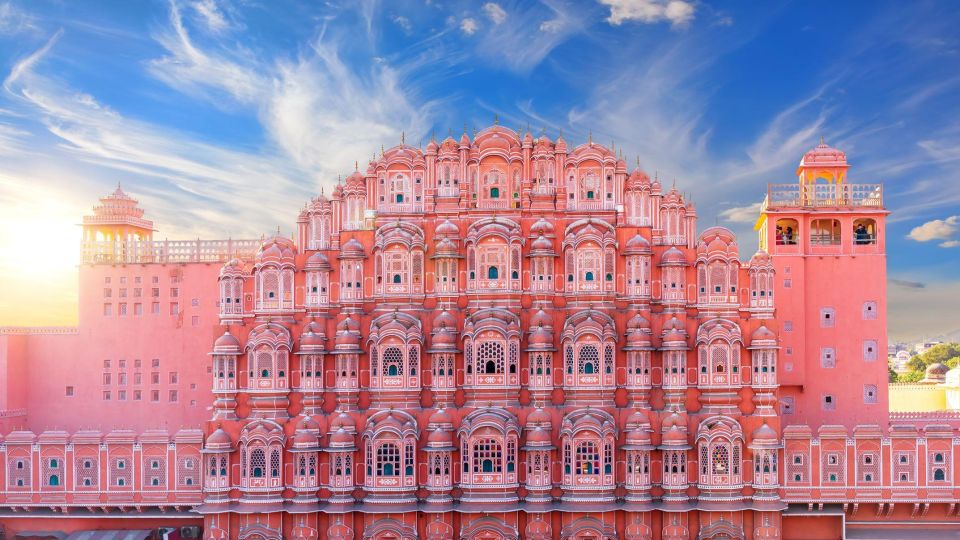
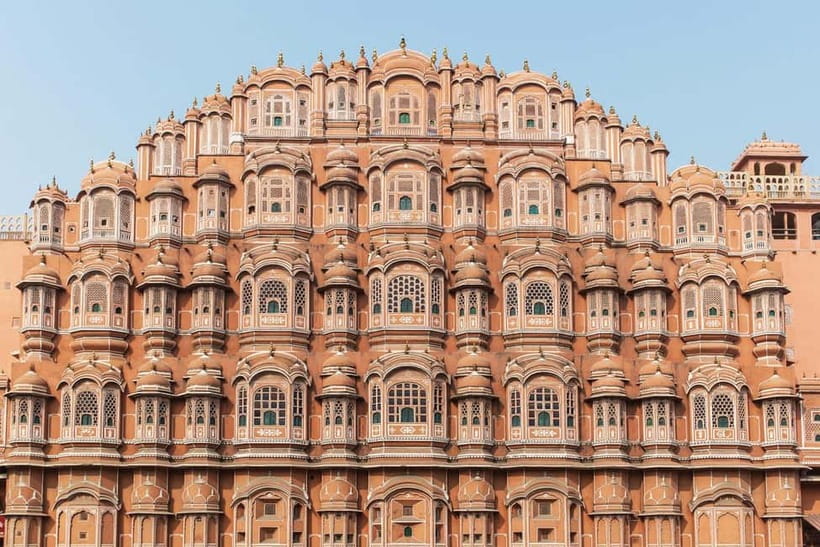
Hawa Mahal (Palace of Winds) is famously photogenic for a reason: tiered arches and latticework screens designed to give a view into the life of the street below. This stop is scheduled as a photo stop plus guided visit, so you get more than just a quick look from outside.
If you’re the type who takes photos and then forgets what you photographed, this is where a guide can help you “read” the building—why those screens exist, and how the palace fit into daily city life.
Timing note: plan for this to be short and focused. It’s listed as around 20 minutes for the stop, so bring your camera, pick your angle early, and don’t expect a long stroll here.
Amber Fort: where Hindu-Muslim architecture feels tangible
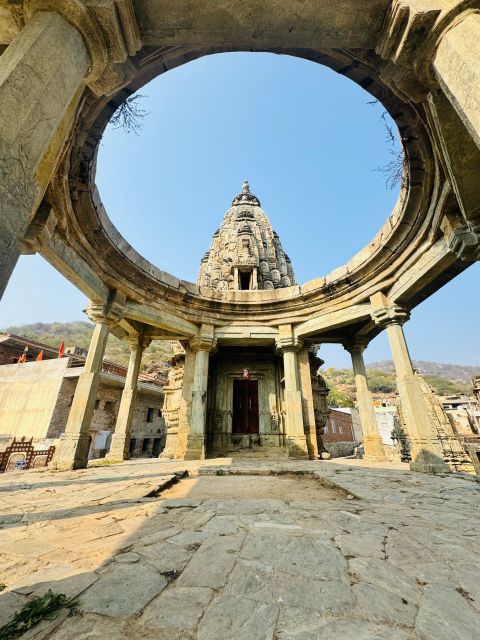
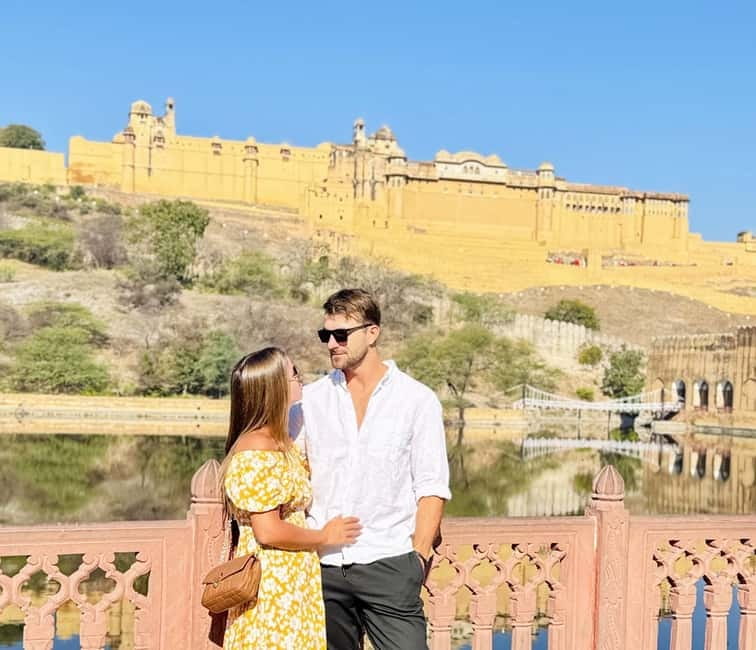
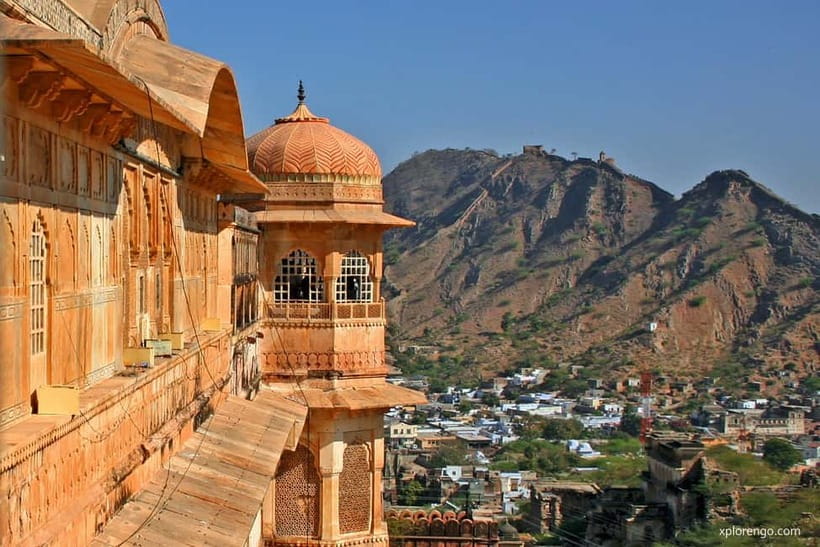
Amber Fort is the main event, with about two hours set aside for the visit and surrounding area. The key detail is the architectural mix: the fort is described as an exemplary blend of Hindu and Muslim design, built with red sandstone and white marble. The fort sits on hills just outside Jaipur, so the setting adds drama before you even reach the courtyards.
Expect more than walls and gateways. This is where your guide’s storytelling makes a difference—Rajput lifestyle, palace power, and how the fort functions as a historic statement. Many guides on this route are also praised for being patient, answering questions, and guiding visitors through the sights at a human pace.
If Amber is your top priority, there’s an optional upgrade-style approach: choose a 3-hour guided Amber Fort experience with hotel pickup/drop-off, with emphasis on highlights like Sheesh Mahal, Ganesh Pol, royal chambers, and hilltop views. That extra time is worth it if you want to slow down and actually understand the details.
Panna Meena Ka Kund: the stepwell you’ll remember

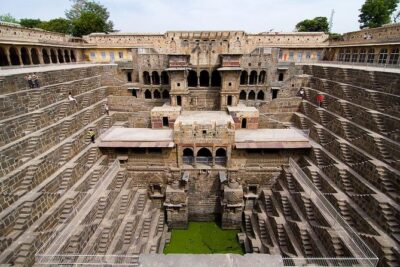
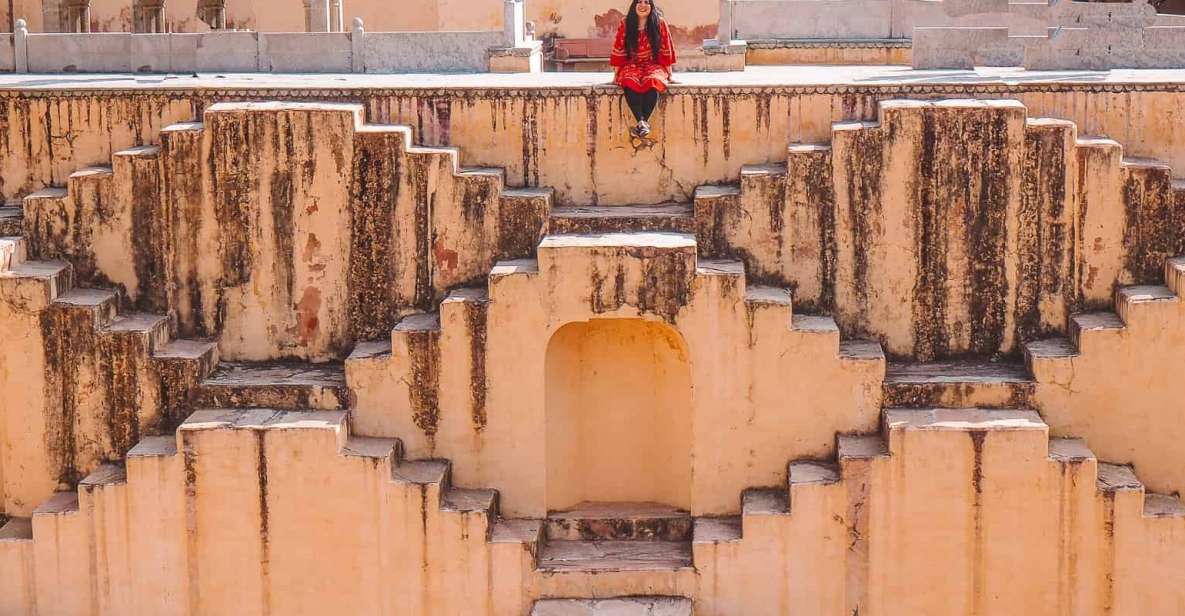
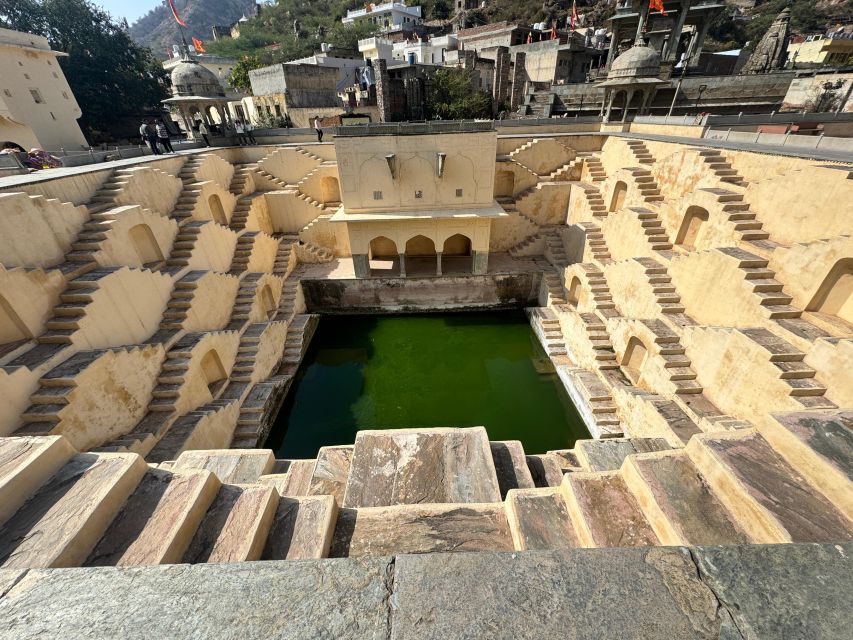
Panna Meena ka Kund is brief in the schedule (about 30 minutes), but it’s not a throwaway stop. This 16th-century stepwell is famous for its symmetrical stairways and its practical rainwater catchment design.
Here’s why it’s a smart inclusion: Jaipur isn’t only forts and palaces. Stepwells show how water technology shaped daily life in Rajasthan. Even if you’re not a “history person,” the layout is visually satisfying, and the purpose is easy to grasp when explained well.
Wear shoes you can walk in comfortably. Stepwell steps are uneven in places, and you’ll want footing confidence more than fashion confidence.
You can also read our reviews of more private tours in Jaipur




Jal Mahal: a water-palace pause on Man Sagar Lake

Jal Mahal, the Water Palace, is one of those places where the postcard image makes sense in person. It’s set on Man Sagar Lake, and the tour format keeps the visit short—photo stops with a guided context around 20–30 minutes depending on the day.
You’re mostly there for the view and the architectural silhouette: red sandstone, and that calm-lake contrast that makes Jal Mahal feel different from the forts. This is a good stop for a breather in the middle of the day.
If you’re hoping to do a long sit-down, this isn’t that stop. Think of it as a mood-setting intermission.
A craft workshop stop with no pressure
One of the most practical add-ons in this tour is a workshop-style cultural stop (about 10–15 minutes). You’ll learn about traditional crafts mentioned in the tour format, including Jaipur hand block printing and cutting rough stones.
The best part is the structure: it’s described as purely educational, with no pressure to buy anything. If you enjoy watching how things are made, even briefly, you’ll likely enjoy this stop.
If you don’t care about crafts at all, you can treat it as a quick break from monument walking. The time is short enough that it won’t hijack your day.
Lunch break: keep it flexible, keep it simple
Lunch is scheduled as an optional 1-hour break at a local restaurant. You’re not required to stay with the group for a long sit-down, but having the pause matters because Jaipur’s sun and walking add up.
A smart strategy: eat something straightforward, hydrate, and be ready to return to walking mode. If you’re planning to visit paid interiors later (like City Palace), energy helps.
Also remember: meals aren’t included. Budget for lunch separately so there are no surprises.
Royal Gaitor Tumbas: quieter than the headline sites
Gaitor Ki Chhatriyan is set aside for about 1 hour, including photo stops and a guided visit. This complex is described as 18th-century, with intricate carvings and dedicated temples, and it has a spiritual pilgrimage role for Hindu devotees.
Why this stop works: by the time you arrive, you’ve already seen the city’s iconic skyline and power statements. Gaitor feels more contemplative and architectural rather than loud-and-impressive. It’s the kind of place where a guide can point out details you’d miss on your own.
City Palace: the royal center in plain terms
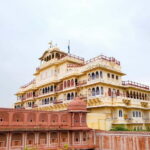
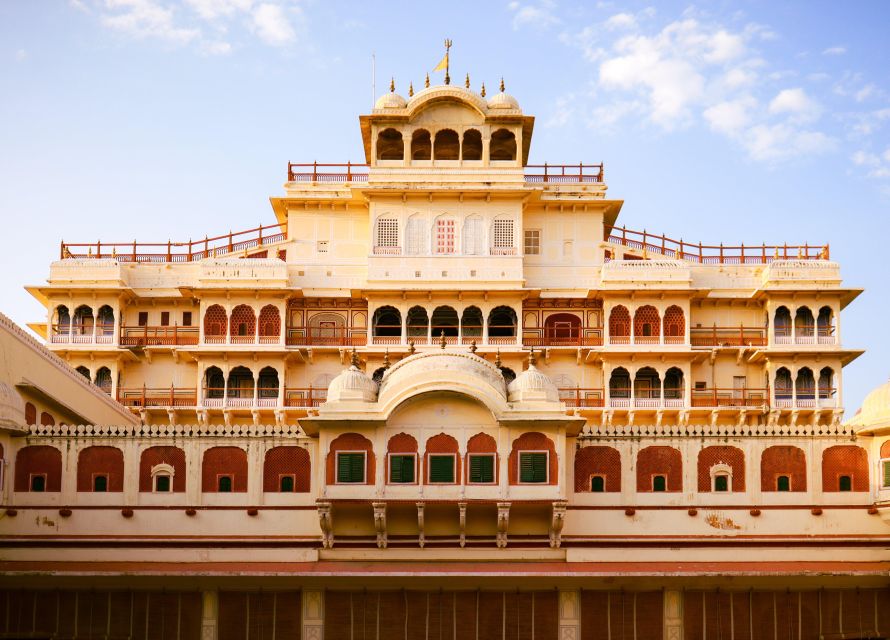
City Palace is one of the most meaningful mid-to-late day stops (around 1 to 1.5 hours in the tour flow). It’s built by Maharaja Jai Singh and connected to the erstwhile royal family, so it’s not just pretty rooms—it’s the administrative and symbolic center of Jaipur’s power.
This is a strong stop if you like understanding how rulers organized their world. Also, it’s a good place for your guide’s “how Jaipur works” explanations—how architecture reflects authority, how the palace space supports court life, and what the different sections were built to do.
Since time here is limited, don’t try to see everything like you’re speed-running. Pick a few key areas and let the guide walk you through them.
Jantar Mantar: the astronomy lesson in stone
Jantar Mantar is where Jaipur flexes its scientific side. This UNESCO World Heritage site includes nineteen astronomical instruments built by Rajput king Sawai Jai Singh, including the world’s largest stone sundial.
The tour gives around an hour here, with photo stop plus guided visit. This is a rare monument type: you’ll get to look at instruments designed to measure time and celestial positions, built in an era without modern electronics.
If you’ve ever wondered how people tracked the sky before satellites, Jantar Mantar answers that. And if you’re not a science person, it still works because the structures are visually bold and easy to understand once someone explains how they’re used.
Transportation and timing: what makes the day feel easy
The tour is private, with a dedicated car and professional guide. Vehicle size depends on your group: 1–3 people use an air-conditioned 5-seater sedan, 3–6 use an air-conditioned 8-seater SUV, and 7–10 use an air-conditioned 10-seater van.
That’s more than a comfort perk. It affects how quickly the day moves. A car that fits your group means less squeezing, easier entry/exit at crowded stops, and fewer delays.
On the ground, your driver’s job is routing through Jaipur traffic. Many guide-driver combinations praised in the experience notes are described as punctual and safety-focused, and the general pattern is that you don’t spend your time waiting around.
For your own planning, remember:
- You’ll walk at forts and heritage sites.
- It’s a full 8-hour commitment.
- Short stops are still worth doing, but you should mentally accept the pace.
Price vs. reality: what you should budget extra for
Here’s the straightforward money math. The tour price covers pickup/drop-off, car with AC, guide, parking, fuel, and skip-the-line support where applicable. What costs extra is clearly listed: entry tickets and meals.
So before you go, decide which model you want:
- Minimal cash add-ons: buy only the entrances you most care about, and treat photo stops as part of the experience.
- Comfort-first: plan to cover entry tickets for major interiors like City Palace, and keep lunch separate.
Given the lineup includes UNESCO-style attractions and a full guide day, the cost-to-coverage ratio still makes sense for many people who want one organized day without DIY stress.
Who this tour is best for
This is a strong fit if you:
- Want a one-day overview of Jaipur’s key sights without juggling transport.
- Appreciate guides who connect monuments to stories, from Rajput life to the city’s astronomical legacy.
- Like a comfortable day plan where someone else handles timing between stops.
It’s also a decent choice for couples and families because it’s private and adjustable. If you’re traveling solo, it’s still private, though in some cases another solo guest may join to share the experience.
Who might want a different style
If you hate short photo stops, this may feel a bit “fast” at certain points, since stops like Hawa Mahal and Jal Mahal are time-limited. And if you’re traveling only for markets or only for deep interior museum-style time, you might choose a tour that gives more hours to those interests.
Booking checklist: what to bring and how to prepare
Bring:
- Passport or ID card
- Sunglasses
- Camera
- Sunscreen
- Sports shoes
Don’t bring:
- Pets
- Alcohol and drugs
Also, plan to stay flexible. The tour is described as able to adjust to your interests and your available time, which is handy if Jaipur traffic or your energy level changes.
One more practical tip: keep a small amount of cash for any craft or shopping-related moments you decide to do. Even though the workshop is described as no-pressure, you may see items you want to buy.
Should you book this Jaipur private full-day tour?
If your goal is to see Jaipur’s top monuments in a single day with less stress and more context, this is an easy yes. The combination of an AC private car, a professional guide, and an itinerary that hits both palace/fort culture and Jaipur’s astronomy makes it a solid value for most first-timers.
You should think twice only if you want lots of unscheduled wandering time, or if you know you’ll be frustrated by short stops at places like Hawa Mahal and Jal Mahal. If that’s you, ask your guide to rebalance time toward the stops you care about most, especially Amber Fort and Jantar Mantar.
FAQ
How long is the Jaipur private full-day sightseeing tour?
The duration is 8 hours.
What’s included in the tour price?
It includes hotel pickup and drop-off, transportation in an air-conditioned sedan/SUV (or van for larger groups), a professional authorized guide, parking fees, and fuel.
Are entry tickets included for the monuments?
No. Entry tickets are not included.
Is this a private tour or shared group?
This is a private group tour with a dedicated car, driver, and guide. If you’re a solo traveler, another solo guest may join in some cases.
What languages are available for the guide?
The guide is available in English, French, Italian, and Spanish.
Can the driver pick you up from anywhere in Jaipur?
Pickup is optional and can be from your desired location in Jaipur, including hotel, airport, railway station, or another preferred spot.
Do they skip the ticket line?
Yes, skip-the-ticket-line access is included.
What’s the flexibility for cancellation and payment?
You can cancel up to 24 hours in advance for a full refund. There’s also a reserve now & pay later option, with pay nothing today.
What should I bring, and are pets allowed?
Bring your passport or ID card, sunglasses, a camera, sunscreen, and sports shoes. Pets are not allowed.