REVIEW · JAIPUR
Jaipur Sunrise Tour with Morning Flower Market Walk
Book on Viator →Operated by Visit Jaipur Tour · Bookable on Viator
Jaipur looks better before the day starts. This morning loop is built for that golden-hour magic: sunrise at Jal Mahal, a flower market walk, then temples and viewpoints while the city is still waking up. It’s a simple route with big payoff.
I really like the pacing and the early start. You get a calm-feeling morning, plus a driver (and your own private group) to handle the back-and-forth while you focus on photos and people-watching. One thing to keep in mind: you’ll pay small entrance fees at Royal Gaitor Tumbas and Hawa Mahal, since they’re not included.
In This Review
- Key Highlights You’ll Feel Immediately
- Why Jaipur at Sunrise Feels Like Another City
- Pickup, Driver, and How the 4-Hour Flow Works
- Jal Mahal (Water Palace) Views Before the Sun Hits
- Flower Market Walk: Color, Trade, and Morning Life
- Galtaji Monkey Temple: A Sacred Site With Real Energy
- Royal Gaitor Tumbas: Fort Views and Hindu–Mughal Mix
- Hawa Mahal (Palace of Breeze) in the Morning Light
- Price and What You Really Get for $9
- Who This Tour Fits Best (and Who Might Want Something Else)
- Tips That Make Your Morning Smoother
- Should You Book This Jaipur Sunrise Tour?
Key Highlights You’ll Feel Immediately
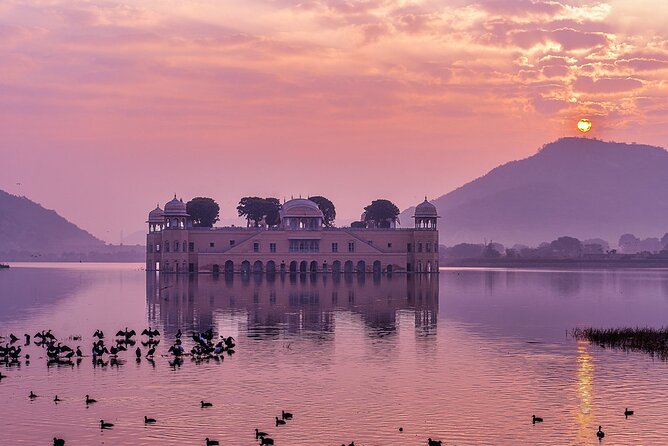
- Sunrise at Jal Mahal (Water Palace) with the first light look people come for
- Flower market walk in the morning when vendors are actively setting up and selling
- Galtaji / Monkey Temple time with a friendly troop of monkeys nearby
- Royal Gaitor Tumbas: 16th-century fort with Hindu and Mughal architectural styles
- Hawa Mahal in morning light for a different vibe than the midday crowd scene
Why Jaipur at Sunrise Feels Like Another City
You don’t need a big itinerary trick to make Jaipur special. Starting early does the work. In the pre-heat hours, streets feel less hectic, and landmarks look softer in the light. That’s where this tour shines: it’s timed so you can see key spots when the city is still in motion, just not loud.
The first part matters, too. Jal Mahal is the opener, and that sets the mood for everything after. Then you shift from lake-side views to everyday life in the flower market, and finally into temples and palace architecture. It’s a morning that connects scenery and culture without turning the whole day into a sprint.
You can also read our reviews of more walking tours in Jaipur



Pickup, Driver, and How the 4-Hour Flow Works
This experience runs about 4 hours, and you’ll usually be picked up before sunrise from your chosen location, then returned afterward. It’s designed as a private tour, so only your group rides together, with an English-speaking driver handling transportation.
Price-wise, that structure is part of the value. You’re not paying to hop between places on your own while guessing traffic timing. You’re paying for a smooth route, plus fuel/parking and the car or tuk-tuk option. If you prefer the more local feel, the tuk-tuk option can be fun—just remember mornings can be cool, and you’ll want to dress accordingly for short transfers.
One extra detail I appreciate: flexibility. The name Aadil shows up in the guide feedback, and the theme is that the driver can adjust to what you need during the morning. That’s useful when you want a quick extra minute for photos or you’d like to slow down at a stop.
Jal Mahal (Water Palace) Views Before the Sun Hits
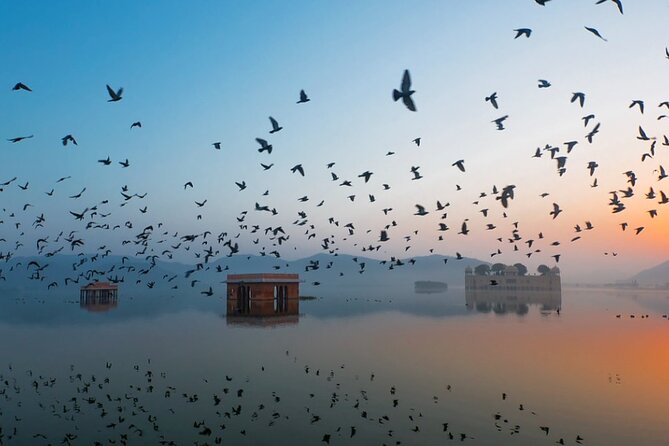
Your morning begins at Jal Mahal, also known as the Water Palace. You’ll arrive for the sunrise view and spend about 30 minutes here. The admission ticket is listed as free, so you’re not starting the trip with extra costs.
What makes this stop work is timing. A sunrise view isn’t just a pretty photo moment—it changes how the whole area feels. The water-and-palace setting is visually distinctive, and in early light it tends to look more atmospheric than it does later in the day.
Practical note: because you’re arriving before full daylight, keep your camera ready before you step out. That first light changes fast, and the best shots often happen in a narrow window.
Flower Market Walk: Color, Trade, and Morning Life

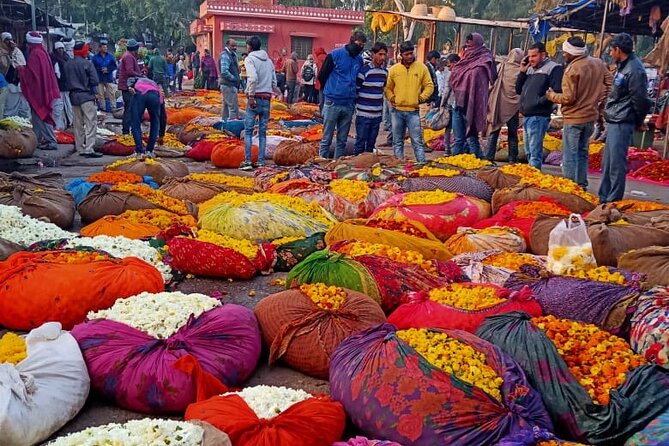
After the sunrise viewpoint, you head into Jaipur’s flower market for about 1 hour. Here the mood flips from scenic stillness to daily rhythm. Vendors offer a rainbow of blooms, and the market comes alive as the morning starts moving forward.
This is the stop I most recommend if you want Jaipur to feel lived-in rather than just photographed. You’re not only seeing monuments. You’re seeing what people do at the start of the day—buying, selling, arranging, and moving around with purpose.
A few tips to make this part of the trip easier:
- Keep your hands free for photos (you’ll be walking and changing angles).
- Be gentle with your curiosity. Markets are busy even early; quick, polite movement keeps things smooth.
- If you’re sensitive to strong smells, keep a light pace and pause only where you want to photograph.
The flower market is also a great energy buffer. It breaks up the morning so you don’t bounce from one high-stakes viewpoint to the next without a mental reset.
Galtaji Monkey Temple: A Sacred Site With Real Energy

Next up: Galtaji Temple, commonly called the Monkey Temple. You’ll spend about 1 hour here, and the admission ticket is free.
This stop is special because it’s not a silent monument moment. The attraction is the combination of a Hindu pilgrimage place and a location where a troop of monkeys is part of the scene. You’ll see them around, and that adds a playful, slightly chaotic edge—one that can feel very “only in the moment” compared to temple interiors you might visit elsewhere.
A balanced way to approach it:
- Expect monkeys to be curious, so keep small items secured and avoid sudden moves.
- Don’t try to feed or engage with them unless you’re clearly guided by what’s allowed on-site.
- If you’re traveling with kids, keep a close eye—this is the one stop where attention needs to be high.
This is also where an English-speaking driver helps, since they can guide you through where to go and how long to spend without you feeling lost.
You can also read our reviews of more tours and experiences in Jaipur






Royal Gaitor Tumbas: Fort Views and Hindu–Mughal Mix
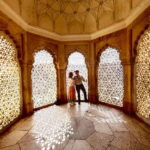
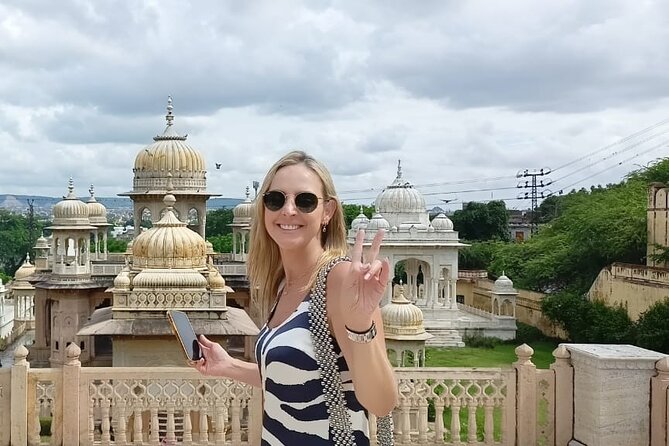
After Galtaji, you’ll head to Royal Gaitor Tumbas, spending about 30 minutes. This is where the architecture starts telling a different story. The site is described as a 16th-century fort with a blend of Hindu and Mughal architectural styles, plus expansive halls, courtyards, and scenic viewpoints.
Admission isn’t included here. The entrance fee is listed as $0.50 per person. It’s not expensive, but it’s important to plan for it so you’re not doing math mid-morning while you’re already on a tight schedule.
Why this stop earns its place: it’s a breather from both the market and the monkey-temple atmosphere. You get structure, sightlines, and places to stand back and take in the form of the complex. Even if you don’t consider yourself an architecture person, you’ll likely appreciate the way different styles show up in the details and layout.
Hawa Mahal (Palace of Breeze) in the Morning Light

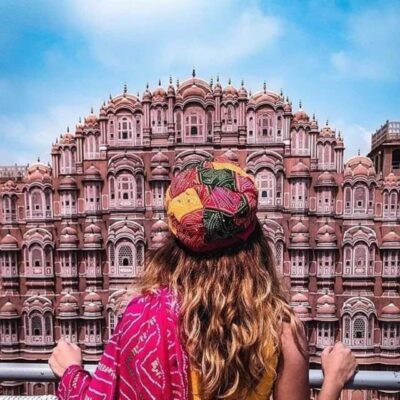
To close the tour, you visit Hawa Mahal, the Palace of Breeze. You’ll spend about 1 hour here, and admission is not included; the entrance fee is listed as $3.00 per person.
Hawa Mahal is famous for its honeycomb-style facade, and the key difference on this tour is when you see it. Morning light can make the facade look different than the midday “everyone’s here” experience. You also tend to get easier timing for photos since your day starts with the most time-sensitive view.
If you’re planning to photograph, arrive ready to move. You’ll want a few angles: straight-on for the facade pattern and a few side views for depth.
Price and What You Really Get for $9
The tour price is $9.00 per person, which is unusually low for a private sunrise route that includes pickup/drop-off and a driver. The big reason it can work at this price: several major moments are either free-entry (like Jal Mahal and the flower market, and Galtaji) or quick (30 minutes at key spots).
Here’s the realistic cost picture:
- Included: pickup/drop-off, private transportation, English-speaking driver, fuel/parking/charges, and admission for free stops (Jal Mahal, flower market, Galtaji)
- Not included: Royal Gaitor Tumbas ($0.50) and Hawa Mahal ($3.00)
So you should expect the tour’s total out-of-pocket to be roughly:
- Base: $9
- Entrance add-ons: about $3.50 per person
Still a strong value for a morning tour that packs in multiple iconic stops plus local-market life. The main tradeoff is that it’s not a slow, all-day exploration. It’s efficient. If you like long museum time and wandering without a route, this may feel brisk.
Who This Tour Fits Best (and Who Might Want Something Else)
This is a great match if you:
- Want a sunrise start and the calmer city feel that comes with it
- Like mixing landmarks + real-life morning markets
- Prefer private transportation so you can avoid figuring out timing yourself
It may be less ideal if you:
- Hate early mornings. This is built for pre-daylight viewing.
- Want fully guided storytelling at every stop. You’ll get guidance and logistics from the driver, but the tour is structured around movement and time windows.
- Don’t want to pay any entrance fees at all. Two sites require small add-ons.
Tips That Make Your Morning Smoother
A sunrise tour is simple, but it rewards smart prep. Here’s what I’d do if I were planning your day:
- Wear layers. Early morning can feel cooler than you expect, and you’ll be outside for sunrise and viewpoints.
- Bring water. You won’t be promised a meal, and it’s an active morning.
- Charge your phone/camera beforehand. You’ll want to capture the Jal Mahal sunrise moment and the Hawa Mahal angles.
- Keep your plan flexible. One benefit you’ll likely get with this style of tour is the driver’s willingness to accommodate needs—so if you want a slightly different timing at a stop, ask.
- Monkey Temple etiquette: secure small items and keep a calm pace. This stop is playful, but attention matters.
Should You Book This Jaipur Sunrise Tour?
If you want Jaipur without the usual later-day crush, I think this one is worth booking. For a $9 base price, you’re getting pickup, private transport, and a tight route that hits a sunrise viewpoint, a flower market, temple culture, a historic fort complex, and Hawa Mahal—while the city still feels fresh.
Book it if you’re the type who likes short, meaningful stops done well. Skip it if you need a slow, spend-hours-in-one-place kind of morning. Either way, go in early, dress for the temperature, and treat the flower market and monkey temple as part of the experience—not just photo stops.