REVIEW · JAIPUR
Jaipur Rickshaw Tour Jantar Mantar City Palace
Book on Viator →Operated by City Palace Jaipur Guide · Bookable on Viator
Three Jaipur icons, one easy plan. This private tour strings together City Palace, Hawa Mahal, and Jantar Mantar with a local guide so you get more than selfies. I especially like the way the guide stays on schedule and communicates ahead, and you still get the comfort of hotel pickup and a/c transport. One heads-up: entrance fees aren’t included, and the tour depends on good weather.
I also like the pacing: about an hour per stop gives you time to look closely, ask questions, and keep moving without feeling rushed. You’ll walk through royal spaces, study Hawa Mahal’s famous lattice windows, and then switch gears to an astronomical site where shadows do the talking.
In This Review
- Key highlights before you go
- Why this City Palace–Hawa Mahal–Jantar Mantar route feels efficient
- Planning your timing: hours, meeting point, and how long it really takes
- Entering the City Palace: Mubarak Mahal and royal court spaces
- Hawa Mahal’s 953 jharokhas: seeing beyond the famous facade
- Jantar Mantar: the stone observatory and time measured by shadows
- Price and tickets: what the $20 really buys you
- Included comfort, plus how the tour keeps your day low-stress
- What you’ll learn (and what to ask your guide)
- Who this Jaipur tour suits best
- Should you book this private Jaipur tour of City Palace, Hawa Mahal, and Jantar Mantar?
- FAQ
- How long is the Jaipur City Palace–Hawa Mahal–Jantar Mantar tour?
- Is hotel pickup and drop-off included?
- Is this tour private or shared with other groups?
- What is included in the price?
- What is not included?
- What are the opening hours for the experience?
- Where do we meet, and where does the tour end?
- What happens if weather is bad?
Key highlights before you go
- Private guide in your chosen language (English, Spanish, or Hindi) for clear explanations at each stop
- Hotel pickup and drop-off with an air-conditioned vehicle, plus parking fees handled
- City Palace courtyards and museums with time at the highlights, including Mubarak Mahal and royal costume displays
- Hawa Mahal’s 953 jharokhas (lattice windows) and the story behind their street-level viewing design
- Jantar Mantar, UNESCO-listed, with guided insights into the stone instruments and shadow-based timekeeping
Why this City Palace–Hawa Mahal–Jantar Mantar route feels efficient
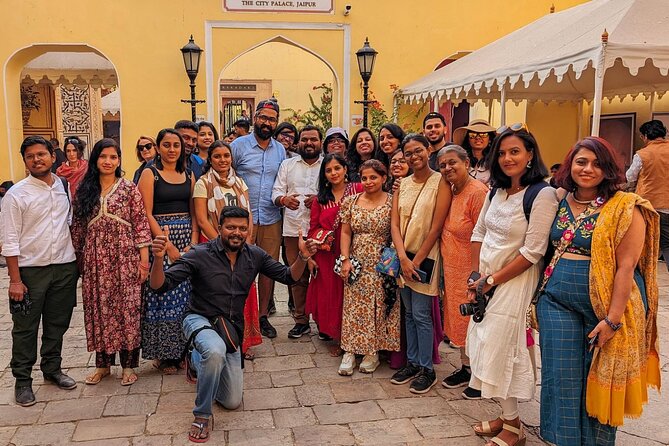
Jaipur’s top sights can eat your day fast, mainly because you’re moving between very different places with different rules. This tour solves that with a simple plan: you start at the City Palace area, then move to Hawa Mahal, and finish at Jantar Mantar—all with a guide and a private vehicle.
What makes it work for you is the combination of structure and freedom. The tour is private, so your group sets the tone. If you’re into architecture, you can linger at the details. If you prefer stories, you can steer the questions. And because it’s only your group, you’re not stuck doing the same fast look with a crowd.
Another value point: you get optional help with entry tickets so you’re not standing there figuring out what to do next. That’s especially useful when you want your photos and your facts, without turning the day into a paperwork marathon.
If you’re the type who likes getting your bearings quickly, this lineup does that. You’ll see the royal seat, the iconic facade, and the UNESCO observatory in one connected outing.
You can also read our reviews of more city tours in Jaipur
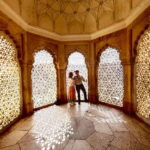


Planning your timing: hours, meeting point, and how long it really takes
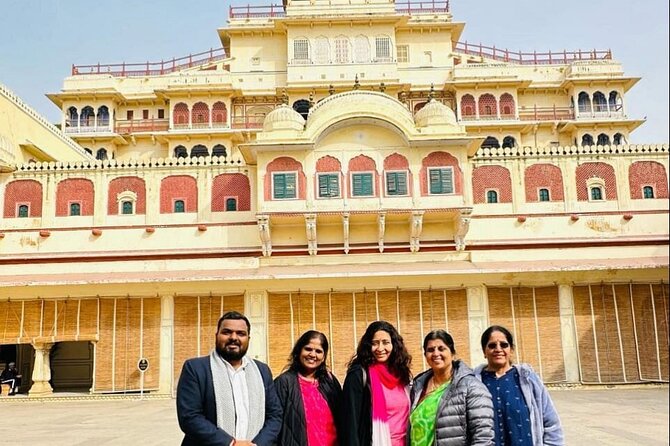
The tour starts at the City Palace meeting point in the Gangori Bazaar area (J.D.A. Market, Kanwar Nagar, Jaipur). It also ends back at the same meeting point, which helps you plan dinner or a next stop afterward.
The stated opening hours run 9:30 AM to 5:00 PM, every day. That means the best results come when you time your day so you’re not arriving late and getting shortened at one or more sites.
Duration is listed as 3 to 20 hours (approx.), which sounds huge until you think about how private tours can stretch or compress. In practice, the itinerary time blocks are about an hour at each stop, which is a solid baseline if you want to see the main highlights without turning every corridor into an hour-long detour. If you’re a slow reader of plaques or a photographer who wants perfect angles, you’ll likely land toward the longer end.
Also: this experience requires good weather. If clouds or rain disrupt your visit, you should expect a reschedule or a refund offer. Planning your Jaipur day with flexibility helps.
Entering the City Palace: Mubarak Mahal and royal court spaces
City Palace is the one place in Jaipur where the scale of the rulers feels real. With this tour, you start by walking through grand gateways into courtyards and palace areas where history isn’t just on a sign—it’s in the layout.
A highlight here is Mubarak Mahal, described as home to royal costumes. That matters because costumes tell you how status looked and how people presented themselves, not just how the building was designed. A good guide is useful in spots like this, because you’ll understand what you’re seeing instead of guessing based on decoration alone.
You’ll spend around one hour at this stop, and that length is intentional. It’s long enough to get your eyes oriented: how the courtyards connect, where your major photo angles are likely to be, and where the most meaningful rooms are. It’s also short enough that the rest of your day doesn’t collapse into a single attraction.
One practical consideration: admission tickets are not included. You’ll want to budget for the entrance fee on top of the tour price, and (if you like) use the offered ticket assistance so you don’t waste time figuring out the process at the gate.
Hawa Mahal’s 953 jharokhas: seeing beyond the famous facade
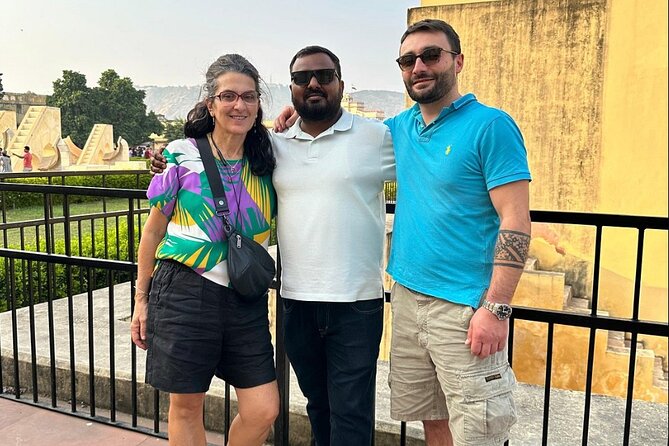
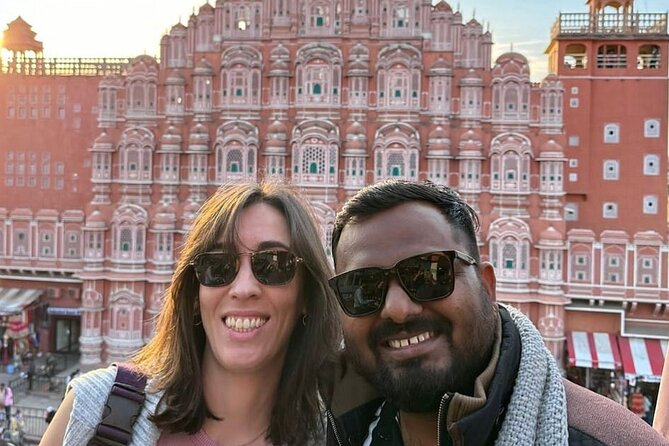
Hawa Mahal, the Palace of Wind, is one of those buildings that almost everyone recognizes instantly. What I like about having a guide here is that you stop treating it like a photo backdrop and start reading it like a design solution.
The big detail: Hawa Mahal has 953 jharokhas, the lattice windows that make the facade look like it’s made of cut-out patterns. A guide helps you notice how those windows relate to the building’s purpose. In this case, the design is tied to how royal women could observe street life discreetly—a role built into the architecture, not just a story attached afterward.
You’ll have about one hour at this stop. For photos, that’s enough time to shoot the exterior angles and then work your way through viewpoints that show different parts of the facade. For explanation, it’s also enough time to understand what jharokhas are doing and why the building looks the way it does.
Here’s the drawback to plan around: like most major sights, entrance tickets cost extra. If you’re trying to keep costs tight, it helps to check whether you want to go inside certain areas or focus primarily on the exterior views your route allows. Your guide can help you make that call based on what you care about.
Jantar Mantar: the stone observatory and time measured by shadows
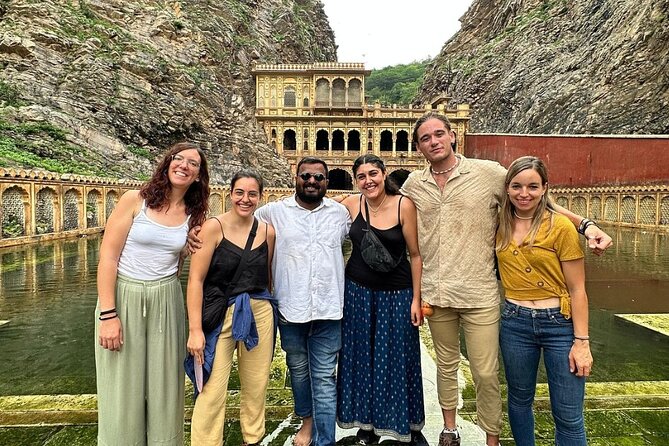
Then you switch gears. Jantar Mantar feels like a different world: less palace, more instruments. And that contrast is a big reason this tour works so well.
Jantar Mantar is a UNESCO World Heritage Site, and it’s described as the world’s largest stone observatory. Instead of “look at this building,” the experience is “watch what the instruments do.” The key idea is how it measures time by shadows.
With a local expert beside you, you’re not just walking past stones and circles. You learn how to read the setup—what each instrument is for and how the shadow movement ties into the bigger system of astronomy and observation. That’s the part that turns Jantar Mantar from a quick stop into a memory.
You’ll spend around one hour here. That’s a good sweet spot because you can:
- get an overview of the instruments,
- spend a few moments at the most important pieces,
- and understand the shadow-based timing concept without feeling lost.
Like the other stops, Jantar Mantar isn’t included in the base tour price—entrance is extra. Still, the guide’s role matters here. If you go without help, you can end up with a list of objects and no sense of what they’re measuring.




Price and tickets: what the $20 really buys you
The tour price is $20.00 per person, and entrance is listed separately as an additional $20.00 per booking. That means your total day cost depends on how the entrance fee is applied to your group, but either way, it’s not a fully all-in-one deal.
So what are you paying for?
- Private transportation (and parking fees), which saves you time and reduces stress between stops.
- A private guide who works as a translator between the site and your understanding, especially at Jantar Mantar and for the story behind Hawa Mahal’s design.
- Optional support with entry ticket handling, which can reduce friction when you’d rather keep the day moving.
If you were to do these sites solo, you’d still pay for transit and likely spend time figuring out how much to visit at each location. The value here is that the route is managed for you, with a guide to make the sights click.
When this feels like a great deal: if you care about meaning, photography, or you simply want a smooth itinerary without negotiating your way through each step.
When it might feel less cost-friendly: if your main goal is quick exterior photos and you’d be happy skipping guided explanations. In that case, you might choose a cheaper self-guided plan and spend the money on a great local meal.
Included comfort, plus how the tour keeps your day low-stress

This is a private experience with only your group, and that alone changes the feel of the day. No one’s holding you back, and you can ask follow-up questions without waiting for the group to catch up.
Included perks that matter day-to-day:
- Private transportation with hotel pickup and drop-off
- Parking fees covered
- Mobile ticket
- A/c vehicle comfort
The guide also helps you connect dots between the places. City Palace is the royal center, Hawa Mahal is the symbol you see from afar with its lattice story, and Jantar Mantar is the scientific lens. Seeing them back-to-back helps you build a mental framework instead of collecting three unrelated “must-see” spots.
One more practical point: the tour offers private guided services in English, Spanish, or Hindi, so you can pick the language that helps you understand the details without constantly looking things up later.
What you’ll learn (and what to ask your guide)
This tour is built around interpretation, not just checkpoints. Here are the types of questions that match what you’ll see:
- At City Palace, ask what Mubarak Mahal is known for and how royal costume displays help explain status and ceremony.
- At Hawa Mahal, ask how the jharokhas work in practice—how that design supports discreet viewing from within.
- At Jantar Mantar, ask what shadow-based timing means in plain terms and how the instruments relate to the idea of observation.
Because the tour is private, your guide can adjust to your interests. If you’re taking photos, you can ask for the best angles at each stop. If you want story over stonework, you can steer the conversation to the human side of the sites—what the buildings were designed to do.
If you’re traveling with kids, this is also a fun option since Jantar Mantar naturally turns into a hands-on style of thinking about shadows and measurement. Just keep in mind the tour times are about an hour per stop, so you’ll want to use that time intentionally.
Who this Jaipur tour suits best

This is a strong match for:
- History and design lovers who want short, clear explanations at each major landmark
- Photographers who want time at the right spots without wasting daylight on logistics
- Cultural explorers who like connecting royal life at the palace to the street-facing facade and then to the scientific observatory
It may be less ideal if:
- you want a long, slow museum-style day at a single location
- you’re on a strict budget and would rather skip entrance fees and guided interpretation
Should you book this private Jaipur tour of City Palace, Hawa Mahal, and Jantar Mantar?
If you want one organized day that hits Jaipur’s most iconic trio—royal palace, famous facade, and UNESCO observatory—this is a smart choice. The private guide, hotel pickup, and the way the stops are paced make it easier to focus on what you came for instead of managing the day.
I’d book it when you’re willing to pay a bit extra for entrance and you want the guide’s help turning the sights into stories. I’d think twice if you only care about quick exterior photos and you’re comfortable going without interpretation.
If your goal is a well-run itinerary that helps you see the connections between these three places, this tour is worth it.
FAQ
How long is the Jaipur City Palace–Hawa Mahal–Jantar Mantar tour?
The duration is listed as 3 to 20 hours (approx.), with about 1 hour at each main stop.
Is hotel pickup and drop-off included?
Yes. The tour includes pickup and drop-off using a comfortable air-conditioned vehicle.
Is this tour private or shared with other groups?
It’s private. Only your group participates.
What is included in the price?
Private transportation and parking fees are included.
What is not included?
Meals and entrance fees are not included. Entrance is listed as $20.00 per booking.
What are the opening hours for the experience?
The experience hours are 9:30 AM to 5:00 PM, Monday through Sunday.
Where do we meet, and where does the tour end?
It starts at the City Palace area near Gangori Bazaar, J.D.A. Market, Kanwar Nagar, Jaipur, Rajasthan 302002, India, and ends back at the same meeting point.
What happens if weather is bad?
The experience requires good weather. If it’s canceled due to poor weather, you’ll be offered a different date or a full refund.