REVIEW · JAIPUR
Jaipur: Heritage Evening Tour with Monkey Temple Sunset
Book on GetYourGuide →Operated by Jaipur Tour Taxi · Bookable on GetYourGuide
Night lights turn Jaipur into a moving postcard. This evening route strings together big sights in a low-stress way, with a standout Monkey Temple sunset stop and then a slow parade of illuminated landmarks across the Pink City. You get hotel pickup, a quick view of the city’s key icons, and that great feeling of doing a lot without feeling rushed.
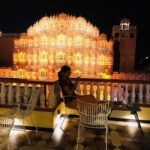
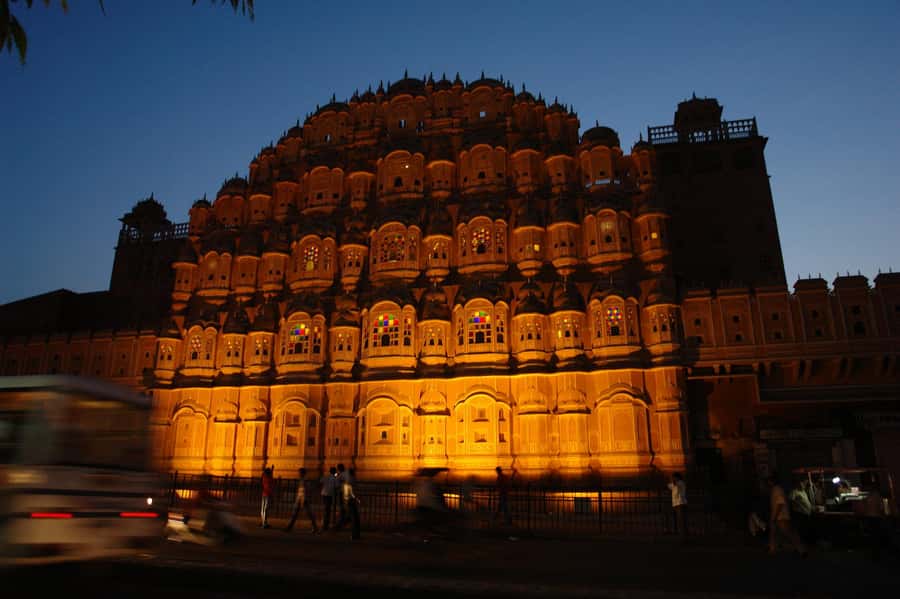
I especially love the sunset timing at Monkey Temple, because it sets the mood before the monuments start glowing. Second, I like seeing Hawa Mahal at night, with its story of royal windows made for discreet watching—now it’s just stunning from the street.
One consideration: this is an evening drive-and-walk style tour, so expect uneven pavement and stairs around viewpoints. It’s not wheelchair-friendly, and it’s not a good fit if you have back problems.
In This Review
- Key things I’d circle before you go
- A $6 Jaipur evening that packs real sightseeing value
- Hotel pickup to your first golden moment
- Monkey Temple sunset: the photo moment that makes the whole night work
- Jal Mahal after dark: the floating palace on Man Sagar Lake
- Hawa Mahal at night: royal windows for discreet watching
- Flower market stop: real street life between monuments
- Isarlat, Sargasuli, and Tripolia Gate: old gates and layered streets
- Albert Hall Museum: museum architecture lit for evening viewing
- Birla Temple: white marble calm at night
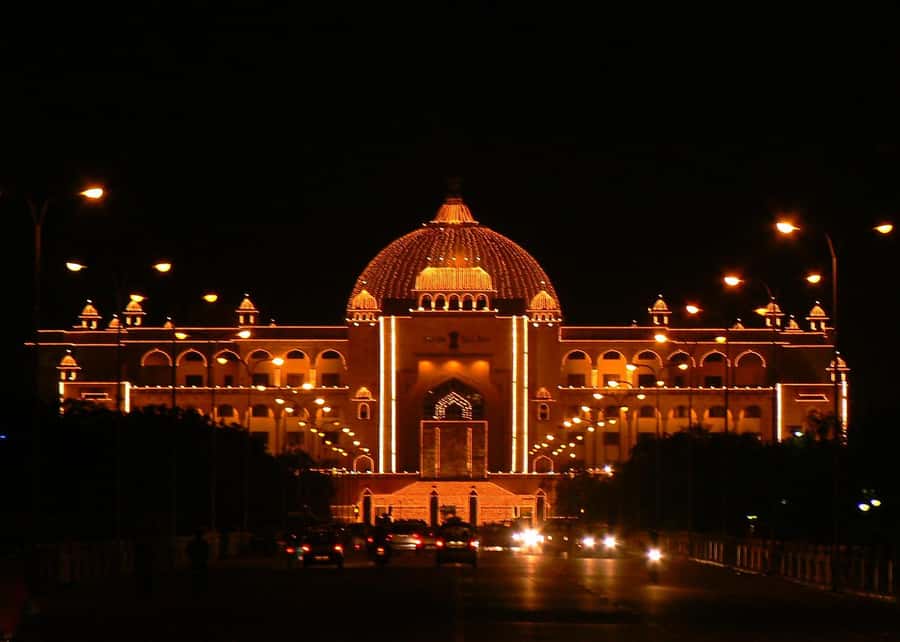
- Rajasthan Vidhan Sabha, Statue Circle, and Raj Mandir: lights, power, and pop culture
- Tips to make your evening run smoother (and less hot-footed)
- Who this Jaipur night tour is best for
- Should you book it? My straight answer
- FAQ
- What transport will I use on this tour?
- Is hotel pickup and drop-off included?
- What’s included in the price?
- Are entrance fees included?
- Are meals included?
- Can I buy snacks or drinks during the tour?
- What should I bring?
- Is the tour suitable for wheelchair users?
- Is it suitable if I have back problems?
- Can I cancel for a refund?
Key things I’d circle before you go
- Monkey Temple at sunset sets the tone for the entire evening
- Jal Mahal on Man Sagar Lake gives you that floating-palace photo moment
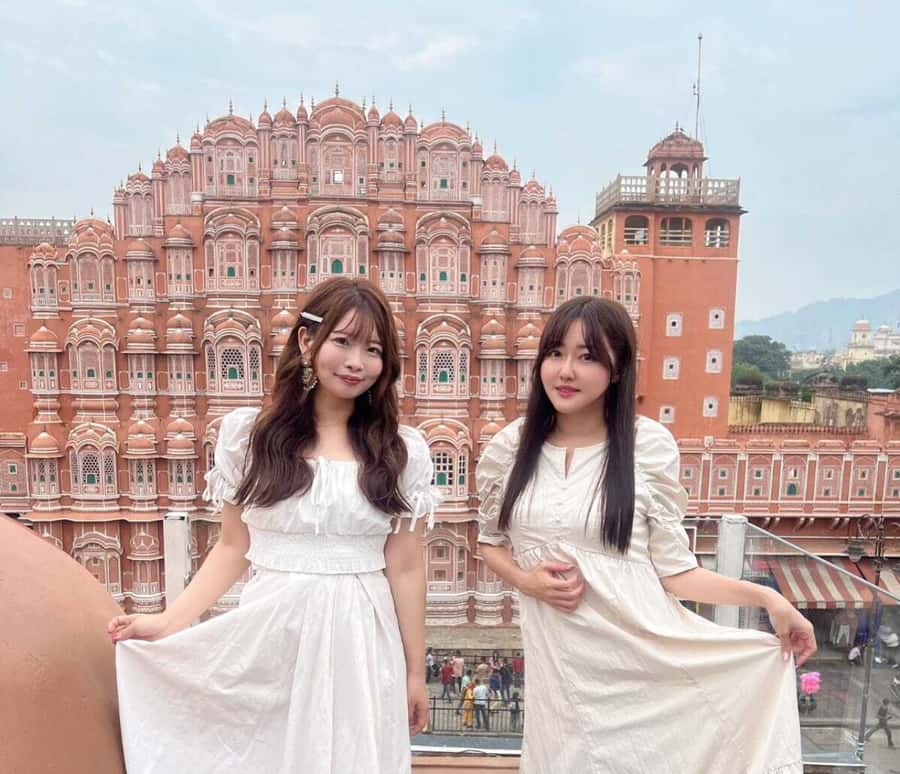
- Hawa Mahal at night adds a story to the pink facade with its window design
- A string of illuminated landmarks keeps the night interesting without extra planning
- Complimentary tea or coffee is included, and some drivers add extra warmth with chai and water
A $6 Jaipur evening that packs real sightseeing value
For about $6 per person, you’re buying convenience and a full evening’s worth of sightseeing focus. Jaipur can be big, traffic can be unpredictable, and coordinating multiple sights on your own takes time. This tour solves the “where do I go next?” problem by laying out a logical nighttime loop: start at sunset, then transition into monuments lit up after dark.
The best value here isn’t just the price. It’s the way the tour bundles iconic views—Monkey Temple, Jal Mahal, Hawa Mahal, Albert Hall Museum, and several more photo stops—into one guided run, with hotel pickup and drop-off. You show up, you ride, you get dropped near the action, and you don’t have to keep re-planning in the evening when everyone else is trying to do the same.
Rides are by tuk-tuk or private car, depending on the option you book and what’s available. Either way, the goal is the same: get you around fast enough to enjoy the light outside and then the lighting inside the city.
You can also read our reviews of more historical tours in Jaipur

Hotel pickup to your first golden moment
The tour starts with pickup from your hotel. That matters more than it sounds. Jaipur evening plans often die at the first step—finding the right transport area, guessing distances, and losing time. Here, you hand your evening to your driver and start with the scheduled highlight.
Your ride is set up for quick movement between stops. The tour includes fuel, parking, and taxes, so you’re not juggling extra “how much is this going to cost?” steps for the driving side of things. The only thing you’re likely to think about is entrance fees, since those are not included.
Bring the basics: comfortable shoes, water, sunscreen, and your camera. Jaipur sun can still bite even later in the day, and you’ll be standing and looking around when the light turns.
Monkey Temple sunset: the photo moment that makes the whole night work
The highlight sequence begins at Monkey Temple, where you’ll catch the sunset view. This is the kind of stop that anchors the entire evening. Before the monuments become “pretty at night,” you get that natural color shift—warm sky tones that make Jaipur feel cinematic even before the lights turn on.
Practically, this is a good way to do Jaipur evenings because it’s timed. If you start too late, you miss the gradient sky that makes photos look layered instead of flat. Starting with sunset gives you a mood, then the tour can transition into illuminated architecture.
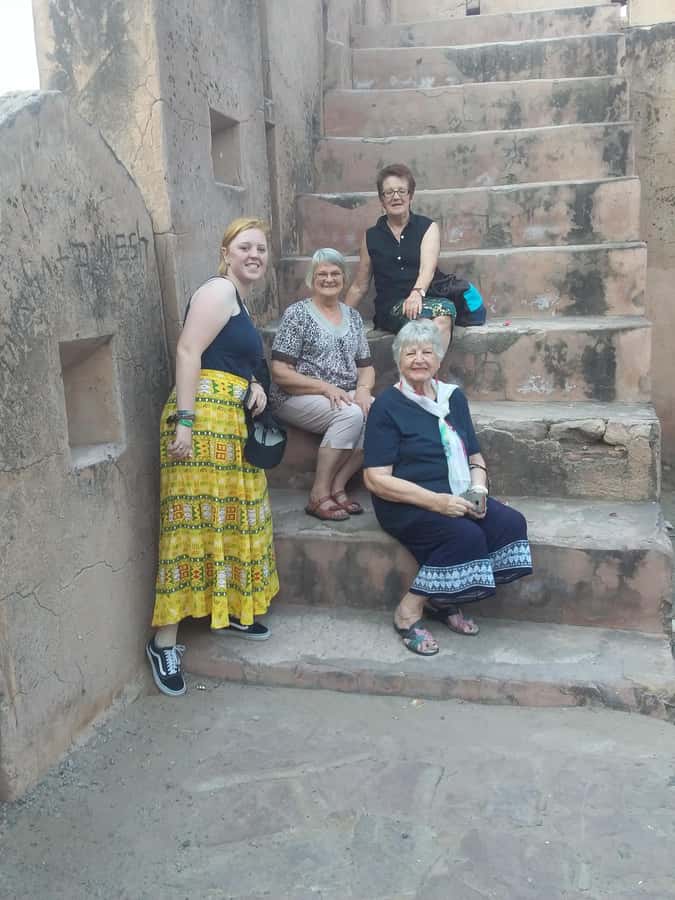
Expect a bit of standing around for the best angles. Wear shoes you can trust. Some areas can be uneven, and you’ll want your footing more than your fashion.
Jal Mahal after dark: the floating palace on Man Sagar Lake
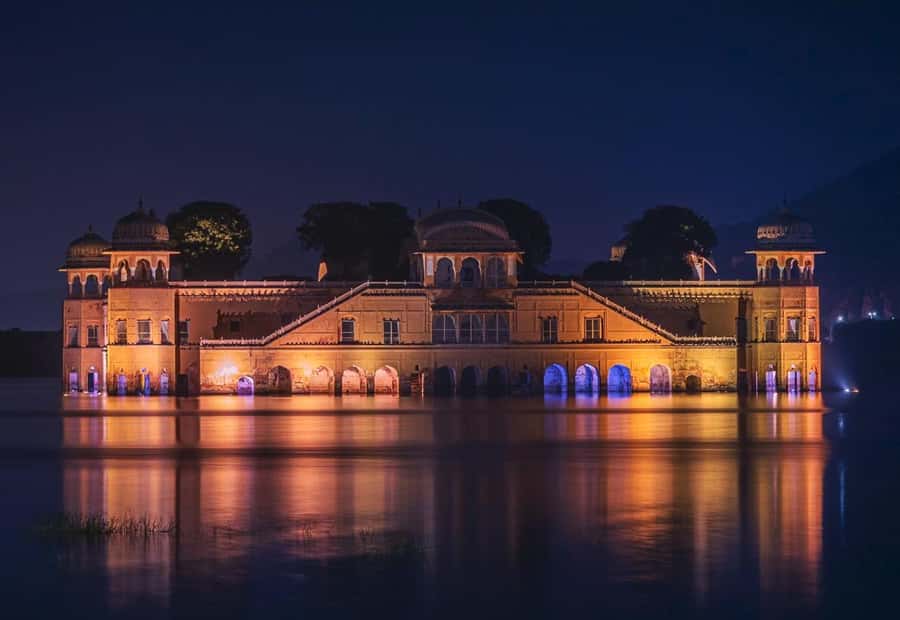
After the sunset stop, the route brings you to Jal Mahal, the palace set in Man Sagar Lake. The reason people love this sight is simple: at the right time of day, it looks like it’s resting on the water instead of sitting on solid ground.
At night, lighting can change the look dramatically. You’ll likely get an angle where the building silhouette and reflections feel like they belong to the same picture. This stop is a nice counterbalance to the more vertical facades—Hawa Mahal’s windows, Albert Hall’s massing, and so on—because Jal Mahal is horizontal, calm, and visually different.
Photo tip: take a few shots, then step back and look with your eyes for 10 seconds. Jaipur photography is all about the angle, and your first photo often isn’t your best one.
Hawa Mahal at night: royal windows for discreet watching
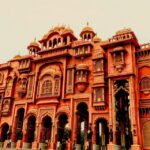
Next up is Hawa Mahal, also called the Palace of Winds. You’ll see it in the evening lighting, when the pink sandstone looks almost warm and the details pop more than they do in harsh daytime sun.
The tour adds meaning to the facade. Hawa Mahal’s intricately designed windows were built so royal women could observe street life discreetly. At night, that idea gets flipped: you’re not watching from inside a royal space—you’re watching the building itself, and the windows become a kind of architectural grid that makes great photos from the street.
One small drawback of Hawa Mahal by night: it can feel like a stop where you want a long linger, but the tour is moving. If you’re a slow photographer, give yourself at least one “wandering” moment—quickly circle for a better angle, then return so you don’t miss the rest.
You can also read our reviews of more evening experiences in Jaipur


Flower market stop: real street life between monuments
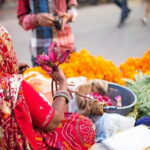
The route includes a visit to the flower market. This is a smart pause in the schedule. After architecture after architecture, markets bring you back to daily Jaipur: colors, movement, and a human pace that breaks up the “monument only” feeling.
It’s also a good reminder that Jaipur isn’t just about famous buildings. The city runs on market days and small transactions—flowers are a practical part of that life, not just decoration.
The tour does not include meals, and it also notes that consuming food and drinks isn’t allowed during the tour. That means if you want to snack, you’ll usually need to do it within the time you’re allowed at stops and within the tour rules. You do get complimentary tea or coffee, so plan to use that as your built-in comfort break.
Isarlat, Sargasuli, and Tripolia Gate: old gates and layered streets
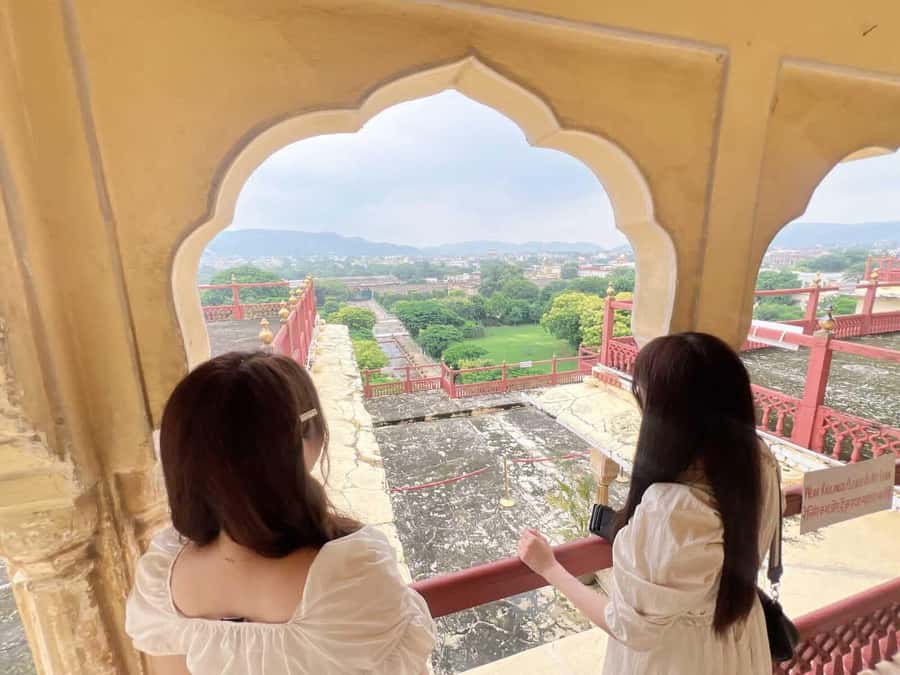
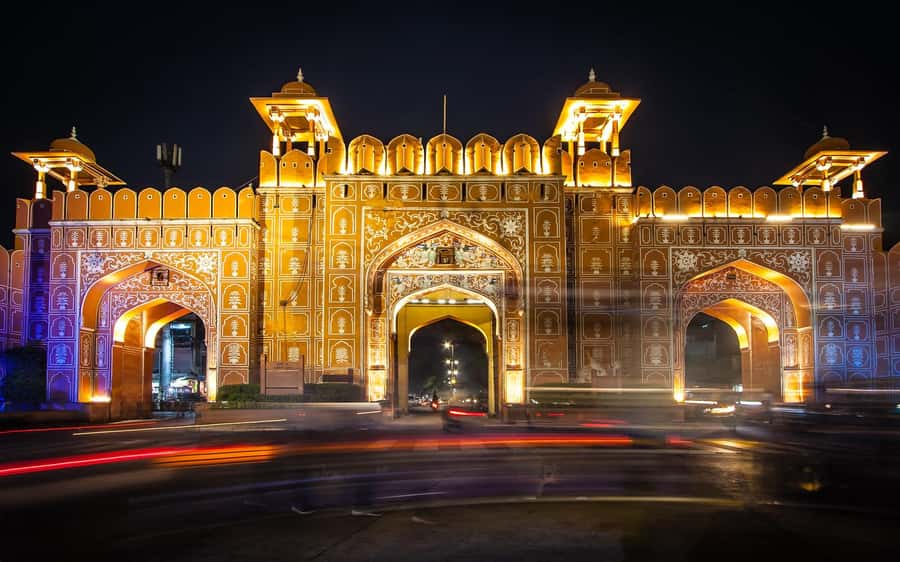
After Hawa Mahal and the market area, you continue through Isarlat, Sargasuli, and Tripolia Gate. These kinds of stops are valuable because they show Jaipur as a connected city, not a museum collection.
Gates and street sections are often where you notice scale: how narrow passages feel compared to the big landmark views, and how the city’s design guides you from one sightline to another. Even if you don’t go inside anything, the street context matters for understanding the “why” behind the landmarks.
If you like walking a little and noticing details, this section is a good fit. If you prefer minimal walking, stick to quick photo bursts and keep one eye on where the driver is waiting.
Albert Hall Museum: museum architecture lit for evening viewing
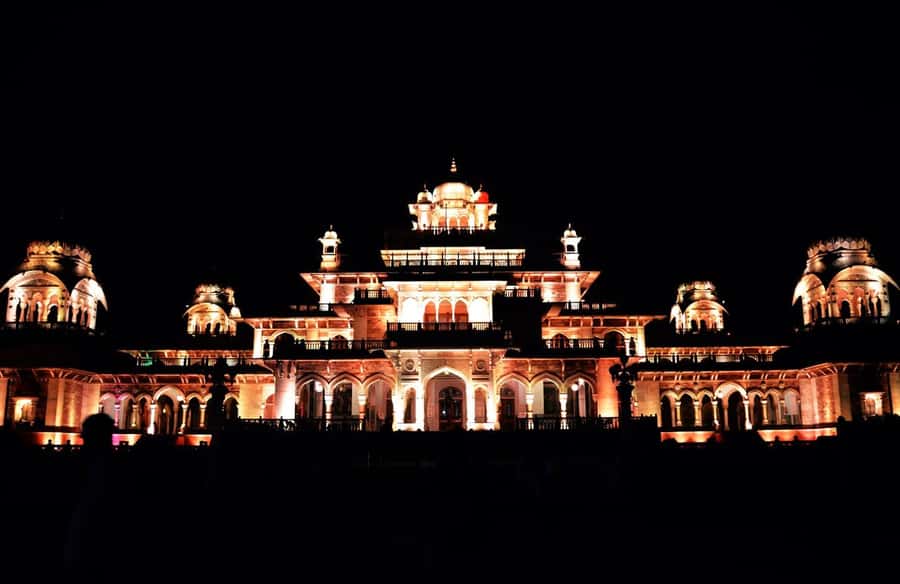
The itinerary includes Albert Hall Museum at night. It’s described as one of Jaipur’s older museums, and at night it becomes a quieter stop with grand architecture under evening lighting.
This is where the tour feels more cultural than purely scenic. You’ll see the museum facade framed by the night sky, and the vibe tends to be calmer than the street-level rush. If you like a slower moment in your evening, Albert Hall works well.
The only caution: entrance fees are not included, so if you decide to go in, you may need to pay separately. If you don’t, that’s okay—you can still enjoy the exterior lighting and the overall atmosphere.
Birla Temple: white marble calm at night
Next, you’ll visit Birla Temple, lit softly so the white marble architecture stands out. It sits at the foot of Moti Dungari Hill, and at night that location adds to the peaceful feel.
This stop offers a different mood from the busy street scenes. If you’re traveling with someone who wants a break from crowds, Birla Temple is a good option. It also works nicely after photo-heavy moments like Jal Mahal and Hawa Mahal.
Like other sightseeing stops here, entrance cost isn’t included. If you stay outside and enjoy the lighting and design, you’re still getting the main experience.
Rajasthan Vidhan Sabha, Statue Circle, and Raj Mandir: lights, power, and pop culture
The evening continues with more illumination-driven stops:
- Rajasthan Vidhan Sabha (the state assembly) at night, where the architecture is lit against the evening sky. Seeing government buildings lit up can surprise first-timers, because it makes power feel visible and human-sized.
- Statue Circle, where the illuminated statue of Maharana Pratap stands amidst greenery. This is a calmer breather stop, and it helps break up the intensity of landmark after landmark.
- Raj Mandir Cinema, often called the Palace of Cinema. It opened in 1976, and it’s known for its grand architecture and regal interior. Even if you’re not seeing a show, the building itself is a fun part of the night story.
These stops are less about single photo masterpieces and more about building an evening “map” of Jaipur. You see how the city mixes heritage, politics, and entertainment in one continuous night drive.
Tips to make your evening run smoother (and less hot-footed)
A good night tour is all about comfort, not speed. Here’s what helps on this route:
- Wear comfortable shoes. You’ll be walking around viewpoints and stopping often enough that uncomfortable footwear will become a problem fast.
- Bring water and sunscreen. The night can still get warm, and you’ll spend time outside.
- Use your camera early. Sunset colors and the first sets of lights produce the most varied photos. Later, lighting can be beautiful but less changeable.
- Plan around the tour rules. Smoking and consuming food and drinks are not allowed during the tour, so rely on the included tea or coffee for breaks.
- Keep bags light. Pets are not allowed, and luggage or large bags aren’t allowed.
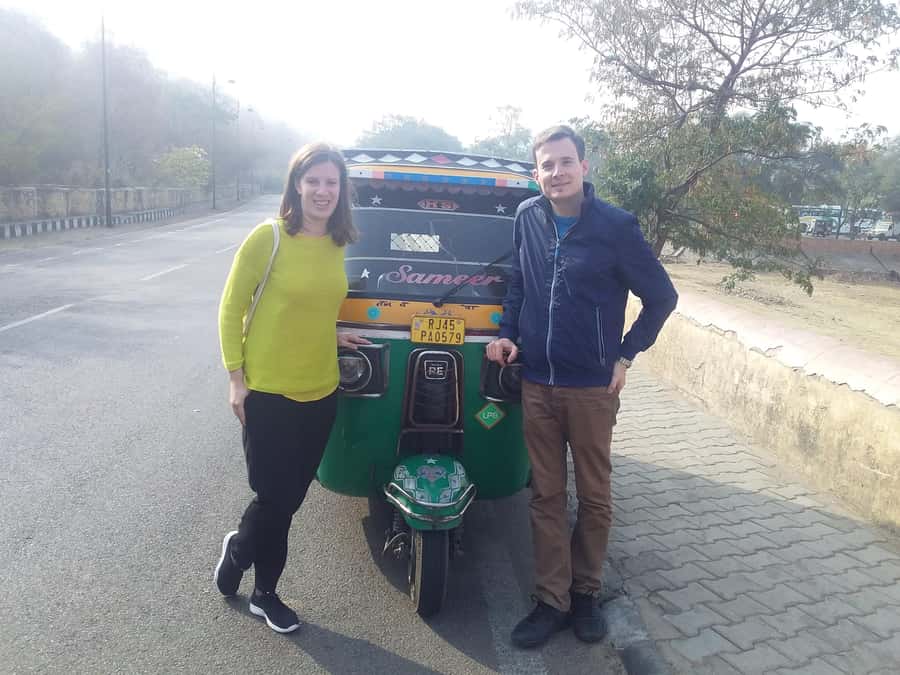
One nice human detail: if your driver is someone like Ali, you may get extra local warmth. In one case, the ride included friendly conversation plus chai and water, and the vibe felt like a guided street chat rather than just transportation.
Who this Jaipur night tour is best for
This tour is a great match if you want:
- A focused evening plan without navigating on your own
- Multiple iconic sights in one go, with sunset as the anchor
- A mix of architecture, markets, and lit-city atmosphere
It may be less ideal if:
- You have back problems (it’s not suitable)
- You need wheelchair access (wheelchair access isn’t available)
- You hate even short walks and stairs at night (the route includes moving between viewpoints)
If you’re traveling in a pair and want an efficient first Jaipur evening, this is the kind of plan that helps you understand the city quickly.
Should you book it? My straight answer
Book this tour if you want a low-cost, high-coverage evening that starts at sunset and ends with Jaipur lit up. The route makes sense, the pickup/drop-off removes stress, and the included tea/coffee helps you stay comfortable while you’re out and about.
Skip it or reconsider if mobility is an issue for you, or if you prefer spending long hours at a single site rather than hitting many stops. This is designed for movement and lighting moments, not deep time at one place.
If your goal is to get your bearings fast and still leave with good photos—Monkey Temple sunset, Jal Mahal, and Hawa Mahal at night are strong reasons to go.
FAQ
What transport will I use on this tour?
You’ll travel by tuk-tuk or private car, depending on the option you book and availability.
Is hotel pickup and drop-off included?
Yes. Hotel pickup and drop-off are included.
What’s included in the price?
The tour includes pickup/drop-off, transport for the route, fuel, parking fees, all taxes, handling charges, personal care, and complimentary tea or coffee.
Are entrance fees included?
No. Entrance fees are not included.
Are meals included?
No. Meals are not included.
Can I buy snacks or drinks during the tour?
The tour rules say smoking and consuming food and drinks are not allowed during the tour.
What should I bring?
Bring comfortable shoes, a camera, sunscreen, and water.
Is the tour suitable for wheelchair users?
No. Wheelchair access is not available.
Is it suitable if I have back problems?
No. It is not suitable for people with back problems.
Can I cancel for a refund?
Yes. You can cancel up to 24 hours in advance for a full refund.