REVIEW · JAIPUR
Private 6-Day Golden Triangle Tour: Delhi, Agra, Jaipur by Car
Book on Viator →Operated by Namaste India Vacations · Bookable on Viator
A Golden Triangle tour by car feels like control. You get a private pace, hotel pickup each day, and a guide who helps you hit the big sights without getting lost in the noise. I especially like that you’re not stuck with one fixed route all day; you can slow down for photos or speed up when the timing works.
Two other things I like: you’ll have professional guidance through Delhi, Agra, and Jaipur, and the service quality shows in real ways. One guide, Mohammed, stood out for Agra—people praised his knowledge and even how good he was at taking photos. And the driver, Ajay, helped make long transfers feel safe and calm, including a very early airport pickup at 2am.
One thing to consider: monument entry fees and meals are not included. So you’ll want a small budget for tickets, plus you’ll plan your own lunch and dinners as you go.
In This Review
- Key things that make this tour work well
- The Golden Triangle by car: why it feels calmer than “tour buses forever”
- Delhi first: Old Delhi action, New Delhi icons, and the right mix of time
- Red Fort and Humayun’s Tomb: Mughal power, but with different moods
- India Gate and Akshardham: a break from forts, plus contrast in style
- The drive to Agra: make the transfer part of the trip, not a punishment
- Taj Mahal planning: the iconic stop that still deserves time
- Beyond the Taj: Agra Fort, Itmad-ud-Daula, Mehtab Bagh, and craft stops
- Abhaneri and Chand Baori: the detour that actually changes the pace
- Jaipur: Amber Fort, City Palace, and getting the most out of limited hours
- Jaipur markets and a gems stop: useful if you go in with the right mindset
- Price and value: what $215 really buys you (and what you’ll still pay for)
- Who should book this Golden Triangle by car?
- Should you book it?
- FAQ
- Is this tour private?
- Is hotel pickup included?
- Are meals included?
- Do I choose my own accommodation?
- Are monument entry tickets included?
- What cities and areas are included?
- How long is the drive from Delhi to Agra?
- Is cancellation free if plans change?
Key things that make this tour work well
- Daily hotel pickup in an air-conditioned car keeps Delhi and Agra heat manageable
- A dedicated guide each day helps you understand what you’re seeing and where to go next
- Private pacing means you can linger at the Taj Mahal area without a group pressure clock
- Chand Baori in Abhaneri breaks up the Golden Triangle with a stepwell you won’t see on every quick itinerary
- Meals and accommodations are your choice (more freedom, but you’ll manage costs)
The Golden Triangle by car: why it feels calmer than “tour buses forever”
This is the classic route—Delhi to Agra to Jaipur—but done in a way that feels practical. You’re traveling by private air-conditioned vehicle, with hotel pickup and drop-off. That matters more than it sounds, because you’re moving between cities for a few days in a row. In India, that kind of comfort can turn a stressful logistics day into a straightforward travel day.
The private setup also changes how the sightseeing feels. You’re not waiting for a big group to find everyone, and you’re not stuck with a rigid parade of stops. You can ask your guide questions in real time, and you can decide when you want to slow down for street scenes, photos, or a rest.
One more small detail that adds up: you get a water bottle, and you’re issued a mobile ticket. Those things don’t look glamorous in a brochure, but they help when you’re trying to keep things simple on crowded days.
You can also read our reviews of more private tours in Jaipur



Delhi first: Old Delhi action, New Delhi icons, and the right mix of time
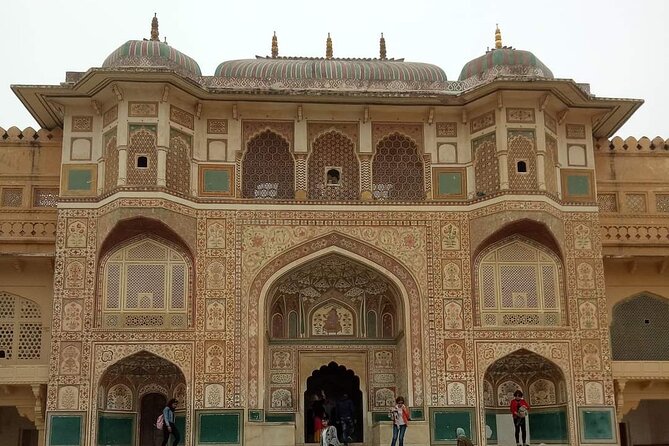
Your Delhi day is built to cover both sides of the city: the heritage-heavy Old Delhi lanes and the grander New Delhi landmarks. You’ll start with major historical stops like the Red Fort area, Jama Masjid (described as part of the Old Delhi experience), Humayun’s Tomb, and Qutub Minar. Then you’ll move into the New Delhi highlights like India Gate and the government-era district vibe.
The best part here is pacing plus variety. Old Delhi is where you get the sensory stuff—busy streets, rickshaws, and food stalls. The itinerary specifically mentions a rickshaw ride through Old Delhi and a chance to savor local street food. You’ll get that without having to plan it yourself at the start.
Drawback to keep in mind: Delhi can get hectic fast. Even with a guide and car, you’ll still deal with crowds and traffic patterns. The benefit is that you’ll have someone steering the day, instead of you trying to decode the city on your own.
Red Fort and Humayun’s Tomb: Mughal power, but with different moods
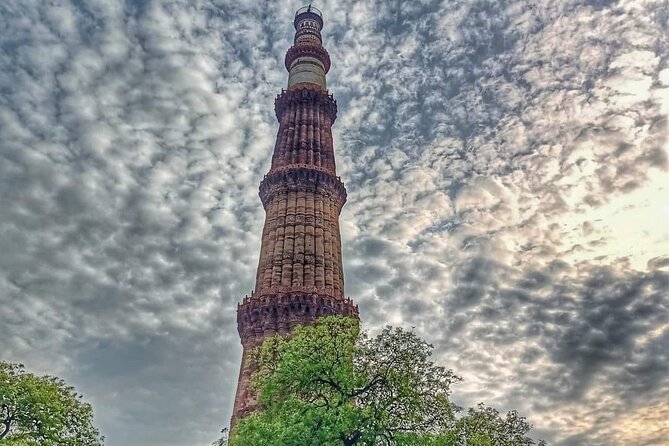
Two Mughal-era stops anchor the Delhi sightseeing plan: Red Fort and Humayun’s Tomb.
Red Fort (Lal Qila) is all about scale and symbolism. Commissioned by Shah Jahan and completed in 1648, it’s a landmark you’ll recognize immediately once you see the red sandstone walls. The tour lists it as a stop of about 1 hour, and it’s marked as not included for admission, so plan for entry fees if you want to go inside.
Humayun’s Tomb is a different vibe—more reflective and architectural. It’s UNESCO-listed and known as one of the finest examples of Mughal architecture. The timing here is about 1 hour 30 minutes. Like Red Fort, it’s also marked as not included for admission, so you’ll want to factor that into your budget.
If you care about understanding the “why” behind the sights, this is where a good guide earns their pay. You’ll get more than photos if your guide explains how these monuments fit into Mughal rule and how the styles connect.
India Gate and Akshardham: a break from forts, plus contrast in style
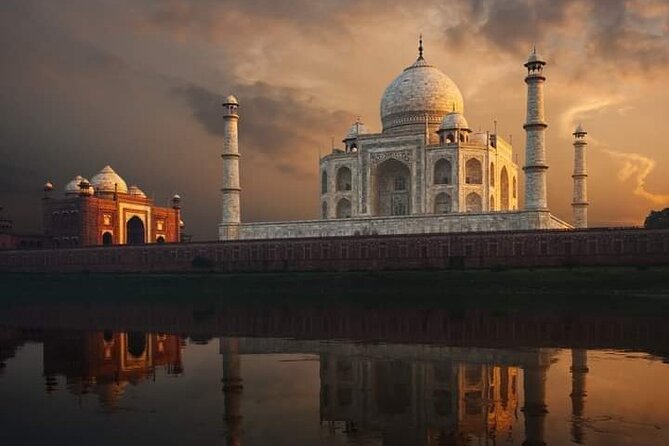
After the older monuments, the plan switches tone. You’ll visit India Gate, a famous war memorial in New Delhi, and then Swaminarayan Akshardham.
India Gate is listed as a shorter stop (about 30 minutes) and is marked as admission free. That’s useful because it gives you a quick landmark moment without eating up your whole day.
Akshardham is a bigger commitment (about 1 hour 30 minutes) and admission is not included. The value here is contrast. After days that focus on forts and tombs, Akshardham gives you a different kind of structure—more modern monumental design and a more complex temple complex experience.
If you’re traveling with kids or just want a day that isn’t 100% history walls, this combo helps. You end the Delhi portion with variety, not burnout.
The drive to Agra: make the transfer part of the trip, not a punishment
You’ll depart Delhi for Agra on a drive of about 4 hours. Doing this by private car is a big deal. It’s not just comfort—it’s control. You’ll be able to work with your guide if you want a quick stop for restroom needs, or if you need a short break due to heat or jet lag.
Agra is where the itinerary starts stacking the “must-sees,” so getting there ready matters. The tour keeps a long day structure—around 8 hours for the Agra city stop—so think of it as a full city day rather than a quick check-in.
You can also read our reviews of more tours and experiences in Jaipur


Taj Mahal planning: the iconic stop that still deserves time
The highlight in Agra is, of course, the Taj Mahal. The itinerary gives it about 2 hours 30 minutes. That’s enough time to enjoy the main view, walk around the surrounding areas, and still not feel like you were rushed.
Also important: Taj Mahal admission is not included, so you’ll want to budget for tickets ahead of time. If you’re the type who likes sunrise or late-day light, this tour’s timing is what it is—you’ll follow the schedule offered—so your best bet is to arrive ready and let the guide help you make the most of your window.
Even if you’ve seen images before, the Taj feels different in real scale. The trick is to avoid treating it like a checkbox. Spend time looking at the details at the edges and the way the white marble catches light as you move.
Beyond the Taj: Agra Fort, Itmad-ud-Daula, Mehtab Bagh, and craft stops
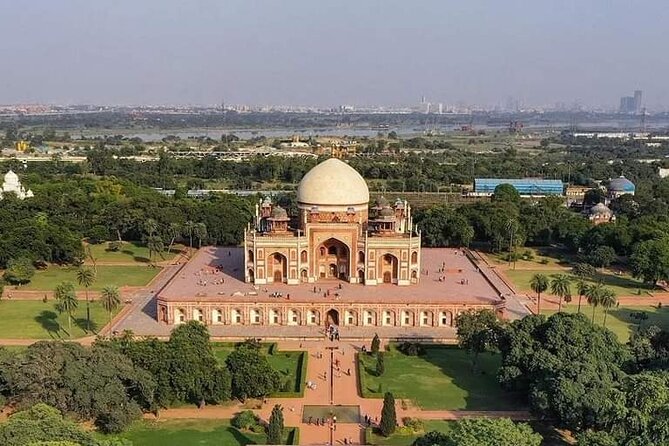
This itinerary doesn’t stop at one famous building. It adds a strong set of secondary sights that make Agra feel fuller.
- Agra Fort (about 1 hour 30 minutes) gives you a fortress perspective on Mughal power. Admission is not included.
- Itmad-ud-Daula (the Baby Taj, about 1 hour) is a great option if you like careful detail work. Admission is not included here too.
- Mehtab Bagh (about 1 hour) is a garden complex on the opposite bank from the Taj Mahal. It’s listed with not included admission. This can be the kind of stop that makes the day feel less rushed because it’s quieter than the main Taj area.
- Marble Art Palace is a shorter stop (about 30 minutes) tied to local crafts. Admission isn’t included, but it can be a useful way to see how the region’s artisan culture fits into the broader story of marble.
Here’s the balance point: if you love monuments, you’ll be happy. If you only care about one or two sights, the extra stops can start to feel like a lot. My advice is simple: if you want this tour to feel great, commit to at least the Taj, plus two supporting sites—Agra Fort and either Itmad-ud-Daula or Mehtab Bagh.
Abhaneri and Chand Baori: the detour that actually changes the pace
On the way to Jaipur, you’ll make a detour to Abhaneri. The drive time is about 2 hours from Agra, and you’ll spend around 8 hours on this combined sightseeing block.
The star here is Chand Baori, a dramatic ancient stepwell. It’s listed as admission free in the itinerary. That’s a win because it lets you focus on the experience without adding extra fees.
What makes Chand Baori special in practice is how different it feels from forts and palaces. The stepwell is a geometric visual puzzle, and it gives you a break from the same type of landmark photography. It’s also the kind of place where you’ll notice scale tricks—how deep it feels, and how the patterns change when you walk around.
If you’re deciding whether to take detours, I’d call this one a smart one. It keeps your Golden Triangle from becoming a single repeat loop of the same “royal stone” theme.
Jaipur: Amber Fort, City Palace, and getting the most out of limited hours
Jaipur is where the itinerary leans into big “look at that” stops, and it’s structured in a way that works well for first-timers.
The tour begins with Amber Fort. Expect about 1 hour 30 minutes for the fort stop itself, plus you’ll have the option for an elephant or jeep ride up the fort’s ramparts. The itinerary doesn’t include admission fees for Amber Fort, so budget for tickets. This is also one of the moments where a guide can help you navigate when to go, where to stand for photos, and how to avoid the worst lines.
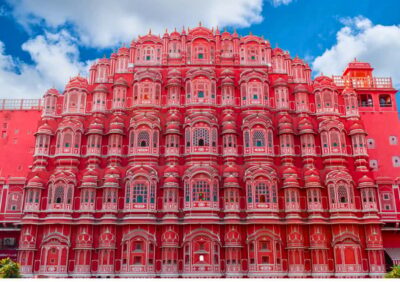
Then you’ll head into the center with City Palace (about 1 hour 30 minutes) and Hawa Mahal (about 45 minutes). Both are listed as not included for admission. Hawa Mahal is famous for its facade, and even a short stop can be worth it if you take a moment to appreciate the building as a design object, not only a postcard.
For a different kind of Jaipur, you’ll also visit Jantar Mantar, the astronomical observatory created in the early 18th century. It’s about 1 hour, and again admission is not included. If you like science-y history, this can be one of the most interesting stops because it mixes art, math, and architecture.
Jaipur markets and a gems stop: useful if you go in with the right mindset
The itinerary includes a Jaipur Gems & Jewellery stop (about 30 minutes). It’s marked as free in the plan, but keep your expectations realistic. This is essentially a market visit, so your time will likely be spent looking at stones and learning about how gemstones are sold.
If you enjoy crafts and trade culture, it can be interesting. If you’re trying to minimize shopping pressure, just treat it as a short educational stop and move on quickly when you’ve seen what you came to see. Your guide can help you interpret what you’re looking at, without turning the visit into a hard sell.
Price and value: what $215 really buys you (and what you’ll still pay for)
At about $215 for 6 days, the value depends on your expectations.
What you get included:
- Professional guide(s) in Delhi, Agra, and Jaipur
- Air-conditioned vehicle with hotel pickup and drop-off
- All fees and taxes (for the tour package itself)
- Water bottle
- Mobile ticket and pickup offered
What costs extra:
- Accommodation (you choose your hotel type each city)
- Meals (lunch, breakfast, dinner are not included)
- Paid entry tickets for monuments that are marked as not included
So the price works best if you’re comfortable planning your own hotel and meals, and if you’re happy budgeting for ticketed attractions like the Taj Mahal, Red Fort, Humayun’s Tomb, Akshardham, and others marked as paid.
The big “value lever” here is that your guides and transport are handled. That’s the hard part to organize well. And the private nature of the tour makes it easier to keep days efficient without feeling like you’re sprinting.
Who should book this Golden Triangle by car?
This tour is a strong fit if you:
- Want a private Golden Triangle pace, not a crowded group shuffle
- Like having a guide each day to explain what you’re seeing
- Prefer air-conditioned comfort on travel days
- Want the main icons plus a detour to Chand Baori
- Are okay choosing your own hotel and managing meals
It might not be the best fit if you:
- Hate paying monument entry fees on top of your tour cost
- Want a lot of free time in each city (this itinerary is sight-focused)
- Plan to skip most ticketed attractions and only do low-cost stops—because some of the biggest names are listed as paid
Should you book it?
If you want the Golden Triangle without the chaos, I’d say this is a smart choice. The mix of daily guide support, private air-conditioned car, and the Chand Baori detour makes it feel more than a basic checklist. Plus, the real service examples from guides like Mohammed in Agra and the careful driving style from Ajay make the trip feel like it’s managed, not improvised.
Book it if you’re ready for a structured sightseeing rhythm and you’ll budget a bit extra for entry tickets and meals. Skip it if you want a super flexible, free-roam vacation with no added ticket costs.
FAQ
Is this tour private?
Yes. It’s a private tour/activity, and only your group will participate.
Is hotel pickup included?
Yes. The tour includes daily hotel pickup in an air-conditioned vehicle, plus pickup and drop-off for sightseeing.
Are meals included?
No. Lunch, breakfast, and dinner are not included.
Do I choose my own accommodation?
Yes. Accommodation is not included, so you’re free to pick your hotel in each city.
Are monument entry tickets included?
Paid entry tickets for monuments are not included. Some stops are marked as admission free, but others are not.
What cities and areas are included?
You’ll cover Delhi, Agra, Jaipur, and a detour to Abhaneri to visit Chand Baori.
How long is the drive from Delhi to Agra?
The itinerary lists the Delhi to Agra transfer as approximately a 4-hour drive.
Is cancellation free if plans change?
Yes. You can cancel for a full refund up to 24 hours in advance of the experience start time.