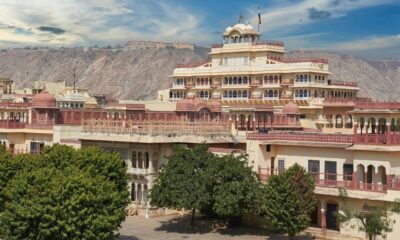
REVIEW · JAIPUR
Nahargarh Water Walk – Guided 2-Hour Heritage Tour in Jaipur
Book on Viator →Operated by Heritage Water Walks · Bookable on Viator
Water and history in Jaipur have a real connection. This guided walk turns that connection into an easy, camera-friendly stroll from Nahargarh Fort. You’ll follow the story of how desert communities solved one big problem: getting enough water.
What I like most is the focus on waterworks you can actually see—stepwells, channels, aqueducts, and storage reservoirs—and the way the guide makes each one make sense in plain terms. I also like that it’s built for the end of the day, so you’re not just looking at old stones; you get sunset views over Jaipur at the top of the fort.
One drawback to plan around: this is an outdoor walk, and it depends on good weather. If conditions aren’t right, the tour may be moved or refunded, so keep some flexibility in your schedule.
In This Review
- Key highlights to expect
- Why water heritage around Nahargarh Fort matters
- Starting point: Nahargarh Fort and the view from the start
- The 1 km water walk: stepwells, channels, aqueducts, reservoirs
- Sunset over Jaipur: timing, camera moments, and atmosphere
- Your guide experience: why Neeraj’s style makes it click
- Price and value: what $39.14 gets you (and what it doesn’t)
- Logistics that affect your comfort
- What to bring for a water-focused sunset walk
- Who should book this Nahargarh Water Walk—and who might skip it
- Should you book it?
- FAQ
- How long is the Nahargarh Water Walk?
- What’s included in the ticket price?
- Where does the tour start and end?
- Do I need to bring my own water or snacks?
- What time of day should I go for the best experience?
- What happens if the weather is bad?
Key highlights to expect
- Water-themed storytelling tied to Jaipur’s desert communities and how they handled water over centuries
- 1 km walking loop in the fort area, paced as a relaxed heritage walk
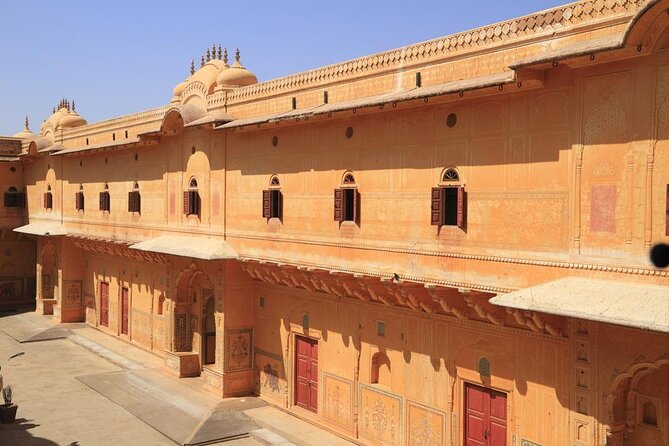
- Stepwells, channels, roman aqueducts, and storage reservoirs you can point your camera at
- Sunset timing that gives you panoramic views over the city
- Small group feel with a maximum of 30 travelers
- Neeraj-style guide energy—enthusiastic, informative, and clearly passionate about the subject
Why water heritage around Nahargarh Fort matters
Jaipur sits in a dry region, so water is never just a background detail. It shapes neighborhoods, engineering, and even daily habits. That’s the big idea behind this Nahargarh Water Walk: you don’t just hear facts. You watch how the landscape was designed to handle scarcity.
What makes it more than a standard sightseeing walk is the “why.” You’ll connect structures like stepwells and aqueducts to real desert logic—store it, move it, and reuse it. Once you get that lens, the fort area stops feeling like a single historic monument and starts looking like a working water system built over time.
And yes, you’ll get the fun side too: the walk is sprinkled with facts, anecdotes, and tales, so the history doesn’t feel like a lecture.
You can also read our reviews of more walking tours in Jaipur



Starting point: Nahargarh Fort and the view from the start
Your tour begins at Nahargarh Fort, at Krishna Nagar, Brahampuri, Jaipur (302001). The end is back at the same meeting point, so you’re not dealing with complicated logistics or a long transfer at the end of your day.
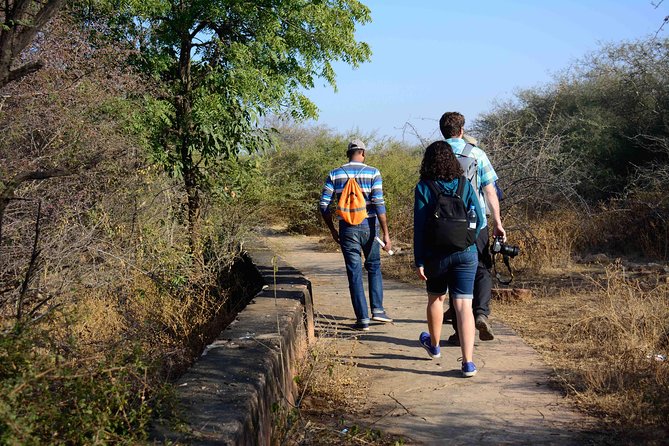
There’s also a practical comfort in the setting. The experience is described as a relaxed walk in the area near the fort, with natural beauty around you as you listen. For a lot of visitors, that shift matters. Downtown Jaipur can be busy and loud; this gives you a calmer pace without needing to leave the city.
One more small planning note: since the tour is in the fort vicinity, your shoes matter. You’ll be walking on uneven ground at least some of the time, so wear footwear you’d be happy to get a little dusty.
The 1 km water walk: stepwells, channels, aqueducts, reservoirs
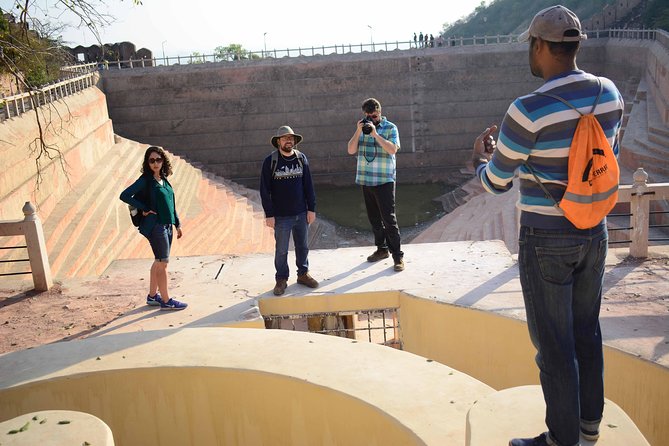
The walk is about one kilometer long and runs for roughly 1.5 to 2 hours. Even with a short distance, it’s designed to feel full because the guide keeps linking each water structure to a bigger story about survival and design in Rajasthan’s desert communities.
Here’s what you’ll focus on as you move:
- Channels: These are about movement—how water gets directed where it’s needed. Expect the guide to explain their purpose and how they fit into the system.
- Roman aqueducts: You’ll see structures referred to as roman aqueducts and learn what they were built to do and how they were shaped architecturally.
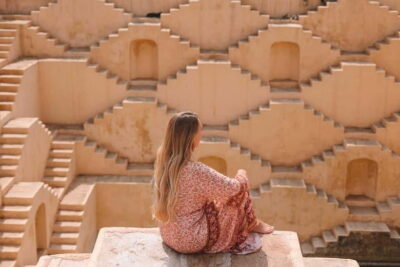
- Stepwells: These are the headline features for a lot of people, because you can visually understand the “step” idea and why it mattered for access to stored water.
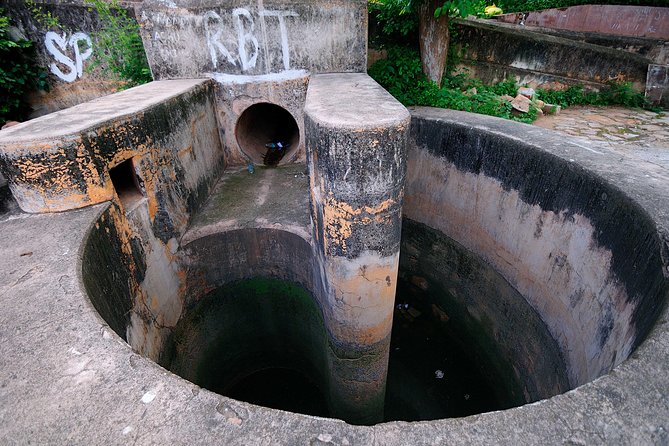
- Storage reservoirs: These show the other side of the equation: not just getting water, but saving it.
The tour’s rhythm is built around these landmarks, so you’re not just stopping at random points. Each one is part of a chain, and the guide connects them so you start seeing how the whole water strategy works rather than treating each structure like a separate photo-op.
If you like history that’s practical—history that helps you understand how people lived—this format works. The architecture stops being decoration. It turns into evidence.
Sunset over Jaipur: timing, camera moments, and atmosphere
If you take the tour in the evening, you get one of the best rewards: the walk ends with sunset views over the top of Jaipur. That changes the feeling of the experience, because the last stretch isn’t just “one more stop.” It’s a payoff.
Bring a camera (the tour is built with that in mind), but also bring common sense. Sunset means changing light and darker shadows, especially on stone. Wear a hat if you’re prone to glare, and if you’re shooting photos, plan to keep your phone/camera battery charged before you start.
The best part is that the scenery isn’t the only reason to go at sunset. Seeing water structures and then looking out over the city makes the whole story feel more immediate. It’s one thing to hear about desert engineering; it’s another to stand above the city and think about how water helped make urban life possible.
Your guide experience: why Neeraj’s style makes it click
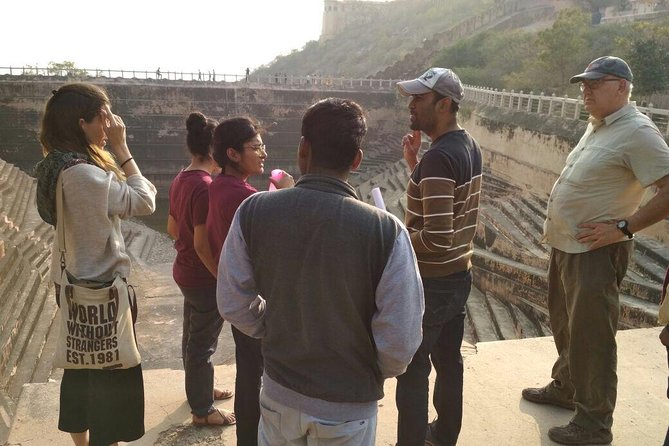
A lot of walking tours succeed or fail on the guide. Here, that’s clearly a strength. One reviewer specifically highlighted Neeraj as enthusiastic and informative, with a passion for the subject that came through during the walk.
What you’re aiming for in a heritage tour like this is not just facts, but flow. You want to understand the “purpose, architecture, and history” of what you’re seeing. The guide does that by keeping the tour engaging with stories and anecdotes as you move through the water-related sites.
Also, the group size matters. This tour caps at 30 travelers, which usually keeps the pacing comfortable and makes it easier to hear the guide. If you’ve ever been stuck at the back of a huge group, you’ll appreciate this cap.
You can also read our reviews of more guided tours in Jaipur






Price and value: what $39.14 gets you (and what it doesn’t)
At $39.14 per person, this isn’t a “drop-in ticket for a quick photo.” It’s a guided, story-driven walk designed around specific water heritage landmarks. The main included item is the tour guide, and the structure of the experience is built around that—so you’re paying for guided interpretation, not just admission to a site.
What’s not included is equally important for planning:
- Bottled water is not included
- Food is not included
That means I strongly suggest you bring your own water, especially because you’ll be outdoors and walking for about two hours. If you’re doing this near dinner time, consider eating before you go, not after.
Value-wise, the best comparison isn’t with other forts. It’s with other guided experiences that try to explain architecture. This one stays focused: water systems, their design, and why they mattered. For many visitors, that narrow focus is what makes it worth the ticket.
Logistics that affect your comfort
A few practical details help you plan without stress:
- You’ll receive a mobile ticket.
- The tour is said to be near public transportation.
- It runs within 6:00 AM to 6:00 PM operating hours (Monday through Sunday).
- Confirmation is provided at booking time.
- The experience requires good weather, and if it’s canceled due to weather, you’ll be offered a different date or a full refund.
One more comfort point: the tour says “most travelers can participate.” Still, use your judgment. If you dislike walking on uneven ground, bring that caution to the table.
What to bring for a water-focused sunset walk
Because bottled water and food aren’t included, pack like you’re planning an outdoor stroll:
- A water bottle you’re comfortable carrying
- Good walking shoes (fort areas can be uneven)
- A hat or sun protection, especially earlier in the day
- Your camera (sunset views are part of the payoff)
- Light layers, since sunset can feel cooler than midday
Also, consider bringing something simple for keeping track of timing. If you’re planning around sunset, you don’t want to be sprinting to the meeting point while you’re trying to photograph stone details.
Who should book this Nahargarh Water Walk—and who might skip it
I’d recommend this tour if you like:
- Architecture with a purpose (not just architecture as a backdrop)
- Short walking experiences that still feel meaningful
- Stories that connect the past to how people lived in a dry region
- Sunset views without committing to a whole evening program
You might skip it if:
- You want a long, far-reaching hike (this is about a 1 km walk in the fort vicinity)
- You need food included and don’t want to plan your own timing
- You don’t want to deal with weather dependency (good weather is required)
Should you book it?
Yes, you should book this if you’re the type of visitor who likes to understand how a city works—not just how it looks. For $39.14, you’re getting a guided, water-focused heritage story with real structures you can see close up, plus a sunset finish.
Book it especially if you’re already visiting Nahargarh Fort and want to turn that stop into something more explained. And if you’re flexible with your schedule, plan for the evening slot for the best views.
If your main goal is a quick fort photo and you don’t care about water systems at all, you may feel this is too focused. But if you want context and a clearer picture of how Jaipur’s desert communities handled water, this is a smart way to spend two hours.
FAQ
How long is the Nahargarh Water Walk?
The walk lasts about 1 hour 30 minutes to 2 hours.
What’s included in the ticket price?
The only listed inclusion is the tour guide.
Where does the tour start and end?
It starts at Nahargarh Fort (Krishna Nagar, Brahampuri, Jaipur) and ends back at the same meeting point.
Do I need to bring my own water or snacks?
Bottled water and food are not included, so it’s a good idea to bring your own.
What time of day should I go for the best experience?
If you go in the evening, you’ll get the sunset views over Jaipur.
What happens if the weather is bad?
The experience requires good weather. If it’s canceled due to poor weather, you’ll be offered a different date or a full refund.