REVIEW · JAIPUR
Private Full-Day Jaipur Sightseeing Tour by Tuk-Tuk
Book on Viator →Operated by Tuk Tuk Safari · Bookable on Viator
Big Jaipur in a single tuk-tuk day. I like the non-polluting tuk-tuk for zipping through Jaipur’s tighter streets, and I really appreciate the round-trip hotel pickup and drop-off that keeps the day simple. You get a one-day sweep of major sights without the hassle of figuring out transport hop-by-hop.
This full-day route is built for people who want the headline stops—Jantar Mantar, Hawa Mahal, City Palace, and Amber (Amer) Fort—plus a couple calmer adds. One consideration: the tuk-tuk may not be electric, so if that matters to you, ask ahead and manage expectations.
In This Review
- Key points before you go
- Price and what that low per-person number really means
- Tuk-tuk logistics: why this route feels easy
- Jantar Mantar: 19 instruments and a reason to slow down
- Hawa Mahal: the Palace of Winds in tiers and curved arches
- City Palace: royal residences, not just ruins
- Jal Mahal: a quick water-palace pause on Man Sagar Lake
- Amer (Amber Fort): red sandstone and white marble on the hill
- Royal Gaitor Tumbas: calmer royal cenotaphs under Nahargarh
- Galtaji Temple (Monkey Temple): pink stone and carved pavilions
- What I’d pack for this 8-hour Jaipur hit
- Who this tour suits best
- Should you book this Private Full-Day Jaipur Sightseeing Tour?
- FAQ
- What’s included in the Private Full-Day Jaipur Sightseeing Tour by Tuk-Tuk?
- How long is the tour?
- What entrance fees are not included?
- Is food included?
- Is this tour private?
- Do you get pickup from hotels in Jaipur?
- Is the tuk-tuk electric?
Key points before you go
- Private only for your group, so you can set a comfortable pace
- Non-polluting tuk-tuk rides, helpful for Jaipur’s narrow lanes in the Pink City
- Hotel pickup and drop-off included, which saves real time in a city this spread out
- Entrance fees are the main extra cost (City Palace, Jantar Mantar, and Hawa Mahal)
- A smart mix of landmarks and quieter stops, like Royal Gaitor Tumbas and Galtaji
- High satisfaction level with a 4.9 rating and 97% recommendation rate
Price and what that low per-person number really means

At $7.27 per person for an ~8-hour private sightseeing day, this looks like a bargain on transport and time. That low headline price works because the tour includes the nuts-and-bolts—private tuk-tuk for sightseeing, fuel, parking, taxes, and bottled water—while the big palace-style attractions are paid separately when you arrive.
Here’s the part to plan for: City Palace entrance is INR 700 per person, Jantar Mantar is INR 200 per person, Hawa Mahal is INR 200 per person, and Royal Gaitor Tumbas is INR 50 per person. In this route, Jal Mahal, Amber Fort (Amer), and Galtaji Temple are marked as free stops, so you are not paying entry at every single location.
So your “real cost” usually ends up being the tour price plus those monument fees. If you’re traveling with cash on hand and you don’t overbuy snacks along the way, this still adds up to strong value for a full-day hit list.
You can also read our reviews of more private tours in Jaipur



Tuk-tuk logistics: why this route feels easy
I like this style of Jaipur sightseeing because the tuk-tuk is not just transportation—it’s a time-saver. Jaipur’s old-city lanes can be tight, and a tuk-tuk helps you get closer to the action without the stress of parking and gridlock.
The tour is built around round-trip transfers from your Jaipur hotel (or airport/railway station), so you don’t spend the morning chasing directions. Since it’s private, you’re not stuck waiting for other schedules; your driver and your pace are the schedule.
One practical note: bottled water is included, but food and drink are not. That matters because your day runs long and you’ll likely want breaks that fit your own needs. I’d plan on carrying a snack or budgeting for meals nearby, especially since entrance lines can shift your timing.
Jantar Mantar: 19 instruments and a reason to slow down

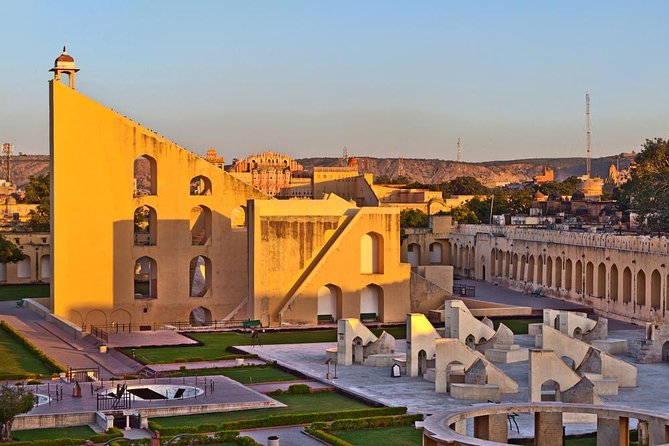
Jantar Mantar is the kind of stop that rewards patience. You’ll spend about 1 hour here, and it’s a must in Jaipur because it’s not a museum-style building—it’s a working set of architectural astronomical instruments.
This site was built by the Rajput king Sawai Jai Singh and completed in 1738 CE. The instrument layout includes nineteen structures, designed to measure things tied to astronomy and timekeeping. Even if you’re not a science person, you can still enjoy the visuals: tall stone forms, precise angles, and a whole philosophy of how people learned the sky without modern tech.
Two things I love about placing Jantar Mantar early in the day:
First, it’s easier to focus before you’ve climbed into fort fatigue. Second, you’re not yet trying to squeeze every photo into the last hour of daylight.
Main consideration: entry is not included, so you’ll want to factor in INR 200 per person and bring cash.
Hawa Mahal: the Palace of Winds in tiers and curved arches
Next up is the iconic Hawa Mahal, or the Palace of Winds. It takes about 1 hour, and it’s one of those places where the outside alone tells a story. The palace was built in 1799 by Sawai Pratap Singh, and the design was made for royal members to watch everyday life from the many tiers.
What’s clever here is how the building’s curved arches and multi-level openings are part of daily living. You’re not just looking at stonework; you’re looking at a purpose-built viewpoint.
I like this stop because it works for different travel styles. If you love architecture, you’ll notice the way the facade repeats patterns. If you’re more into photo walks, it’s a natural viewpoint magnet.
Practical consideration: Hawa Mahal entry is not included, with INR 200 per person noted for the stop. Also, plan your photos with crowds in mind since this is a top Jaipur headline.
City Palace: royal residences, not just ruins
City Palace is where the day starts to feel more “alive.” You’ll have about 2 hours at City Palace of Jaipur, and it’s special because it isn’t only a historical site. The information here points out that the royal family still lives there, which changes the vibe from empty exhibit to something closer to a living landmark.
The complex was designed by Maharaja Sawai Jai Singh, and it’s known as one of Jaipur’s most recognized sights. Compared with forts, this is more about palatial spaces and the way the palace blends power, design, and city presence.
Two ways to make the most of your time:
1) Don’t rush the transitions. This is the kind of place where you’ll want to stop, look up, and then move again.
2) Save your questions for your driver/guide time, if you have that access, since these palaces come with a lot of details and labels.
Main consideration: City Palace entrance fee is INR 700 per person, and it’s not included. If you’re trying to keep costs down, this is the big add-on to plan for.
You can also read our reviews of more tours and experiences in Jaipur




Jal Mahal: a quick water-palace pause on Man Sagar Lake
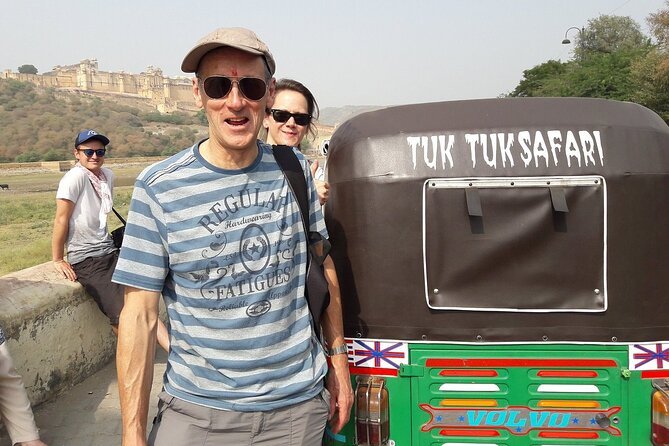
Between City Palace and Amber (Amer), there’s a short stop at Jal Mahal, the water palace located in the middle of Man Sagar Lake. You’ll have about 30 minutes here, and it’s mainly a scenic break.
Even if you don’t pay attention to every architectural detail, this stop is useful. It breaks up the day and gives you a different kind of view—something reflective and open compared to fort walls and courtyards.
The key benefit is pacing. When you’re headed to Amber Fort next, you’ll be glad you carved out this breathing space.
Entry is listed as free, so there’s less to budget for here. The tradeoff is that it’s a short stop, so don’t count on a long wandering session.
Amer (Amber Fort): red sandstone and white marble on the hill
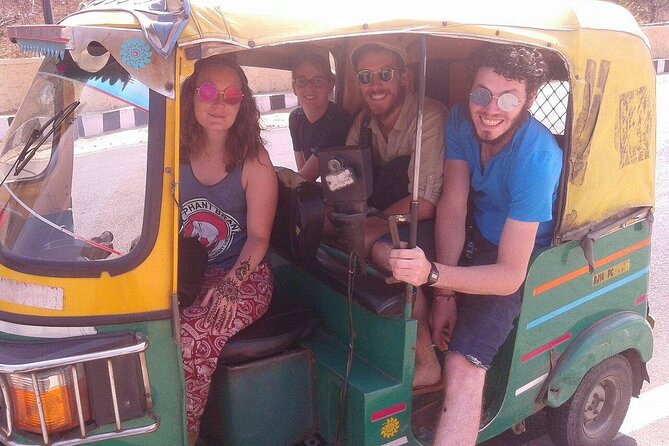
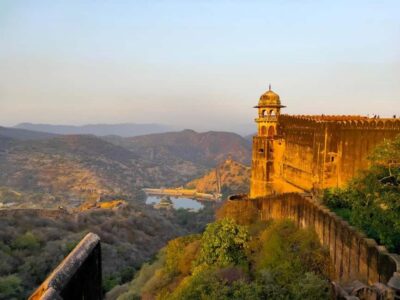
Amber Fort, also known as Amer, is the big one. You’ll get about 2 hours here, and the setting matters: it sits up on rugged hills outside the city, which is part of why it looks so dramatic in photos.
This fort is described as an example of Hindu and Muslim architectural traditions, built with red sandstone and white marble. That blend shows up in details—arches, materials, and how the spaces feel planned and decorative rather than purely defensive.
I like having Amber Fort included in a full-day tour because it’s one of those “you’ll either go or you won’t” sights in Jaipur. Once you pass it, it’s gone from your day. Getting it done while you still have energy is smart.
One consideration: because it’s on a hill and the day is long, wear shoes you can walk in without thinking about it. The fort may also involve steps and uneven surfaces, so keep your plan realistic.
In this route, Amber Fort admission is listed as free. Still, double-check what’s required on the ground, since entry rules can sometimes vary by area inside large complexes.
Royal Gaitor Tumbas: calmer royal cenotaphs under Nahargarh
After the major sights, the tour heads to Royal Gaitor Tumbas, described as royal cenotaphs beneath Nahargarh outside Jaipur’s city walls. You’ll spend about 30 minutes here, and the tone is different: it’s described as tranquil and relatively less known.
This is the kind of stop that works well when you’re feeling “fort and palace overload.” Instead of another big ticket attraction, you get open sky time and a chance to notice craftsmanship in a quieter setting.
If you’re into atmosphere, this is one of the more relaxing breaks in the day. You also get a location contrast—outside the main city core—without giving up your tight schedule.
Entry is not included and is listed at INR 50 per person. Since the fee is small, it’s a low-cost way to add variety and slow your pace without losing time.
Galtaji Temple (Monkey Temple): pink stone and carved pavilions
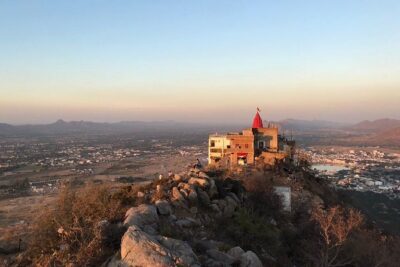
The last stop is Galtaji Temple, also called the Monkey Temple. You’ll have about 30 minutes, and it’s a great finale because it’s more about temple architecture and the feel of a place than about checking off another giant monument.
Galtaji is made from pink stone and includes multiple pavilions with rounded roofs, carved pillars, and painted walls. Even on a shorter visit, that kind of design shows up quickly, and it’s easy to enjoy without needing a long attention span.
The “Monkey Temple” name is a clue, and you might see monkeys around, since this is part of what the site is known for. That can make the stop fun, but it also means keep your belongings secure and don’t expect a zoo-like calm. Keep it simple: hold bags close and don’t feed anything you’re not instructed to.
Entry is listed as free. The 30-minute slot is short, but it’s enough to take in the carvings and leave with a clear mental image of what makes this place different.
What I’d pack for this 8-hour Jaipur hit
Even when the tour handles the big stuff, you’ll enjoy the day more if you dress and prepare for walking and heat. Jaipur can feel intense, and the route mixes indoor viewing with outdoor gaps.
I’d pack and plan like this:
- Comfortable shoes for fort steps and uneven stone
- Sunscreen and a hat since you’ll be out between stops
- Cash for entrance fees (City Palace, Jantar Mantar, Hawa Mahal, and Royal Gaitor)
- A snack or small meal plan, since food isn’t included
- A light layer if you end up inside spaces with stronger air flow
Since bottled water is included, you’re covered for basic hydration, but having extras helps when you’re waiting or walking longer than expected.
Who this tour suits best
This is a smart match if you want to see a lot of Jaipur’s top sites in one day without managing multiple tickets and transport arrangements. The private setup also makes it easier for couples, small groups, and solo travelers who want flexibility.
It’s especially good if you care about covering the major “must-see” landmarks: Jantar Mantar, Hawa Mahal, City Palace, and Amber Fort. Then you get a bonus mix with Royal Gaitor Tumbas and Galtaji to break up the palace-and-fort rhythm.
If you hate crowds and want long, slow time in one place, this route may feel tight, since it’s a full-day sweep. But if you like efficiency with built-in stops for photos and resets, you’ll likely find the pacing workable.
The satisfaction stats also matter: a 4.9 rating from 67 reviews and a 97% recommendation rate suggest the format lands well for most people who want a single-day Jaipur tour.
Should you book this Private Full-Day Jaipur Sightseeing Tour?
Yes, I’d book it if your goal is one packed, high-value day with hotel pickup, a private tuk-tuk, and a clear lineup of Jaipur highlights. It’s also a good call if you’re trying to avoid the mental load of transport and ticket coordination across multiple major sites.
Before you confirm, check two things:
- Make sure the entrance fees you care about are within your budget, especially City Palace at INR 700.
- If you have strong preferences about vehicles, ask whether the tuk-tuk is the type you expect, since at least one traveler noted it wasn’t electric.
If your travel style is practical, photo-friendly, and you want maximum Jaipur in a single day, this tour fits the bill.
FAQ
What’s included in the Private Full-Day Jaipur Sightseeing Tour by Tuk-Tuk?
The tour includes hotel/airport/railway station pickup and drop-off, a private tuk-tuk for sightseeing, fuel, parking charges and other taxes, and bottled water.
How long is the tour?
The duration is listed as about 8 hours.
What entrance fees are not included?
City Palace entrance is INR 700 per person. Royal Gaitor entrance is INR 50 per person. Jantar Mantar and Hawa Mahal entrance is INR 200 per person each.
Is food included?
No. Food and drink are not included.
Is this tour private?
Yes. It’s listed as a private tour/activity, meaning only your group will participate.
Do you get pickup from hotels in Jaipur?
Yes. Pickup and drop-off from your Jaipur hotel are included, and pickup is also offered from the airport or railway station.
Is the tuk-tuk electric?
The provided information mentions a non-polluting tuk-tuk, and one review specifically noted it wasn’t electric. If electric vehicle matters to you, it’s smart to ask before booking.