REVIEW · JAIPUR
Jaipur Heritage Walk – Artisans | Bazaars | Culinary | Temples (Awarded)
Book on Viator →Operated by Vedic Walks Rajasthan · Bookable on Viator
Jaipur wakes up with your own two feet. On this 2.5-hour Heritage Walk, you trace the Pink City’s layout and pass through the older lanes where seven gates stories set the tone and artisan lanes do the talking.
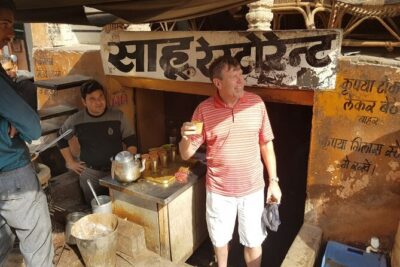
I especially like the live metal-and-bangle demos—watching metal beating work hands-on, then seeing traditional bangles made from sealing wax. I also like the paani puri and mohanthal stops, plus a chance to sip hot masala chai while you’re surrounded by market life.
One thing to plan for: this is a walk through busy, narrow streets, and it has a good-weather requirement—so come in ready to move and stay flexible if conditions are poor or programs adjust. Also, no transfers are included, so you’ll want to be comfortable getting yourself to the start point.
In This Review
- Key points to know before you go
- Entering Jaipur’s old lanes from Golcha Cinema
- Step into the seven-gates story and a heritage priest family
- Metal beaters, pani puri wholesale chaos, and an Ayurveda stop
- The big royal-family gate you’ll pass on foot
- Sodhy Halwai and the bridal market rhythm
- Maniharo Ka Rasta: sealing-wax bangles in action
- Tripolia Bazar: flowers, spices, and Isarlat Sargasooli
- Food and tea: how to make the tastings count
- Price and value: what you get for $30.04
- Temple stop and market context: why it’s more than sightseeing
- Guide style: what to expect from Nidhi or Ani type energy
- Who should book this heritage walk, and who should skip
- Should you book this Jaipur Heritage Walk?
- FAQ
- How long is the Jaipur Heritage Walk?
- Where does the tour start and end?
- What does the tour include?
- What food will I taste?
- Is there a temple stop?
- Is admission required for the stops?
- Is the tour walkable for most people?
- How big are the groups?
- What if I need to cancel?
Key points to know before you go
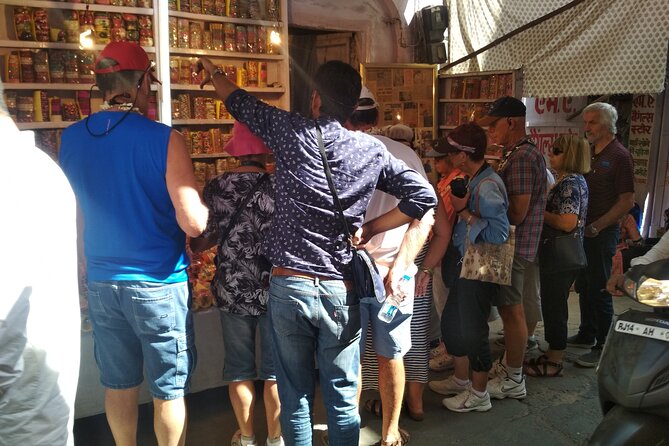
- Seven-gates orientation helps you understand Jaipur’s walled-city design fast
- Artisan workshops focus on real process, not staged performances
- Food tastings are built into the route, including pani puri and mohanthal
- A temple stop adds meaning to the market-and-architecture mix
- Old bazaars at the end of the walk make a clean finish at the Flower Market
Entering Jaipur’s old lanes from Golcha Cinema

The walk starts at Golcha Cinema in the Pink City area (Chaura Rasta Rd, New Gate, Bapu Bazar). This matters because you begin inside the older grid, not out on the edges. Your guide sets context early, and that makes the rest of the route click into place. You’ll hear about why Jaipur’s plan is so ordered—symmetrical sections, defined lanes, and those classic walled-city boundaries that shaped everyday movement.
The tour runs about 2 hours 30 minutes with a small group size (max 15), which keeps it easier to ask questions and to pause for photos when you want them. Since it’s a mobile-ticket experience, you can keep everything simple on your phone.
In the background, Jaipur always feels like it’s in motion. Expect foot traffic, scooters, and the kind of street energy that can feel chaotic from a distance—but when you’re guided through it with confidence, it becomes manageable.
You can also read our reviews of more walking tours in Jaipur



Step into the seven-gates story and a heritage priest family
The first stop keeps things grounded in the city’s structure. You start learning about the seven gates of Jaipur, which is an easy framework for making sense of the walled city. Even if this is your first time in Jaipur, you’ll leave this part with a mental map: gates weren’t just entrances, they were part of how the city controlled flow and identity.
You’ll also visit a local priest family living in a heritage mansion. This kind of stop is valuable because it shifts you from viewing architecture as a pretty backdrop to seeing it as a lived environment. You get a glimpse of how tradition continues in domestic space, not just in big-ticket monuments.
This first segment is short—about 15 minutes—and there’s an admission ticket included for that stop, so you’re not scrambling for extras right away.
Metal beaters, pani puri wholesale chaos, and an Ayurveda stop
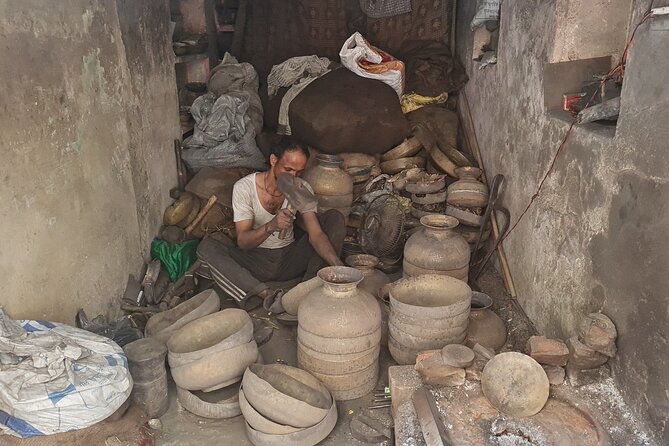
Next, you move into the narrow by-lanes. This is where Jaipur’s “how it works” side shows up. You’ll encounter a community of metal beaters, a craft practiced over generations. The tour focuses on seeing what’s happening in the work itself—motion, process, and the way families pass along skill. If you like crafts, you’ll feel the difference between watching a final product and watching how it’s made.
Then you head to a wholesale market for pani puri. This is one of those places where the energy isn’t just visual—it’s practical. Ingredients, prep, and daily rhythm all blend together. If you’re thinking, I want street food with context, this is where you get it. (And yes, it feeds directly into the tastings later on the route.)
You’ll also stop at an Ayurveda center. I like this add-on because it widens the story beyond food and fashion. Ayurveda is part of everyday thinking in India, so it fits naturally with a walk that’s about local life—how people care for health, not just what tourists photograph.
This portion runs about 45 minutes, and it’s mostly free admission stops, which is a nice value angle if you’re trying to keep the trip budget-friendly.
The big royal-family gate you’ll pass on foot
At the midpoint, you walk past a major heritage gate that also functions as an entry gate for the residence of Jaipur’s Royal family. Even without going inside a palace complex, this is meaningful. Gates in Jaipur are like punctuation marks in the city’s layout, and this one reinforces how closely public roads and private heritage overlap.
This stop is also a good reset for your legs. You’re moving constantly through old lanes, and pausing here gives you a moment to look outward—how the gate frames the street, and how the city’s planned order contrasts with everyday bustle.
Sodhy Halwai and the bridal market rhythm
After the craft-and-bazaar section, the tour shifts into a fashion-and-festival mood at SODHYA HALWAI. This is where you reach Jaipur’s Bridal market, known for bright displays and the visual intensity of wedding preparations.
You’ll see brides shopping for traditional wedding dress, which is one of the most human parts of the walk. It’s not just textiles behind glass. People are choosing, discussing, and pairing. That makes the market feel like a living event, even if you visit on an ordinary day.
Here’s the food moment that matches the mood: you can try Mohanthal, a local sweet associated with Jaipur. I like pairing food with context, because it stops the tasting from feeling random. You taste something that fits the moment the market is building.
This stop runs about 15 minutes, and admission is free.
You can also read our reviews of more historical tours in Jaipur




Maniharo Ka Rasta: sealing-wax bangles in action
Next is Maniharo Ka Rasta, a street strongly linked with bangle-making artisans. If you want Jaipur to feel real rather than postcard-like, this is the kind of street you remember.
You’ll see a live demo making traditional wrist bangles using sealing wax. That detail matters. Sealing wax suggests a method that’s hands-on, precise, and designed for shaping. It’s also a reminder that “craft” isn’t a museum category here—it’s production.
Also, bangle work is a perfect fit for Jaipur because bangles are cultural signals as much as accessories. Watching the process helps you understand why the market exists beyond selling, and why families keep these techniques alive.
This segment is short—about 15 minutes—but it’s the kind of stop that can feel long because you’ll keep looking at the hands, not just the finished piece.
Tripolia Bazar: flowers, spices, and Isarlat Sargasooli
You finish in the Tripolia Bazar area, moving into sensory overload in the best way: the oldest Flower Market, plus spice market energy. This is the endgame zone for a heritage walk because it’s where the city’s day-to-day needs show up loud and clear—scents, stacks of goods, and constant movement.
You’ll also walk past a tall minaret known as Isarlat Sargasooli. This is one of those landmarks you’ll notice right away because it breaks the usual street-level visual pattern. Even if you don’t spend time climbing or entering a monument, the view anchors the walk in Jaipur’s vertical storytelling—architecture doing its job above the lanes.
The final stretch leads you to the end point at the Flower Market (Choti Chaupar), around 20 minutes for this section. The route naturally funnels you toward your conclusion in a way that feels satisfying, not rushed.
Food and tea: how to make the tastings count
This tour includes two local food tasting opportunities, plus you’ll likely be offered hot masala chai as part of the overall experience. Here’s how I’d treat the food so you get the most value:
- Take one bite for flavor, then one moment to notice what’s driving the taste: spice, sweetness, crunch, or aroma.
- Don’t over-snack right before you start. You want your palate fresh for paani puri style bites and for mohanthal.
- If you’re offered chai, treat it as a reset between the more intense market stops. It cools down your system and makes the next lane easier to handle.
The big practical win is that food here isn’t a separate add-on. It’s integrated into your path, so you spend less time hunting for snacks and more time understanding what you’re eating.
Price and value: what you get for $30.04
At $30.04 per person for about 2.5 hours, this is good value if your priority is authentic street-level Jaipur.
Here’s what helps justify the price:
- An experienced English-speaking city explorer who explains what you’re seeing and why it matters
- Packaged drinking water (small detail, big comfort in Jaipur heat)
- Two local food tastings included
- Souvenir from local artisans included
- An admission ticket included early on for the first stop
Also, the route uses a “pay for what’s necessary” approach. Some stops are free admission, which keeps the overall experience focused on the walking, the people, and the crafts.
If your day in Jaipur is packed with monument visits, this walk is a strong counterweight. You get the working city: artisans, markets, and religious-cultural rhythms in one connected loop.
Temple stop and market context: why it’s more than sightseeing
The tour description includes temples, and your guide typically weaves that religious context into the route. That’s where the experience turns from a collection of stops into a story about how Jaipur functions day to day.
Even a short temple moment can change how you read the street. You start noticing symbols, how people move through spaces, and why markets sit next to places of worship. It’s not just pretty architecture; it’s part of how daily life organizes itself.
Guide style: what to expect from Nidhi or Ani type energy
From the guide experiences shared, Nidhi and Ani stand out for storytelling and for explaining what’s happening while you’re standing right there. I like that approach because you don’t feel like you’re being rushed past your questions.
You can also expect a respectful tone in temples and in artisan spaces. That matters when the goal is understanding rather than just collecting photos.
And pace-wise, you should expect an effort to keep things moving without turning the walk into a sprint. You’ll still have chances to stop, look closer, and ask questions.
Who should book this heritage walk, and who should skip
This tour fits best if you:
- Want crafts and bazaars with real context, not just a shopping stroll
- Like food that comes with place-based meaning (like paani puri and mohanthal)
- Prefer a small group where your questions don’t get lost
- Are comfortable walking through narrow lanes and street crowds
It might be less ideal if you:
- Have limited mobility or fatigue with lots of street-level walking
- Want a monument-heavy day (this is more about everyday Jaipur than entrance-ticket sights)
- Visit in weather that’s not cooperative, since it requires good weather
Should you book this Jaipur Heritage Walk?
Yes, book it if you want Jaipur to feel like a city you can understand, not just a place you can photograph. The mix of artisan workshops, bazaars, a temple moment, and included tastings makes it an efficient way to learn what makes Jaipur tick.
I’d skip it only if your schedule demands purely ticketed monuments, or if you know you can’t handle narrow lanes and day-to-day street motion.
If your goal is to leave with a sharper mental map of Jaipur and memories of hands-on craft work, this one deserves a spot early in your trip.
FAQ
How long is the Jaipur Heritage Walk?
It runs about 2 hours 30 minutes.
Where does the tour start and end?
It starts at Golcha Cinema, Chaura Rasta Rd, New Gate, Bapu Bazar, Pink City, Jaipur and ends at the Flower Market (Choti Chaupar, Tripolia Bazar area), Modikhana, Jaipur.
What does the tour include?
The tour includes packaged drinking water, an English-speaking city explorer, two local food tastings, and a souvenir from local artisans.
What food will I taste?
You’ll have two local food tasting opportunities, including paani puri from the wholesale market area and mohanthal at the bridal market stop. Hot masala chai is also mentioned as part of the experience.
Is there a temple stop?
Yes. The tour description includes temples, and the walking includes a religious-cultural moment where your guide explains what’s happening.
Is admission required for the stops?
Admission is stated as included only for the first stop (Golcha Cinema). The rest of the listed stops are marked as free admission.
Is the tour walkable for most people?
Yes. The experience notes that most travelers can participate.
How big are the groups?
The tour has a maximum of 15 travelers.
What if I need to cancel?
You can cancel for a full refund if you cancel up to 24 hours in advance of the experience start time. If you cancel less than 24 hours before, the amount paid is not refunded.