REVIEW · JAIPUR
Hands-on Block Printing Workshop
Book on GetYourGuide →Operated by Creatis · Bookable on GetYourGuide
Wood blocks make wearable art fast. In Rajasthan, this small-group workshop teaches block printing basics in a way you can use right away, and you’ll create a Pico stitch scarf or sarong by the end.
I especially like the hands-on pace. After a short intro, you pick a design and colors, then get guided practice that turns a pile of blocks and ink into an actual pattern on fabric.
One thing to consider: the class is only 2 hours, so you’ll focus on printing and layering your design, not on learning every step of the full artisan production process from scratch.
In This Review
- Key things to know
- Why this Rajasthan workshop feels more personal than it sounds
- The real lesson: Gad, Rekh, Datte (how patterns actually get built)
- Tools and pigments: what you’ll handle and why it matters
- Picking your design: make it your scarf or sarong, not someone else’s
- The hands-on printing flow (what happens during the class)
- Watching artisans work nearby (and why that’s a smart bonus)
- Pico stitch finish: what you’ll take home
- Studio pace and group vibe: easy for solos
- Price and value: is $24 a fair trade for 2 hours?
- Who should book this workshop
- Tips to get better fast (without overthinking it)
- Should you book this block printing workshop?
- FAQ
- Where is the block printing workshop located?
- How much does the workshop cost?
- How long is the workshop?
- What will I take home at the end?
- Are materials provided?
- Is it a small group?
- What languages does the instructor speak?
- What should I bring?
- Can I get a refund if I cancel?
Key things to know
- Gad, Rekh, Datte structure: ground, outline, and filler layers that help your motif come together
- Water-based pigments: you’ll mix and test colors as you build your pattern
- Sanganeri-inspired designs: choose from intricate motifs and apply them to fabric
- Small group limit (10 max): easier questions, faster help, less waiting around
- Coaching from on-site instructors: people like Mohit, Vivek, and Aftab are part of the guidance team
- Printing next to production work: the studio setup lets you see how professionals work nearby
Why this Rajasthan workshop feels more personal than it sounds
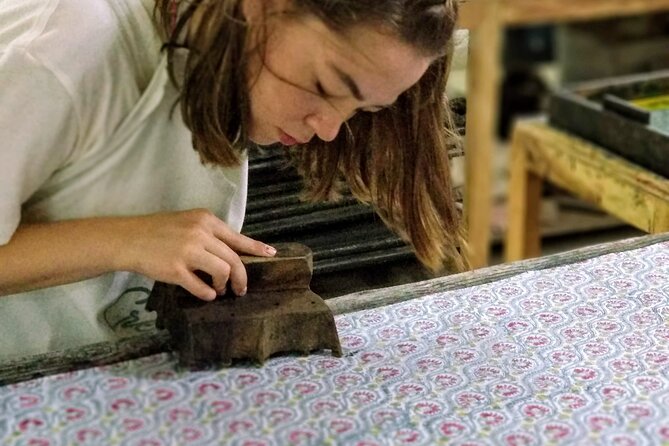
If you’ve done art classes where you mostly watch a demo, this is the opposite. You’ll do the work. Blocks go on. Pigment goes on. Fabric takes the pattern.
Rajasthan is a great place for this because block printing isn’t just decorative here. It’s a working craft with real technique behind it, from carving logic to color layering. You’ll get a basic overview, then jump straight into printing with wooden blocks.
The format also matters. A limited group of 10 participants keeps things friendly and practical. When you get a question, you won’t be yelling into the back row.
You can also read our reviews of more tours and experiences in Jaipur

The real lesson: Gad, Rekh, Datte (how patterns actually get built)
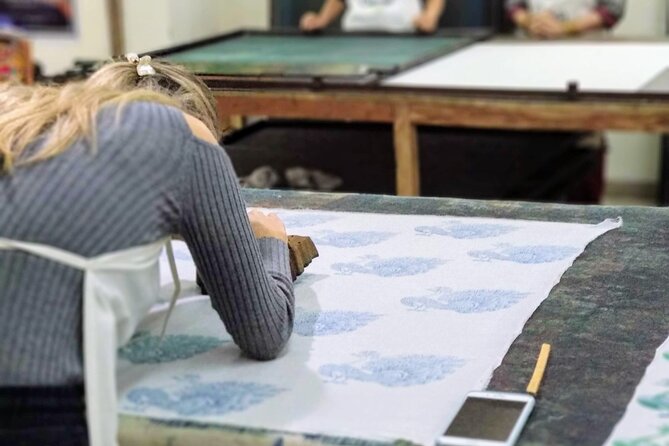
Here’s what I love about this workshop: it teaches a simple design system. You learn the idea behind three types of block work—so your result looks intentional, not random.
You start with Gad (Ground). That’s the base fill that sets the “world” of your design. Then you use Rekh (Outline) to define shapes—think of it like the drawing stage. Finally, there’s Datte (Filler), which adds small elements that make the pattern feel complete.
This structure is surprisingly helpful for beginners. Even if your first prints look a little off, you can usually fix the look by adjusting where outline and filler sit relative to the ground.
And because you’re working on fabric, you quickly understand what those terms mean in practice. Pigment doesn’t behave like paint on paper. It spreads, it stamps, and it picks up texture from the cloth. That’s part of the learning.
Tools and pigments: what you’ll handle and why it matters
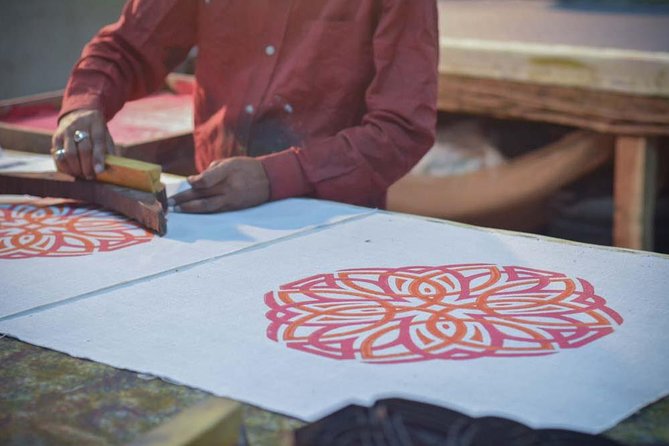
You’ll be introduced to the tools and materials used in traditional block printing. The point isn’t to memorize a list. The point is to learn how each part affects the final look.
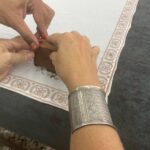
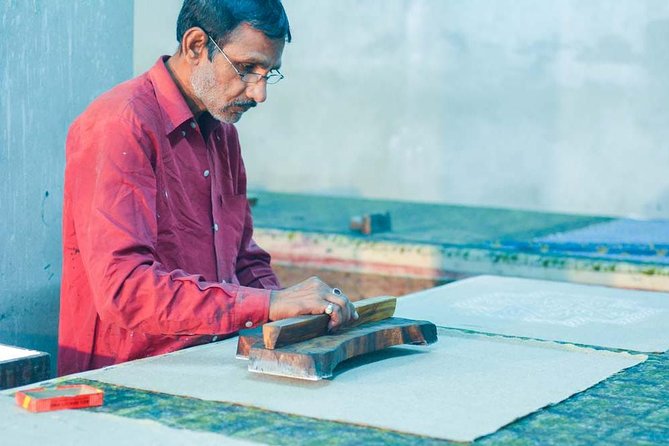
Wooden blocks are the star. Each block carries a specific design role, whether it’s ground, outline, or filler. When you press and lift, alignment matters. Too light and the print fades. Too heavy and pigment can smear.
You’ll use water-based pigments. That’s a good sign for your comfort in a hands-on class. It also means your colors can mix and shift in the way the workshop expects—so your palette can still look cohesive even when you experiment.
You’ll also learn layering and printing techniques. That’s where the magic happens. A pattern looks simple only until you realize it’s built line by line, layer by layer.
Picking your design: make it your scarf or sarong, not someone else’s
Once you get the basics, you choose from a range of intricate designs inspired by Sanganeri prints. That helps because you’re starting with motifs that already work as block patterns, not just random artwork.
Then you decide how you want your colors to feel. The workshop includes guidance on mixing and matching colors so you can create dynamic patterns instead of flat repeats. You’ll apply your designs to make a one-of-a-kind wearable piece.
You can also choose between a scarf or sarong. That choice matters because it changes how you think about pattern coverage. A scarf often feels like a focused design area. A sarong can feel more like an all-over layout.
In real terms, this is what makes the finished piece feel personal. You’re not just stamping the same result as everyone else. You’re shaping the final look with your palette and layering decisions.
The hands-on printing flow (what happens during the class)
The workshop runs like a calm production line, not chaos. It starts with an intro to history and cultural significance, but you don’t get stuck in lectures. You get the context quickly, then move to materials.
Next comes block logic. You’ll learn what Gad, Rekh, Datte do, and how motives and all-over designs differ. A motive design is more about a central story. An all-over design is more about repetition and rhythm.
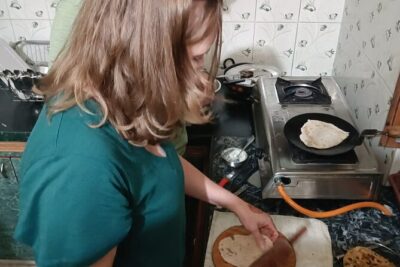
After that, you start printing. You’ll practice with wooden blocks, then work through your own scarf or sarong design using the layering techniques taught during the class.
By the time you’re printing your final piece, the experience turns almost meditative. People often expect block printing to be quick and satisfying. It is satisfying, but it’s also repetitive in the best way—press, lift, check, repeat.
And if you mess up, you’re not on your own. In the guidance I experienced, the instructors are patient about mistakes and help you correct them while you’re still in the process. That keeps one bad print from ruining everything.




Watching artisans work nearby (and why that’s a smart bonus)
One of the nicest touches is the studio setup. The workshop happens right next to a small factory area where you can watch pros at work. This adds context fast.
Even if you don’t get a full tour, seeing experienced hands working nearby changes how you judge your own results. You understand what’s skill, what’s technique, and what’s just practice.
It also helps you appreciate the difference between “I made a print” and “I made a pattern.” Block printing rewards attention. When you see the pros working, you naturally slow down and print more carefully.
Pico stitch finish: what you’ll take home
The class includes a Pico stitch scarf or sarong. That means you don’t just leave with a flat test swatch. You finish with a wearable item you can actually use.
The value here is big. You’re paying for instruction plus materials plus the finished textile. For a $24, 2-hour workshop, that’s a strong deal because you’re not buying a finished product—you’re creating it with guidance.
Also, you’ll likely feel a bit of pride when you wrap it. Handmade block prints have a distinct look: crisp lines from outlines, softer movement from fillers and ground layers, and an overall rhythm that machine printing can’t replicate.
If you’re the type who likes practical souvenirs, this is one of the better options in Rajasthan. It’s not just a photo. It’s something you’ll wear.
Studio pace and group vibe: easy for solos
This workshop is easy to do solo. The group stays small, and you’re actively working, so you’re not stuck waiting around in awkward silence.
The guidance team speaks English and Hindi, so you should be able to ask questions without guessing. You’ll also get help throughout, which is important because block printing has real technique. Alignment and pressure aren’t intuitive at first.
I also like that the class doesn’t treat beginners like an inconvenience. The instructors guide you through the steps in a way that makes the process feel doable—even when your first few prints aren’t perfect.
And because it’s hands-on, you get social in a natural way. You’re sharing color ideas, comparing how your outlines look, and offering quick advice like which layer makes the motif feel balanced.
Price and value: is $24 a fair trade for 2 hours?
At $24 per person for 2 hours, the value is mainly in three things: materials, finished output, and coaching in a small group.
If you only got access to blocks and pigment, you might still need a lot of trial-and-error. Here, you get instruction on block types, layering, and color mixing. That’s what prevents you from wasting time.
Then you get a finished scarf or sarong, not just a couple of prints. That matters because it turns the class into something you can use right away.
Finally, the small group limit means you’re more likely to get hands-on support when you need it. That support is hard to buy on your own unless you’re taking a more advanced or longer class.
One consideration on value: if you’re expecting a long deep-crack learning experience about carving and all production steps, this isn’t that. You’re focused on printing and making your wearable piece.
Who should book this workshop
Book it if you want a hands-on craft class that ends with something real you’ll use. You don’t need to be an artist. You need patience, a steady hand, and a willingness to print more than once.
It’s also a great fit if you like creative activities that feel calm. The repetitive stamping makes the session feel focused, and the finished scarf or sarong gives you a satisfying result.
If you hate mess, wear something you’re comfortable getting pigment on. The workshop says to bring comfortable clothing suitable for a hands-on workshop, and I agree with that advice. Even with good controls, textile pigment can get on sleeves and cuffs.
Tips to get better fast (without overthinking it)
1) Choose one strong color idea first. Then adjust from there. Mixing is part of the process, but starting with a plan saves you from scrambling.
2) Pay attention to layering order. The block types (Gad, Rekh, Datte) work because ground, outline, and filler do different jobs.
3) Go slow on pressure. Light pressure can fade; heavy pressure can smear. Find the sweet spot early, then repeat it.
4) Expect minor misprints. That’s normal. The best results come after a few stamps while you learn how the fabric takes pigment.
5) Ask for help quickly. The instructors are there to guide you, including correcting mistakes before your design is finished.
Should you book this block printing workshop?
Yes, I’d book it if you want a short, practical creative experience in Rajasthan that ends with a wearable piece of art. The combination of small group size, guided Gad/Rekh/Datte technique, and a finished Pico stitch scarf or sarong makes it a good value use of your time.
I’d skip it only if you’re looking for a long, advanced training course or if you strongly dislike hands-on work with textiles. Otherwise, this is one of those experiences where the best souvenir is the one you actually get to wear.
FAQ
Where is the block printing workshop located?
It takes place in Rajasthan, India.
How much does the workshop cost?
The price is $24 per person.
How long is the workshop?
The duration is 2 hours.
What will I take home at the end?
You’ll be included in receiving a Pico stitch scarf or sarong that you create during the workshop.
Are materials provided?
Yes. The workshop provides the necessary materials, including wooden blocks, pigments, and fabric.
Is it a small group?
Yes. It’s limited to 10 participants.
What languages does the instructor speak?
The instructor speaks English and Hindi.
What should I bring?
Wear comfortable clothing suitable for a hands-on workshop.
Can I get a refund if I cancel?
Free cancellation is available up to 24 hours in advance for a full refund.