REVIEW · JAIPUR
Heritage Culture and History Walking Tour in Jaipur
Book on Viator →Operated by RICH walk ( heritage, culture, history walk ) · Bookable on Viator
Jaipur on foot tells you how the city thinks. This heritage walk links major monuments and working markets in a route that feels practical, not staged, and it’s timed to keep you moving. I like the focus on stories behind what you see, and I also like that the guide can explain both religion and everyday Jaipur without turning it into a lecture.
Two things I really like: you get clear context at Jantar Mantar and the City Palace, and the walk doesn’t stop at big sights—it includes temples and market streets so you get a real sense of how the city lives. One thing to consider: several big-name stops have separate admission fees (Jantar Mantar, City Palace, Hawa Mahal, and Isarlat Sargasooli), so check the INR costs before you assume the $20 is all-in.
In This Review
- What You’ll Notice on This Jaipur Heritage Walk
- A Smart Route: From Jantar Mantar to Isarlat Sargasooli
- Price and What It Actually Covers in Jaipur
- Starting at Jantar Mantar: Astronomy With a Royal Purpose
- City Palace of Jaipur: Royal Architecture in Human Scale
- Govind Devji Temple: Aarti Time and a Calmer Pace
- Chandi Ki Taksal and Market Streets: Learning the City’s Trade
- Mandir Shri Ram Chandra Ji: Lord Rama and Intricate Spiritual Focus
- Hawa Mahal (Outside Only): The Icon Without the Ticket Shock
- Mandir Shree Laxminarayan ji: Vishnu and Lakshmi in Peace Mode
- Isarlat Sargasooli Tower: The Finish With Panoramic Views
- How the Guide Makes the Walk Feel Personal
- Small Add-Ons That Make It Feel Like a Real Day in Jaipur
- Who This Tour Suits Best
- Should You Book This Jaipur Heritage Walk?
- FAQ
- How long is the Heritage Culture and History Walking Tour in Jaipur?
- What is the meeting point for the tour?
- Where does the tour end?
- Is the tour private?
- What does the price include?
- What entrance fees are not included?
- Do we go inside Hawa Mahal?
- Which temple-related experience is part of the tour?
- Are any temple stops free?
What You’ll Notice on This Jaipur Heritage Walk

- Jantar Mantar astronomy explained with the vision of Raja Sawai Jai Singh II in plain terms
- Temple stops with real ritual time, including the Govind Devji Temple aarti ceremony
- You see Hawa Mahal from the outside (no time sink inside), then keep walking to markets
- Old market lanes like Chandi Ki Taksal and Katla Purohit Ji Ka add the local flavor
- Isarlat Sargasooli tower views close the loop with panoramic photo time
- Guides may adjust the pace based on what you’re most curious about, including Q&A
A Smart Route: From Jantar Mantar to Isarlat Sargasooli

This tour is built like a loop that starts at Jantar Mantar and ends at Isarlat Sargasooli, a historic tower where you can grab panoramic views before you wrap up. The total time is about 2 hours 25 minutes, which is long enough to feel like a proper overview but short enough that you can still plan other Jaipur sights afterward.
Because it’s a private activity for your group, you’re not competing for the guide’s attention. That matters on a walk where the best moments come from asking questions—especially when the guide is unpacking religion, royal design choices, and how markets shaped daily life.
You’ll also want to come ready to walk. This is not a drive-to-each-stop tour. It’s a walk-and-reach rhythm, and you’ll cover multiple neighborhoods and temple areas at a comfortable pace.
You can also read our reviews of more walking tours in Jaipur



Price and What It Actually Covers in Jaipur
The price is $20 for the walking tour, and it includes a water bottle plus an English and Spanish written guide. You also get extras like mobile ticket access and group discounts.
Here’s the honest part: key sights along the route require separate tickets:
- Jantar Mantar: 200 INR
- City Palace: 1000 INR
- Hawa Mahal: 200 INR
- Isarlat Sargasooli: 200 INR
So the value depends on how many of those you plan to enter. Even if you only count the tour itself, the guide support—especially the way they explain the history and cultural logic—can make the paid walking time feel worthwhile. If you’re budgeting tight, you’ll want to set aside those INR amounts early so there are no surprises at the ticket counters.
Starting at Jantar Mantar: Astronomy With a Royal Purpose

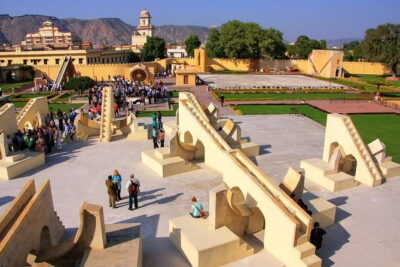
Jantar Mantar is where the day gets interesting fast. You meet at the ticket counter and then move into the site with commentary on the astronomy instruments and the ambition of Raja Sawai Jai Singh II. The payoff here is how the guide connects “cool objects” to why they existed in the first place: this was science tied to power, planning, and knowledge.
Plan for this stop to be about 20 minutes, and yes—there’s a ticket fee (200 INR) not included. If you’ve seen other astronomical sites, you’ll notice Jaipur’s instruments feel different because of how visually bold they are and how clearly they’re designed for measurement and observation.
Practical tip: bring some patience for crowds and photo lines. Jantar Mantar can attract groups, and you’ll want a moment to look without always looking through people.
City Palace of Jaipur: Royal Architecture in Human Scale
Next comes the City Palace of Jaipur, reached by walking from Jantar Mantar. This is a 20-minute stop focused on history and architecture, with a guide who explains why the palace complex matters beyond its exterior wow-factor.
You’ll face a big ticket price here: 1000 INR not included. That’s the main reason I tell people to think of this tour as a guide-led route, not a bargain-entry package. If you like royal history and architectural detail, the City Palace price can feel easier to justify because it’s one of the most central, story-rich parts of Jaipur.
One more value point: the guide doesn’t just point out features. They connect the royal family’s choices to how the palace was designed and how it functioned as a statement of identity.
Govind Devji Temple: Aarti Time and a Calmer Pace
Then the tour shifts from royal architecture to lived religion with Govind Devji Temple. This is where the energy changes. Instead of scanning for details, you pause—quietly—for the atmosphere of the place. The highlight is that you get the chance to witness the aarti ceremony.
The stop is timed around about 20 minutes, and in practice this can be one of the most memorable moments because the ritual creates a sense of meaning that’s hard to recreate in photos.
A quick consideration: since this is an active religious space, you’ll want to follow the guide’s pace and any on-site guidance. The best experience here usually comes from slowing down, not trying to do everything at once.
You can also read our reviews of more historical tours in Jaipur




Chandi Ki Taksal and Market Streets: Learning the City’s Trade

After temples, you head into Chandi Ki Taksal, described as a local bazaar that has existed since the 17th century. This is one of those stops that many tours skip because it doesn’t look “important” at first glance—but it’s important. It’s where you see how Jaipur’s heritage ties into craft and daily business.
The route also includes Johri Bazar, known for jewelry and handicrafts, plus time in Katla Purohit Ji Ka, an historic market with narrow streets and a more street-level feel.
A key detail: the tour notes that it doesn’t push you to buy anything. I like that. Shopping can be fun, but you’re still there to understand the city. If you want to browse, your guide can help you notice the differences between what’s sold, why that matters, and how the market fits into the city’s older patterns.
If you’re sensitive to crowded lanes, keep your expectations realistic. Markets are markets—busy, close quarters, and full of visual noise. The guide’s job is to help you see through it.
Mandir Shri Ram Chandra Ji: Lord Rama and Intricate Spiritual Focus
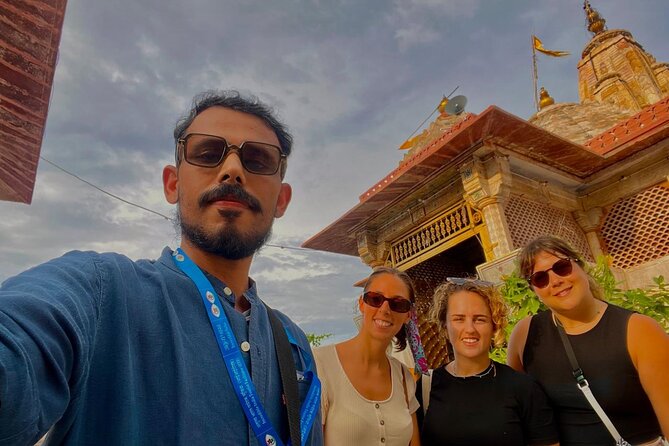
Next up is Mandir Shri Ram Chandra Ji, a temple dedicated to Lord Rama. This is a 20-minute stop, and the admission is listed as free.
What I like about including a Rama temple on this particular route is the way it balances the day. Earlier you saw science and royal design. Now you’re in a place where architecture and devotion are doing different work—shaping how people slow down and connect with belief.
In terms of what you’ll actually do, you’ll spend time in the serene atmosphere and focus on the architecture and spiritual significance—guided so it doesn’t turn into guesswork.
Hawa Mahal (Outside Only): The Icon Without the Ticket Shock
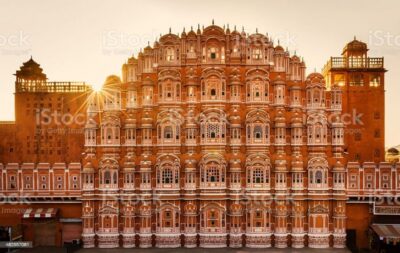
If you’ve ever seen Jaipur on postcards, you’ve seen Hawa Mahal, the Palace of Wind. Here, you’ll walk by and admire the stunning facade, but you won’t go inside. The stop is about 15 minutes.
There is an admission fee listed (200 INR) but since the tour doesn’t go inside, the experience is really about the exterior view and the explanation of design ideas behind the facade. That makes it a smart use of time for people who don’t want to get bogged down with indoor ticket lines and delays.
If you want good photos, arrive mentally ready to stop at the facade at the right angle. This is one of those spots where the best picture comes when you let the guide tell you exactly where to stand rather than trying random spots.
Mandir Shree Laxminarayan ji: Vishnu and Lakshmi in Peace Mode
After Hawa Mahal, the walk continues to Mandir Shree Laxminarayan ji, dedicated to Lord Vishnu and Goddess Laxmi. This is also listed as free entry and runs about 25 minutes.
This is a calm, slower-feeling stop after the visual intensity of the palace facade and the energy of markets. The guide will help you appreciate both the architecture and the significance of the site within Hindu culture.
For me, the value here is balance: your day isn’t only monuments. You also get time in a space where meaning and design are meant to coexist.
Isarlat Sargasooli Tower: The Finish With Panoramic Views
The walk ends at Isarlat Sargasooli (also described as Sarkasuli), a historic tower built in the 18th century. The time set aside is about 10 minutes, with an admission fee listed as 200 INR not included.
This is a great finish because it’s the moment where all your earlier stops make more sense. From a height, you get a clearer sense of how these areas relate across the city. And yes, it’s a prime spot for photography.
If you care about photos, don’t rush this one. Give yourself at least a couple of angles—one wider view for context and one tighter view for detail.
How the Guide Makes the Walk Feel Personal
A big reason this tour earns top marks is the way the guide handles questions and adjusts the focus. In reviews, guides are described as friendly, energetic, and able to answer deep questions—one guide is even described as a PhD student, which hints at why the explanations can go beyond surface facts.
You also get flexibility: one review highlights that the guide asked what subjects interested you and then tailored the discussion. That’s a huge quality-of-life benefit on a walking tour, because Jaipur history and religion can be approached in different ways—science-first, royal-first, or temple-and-market-first.
You’ll also be supported by the English and Spanish written guide. That’s useful when you want to double-check names or takeaways after the walk.
Small Add-Ons That Make It Feel Like a Real Day in Jaipur
One thing I appreciate from the experience descriptions is that it can include short, practical breaks. For example, one review mentions a quick snack moment like kulfi/ice cream during the walk. That’s not guaranteed as a permanent part of every run, but it’s a good sign: the guide isn’t just ticking boxes. They’re thinking about making the walk enjoyable.
So if you get offered a quick local treat, I’d treat it as a bonus, not a distraction.
Who This Tour Suits Best
This one fits best if you like:
- First-time Jaipur days when you want a focused sweep of landmarks plus street-level culture
- People who enjoy Q&A and want context for temples, palaces, and markets
- Families who can handle a moderate walking plan with breaks and storytelling
- Travelers who want the icon sights (Jantar Mantar, City Palace, Hawa Mahal) without only doing museum-style sightseeing
If you’re someone who hates walking or expects every site to be included with admission, you might find the extra ticket fees frustrating. The tour works best when you accept that a guided route plus separate tickets is part of the deal.
Should You Book This Jaipur Heritage Walk?
Yes—if you want an organized, story-driven introduction to Jaipur that mixes major monuments with temples and market streets. The route makes sense, the timing is manageable, and the guide quality is clearly a strong point, including the ability to handle questions and explain culture in a way that sticks.
I’d book it when:
- You’re okay paying separate INR admission fees for a few standout stops
- You want a guide who helps you read what you’re looking at (not just point and move)
- You want the day to feel like Jaipur, not like a checklist
One more practical note: the tour includes a water bottle and offers free cancellation if you adjust plans, so it’s relatively low-risk to try.
If you tell me your travel dates and what you care about most (astronomy, palaces, temples, or markets), I can help you decide whether this route matches your priorities—or suggest how to pair it with the rest of your Jaipur day.
FAQ
How long is the Heritage Culture and History Walking Tour in Jaipur?
The tour lasts about 2 hours 25 minutes.
What is the meeting point for the tour?
The tour starts at Jantar Mantar, located at Malve Nagar, J.D.A. Market, Kanwar Nagar, Jaipur, Rajasthan 302002, India.
Where does the tour end?
The tour ends at Isarlat Sargasooli (Sarkasuli) in Jaipur.
Is the tour private?
Yes. It’s listed as a private tour/activity, meaning only your group participates.
What does the price include?
Included items are a water bottle, and an English and Spanish written guide. The tour is also offered with a mobile ticket and group discounts.
What entrance fees are not included?
Jantar Mantar is 200 INR, City Palace is 1000 INR, Hawa Mahal is 200 INR, and Isarlat Sargasooli is 200 INR.
Do we go inside Hawa Mahal?
No. You’ll view Hawa Mahal from the outside, not go inside.
Which temple-related experience is part of the tour?
At Govind Devji Temple, you can witness the aarti ceremony.
Are any temple stops free?
Yes. Mandir Shri Ram Chandra Ji and Mandir Shree Laxminarayan ji are listed as free admission.