REVIEW · JAIPUR
Jaipur Sightseeing Tuk-Tuk Tour
Book on Viator →Operated by Unique Jaipur Tour · Bookable on Viator
A tuk-tuk day can feel like magic in Jaipur. You get a hotel pickup/drop and a tight one-day hit list of top sights, plus an English-speaking driver who keeps things practical and easy. The one real thing to watch is cost: monument entrance and camera fees are not included, so the day can get pricier once tickets come up.
I love how this tour turns a long sightseeing day into something you can actually enjoy. You’re not hopping between cars, and the schedule is built to flow from temples and gates to palaces, stepwells, and the Amer hill area. One more note: the route depends on good weather, so if it’s rough out, you may need to switch dates.
In This Review
- Key highlights you’ll feel right away
- How the Jaipur tuk-tuk tour actually works
- Mandir Shree Sitaram Ji and Tripolia Gate: a calm start with real Jaipur texture
- Jantar Mantar and City Palace: where the day turns from pretty to impressive
- Hawa Mahal and Royal Gaitor Tombs: iconic views plus a quieter pause
- Jal Mahal and Panna Meena ka Kund: the water stop and the stepwell
- Amer: the hilltop finale with red sandstone and white marble
- Shopping time: gems, silver, bangles, textiles, and blue pottery
- What’s included, and what you’ll pay for separately
- Meeting your driver: Rauf-style flexibility and friendly pacing
- Optional: a tuk-tuk driving lesson to end the day
- Practical tips to keep your day smooth
- Should you book the Jaipur sightseeing tuk-tuk tour?
- FAQ
- Is hotel pickup and drop-off included?
- How long is the Jaipur tuk-tuk sightseeing tour?
- Are monument entrance fees included?
- Do I get an English-speaking driver?
- Is food included?
- Is there time for shopping?
- Can I learn to drive a tuk-tuk during the tour?
Key highlights you’ll feel right away
- Private tuk-tuk with pickup and drop so you start and end without logistics stress.
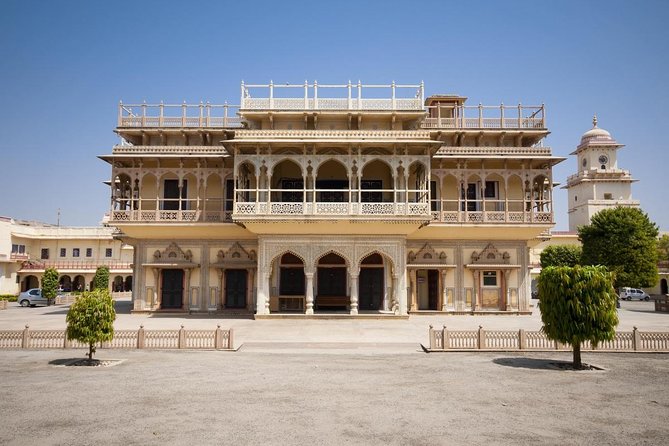
- Major Jaipur landmarks in one day, including City Palace, Hawa Mahal, and Jantar Mantar.
- Shopping time built in, with stops focused on gemstones, silver jewelry, bangles, clothes, and textiles.
- Complimentary masala tea or coffee plus bottled water to keep the day comfortable.
- Rauf-style local driving and storytelling, with a driver who can adjust to your pace.
- Optional tuk-tuk driving lesson at the end if you want a fun souvenir skill.
How the Jaipur tuk-tuk tour actually works
This is a full-day Jaipur sightseeing loop built around the auto rickshaw experience. You’ll ride in a private tuk-tuk with an English-speaking driver, and pickup is offered from your hotel (and also from the airport/railway/bus station, if you’re starting there). The whole thing runs about 8 hours, which is a sweet spot when you want the highlights without losing a full day to transit.
The pacing matters here. Your driver doesn’t just move you from A to B. The plan is structured around a mix of stops that feel different: spiritual sites, royal architecture, a UNESCO-listed observatory, a stepwell, a water palace, and then the Amer hill zone. That variety is what makes a single-day tour feel like more than a checklist.
Included support is also worth noting. You get bottled water, plus complimentary masala tea or coffee for the ride. Parking and fuel are handled, so you’re not dealing with little surprise payments along the way. And since it’s private, it’s your group in the tuk-tuk, not a crowded bus experience.
If you’re tall, plan for comfort. One piece of feedback I’d take seriously: the tuk-tuk setup can feel tight for taller riders, so it helps to wear comfortable clothes and be ready for a snug seat.
You can also read our reviews of more tours and experiences in Jaipur.

Mandir Shree Sitaram Ji and Tripolia Gate: a calm start with real Jaipur texture
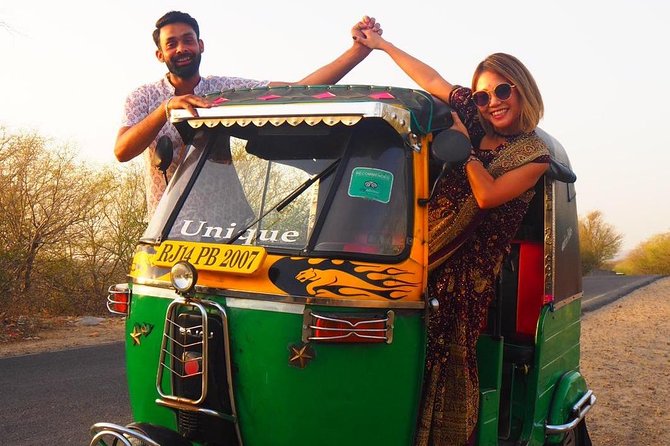
Most tours in Jaipur start with something famous. This one starts with something grounded. First up is Mandir Shree Sitaram Ji (about 15 minutes, admission free). It’s a temple connected to Lord Rama and Sita, and even if you don’t know the full backstory, you’ll feel the everyday worship rhythm. It’s a good warm-up stop because it’s not rushed and it helps you shift from tourist mode into city mode.
Then you roll to Tripolia Gate (about 15 minutes, admission free). This gate is known as the main entrance to the City Palace and is reserved for the royal family. Architecturally, it’s described as having Rajput and Mughal elements, which is a theme you’ll keep seeing across Jaipur. This is the kind of stop that’s short on paper but useful in real life: it gives you an immediate sense of how the old royal city was organized.
Tip for enjoying early stops: take a moment to look up before you look straight ahead. Jaipur architecture rewards that little habit, especially when you’re moving quickly in an open-air vehicle.
Jantar Mantar and City Palace: where the day turns from pretty to impressive
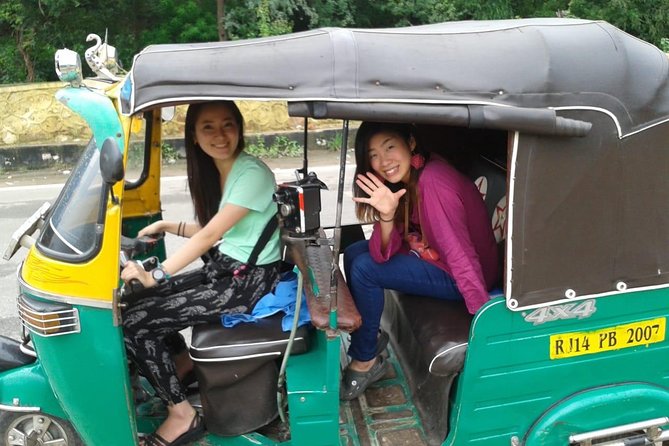
Next comes the big UNESCO moment: Jantar Mantar – Jaipur (about 45 minutes). This is the home of the world’s largest stone sundial, built by Sawai Jai Singh. Even if you’re not a science person, it helps to think of the site as practical astronomy made into architecture. The shapes aren’t random; they’re tools for measuring the sky.
One thing I like about including Jantar Mantar in a tuk-tuk day: it’s a controlled change of tempo. You go from streets and gates to a site that invites you to slow down and look carefully. Just plan for tickets here. Admission fees for monuments are not included, and camera fees can apply.
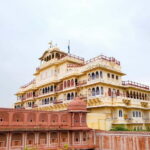
After that, you head to City Palace (about 2 hours). This is a vast complex with gardens and courtyards spread across a large area. It’s one of those places where you can easily rush, miss details, then feel annoyed later. Two hours gives you enough time to move at a comfortable pace and still actually see what you came for.
You’ll want to bring patience for crowd and security flow. That’s normal at major palaces. The practical win is that you get a real chunk of time, not a quick photo sprint.
Hawa Mahal and Royal Gaitor Tombs: iconic views plus a quieter pause
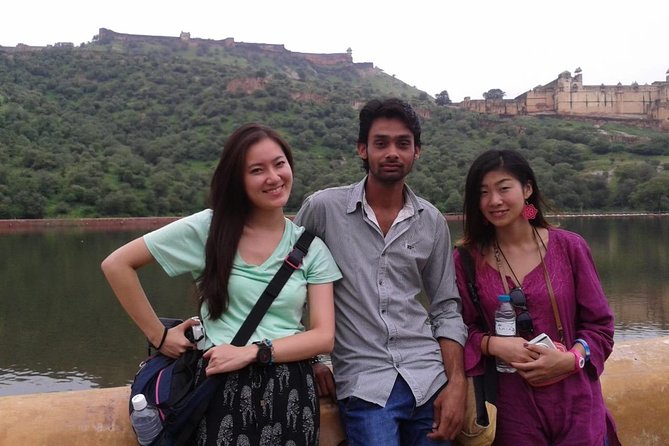
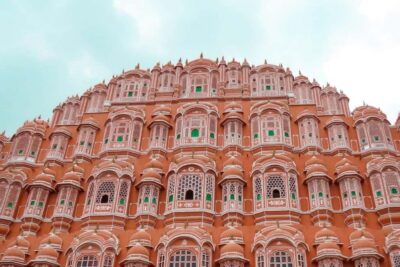
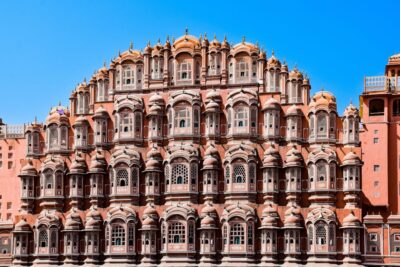
Then comes Hawa Mahal – the Palace of Breeze (about 45 minutes). It’s one of Jaipur’s most recognizable landmarks, built by Sawai Pratap Singh. The structure is known for its curved latticework and the idea that the royal household could view daily life while citizens had access too. This stop is all about angles. Stand in a position where you can see the lattice pattern repeating, not just the front facade.
Right after, you go to Royal Gaitor Tumbas (about 45 minutes). Unlike Hawa Mahal, this is more about calm than spectacle. These are intricately carved marble and sandstone cenotaphs honoring Jaipur’s former rulers, set near the foothills of Nahargarh Fort. If you want a mental break from the most photographed sights, this is a great place to exhale.
My advice: don’t treat this as only a scenic stop. Take a few minutes to notice the craftsmanship and symmetry. The architecture here rewards slower looking.
Jal Mahal and Panna Meena ka Kund: the water stop and the stepwell
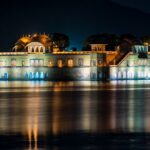
You get a short, quick moment at Jal Mahal (about 15 minutes). It’s the famous water palace sitting in the middle of Man Sagar Lake. The palace and lake area were renovated and enlarged in the 18th century. This stop is short by design, and that makes sense: it’s a view moment rather than a long exploration.
After that comes a site that often steals the show: Panna Meena ka Kund (about 30 minutes, admission free). This is a 16th-century stepwell in Amer known for its symmetrical, crisscross steps and arched niches. It used to function as a water reservoir and gathering spot for the community. The best way to enjoy it is to look down into the structure and then walk around enough to see the repeating geometric pattern.
If you like places that feel slightly cooler in your photos, this is a good one. Even if you don’t know the technical water-engineering details, you can appreciate the design logic immediately.




Amer: the hilltop finale with red sandstone and white marble
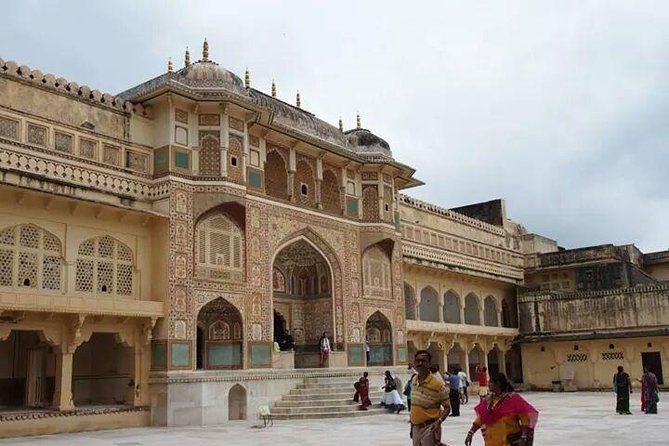
The day’s anchor is Amer (about 2 hours, admission free for this stop as listed). The Amber area is described as blending Hindu and Muslim architecture, built from red sandstone and white marble. This is the “save your energy for later” section of the day. You’ll want to be ready for a longer walk inside the complex areas and for changing light as you move through courtyards and gateways.
Even with a tour time allotment, Amer can feel like a world of its own. Two hours is enough to see the important pieces without feeling like you’re stuck all day in heat and stone.
If you’re visiting for the first time and you only have one day, Amer is one of the most valuable stops to prioritize.
Shopping time: gems, silver, bangles, textiles, and blue pottery
After the main sightseeing circuit, you get an afternoon shopping window. The plan highlights everything from precious gemstones and silver jewelry to bangles, clothes, blue pottery, and textiles.
Here’s how I suggest you approach it: treat this as a browsing block, not a panic-buy session. A tuk-tuk day already includes many architectural stops. Shopping time is best used to spot what you actually want to carry home. If you’re buying jewelry or gemstones, go slow and compare prices within the time you have.
One practical point: since monument tickets are expensive, shopping is not the place to spend money first. Set a simple budget before you enter shops so you’re not negotiating with a shrinking wallet.
What’s included, and what you’ll pay for separately
This tour is priced very low at around $5, but the value is in the transportation and time structure, not in monument tickets. Here’s the breakdown that matters most for planning:
Included
- Hotel/airport/railway/bus station pickup and drop
- Bottled water
- Fuel and parking charges
- Private tuk-tuk with an English-speaking driver
- Complimentary masala tea or coffee
- Mobile ticket
- Private format (only your group)
Not included
- Monument entrance fees and camera fees (listed as INR 2500 per head)
- Driver tips
- Meal expenses (listed as INR 1000 to 1500 per head for a good hygienic restaurant)
- Guide on request (INR 1000)
- Personal expenses
So what does that mean for value? If you’re going to pay for major palaces and observatories anyway, you’re really paying for the convenience of a private tuk-tuk, a driver who manages the day, and a route that covers the highlights. If you’re trying to avoid entrance fees as much as possible, this might feel less economical once you start adding tickets.
Meeting your driver: Rauf-style flexibility and friendly pacing
A standout detail from real-world experience with this tour style is the driver role. You’ll ride with an English-speaking driver, and the tour also mentions a tuk-tuk expert who can teach you how to drive at the end if you want.
In this case, the name Rauf comes up repeatedly as a friendly, helpful driver who adapts the schedule to preferences. That adaptability is a big deal with Jaipur traffic and crowd flow. If a site is packed, or if you want extra time for photos, a good driver can often adjust without breaking the full-day plan.
If you want lunch, a driver can also help with restaurant choice. The tour includes no meal, so you’ll rely on recommendations and your own budget.
Optional: a tuk-tuk driving lesson to end the day
If you’re the type who likes practical fun, there’s an optional extra at the end: you can ask to learn how to drive a tuk-tuk from a tuk-tuk expert. This is one of those add-ons that turns a standard sightseeing day into a personal memory you can tell people about.
You won’t want to plan a big shopping sprint right before that if you’re tired. Save your energy so you can enjoy the lesson.
Practical tips to keep your day smooth
A few things make the difference between a good day and an annoying one:
- Bring cash for tickets and tips. Entrance fees, camera fees, and tips aren’t included.
- Plan for camera fees. If you bring a camera, assume additional charges may apply since camera fees are listed.
- Dress for a long day. You’re out around major open-air sights and palaces, with limited stops for long breaks.
- Expect snug seating if you’re tall. The tuk-tuk is compact.
- Go with good weather. The tour notes it needs good weather, and if conditions are poor you’ll be offered a different date or a full refund.
Also, if you want someone to explain what you’re seeing in more depth, a guide can be arranged on request for INR 1000. That’s not included by default, but it can be worth it if your group wants more story and less self-reading.
Should you book the Jaipur sightseeing tuk-tuk tour?
I’d book it if you want a single-day overview of Jaipur that feels local and manageable. This is especially smart for first-timers who want the big names (City Palace, Hawa Mahal, Jantar Mantar, Amer) without spending your day in separate taxis or wrestling with directions.
I’d hesitate if you’re strict about entrance fees, because monument tickets and camera fees can add a lot to the final cost. I’d also be cautious if you need lots of legroom or have mobility concerns, since tuk-tuk seating can be tight.
If you’re time-limited and you like the idea of riding through Jaipur streets like a local, this tour is a straightforward way to get your bearings fast and see the places you’ll be glad you didn’t skip.
FAQ
Is hotel pickup and drop-off included?
Yes. The tour includes pickup and drop-off from your hotel (and also from the airport, railway station, or bus station).
How long is the Jaipur tuk-tuk sightseeing tour?
It’s approximately 8 hours for a full day.
Are monument entrance fees included?
No. Monument entrance fees and camera fees are not included, and they are listed as INR 2500 per head.
Do I get an English-speaking driver?
Yes. The tour includes a private tuk-tuk with an English-speaking driver.
Is food included?
No meal is included. Bottled water is included, and you also get complimentary Indian masala tea or coffee, but lunch costs are not included.
Is there time for shopping?
Yes. The plan includes an afternoon shopping period with items like gemstones, silver jewelry, bangles, clothes, blue pottery, and textiles.
Can I learn to drive a tuk-tuk during the tour?
Yes. At the end of the tour, if you’d like to learn, the tuk-tuk expert can teach you how to drive.