REVIEW · JAIPUR
Jaipur: Guided History Walking Tour with Food Tasting
Book on GetYourGuide →Operated by Multi Tours India · Bookable on GetYourGuide
Jaipur’s lanes are best tasted, not just photographed. This guided history walk turns the Pink City into something you can walk through: old streets, markets, temples and havelis, plus a food stop plan that makes sense.
I especially like the way the guide connects architecture and daily life. You’re not bouncing between random sights; you learn the local customs and spiritual beliefs that help the city’s details click.
One thing to think about: this is a walk-focused experience on uneven old streets. It’s not suitable for wheelchair users, and you’ll also need to watch out if you have food allergies.
In This Review
- Key things to know before you go
- Walking Jaipur’s Pink City from New Gate
- Chaura Rasta: Photo stop, tea, and your first street-food lessons
- Badi Chaupar: Square stories, local snacks, and scenic pauses
- Tripolia Bazar: A photo stop that helps you read the city
- Choti Chaupar and the Flower Market area: more bites, then sweets
- What you’ll taste: Jaipur classics you can actually picture
- The guide factor: stories, customs, and artisan sightings
- Price and value: why $13 can work here
- Logistics that affect your comfort (and your photos)
- Who this tour is best for (and who should skip it)
- Should you book this Jaipur Pink City history-and-food walk?
- FAQ
- How long is the Jaipur guided history walking tour with food tasting?
- Where does the tour start and where does it finish?
- Is this tour a private group?
- What food and drinks are included in the tastings?
- What languages are the guides available in?
- Is the tour suitable for wheelchair users?
- Is the tour suitable for people with food allergies?
- Is smoking allowed on the tour?
Key things to know before you go
- A short 3-hour format that still covers multiple historic neighborhoods without dragging you across town
- Real street-level food stops built around Jaipur classics like pyaaz kachori, chaat, lassi/masala chai, and sweets
- Photo moments and market time around Chaura Rasta, Badi Chaupar, Tripolia Bazar, Choti Chaupar, and the Flower Market area
- A guide-led history thread, tying together customs, rituals, and how Jaipur’s layout evolved
- Optional artisan sightings (like potters, jewelers, miniature painters, or spice vendors) depending on the day
- Private group setting, so the pace and questions can feel more natural than a large group shuffle
Walking Jaipur’s Pink City from New Gate
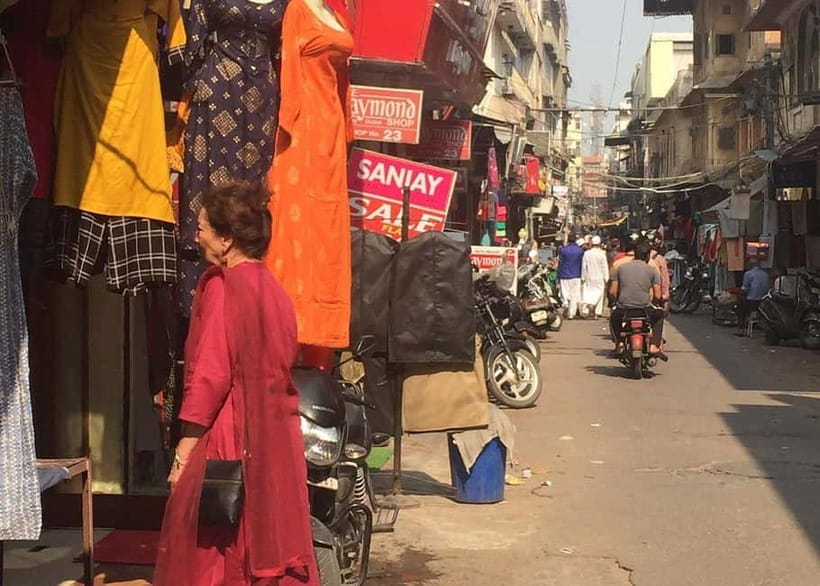
Jaipur looks made for postcards. But the best way to understand it is on foot, with the guide keeping you oriented as the streets narrow and the neighborhoods change character. You start at New Gate, right where the energy of the old city begins to show—shops, pedestrians, scooters in the distance, and that constant sense of movement.
The walking style here matters. You’re not doing long, exhausting hops. This is a 3-hour loop that stays in the historic core and lets you slow down just enough to notice what you’d otherwise miss—doorways, courtyard rhythms, temple silhouettes, and the little cues people use to navigate daily life.
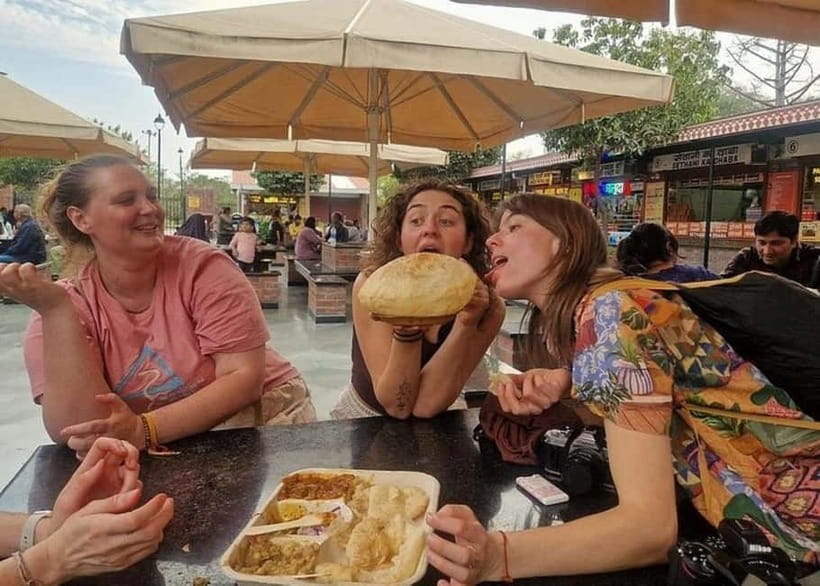
And yes, there’s food. Not just one snack. You get multiple tastings, including a traditional dessert and masala chai at local tea shops. That’s what turns the walk from sightseeing into a lived-in experience.
You can also read our reviews of more walking tours in Jaipur



Chaura Rasta: Photo stop, tea, and your first street-food lessons
After meeting your guide at New Gate, the route takes you into Chaura Rasta, one of those Jaipur lanes where you can feel the city’s trading history in the shopfronts. There’s a photo stop early on, which is a smart move. It helps you get oriented before the alleys tighten.
From there, you’ll hit a tea-and-street-snack segment. This is where I like the tour approach: you taste first, then you start learning what you’re seeing. A plate and a cup make the guide’s explanations land faster. If you’re a bit nervous about ordering food in a crowded market, this part also gives you a safe starting point.
Expect a guided walk that mixes practical observation with stories—how people dress, how greetings and small etiquette work, and what the different market spaces are used for. You’re also walking in real conditions: sun on the street, the sound of vendors calling, and the smell of frying and spices drifting through the lane.
Tip for comfort: wear comfortable shoes and bring your hat and sunscreen. Even a short outing in Jaipur’s sun can feel longer than you planned.
Badi Chaupar: Square stories, local snacks, and scenic pauses
Next comes Badi Chaupar, a major square area that functions like a hub. The big advantage of stopping here is contrast. You go from lane-level motion into an open point where the city’s social rhythm becomes obvious—where people meet, shop, and move through.
You’ll get a guided segment here plus food tastings and regional snacks. This stop tends to work well because it’s both educational and practical. The guide uses the surroundings to explain architecture elements and how spiritual beliefs show up in everyday places.
Also, you’ll have a chance for scenic views on the way. That’s useful because old-city walking can feel like a blur of walls and shop signs. Getting a view break resets your eyes and your sense of direction.
One small caution: squares still get crowded. You’ll want to stay close to the guide and be ready for moments of slowing and starting.
Tripolia Bazar: A photo stop that helps you read the city
Then you’ll head to Tripolia Bazar, with another photo stop before continuing your guided walking. Markets like this are tricky on your own. They’re fascinating, but they’re also dense. With a guide, you don’t just see stalls—you learn what to look for: how certain storefronts tend to cluster, what kinds of items signal the neighborhood’s identity, and how people move through the space.
This is also one of the most satisfying points of a food-and-history combo tour. By the time you reach this bazar segment, you’ve already tasted a bit, so the smells and visual cues start to feel like clues. You’re reading the city with more than your eyes—you’re using taste and context too.
Choti Chaupar and the Flower Market area: more bites, then sweets
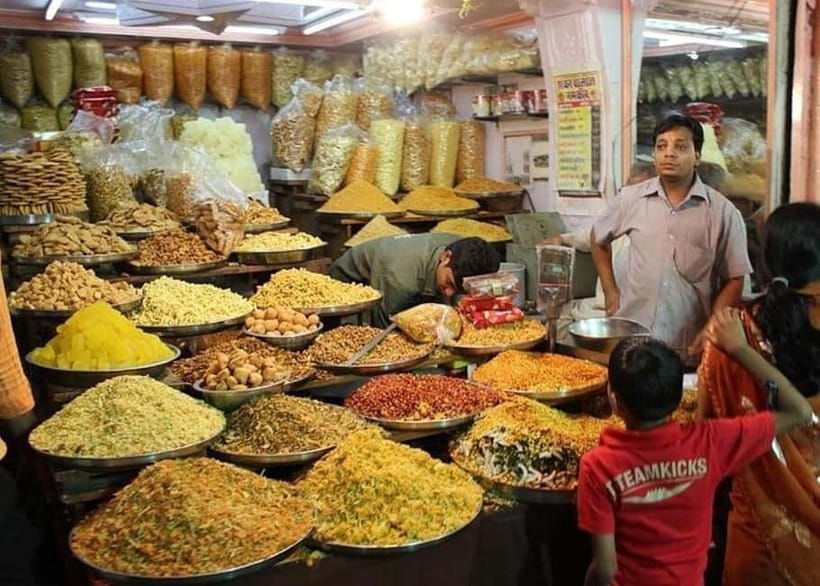
After Tripolia Bazar, the tour shifts to Choti Chaupar, and this is where street snacks take center stage again. Expect more food tasting and local snacks in the Choti Chaupar lane network. If you’re the type who likes ordering the same dish in different places to compare, this part scratches that itch—because the focus stays on Jaipur street food variety.
You’ll also have another photo stop around the Flower Market area (Choti Chaupar). Even if flowers aren’t what you came for, this stop has value. Market stalls like this help you understand what the neighborhood supports day-to-day. People come here with errands and routines, not just for sightseeing.
And then the walk finishes in the same general area—the Flower Market (Choti Chaupar). Ending there is a practical choice: you’re not dumped far away from other food options or the next stage of your day.
You can also read our reviews of more food & drink experiences in Jaipur






What you’ll taste: Jaipur classics you can actually picture
Food tasting is the headline here, but the better story is what the tasting menu says about Jaipur itself. You’re not eating random snacks; you’re sampling a mix of Jaipur and Rajasthani staples that show up across local tea stalls and market counters.
Here are the kinds of dishes you should expect on the tour:
- Pyaaz Kachori (savory, onion-forward, usually crisp and filling)
- Aloo Tikki or Chaat (potato-based street bites and tangy, spiced options)
- Samosa
- Mirchi Bada (spiced chili, typically deep-fried, often bold)
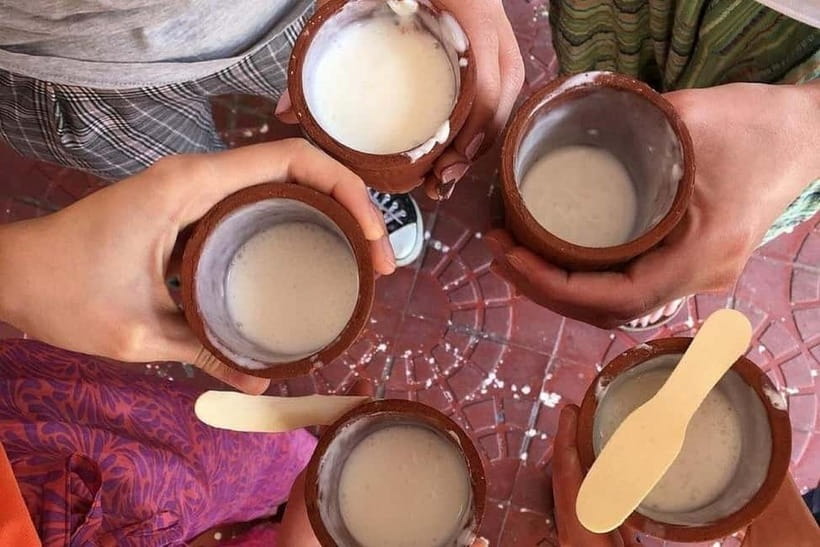
- Lassi or Masala Chai (cooling dairy or warming tea)
- Traditional sweets such as Ghewar or Rabri
- Kulfi or other regional desserts
This mix is smart for first-time visitors because it gives you a spectrum: crunchy snacks, spiced mains-by-snack, hot drinks, and dessert. You’ll get enough variety to feel like you learned something, without the risk of eating one heavy dish for the whole walk.
One note: this tour isn’t suitable for people with food allergies. If you have any allergy, don’t assume you can swap items. The format is built around tasting.
The guide factor: stories, customs, and artisan sightings
A guided history walk lives or dies by the guide. The best part of this experience is that the guide doesn’t just recite facts. They connect what you’re seeing to how people think and live—local customs, architectural elements, and spiritual beliefs.
Depending on the day, you might also get to meet artisans or see them working—potters, jewelers, miniature painters, or spice vendors. You won’t always get the same lineup, but the intention is consistent: show you how craft and commerce shaped Jaipur’s old-city identity.
And the guide style matters too. In guide feedback, names like Rajesh, Krishna, and Ali Irfan come up for a reason. They’re described as friendly and passionate about Jaipur, with tours that focus on sharing rather than pressuring. One recurring theme is that the experience doesn’t feel pushy when it comes to purchases, which is exactly what you want when you’re walking through markets with your hands full of food.
Price and value: why $13 can work here
At $13 per person for a 3-hour private walking tour in the old city, the value is mostly about three things:
First, the food. You’re not just sampling one item. You get multiple tastings, plus bottled water, a traditional dessert, and masala chai. Those extras add up fast if you were to recreate the plan on your own.
Second, the guide time. In old Jaipur, figuring out what you’re looking at can take longer than you think. Paying for a guide compresses learning time into a short walk.
Third, the route stays efficient. You’re not spending this time in long transit. You start at New Gate, cover key historic market areas, and finish near the Flower Market zone where you can continue your day.
The main tradeoff is that you’re walking and eating in markets. If you prefer quiet museums and long pauses in air-conditioned spaces, this may feel too active. If you want sensory, street-level Jaipur with context, it’s a good deal.
Logistics that affect your comfort (and your photos)
This tour is private group, which usually means a calmer pace and fewer crowd-management headaches. You’ll still be navigating market foot traffic, but the flow is easier than a huge public group.
Bring:
- Comfortable shoes for uneven streets
- Hat and sunscreen
- Camera if you want to capture the photo stops
- Water (you’re provided bottled water, but carrying extra helps)
Not allowed: smoking.
Languages are available in English plus several others, including Spanish, Russian, German, Japanese, Chinese, and French. That’s a big win if you want your questions answered clearly while you’re in the middle of a busy bazar.
Who this tour is best for (and who should skip it)
I’d recommend this walk if you’re:
- Seeing Jaipur for the first time and want an efficient old-city introduction
- Food-first, history-second, but you want the history to actually connect
- Comfortable with walking through markets for a few hours
- Interested in how temples, havelis, courtyards, and stepwells fit into everyday life (you may see these elements as part of the guided segments)
I’d skip it if you:
- Use a wheelchair (it’s not suitable for wheelchair users)
- Have food allergies (not suitable)
- Prefer long, quiet sightseeing without street food as a core part of the experience
Should you book this Jaipur Pink City history-and-food walk?
If you want Jaipur that feels personal instead of scripted, I think this is an easy yes. You get a compact, well-paced introduction to the old city, with multiple tastings and a guide who ties buildings and customs to the lived reality around you.
Book it if:
- You like walking + eating in local markets
- You want a structured plan for classic Jaipur dishes
- You want a guide who shares stories without turning it into a shopping push
Consider a different option if:
- You can’t do street-food tastings or you have food allergies
- You need wheelchair-friendly routes
- You’re looking for mostly monumental sights with minimal walking and eating
FAQ
How long is the Jaipur guided history walking tour with food tasting?
It lasts 3 hours.
Where does the tour start and where does it finish?
The tour starts at New Gate and finishes around the Flower Market (Choti Chaupar) area.
Is this tour a private group?
Yes, it’s listed as a private group.
What food and drinks are included in the tastings?
The included items are food tasting, bottled water, a traditional dessert, and masala chai at local tea shops. The tour also includes handpicked Rajasthani and Jaipur-specific dishes such as pyaaz kachori, aloo tikki or chaat, samosa, mirchi bada, and lassi or masala chai.
What languages are the guides available in?
The live tour guide is available in English, Spanish, Russian, German, Japanese, Chinese, and French.
Is the tour suitable for wheelchair users?
No. It is not suitable for wheelchair users.
Is the tour suitable for people with food allergies?
No. It is not suitable for people with food allergies.
Is smoking allowed on the tour?
No. Smoking is not allowed.