REVIEW · JAIPUR
2 Day Jaipur Tour for First-Time Visitors
Book on Viator →Operated by Jaipur Taxi Cab · Bookable on Viator
Jaipur in two days can feel surprisingly manageable. This private tour gives you daily pickup and drop-off plus an air-conditioned car, so you can focus on the sights instead of sorting logistics. I like that the plan is built around Jaipur’s big hits (think City Palace, Hawa Mahal, Jantar Mantar), while still letting you adjust the order based on what you care about most. I also like that you’ll have an English-speaking driver-guide style experience with history explanations that help the places click instead of feeling like random photo stops.
The one thing to plan for: some key sites have admission tickets not included unless you select that option. Also, parts of the itinerary include craft and factory-style stops, which can be great if you enjoy hands-on making, but they may feel sales-heavy if you just want monuments.
If you’re visiting Jaipur for the first time and want a smooth, first-pass overview, this is a practical setup. Just keep a little flexibility in your day—Jaipur traffic can turn even short distances into longer ones.
In This Review
- Key things that make this 2-day Jaipur plan work
- Private AC Car and English Driver: The Real Win in Jaipur Traffic
- Price and Logistics: What You Pay for at $27.97 per Person
- Day 1 in Pink City: City Palace, Hawa Mahal, Jantar Mantar, and the Art Stops
- City Palace: Where Jaipur’s royal story becomes architecture
- Hawa Mahal: The windows you can’t stop photographing
- Jantar Mantar: Jaipur’s astronomy tools in plain sight
- Jaipur block printing: a short hands-on taste
- Albert Hall Museum and Birla Mandir: a culture reset
- Patrika Gate: color and pattern at Jawahar Circle
- Day 2 Around Amer and the Aravalli Hills: Forts, Views, and Water Palace Moments
- Amer: the historic town with real presence
- Jaigarh Fort: strength, scale, and the Jaivana cannon
- Nahargarh Fort and Royal Gaitor: views plus tomb craftsmanship
- Jal Mahal: the Water Palace pause
- Monkey Temple (Galta Ji): temples, tanks, and a friendly crowd
- Ramgarhmode plus the ornaments factory: craftsmanship with a sales edge
- Craft and Factory Stops: How to Avoid Feeling Like It’s All Shopping
- Timing, Admissions, and How to Budget Without Surprises
- Who This Tour Fits Best (and who might want a different pace)
- Should You Book This 2-Day Jaipur Tour?
- FAQ
- How much does the 2-day Jaipur tour cost?
- Is this a private tour?
- Do I get picked up from my hotel or the airport?
- Is the vehicle air-conditioned, and will the driver speak English?
- Are monument entry tickets included?
- Is lunch or dinner included?
- Is there free cancellation?
Key things that make this 2-day Jaipur plan work

- Private AC transportation that keeps you comfortable between stops
- A flexible, preference-based itinerary built for first-timers
- High-value photo and landmark timing across Day 1 and Day 2
- Craft experiences and workshops mixed into the sightseeing
- Free and ticketed stops together, so you can manage your budget
Private AC Car and English Driver: The Real Win in Jaipur Traffic
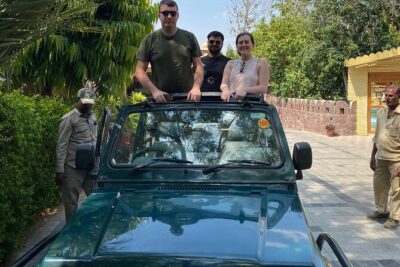
In Jaipur, time disappears fast if you’re constantly recalculating routes, negotiating rides, or waiting in lines without a plan. The biggest value here is that you get your own private car with an English-speaking driver, plus bottled water for the ride. That matters because the itinerary is packed with places spread across different parts of town—especially once you head out toward Amer and the hills.
The driver component is also where the day feels easier. You can ask questions on the move, and you’re not stuck translating signs while you’re trying to decide where to go next. In past trips, English communication has included guides such as Asif, Chirag, Hansraj, and Mukesh, and drivers like Jameel have been singled out for navigating traffic safely. That pattern matters: good driving isn’t just comfort, it’s stress control.
You’ll also see why a private format helps with pacing. Even when the schedule is “full,” you can usually slow down at a place where you want photos or take a shorter look where you’re less interested. That’s a big difference between a rigid group tour and a plan designed for you.
You can also read our reviews of more tours and experiences in Jaipur


Price and Logistics: What You Pay for at $27.97 per Person
At $27.97 per person for a 2-day private-car experience, this is priced like a budget-friendly way to cover a lot of ground without hiring a full-day driver on your own. What helps this feel like value is that the essentials are included: fuel and parking, bottled water, and pickup/drop-off from your hotel or a preferred location. You also get a mobile ticket and group discounts.
What’s not included by default: lunch and dinner, and monument entry tickets unless you chose the option that includes them. That means you should budget for at least some additional spending once you arrive. The tour lists “admission ticket not included” at multiple major sites across both days, so don’t assume everything is prepaid.
Also, this is a “cover the highlights” style tour. You’ll be moving efficiently between stops, but it’s still sightseeing with real travel time. If you’re the type who wants long, slow museum visits or extra time for shopping, you may want to build in your own breaks.
Day 1 in Pink City: City Palace, Hawa Mahal, Jantar Mantar, and the Art Stops
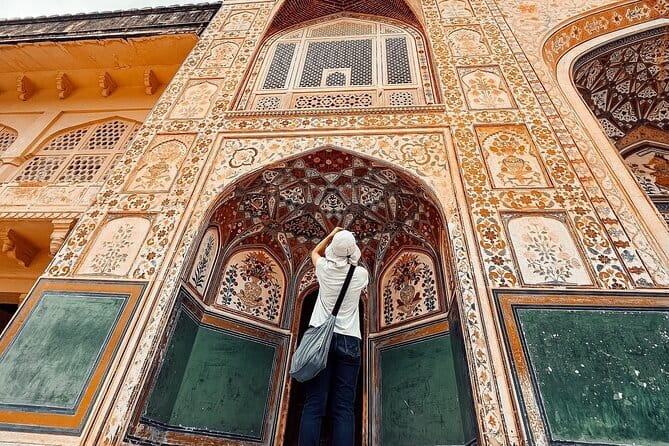
Day 1 is built around Jaipur’s classic center—places you’ll recognize fast even if you’ve only seen them in photos. It also mixes big monuments with a few culture-focused stops, so the day feels less like a checklist.
City Palace: Where Jaipur’s royal story becomes architecture
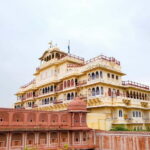
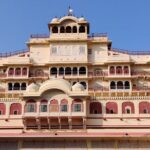
You start at City Palace, a major landmark in the heart of the Pink City. It’s an 18th-century complex tied to Maharaja Sawai Jai Singh II, blending Rajasthani and Mughal styles. The time allotment is about two hours, which is enough to get a sense of the scale and the courtyards without burning the whole day.
The best way to enjoy City Palace is to treat it like a “visual map.” Look for how the buildings are arranged and how the different sections relate to each other. When you understand that layout, the later stops feel easier to place in your head.
Watch-out: admission isn’t included by default, so check whether you’ve selected the option that covers entry.
Hawa Mahal: The windows you can’t stop photographing
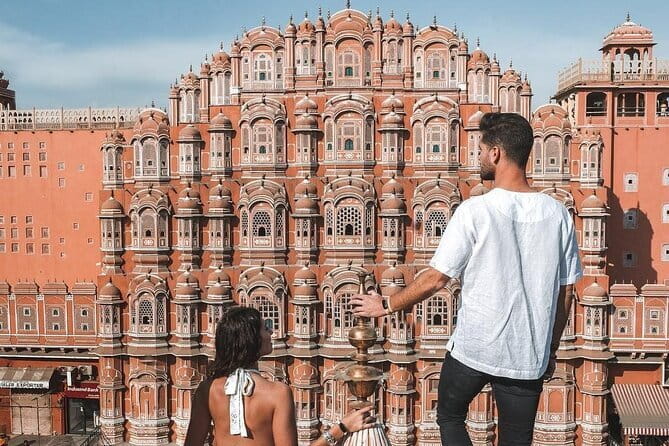
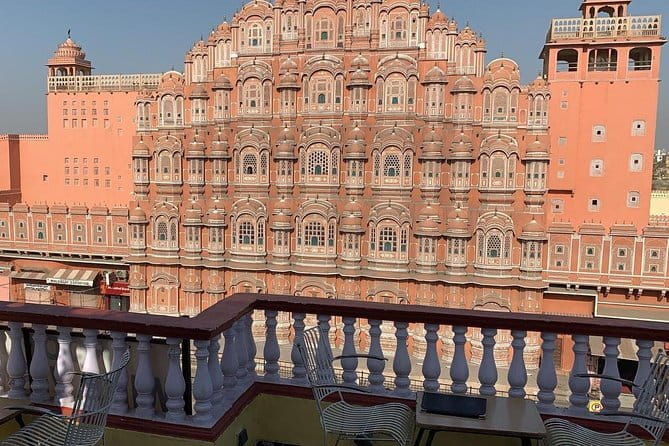
Next is Hawa Mahal—the “Palace of Breeze”—famous for its 953 small jharokhas (windows). You get about 45 minutes here, which is enough to appreciate the façade from multiple angles and take the iconic photos.
This is one of those places where the outside is the main event. If you go in expecting a long, interior-heavy visit, you might feel a little rushed. If you’re happy with façade photography and quick orientation, it’s perfect.
Admission is not included, so again, plan for that.





Jantar Mantar: Jaipur’s astronomy tools in plain sight
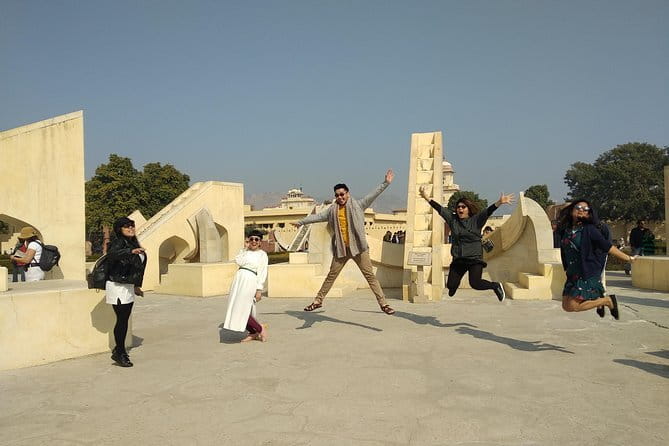
Then you hit Jantar Mantar, the astronomical observatory built in 1734. It’s known for large instruments designed to measure time and make predictions like eclipses. You get about 45 minutes, and that’s a good amount of time to walk, read what you can, and understand why these are more than decorative rocks.
If you like “how did they figure this out?” science-and-history energy, this stop is a strong payoff. It also helps break up the day’s visual intensity, since you’re focusing on instruments and design rather than only architecture.
Jaipur block printing: a short hands-on taste
Jaipur Block Printing is a quick 30-minute stop with traditional block printing techniques. Admission is marked as free. This is one of those additions that can make a short tour feel more human. Even without becoming a craft expert, you’ll see how patterns transfer and why the process matters.
If you love crafts, this is the one place in the plan where the “shopping-adjacent” energy is replaced by actual making and technique.
Albert Hall Museum and Birla Mandir: a culture reset
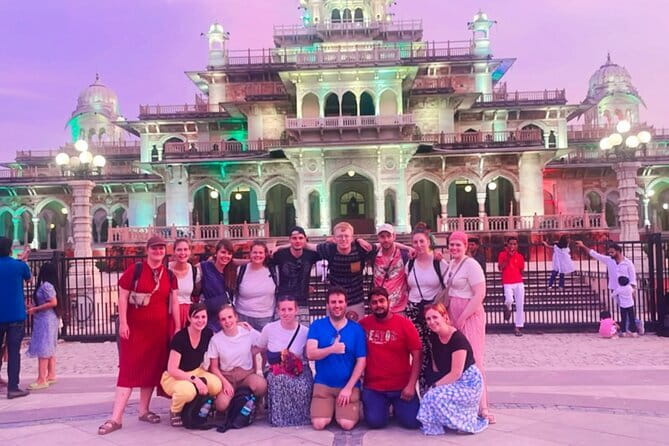
After the monuments, you go to Albert Hall Museum (about one hour). It’s listed as the oldest museum in Rajasthan and was completed in 1887 in an Indo-Saracenic style. Admission isn’t included by default. This is a good stop if you want a bit more context and objects—think sculptures and pottery in the mix.
Then comes Birla Mandir, the Laxmi Narayan Temple, built with pure white marble. It’s a 30-minute stop and listed as admission free. It’s also a nice contrast to the older royal architecture: modern temple, clean lines, bright marble.
Patrika Gate: color and pattern at Jawahar Circle
Day 1 ends at Patrika Gate near Jawahar Circle, a painted gateway with arches designed around Rajasthan’s culture and heritage themes. It’s about 30 minutes and free to enter.
This stop is great for golden-hour photos. Even if you’re not religious or museum-focused, it’s visually satisfying and doesn’t require a big time commitment.
Day 2 Around Amer and the Aravalli Hills: Forts, Views, and Water Palace Moments
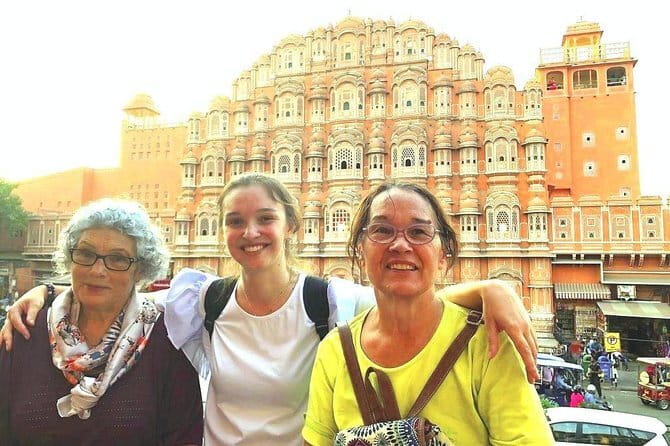
Day 2 is built for the edges of Jaipur—historic forts, hilltop viewpoints, and scenic stops. It’s also the day where your schedule can feel more “out there,” because you’re traveling to the Aravalli hills area.
Amer: the historic town with real presence
You start at Amer, located just outside Jaipur. It’s about two hours and listed as admission free. Amer is known for its historic buildings and the overall feel of a royal past captured in place.
Amer is a place where you’ll appreciate good pacing. If you try to rush, you’ll miss the feeling of the town’s layout. If you go too slow, the forts on the hill might crowd your later time. The allotted two hours is a balanced middle.
Jaigarh Fort: strength, scale, and the Jaivana cannon
Then it’s Jaigarh Fort, built in 1726 by Maharaja Jai Singh II. You get about one hour. Admission is not included. It’s known for housing the Jaivana Cannon, described as the world’s largest on wheels.
This is where the day leans into “fort as engineering.” You’re not just looking at walls—you’re seeing how the fort’s strength connects to its purpose.
Nahargarh Fort and Royal Gaitor: views plus tomb craftsmanship
After Jaigarh, you go up to Nahargarh Fort, built in 1734 by Maharaja Sawai Jai Singh II. You get about two hours. Admission isn’t included. This fort is known for its architecture and overlooks Jaipur, so it’s a strong choice if you want a panoramic sense of where the city sits.
Nearby is Royal Gaitor Tumbas, with intricately carved cenotaphs of Jaipur rulers, blending Rajasthani and Mughal architecture. You have about 45 minutes here; admission isn’t included.
If you’re into stonework and design details, this is a rewarding stop. The tombs can feel like a quieter counterpoint to the big fort walls.
Jal Mahal: the Water Palace pause
Next is Jal Mahal, the Water Palace in Man Sagar Lake. You get about 15 minutes and it’s admission free.
This stop works best as a quick reset. It’s short by design, so you can enjoy the sight without draining your energy. Don’t use all your time here—save energy for the next spiritual and craft-heavy stops.
Monkey Temple (Galta Ji): temples, tanks, and a friendly crowd
Then you’ll visit the Monkey Temple, part of Galta Ji complex. It’s about one hour, admission not included. It’s known for sacred water tanks and intricate temples.
One practical note: this stop can be busy and active. If you’re there for quiet photos, aim for a calm moment inside the hour rather than waiting for perfect emptiness. Also, keep your attention on your belongings—life around temple areas is lively.
Ramgarhmode plus the ornaments factory: craftsmanship with a sales edge
The final stop on Day 2 is Ramgarhmode, described as a silver jewelry and ornaments factory with craftsmanship up close. It’s about 30 minutes and listed as admission free.
This is the other “shopping-adjacent” element on the itinerary. If you like seeing how objects are made, it can be genuinely interesting. If you dislike sales pressure, treat it like a quick show-and-tell: enjoy what you can learn, don’t feel obligated to buy.
Craft and Factory Stops: How to Avoid Feeling Like It’s All Shopping
This tour includes at least two craft-adjacent style stops: the block printing session on Day 1 and the silver jewelry/ornaments factory on Day 2. The block printing is explicitly hands-on in the way it’s described, while the factory stop is framed around viewing craftsmanship.
That said, there has been one sharp negative note about a tour experience that turned into an “ambush shopping” situation and missed stops. I can’t tell you what will happen on your day, but I can tell you how to protect yourself.
Here’s what works in practice:
- Ask your driver/guide to confirm what’s included and what the time limit is at each craft stop.
- Keep your expectations straight: you’re visiting landmarks and workshops, not only wandering museums.
- If a stop starts turning into high-pressure selling, you can request a tighter visit and move on. A private format is meant to give you that control.
Timing, Admissions, and How to Budget Without Surprises
Because many major monuments are marked as “admission ticket not included,” you’ll want to plan for extra payments on the spot. The tour does say that monuments entry tickets are included if you select that option, so the key is choosing the right add-on before you go.
Also, the tour does include bottled water and covers fuel and parking. What it doesn’t cover is lunch and dinner, so you’ll want a meal plan for both days. The itinerary is heavy with stops, so eating late or off-route can waste time.
A smart strategy is to treat the trip like this:
- Expect at least some sites to be ticketed even if you’re doing “just sightseeing.”
- Decide which moments matter enough to pay admissions for, and which can be quick exterior looks.
- Bring small cash or a payment method that works where you’ll be asked to pay.
Who This Tour Fits Best (and who might want a different pace)
This is a good fit if you:
- Are a first-time visitor and want a full “highlights of Jaipur” pass in two days
- Prefer a private vehicle rather than hopping between public transport options
- Like having an English-speaking guide style explanation, not just a driver who drops you off
- Want a mix of monuments and crafts (printing plus an ornaments workshop)
It may feel less ideal if you:
- Want lots of unstructured time at fewer sites
- Don’t enjoy any shopping-oriented stops, even if there’s some craftsmanship
- Plan to spend long sessions inside multiple ticketed museums without added time
Also, if you can, you’ll enjoy this more when you’re ready to move. Jaipur rewards curiosity, but it also punishes delays.
Should You Book This 2-Day Jaipur Tour?
I’d book it if your goal is simple: see the major Jaipur highlights, get comfortable transport, and avoid the mental load of planning. The pricing is attractive for the amount of coverage—especially with AC private transportation, bottled water, and pickup/drop-off included.
I’d be cautious if you’re very sensitive to shopping pressure or if you hate ticket-related surprises. The presence of craft and factory stops is part of the design, and the safest approach is to set expectations early and keep the day under your control.
If you want a practical first look at Jaipur with enough structure to stay efficient and enough flexibility to adjust, this tour is a strong option.
FAQ
How much does the 2-day Jaipur tour cost?
The price listed is $27.97 per person.
Is this a private tour?
Yes. It’s a private tour/activity, and only your group participates.
Do I get picked up from my hotel or the airport?
Yes. The tour includes hotel or airport pickup and drop-off from your hotel or any preferred location.
Is the vehicle air-conditioned, and will the driver speak English?
Yes. It includes private AC transportation with an English-speaking driver.
Are monument entry tickets included?
Monument entry tickets are not included by default, but they are included if you select the option for monuments entry tickets.
Is lunch or dinner included?
No. Lunch and dinner are not included.
Is there free cancellation?
Yes. You can cancel up to 24 hours in advance for a full refund. If you cancel less than 24 hours before the start time, the amount paid is not refunded.