REVIEW · JAIPUR
Jaipur Full-Day Heritage Tour with Guide
Book on Viator →Operated by Jaipur City Tour Travels · Bookable on Viator
Jaipur starts with a scent and a smile. This full-day heritage loop is built around a great morning stop—the flower market—then stacks the big hitters like Amer Fort and City Palace with an English-speaking driver and guide. The one thing to watch: several major monuments list admission as not included unless you picked the ticket option.
I like that the pace feels practical: you get a real block of time at Amer, quick visual hits at spots like Jal Mahal, and then enough time at the signature sites to actually make sense of what you’re seeing. Plus, you’re in a private A/C vehicle with pickup and drop-off, so you can focus on photos and questions instead of haggling over how to get between areas.
In This Review
- Key things I’d circle before you go
- The shape of the day: 8 hours that actually fit Jaipur
- Stop 1: Jaipur flower market before the city fully wakes up
- Amer Fort: the big fort block where the day earns its keep
- Panna Meena ka Kund: the stepwell that makes geometry feel human
- Jal Mahal: a quick look at the Water Palace from the right mindset
- Royal Gaitor Tumbas: the royal cenotaphs stop that adds contrast
- Hawa Mahal, Jantar Mantar, and City Palace: three icons, one practical ticket check
- Hawa Mahal: the palace of breeze
- Jantar Mantar: pre-modern science in stone
- City Palace: where Mughal and Rajput meet
- Walking the Heritage Pink City: use it for markets, not just photos
- Price and value: why $11.35 can make sense for a private day
- The guide and driver effect: reliability you can feel
- Small risks to plan for: heat, extra tickets, and weather
- Should you book this Jaipur full-day heritage tour?
- FAQ
- How long is the Jaipur full-day heritage tour?
- Does the tour include pickup and drop-off?
- Is transportation air-conditioned?
- What’s included in the price?
- Are meals included?
- Are admission tickets included for all the stops?
- Which stops have the shortest time on the schedule?
- What time of day does the tour start?
- Is this tour private?
- What’s the cancellation policy?
Key things I’d circle before you go
- Flower market first thing for early energy, color, and simple sensory immersion
- 2 hours at Amer so the fort doesn’t blur into a photo stop
- Panna Meena ka Kund stepwell with its geometric, crisscross feel
- Jal Mahal photo-view time even if you’re not going inside
- Know which monuments may cost extra (Hawa Mahal, Jantar Mantar, City Palace, and Royal Gaitor)
The shape of the day: 8 hours that actually fit Jaipur
This tour is designed as a single, efficient day out in Jaipur city. Expect about 8 hours of sightseeing, with hotel or airport pickup and drop-off, plus travel in a private A/C vehicle. For most people, that’s the sweet spot: long enough to cover the major highlights, short enough that you’re not melting by sunset.
The best part for your comfort is that the driving is handled. Jaipur traffic can be unpredictable, so a good driver helps you keep the day on track. The tour also mentions a mobile ticket, which usually means fewer last-minute hassles once you’re on the ground.
Timing note: the day starts with the flower market, then moves outward toward Amer and back toward the Pink City core. If you’re the type who likes to ask questions, this structure works well because you get the big context early, not at the end when everyone’s tired.
You can also read our reviews of more guided tours in Jaipur


Stop 1: Jaipur flower market before the city fully wakes up

The day kicks off at the morning flower market. It’s not a landmark in the palace-and-fort sense, but it’s one of the best cultural entry points you’ll get in Jaipur. You’re looking at daily life—vendors arranging blooms, people trading and buying for rituals and celebrations—and the smells and colors set the tone for the rest of the tour.
Why it’s worth doing early: you get a calmer, more focused look before the streets feel more chaotic. You also get a better contrast with everything that comes next. After the market, the architecture and royal history land differently because you’ve already seen how the city breathes day to day.
Practical tip: this stop is about 30 minutes, so go in with the mindset of seeing, not sprinting. Quick photos are great, but linger for details—flowers sold by type, baskets, and the rhythm of the sellers. Admission is listed as free here, so you’re paying mostly with your time and attention.
Amer Fort: the big fort block where the day earns its keep
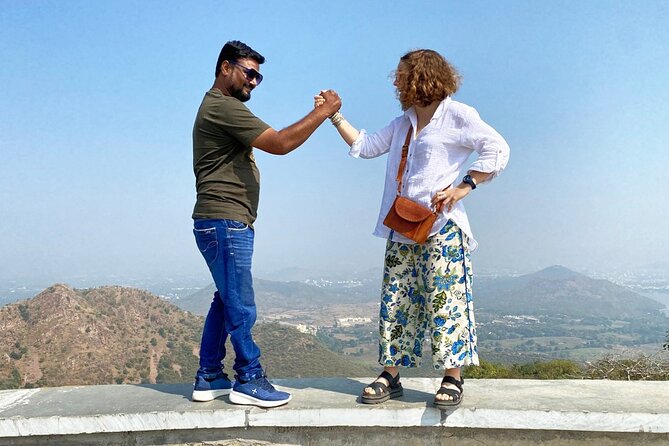
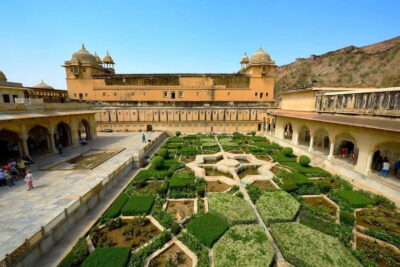
Next up is Amer, about 11 kilometers from Jaipur, known for its majestic fort. You get around 2 hours at Amer, which is long enough to do more than the basics.
Here’s what makes Amer memorable: it’s tied to the power story of Jaipur’s rulers. The fort is associated with Maharaja Man Singh I, and it’s traced to construction around 1592 AD. That date matters because Amer isn’t just a pretty backdrop—it’s part of how this region organized authority, defense, and display.
How to get the most from your time there:
- Use your guide’s framing before you start walking. Forts can feel like “more walls” unless someone explains the layout and purpose.
- Plan your photo stops. Amer has viewpoints that reward slowing down, but the day is scheduled, so you’ll want a quick mental map: where you’ll stand for wide shots, and where you’ll hunt for details.
- Wear comfortable shoes. You’ll be moving for that full 2-hour window.
Admission at Amer is listed as free on this tour, so you can focus on the experience instead of ticket math for this stop.
Panna Meena ka Kund: the stepwell that makes geometry feel human
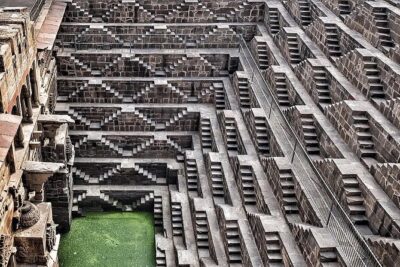
After Amer, you head to Panna Meena ka Kund, a 16th-century stepwell located in the Amer area. This stop is about 30 minutes, and it’s one of those places that’s easy to miss if you’re only chasing the famous names.
What you should look for is the symmetrical, crisscross step design within a square structure. Even if you’re not a “history person,” the design reads instantly once you start noticing the pattern. It also helps to see it as more than architecture: it was a community water storage site, so the form connects directly to daily survival and planning.
The best way to enjoy this stop is to slow down for angles. From one spot the steps look like lines; from another they look like a grid. If you catch it in good light, the structure almost seems to draw itself for you.
Admission is listed as free, which adds to the value.
Jal Mahal: a quick look at the Water Palace from the right mindset
Then it’s on to Jal Mahal, also called the Underwater Palace or Water Palace. This one is shorter—about 15 minutes—and it’s best treated like a visual reset rather than a deep exploration.
What makes it interesting: it’s connected to Rajput and Mughal architecture and was built around 1699, with renovations afterward. The “underwater” idea is a visual hook, but the real payoff is learning how and why structures like this sat within water systems.
Since your time here is brief, don’t expect to solve the building like a puzzle. Instead, use the guide for context, snap your key photos, and move on.
All of this is listed as admission free on the tour, which is helpful when you’re budgeting for the ticketed monuments later.
You can also read our reviews of more historical tours in Jaipur


Royal Gaitor Tumbas: the royal cenotaphs stop that adds contrast
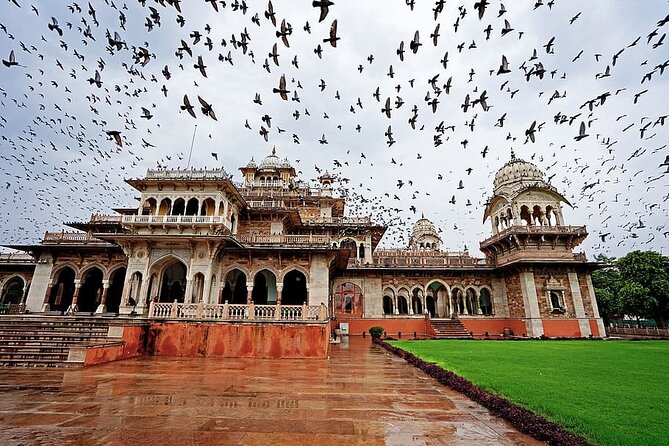
You’ll also visit the Royal Gaitor Tumbas. This is tied to the Kacchhawa dynasty, who ruled over Jaipur roughly from 1727 AD to 1947 AD. The monuments are royal cenotaphs and mausoleums, and they’re described as well-maintained and relatively one of the more visually polished stops of this type.
Time here is about 45 minutes, and admission is listed as not included. So plan for the possibility that you’ll pay entry costs unless your selected option includes tickets.
Why I think this stop is a smart addition:
- It breaks up the day between forts/palaces and the more “staged” viewpoints of the Pink City.
- It adds a different emotional tone. A palace day can feel like spectacle; cenotaphs shift the mood toward legacy and memory.
If you like monuments with fewer crowds and more quiet observation, this is the one to lean into.
Hawa Mahal, Jantar Mantar, and City Palace: three icons, one practical ticket check
Back toward the heart of Jaipur, you’ll hit three of the city’s most recognizable landmarks: Hawa Mahal, Jantar Mantar, and City Palace.
A practical heads-up: for these stops, admission is listed as not included on this tour (unless you chose the option that includes monument entry). If you budget loosely, this is the part of the day that can surprise you. If you’re the organized type, you’ll want to confirm ticket inclusion before you go so you can pay once and stop thinking about it.
Hawa Mahal: the palace of breeze
Hawa Mahal is the summer palace built in 1799, famous for its exterior with 953 honeycomb-shaped windows. This is one of those monuments that’s easier to appreciate once someone explains what the windows were for. They let breezes pass through while the royal household stayed comfortable.
Your time here is about 45 minutes, so use it for both wide exterior shots and a look from different angles. The windows are the star, and they reward patience.
Admission is listed as not included.
Jantar Mantar: pre-modern science in stone
Next is Jantar Mantar, the Jaipur astronomical observatory built by Sawai Jai Singh II around 1729. The key is that this isn’t just a collection of old structures—it’s a working approach to measurement and observation, expressed in stone.
Your stop here is around 30 minutes. That’s short, but it works if your guide talks you through what each instrument was meant to do. If you come in expecting “a museum,” you might miss the point. Think of it as built math and built observation.
Admission is listed as not included.
City Palace: where Mughal and Rajput meet
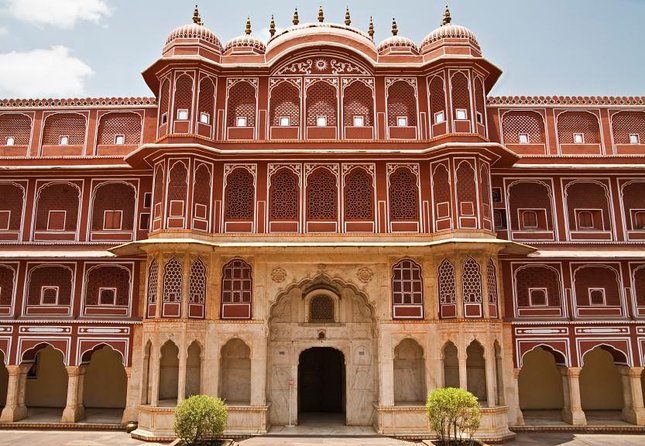
Finally, there’s City Palace, inside the Jaipur walls. This complex was designed and constructed by Maharaja Sawai Jai Singh II, and it’s known for the mix of Mughal and Rajput architecture. City Palace is your bigger, slower stop at about 2 hours, which helps because it can feel like a lot if you rush.
This is also the place where you’ll want to ask your guide how the palace functioned beyond aesthetics. What rooms were for, how authority was displayed, and why architecture here looks the way it does.
Admission is listed as not included.
Walking the Heritage Pink City: use it for markets, not just photos
Along the way, you’ll get a stroll through the Heritage Pink City. The idea here is to see the real texture around the monuments—pink buildings, local market activity, and everyday life moving through narrow lanes.
This isn’t about covering every stall. It’s about getting your bearings and building an image of Jaipur that isn’t only made of palaces. If you want souvenirs, this is the moment to spot what you’ll actually use later rather than buying based on a pretty storefront.
One helpful mindset: pick one or two items you’re hunting for—textiles, small crafts, or something for your home—then walk until you find the right match. Otherwise, the market can blur into “things to photograph” and you miss the chance to buy something meaningful.
Price and value: why $11.35 can make sense for a private day
At $11.35 per person, this tour sits in a budget-friendly zone. But the real value isn’t only the sticker price—it’s what’s bundled.
Included items you should care about:
- Private AC vehicle plus fuel, parking, and taxes
- Bottled water
- Hotel/Airport pickup and drop-off
- Professional tour guide
- Monument entry tickets are included only if you chose the option
That means you’re paying for logistics. In places like Jaipur, the cost of getting between sights adds up quickly if you’re doing it on your own. A private vehicle also saves your energy. You’re spending that energy on the sights, not figuring out the route.
Where value depends on you: decide in advance whether you want monument tickets included. Several major sites here list admission as not included, so double-check your chosen package. If tickets are on you, the final cost may creep up, but you still get good structure and time management for a single day.
The guide and driver effect: reliability you can feel
The tour experience strongly depends on who’s driving and who’s explaining. The names that show up in past bookings are Shamshu, Sunny, and Ali, with guides mentioned such as Abdul. Across those accounts, the themes are consistent: prompt pickup, careful driving through Jaipur’s traffic, and English support that makes the monuments easier to understand instead of just looking at them.
Here’s what to look for when you meet your guide:
- Do they connect the architecture to everyday meaning (why windows, why geometry, why palace layout)?
- Do they pace your group so you don’t feel rushed?
- Do they help you time photo stops and transitions?
A good guide turns “see buildings” into “understand what you’re seeing,” and that’s the difference between a day that feels like a checklist and a day that actually stays with you.
Small risks to plan for: heat, extra tickets, and weather
This experience requires good weather. If conditions aren’t right, you may be offered a different date or a full refund. Jaipur can also be hot and sun-heavy, so plan for sun protection and stay hydrated. Bottled water is included, but you’ll still want to pace yourself.
The other risk is ticket planning. Since Royal Gaitor Tumbas, Hawa Mahal, Jantar Mantar, and City Palace list admission as not included, it’s worth confirming what your package covers. If you’re okay paying those entries on arrival, you’ll likely have a smooth day. If you’d rather avoid surprises, pick the option that includes monuments.
Should you book this Jaipur full-day heritage tour?
I’d book it if you want a structured Jaipur day with a private A/C ride, pickup/drop-off, and a guide who helps you make sense of the highlights without scrambling for transport.
Skip it or rethink it if:
- you already plan to visit the ticketed monuments independently and want maximum flexibility with fewer scheduled stops
- you dislike paying for admissions that may not be included unless you selected the ticket option
If you’re short on time and want the main Jaipur stories—Amer’s fort power, the geometric stepwell, the iconic breeze palace, the science instruments, and the grand palace—this tour is a solid value and a sensible way to stack the day.
FAQ
How long is the Jaipur full-day heritage tour?
The tour runs for about 8 hours.
Does the tour include pickup and drop-off?
Yes. Hotel or airport pickup and drop-off are included.
Is transportation air-conditioned?
Yes. You travel in a private A/C vehicle with an English-speaking driver.
What’s included in the price?
Included items are the private AC vehicle, fuel and parking, taxes, bottled water, pickup/drop-off, and a professional tour guide. Monument entry tickets are included only if you select that option.
Are meals included?
No, meals are not included.
Are admission tickets included for all the stops?
Not for all stops. Flower market, Amer, Panna Meena ka Kund, and Jal Mahal list admission as free. Royal Gaitor Tumbas, Hawa Mahal, Jantar Mantar, and City Palace list admission as not included.
Which stops have the shortest time on the schedule?
Jal Mahal is about 15 minutes, and the flower market and Panna Meena ka Kund are about 30 minutes each.
What time of day does the tour start?
It starts in the morning at the flower market.
Is this tour private?
Yes. It’s private, meaning only your group participates.
What’s the cancellation policy?
You can cancel for a full refund up to 24 hours before the experience starts. If it’s canceled due to poor weather, you’ll be offered a different date or a full refund.