REVIEW · JAIPUR
Private Jaipur City Tour by Tuk Tuk Or Car
Book on Viator →Operated by Jaipur Rajasthan Cab · Bookable on Viator
Jaipur turns into a road trip. A private full-day with pickup and your choice of an AC car or an open tuk-tuk lets you set the pace while rolling past the Pink City’s biggest icons.
I love the mix of famous monuments and calmer stops like Panna Meena ka Kund, where the symmetry is the star. I also love that you can add an expert local guide (and even include monument entry tickets) when you want more meaning than just photos.
One consideration: meals aren’t included, and monument tickets may require the optional guide/ticket add-on. If you’re the type who hates figuring out admissions on the spot, plan for that decision early.
In This Review
- Key highlights worth your time
- How a private Jaipur day stays flexible
- Albert Hall Museum: a fast start with Indo-Saracenic style
- Hawa Mahal: 953 windows and how to use them
- Jantar Mantar: big stone instruments and Jai Singh II
- City Palace: the royal center that still functions
- Royal Gaitor Tumbas: a quieter royal pause
- Jal Mahal: Man Sagar Lake photos without paying to enter
- Panna Meena ka Kund: stepwell geometry you can walk
- Amer: Suraj Pol and Chand Pol for the full royal approach
- Optional expert guide and monument tickets: when the add-on pays off
- Price, value, and what you still need to plan
- Who this tour suits best in real life
- Should you book this Jaipur private city tour?
- FAQ
- How long is the private Jaipur city tour?
- What pickup options are included?
- Can I choose between a tuk-tuk and a car?
- Are monument entry tickets included?
- Is an expert guide available?
- Is Jal Mahal open for entry?
- Are meals included in the tour price?
- What happens if I cancel?
Key highlights worth your time
- Tuk-tuk or AC car: choose the vibe, not just the transportation
- Pickup from hotel/airport/railway station: fewer logistics headaches
- A practical mix of stops: major landmarks plus quieter Jaipur corners
- Photo-friendly Jal Mahal: you can frame it from the outside, even without entry
- Panna Meena ka Kund stepwell: exact geometry you can walk around
- Local-driving comfort: smooth, careful driving is a big part of the value
How a private Jaipur day stays flexible
This is a private full-day in Jaipur, built around your schedule rather than a strict group stampede. You get pickup from your hotel (or from the airport/railway station), plus fuel, parking, and taxes handled for you. That matters because Jaipur traffic and timing can turn a “quick sight” into a half-day detour if you’re doing it solo.
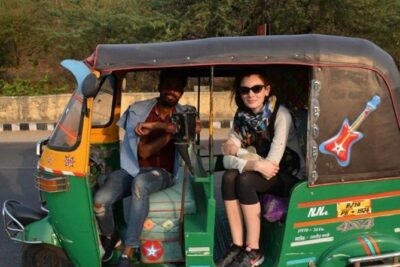
The best part is the ride choice. If you want a more local, open-air feel, pick the tuk-tuk. If you want AC comfort and easier long sits between stops, choose the car. In a day that includes multiple major monuments, comfort is not a small detail.
Duration is listed at about 8 hours, which is long enough to see the core highlights without feeling like you’re speed-running Jaipur. And because it’s private, your route order and pacing can be adjusted to match your energy level—museum person today, photo person today, or both.
You can also read our reviews of more city tours in Jaipur
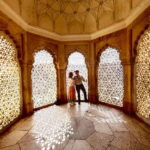


Albert Hall Museum: a fast start with Indo-Saracenic style
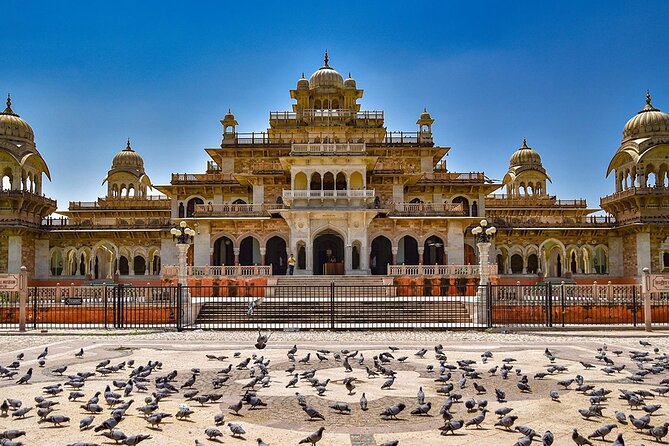
You kick off at Albert Hall Museum, Jaipur’s oldest museum. Even before you read a single label, the building’s Indo-Saracenic architecture gives you an immediate “where am I?” feeling—half civic monument, half ornate statement.
Inside, it’s a strong introduction to Rajasthan’s material culture. You’ll find Rajasthani artifacts, weapons, textiles, and other displays that quickly expand what Jaipur is beyond palaces and forts. One detail that makes this museum memorable is that it includes an Egyptian mummy in its collection, which is the kind of curveball that keeps a history stop from feeling predictable.
What I like about starting here: it gives you context for the day. When you later see royal buildings and ceremonial sites, you’re not walking in cold. You’re building a mental map as you go. Plan about 1 hour for the visit, since that’s the time allocation.
Admission isn’t included by default, so if you want to avoid ticket-world friction later, consider the option that bundles monument entry with the guide.
Hawa Mahal: 953 windows and how to use them
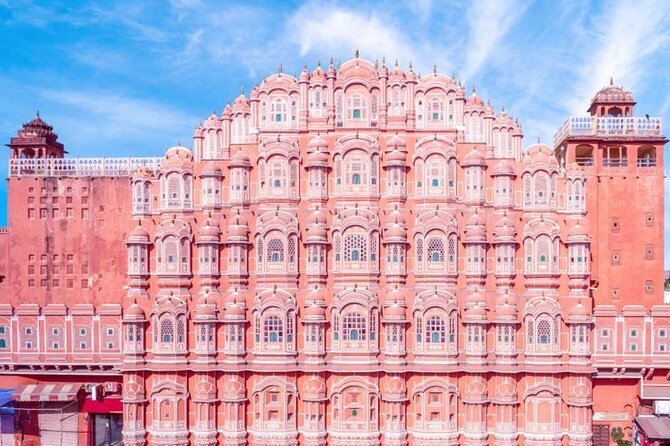
Hawa Mahal—Palace of Breeze—is the Jaipur icon that looks like it was designed for postcards. It’s a five-story pink sandstone structure, created for royal women to observe street festivals while staying unseen. That social angle adds meaning to the views, not just color.
The famous feature is the 953 small windows. They’re not just decorative. They’re the whole point: a design that lets air move through and offers a grid of perspectives over the street.
How to make this stop worthwhile in real life: take your time. Your first glance is the photo. Your second glance is the structure—how the façade stacks, how light hits the stone, and where you can stand for the best angles. With about 45 minutes on the schedule, you can do both.
Admission isn’t included by default, so again: if you select the option that includes monument tickets, this becomes smoother. Also, keep an eye on sun intensity. You’ll be outside for much of the time, and Jaipur light can be intense even when the day feels “cool.”
Jantar Mantar: big stone instruments and Jai Singh II
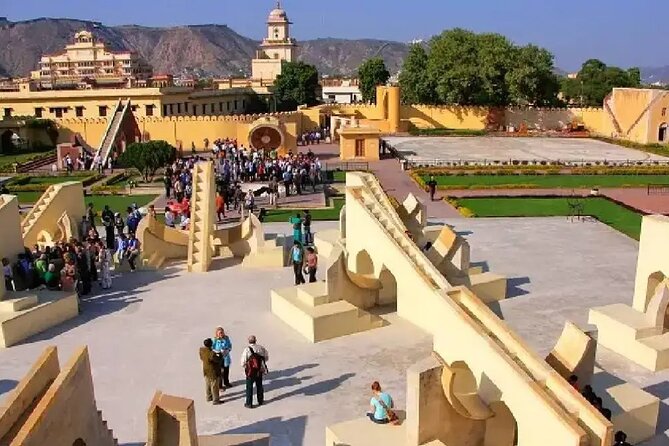
Next up is Jantar Mantar, a UNESCO World Heritage Site. This is not a casual photo stop. It’s an outdoor science museum made of giant stone instruments, built for astronomical observation in the 18th century.
The real takeaway is the precision story tied to Maharaja Jai Singh II. You’ll be shown how the instruments were used to track celestial bodies. Even if you don’t memorize instrument names, you’ll come away with a feeling for why Jaipur mattered to astronomy in its era.
Time is short but workable: around 45 minutes. That’s enough to understand the concept, take a few wide shots, and then walk close enough to appreciate scale. The instruments look simple from far away, but up close you start noticing the workmanship.
If you’re the type who loves explanations, the optional expert guide can be especially helpful here. Jantar Mantar rewards attention. Without it, you might only see a grid of rocks.
City Palace: the royal center that still functions
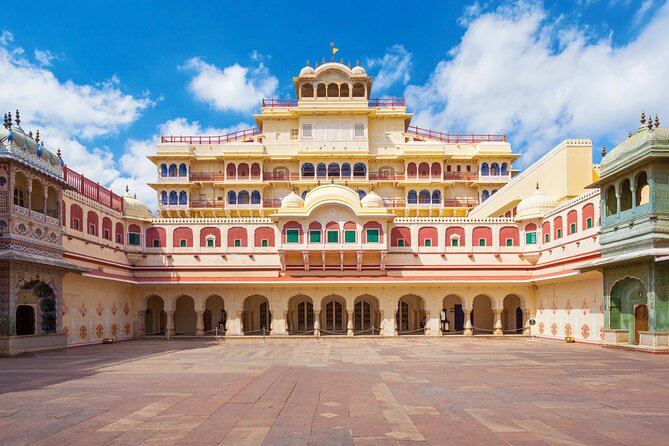
The City Palace is the main landmark in old Jaipur, tied to royal heritage and still partly used by the royal family. Built by Maharaja Sawai Jai Singh II, it anchors your day in a way the photos can’t fully capture.
This stop is longer—about 2 hours—which is good. You need time to move through different sections and absorb the mix of architecture and symbols. What makes it valuable is the sense of continuity. Even though it’s a tourist destination, it’s not frozen in time the way some sites feel.
A practical tip: pace yourself inside. City Palace can feel dense—lots of rooms, details, and visual layers. If you’re touring alone without an included guide, you might want to pause often and use the breaks to read signs slowly rather than rushing to the next view.
Admission isn’t included by default, but it can be if you choose the option that includes monument entry tickets. For many people, that’s the easiest way to manage a day packed with paid attractions.
You can also read our reviews of more private tours in Jaipur






Royal Gaitor Tumbas: a quieter royal pause
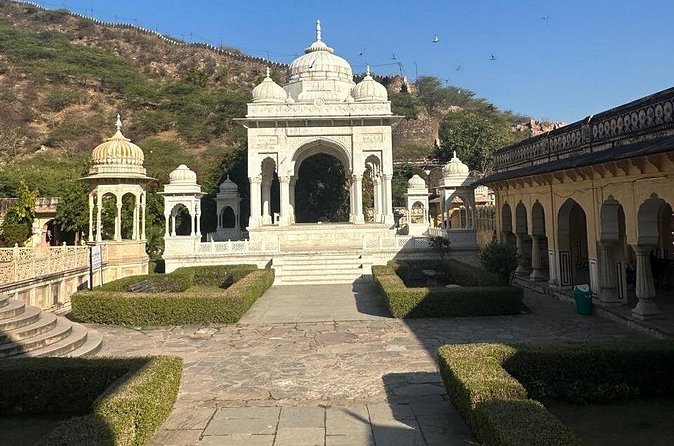
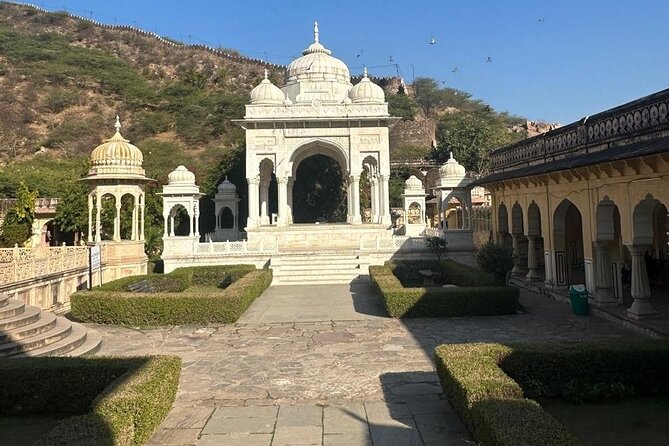
Royal Gaitor Tumbas (cenotaphs) is where the day slows down. Instead of the big “look at me” structures, you get a peaceful marble complex tied to Jaipur’s rulers and cremation history.
Ornate carvings give it beauty, but the atmosphere is what makes it stand out. This is the kind of stop where you feel your breathing slow. It’s also a nice counterweight to the busier monuments earlier.
Schedule time is about 30 minutes, which fits the goal: enough time to walk, notice carvings, and still keep your energy for the next outdoor photo stops. If you’re short on time later, this is one place you don’t need to cut too aggressively because it’s one of the best opportunities for calm in the middle of a monument-heavy day.
Admission isn’t included by default, but you can bundle it if you pick the ticket-included option.
Jal Mahal: Man Sagar Lake photos without paying to enter
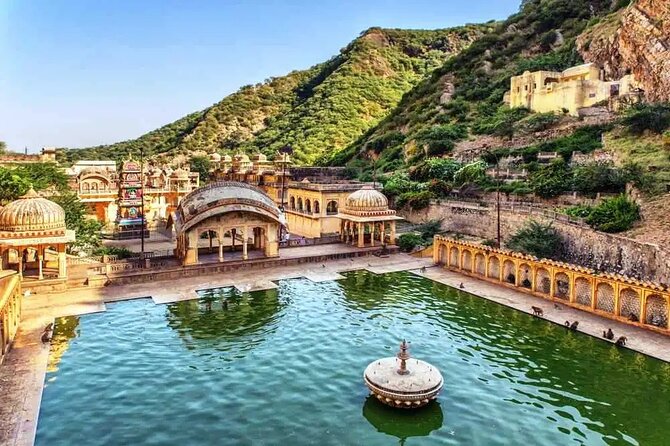
Jal Mahal is the floating palace look you’ve probably seen in travel photos. It sits in the middle of Man Sagar Lake, with the Aravalli hills in the background—exactly the kind of scenery that makes people stop the car and walk away from the itinerary for a moment.
Here’s the important practical part: entry isn’t allowed. You’re enjoying it from the outside, and that’s why this stop works best for photos. You’ll typically get around 15 minutes, which is enough time to capture the angles you want without losing the whole day to one famous view.
If you care about photography, consider your timing. Midday glare can flatten colors, while softer light makes the pink tones and stone texture pop. Even if you’re not a serious photographer, the difference will still show in your pictures.
Admission is marked as free for this stop. So even if you decide not to bundle tickets, this one still gives you value.
Panna Meena ka Kund: stepwell geometry you can walk
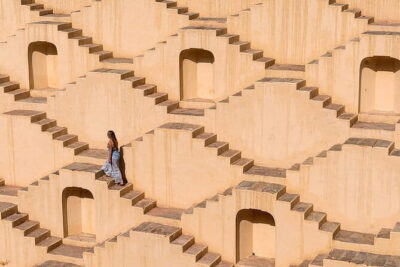
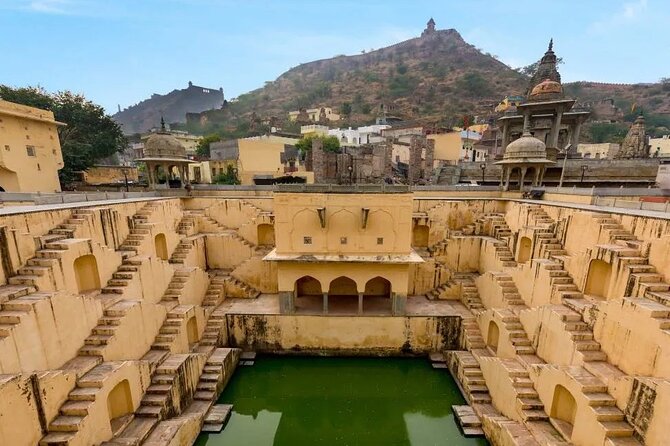
Panna Meena ka Kund is one of those places where the design is the experience. It’s an ancient stepwell with symmetrical staircases used for water collection and community gatherings.
The reason it’s special: precise geometry. Up close, you start seeing the order—how the steps guide you down, how symmetry shapes the feel of the space, and why photographers like it so much.
You’ll spend about 30 minutes here, and that’s the sweet spot. Long enough to explore viewpoints and walk sections safely, short enough to avoid turning it into a “sit and read” lesson.
Admission is listed as free. That’s another value win.
If you’re choosing between transport styles, this is a stop where either works well. The environment is mostly about the structure itself, so you’re not relying on comfort in the same way you might during long drives or museum hours.
Amer: Suraj Pol and Chand Pol for the full royal approach
Amer is a big-name Jaipur area, and this tour focuses on a portion of it with a royal feel. You’ll explore Jaleb Chowk, a main courtyard where the king’s soldiers would parade and assemble. That detail matters because it frames the space as more than a photo background.
You’ll also go through grand gates: Suraj Pol and Chand Pol. Each gate carries historical significance, and moving through them creates a sense of progression—like you’re entering layers of the Amer complex rather than just stopping at points on a map.
The time here is about 2 hours, which signals that Amer is more than a quick stop. It’s where your “I saw Jaipur” feeling becomes “I understand how it worked.”
Important note: admission is listed as free for the tour stop segment described. That helps keep the day’s total out-of-pocket costs lower, depending on which monument-ticket option you choose earlier.
If you want a practical photography tip: courtyards and gate lines often look best from the inside looking out. Use your time to walk a bit and avoid staying stuck at the first wide angle. Jaipur details reward slow movement.
Optional expert guide and monument tickets: when the add-on pays off
This experience can be done without selecting the expert guide/ticket option, but the tour is designed with flexibility in mind. If you choose the option with an expert guide, you get both the guide and monument entry tickets included, plus the day becomes easier to manage.
When does that add-on usually feel worth it?
- When you want context at Jantar Mantar and City Palace, where explanations change the experience.
- When you’d rather not juggle admissions across multiple sites.
- When you prefer a smoother day rhythm—arrive, listen, see, move on.
There’s also real practical value in choosing the right person to talk to. Some of the drivers and guide team around Jaipur Rajasthan Cab, like Firoz, are known for being friendly, on time, and tuned into what to see and where to eat. Another driver name that comes up often is Vinod, with a strong focus on safety and knowing the city well. In a day of gates, courtyards, and timed stops, having that kind of local awareness can save you time and stress.
If you’re the DIY type, you can still do the tour with a driver and add your own pace. Just remember: the default listing notes that monument entry tickets are not included unless you pick the option that includes them.
Price, value, and what you still need to plan
The price shown is $7.00 per person for the private full-day experience. That’s unusually low for a full 8-hour, door-to-door service with a private vehicle. The value part comes from what’s included: pickup/drop-off, fuel, parking, taxes, and bottled water.
But there are two “watch this” items. First, meals aren’t included. Second, monument admission can be extra unless you choose the guide/ticket option. So you’re really choosing between two cost styles: pay less up front and handle admissions yourself, or pay the add-on and keep the day simple.
To plan smart, think about how you like to travel:
- If you want minimal decisions, choose the option that includes tickets and the expert guide.
- If you’re comfortable sorting admissions and you don’t need heavy explanation, you can keep it flexible.
Also, this is listed as private, so the group discount angle matters most if you’re sharing the cost with people traveling together. If you’re traveling solo, you’ll want to confirm how pricing applies to your group size, but the concept is clear: it’s built for smaller parties.
Finally, make sure you’re ready for a full day of movement. Even with a car or tuk-tuk, you’ll be walking inside and between sites. Comfortable shoes are not optional.
Who this tour suits best in real life
This tour is a great fit if you want a one-day highlight plan that still feels personal. The private format works well for couples, small groups, and anyone who hates waiting for a big coach group schedule.
You’ll also like it if you enjoy mixing types of places: a museum with unusual collections, an architectural icon with window-count drama, an astronomy site made of stone instruments, and then a couple of calmer stops like stepwell geometry and royal cenotaphs.
If you’re very strict about only one kind of interest—say, only forts, or only museums—you might feel the day is too mixed. But if you’re the sort who wants Jaipur in one coherent sweep, this tour matches that mindset well.
Should you book this Jaipur private city tour?
If your priority is seeing the key sights in one day with pickup, bottled water, and a choice of tuk-tuk or AC car, I think this is an easy yes. The itinerary has smart variety, and it includes a couple of high-reward stops that don’t require paid entry—like Jal Mahal photos and Panna Meena ka Kund.
Book it if you want convenience and flexibility more than you want to research ticket by ticket. Skip the optional guide/tickets only if you’re confident you’ll handle admissions calmly and you don’t need extra context at Jantar Mantar and City Palace.
If you’re okay with planning for lunch and confirming which admission option you’re using, you’ll get a full, satisfying Jaipur day without the usual logistics mess.
FAQ
How long is the private Jaipur city tour?
It’s listed as about 8 hours.
What pickup options are included?
Hotel pickup, plus pickup from the airport or railway station, is included.
Can I choose between a tuk-tuk and a car?
Yes. You can choose a private vehicle and select either a tuk-tuk or an AC car.
Are monument entry tickets included?
Monument entry tickets are not included by default, but they can be included if you choose the option that also adds an expert guide.
Is an expert guide available?
Yes. An expert guide is included when you select the option that includes guide and monument entry tickets.
Is Jal Mahal open for entry?
No. Entry isn’t allowed at Jal Mahal, but it’s a great stop for photos.
Are meals included in the tour price?
No. Meals are not included.
What happens if I cancel?
Free cancellation is offered. You can cancel up to 24 hours in advance for a full refund.