REVIEW · JAIPUR
Jaipur City Full Day Luxury Private Tour
Book on Viator →Operated by Momento India Tour · Bookable on Viator
Jaipur can overwhelm fast, so this private day tour slows you down. You get AC comfort with a real guide and a route that mixes headline sights with quieter stops like Panna Meena ka Kund. I like the way the guide turns architecture into stories, and I like that you get time at each place instead of sprinting. One thing to consider: several major monuments have separate entrance fees, so your final cost depends on the option you choose.
What makes it work is the human touch. Guides like Sarfaraz Ahmed and Vishal ji are called out for friendly, detailed explanations, and for helping you get photos in the right spots. You’ll start at Sanganeer Airport at 9:00 am, ride between stops in a private air-conditioned vehicle, then finish back at the same meeting point.
In This Review
- Key highlights worth planning around
- A private Jaipur day with AC pickup from Sanganeer Airport
- Price and logistics: what $31.46 usually turns into
- Hawa Mahal’s 953 windows: getting the best views fast
- Panna Meena ka Kund stepwell: a calm break near Amer
- Amber Palace: where architecture turns into a full experience
- Jal Mahal on Man Sagar Lake: the floating palace viewpoint
- Jaipur block printing: see the 300-year-old craft in action
- Gaitore Ki Chhatriyan: royal cenotaphs away from the crowds
- City Palace of Jaipur: Rajput and Mughal in the heart of town
- Jantar Mantar: the world’s largest stone sundial explained
- Timing and comfort: why 7 to 8 hours works (if you pace yourself)
- Who should book this tour—and who might skip it
- Should you book this Jaipur city luxury private tour?
- FAQ
- How long is the Jaipur City Full Day Luxury Private Tour?
- Where does the tour start and where do you end?
- What time does the tour begin?
- Is this tour private?
- What’s included in the price?
- Are monument entrance fees included?
- Is there a craft stop included?
- What weather does the tour require?
- What is the cancellation policy?
- Is tipping included?
Key highlights worth planning around
- Private, guided pacing so you’re not stuck with a slow group shuffle
- AC car + bottled water for a smoother Jaipur day, especially in warmer hours
- Hawa Mahal’s 953 windows with guided orientation for the best views and angles
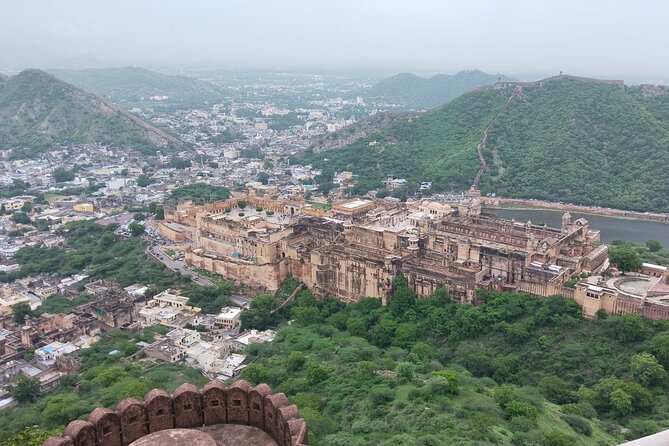
- Amber Palace time on the ground for courtyards and photo chances without a rush
- Jaipur block printing by working artisans so the craft feels real, not staged
- Jantar Mantar’s 19 instruments and the world’s largest stone sundial explained in plain terms
A private Jaipur day with AC pickup from Sanganeer Airport

This is the kind of tour that helps you avoid the early confusion that can hit Jaipur arrivals. You’re picked up from Sanganeer Airport, you don’t have to sort out transport, and you’re back at the same meeting point at the end. The “luxury” part here isn’t fancy. It’s practical: a private air-conditioned vehicle, parking handled, fuel and tolls handled, and bottled water waiting in the car.
That matters, because Jaipur’s famous sights are spread out enough that a day can feel like constant transit if you’re doing it alone. With this setup, you can keep your energy for what you actually came for: monuments, workshops, and viewpoints.
You can also read our reviews of more city tours in Jaipur

Price and logistics: what $31.46 usually turns into
At $31.46 per person, the base price is mainly for the vehicle, guide, and included support. You’re not just paying for a driver. You’re paying for a guide plus the time-structured route that covers multiple major stops in about 7 to 8 hours.
Here’s the key reality check: the tour lists monument entrance fees as not included by default, with $20 per person for entrances. The tour also notes that entrances can be included if you choose that option. So you’ll want to confirm what you’re paying for before you book, especially because several of the headline sites are in the “not included” category.
Also note what isn’t included: meals and personal expenses, plus tips/gratuities (optional). None of that is unusual. It just means you should budget for lunch and a small amount of flex money.
Bottom line on value: if you want a guided day that includes both the big icons and the process behind Jaipur crafts, the price structure makes sense. If you already plan to self-guide and pay entrances yourself, you might compare costs—but you’ll likely miss the smooth routing and storytelling.
Hawa Mahal’s 953 windows: getting the best views fast
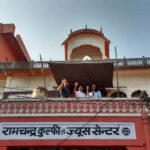
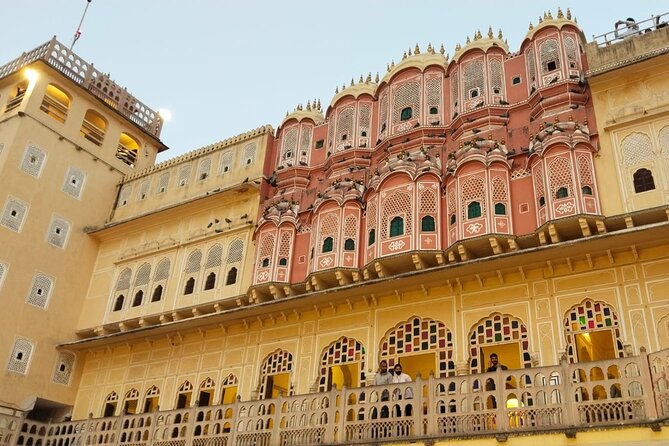
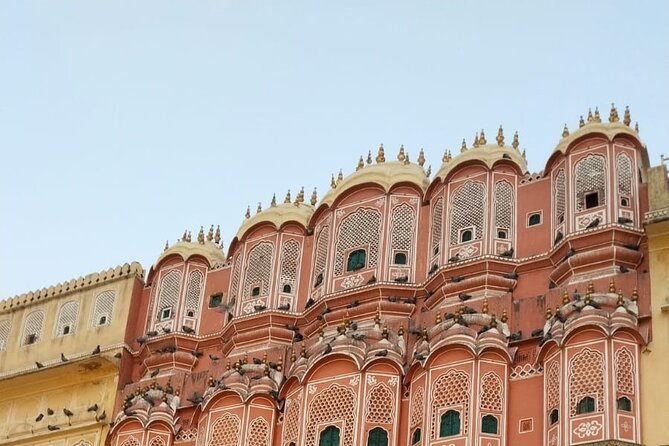
Hawa Mahal, the Palace of Winds, is famous for a reason. It’s a honeycomb façade with 953 intricately designed windows, and when the light hits, the building looks like it’s made of patterns. The tour’s visit is guided for about 30 minutes, which is ideal for this stop: long enough to understand what you’re looking at, short enough that you’re not bored in a crowd.
What I like about a guided visit here is orientation. Without context, Hawa Mahal can feel like “pretty walls.” With guidance, you understand why the windows matter, how the upper spaces worked, and why you’ll want to pause at the right angles for photos.
If you’re a first-timer in Jaipur, this is a great early stop. It helps you get your bearings before you move to bigger complexes.
Panna Meena ka Kund stepwell: a calm break near Amer
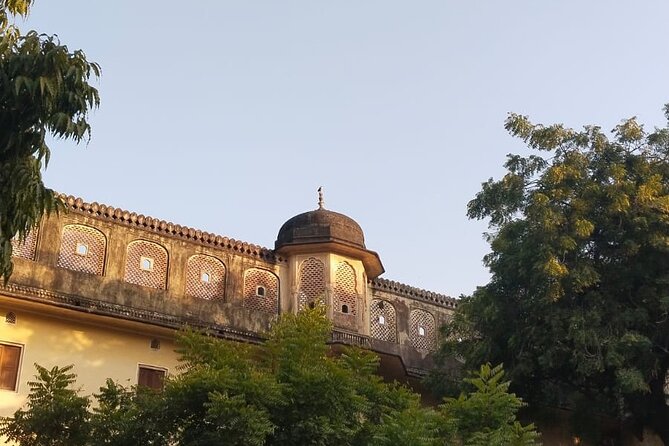
After the big façade moment, the tour shifts to something more quiet: Panna Meena ka Kund, a 16th-century stepwell tucked near Amer Fort. This is one of those places that feels like you got a secret memo from the past. You’re there for around 30 minutes, and admission is free.
What makes it special is its symmetry and the way the structure draws the eye down into the steps. It’s not just a photo stop. It’s a breather. Stepwells were practical infrastructure in Rajasthan, and standing there helps you understand that the region’s architecture often solved real daily needs—water access, shade, and community space.
If you enjoy slower pauses, this is one of the most satisfying parts of the day.
Amber Palace: where architecture turns into a full experience
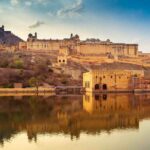
Amber Palace is the heavyweight. The tour plans about 2 hours here, and that time is the right choice. Amber isn’t a place you can “see quickly” and still get the best effect. You’ll want time for the courtyards, the mix of Rajput and Mughal architecture, and the way the red sandstone and marble create a strong visual rhythm.
You should also expect a bit of walking and some uneven areas depending on where you pause. If your day is tightly scheduled, Amber can feel like a lot—but the extra time helps you avoid that “half-seen” feeling.
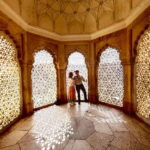
A practical tip: go in with patience. The palace is visually complex, and the guide’s job is to help you connect details into a coherent story. That’s exactly where guides like Sarfaraz Ahmed and Ahmed (mentioned for clear, detailed explanations and strong photo guidance) tend to make a difference.
Entrance fees for Amber are listed as not included unless you choose the entrance-fee option.
You can also read our reviews of more private tours in Jaipur






Jal Mahal on Man Sagar Lake: the floating palace viewpoint
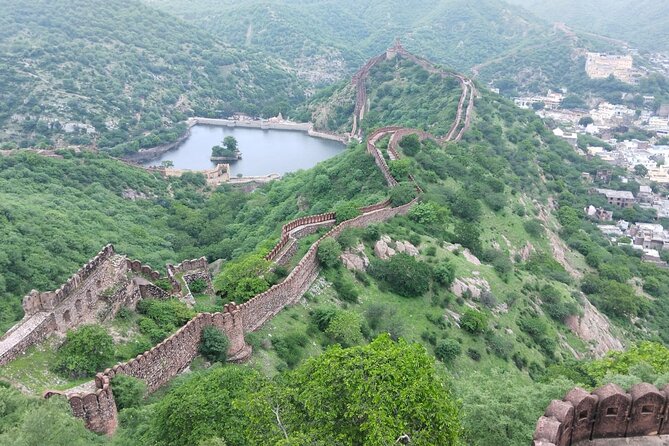
Jal Mahal is the kind of sight that makes you stop talking. The palace sits in Man Sagar Lake, and it’s known for appearing to float—because four levels are submerged and only one is visible.
Your stop here is about 30 minutes, and admission is listed as free. That combination works well because Jal Mahal is more about perspective than wandering. You’ll want to take in the water setting, compare angles, and enjoy the contrast with the palace you visited right before it.
It’s a good reminder that Jaipur isn’t only forts and temples. It’s also designed scenery and clever use of water.
Jaipur block printing: see the 300-year-old craft in action
This is the stop that often makes the tour feel personal. Jaipur block printing is described as a 300-year-old craft, using carved wooden blocks stamped onto fabric. You’ll spend about 1 hour here, and it’s a hands-on style viewing experience where you can watch artisans at work and learn what makes the process matter.
I like this segment for one big reason: it turns Jaipur from “things to look at” into a living skill. Even if you never buy anything, you’ll understand how patterns are built, how precision is needed, and why the craft has stayed relevant.
Because block printing is listed with entrance fees as not included, check what you’re paying for in your chosen package. In many cases, the guide can help you understand what you’re looking at and which products are worth considering if you want a souvenir.
Gaitore Ki Chhatriyan: royal cenotaphs away from the crowds
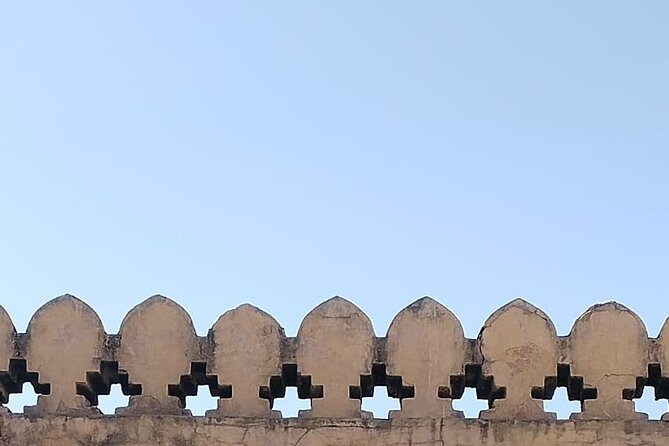
Gaitore Ki Chhatriyan sits in a quiet valley near Jaipur. It’s the royal cremation ground of Maharajas of Jaipur, and the visual focus is the marble and sandstone chhatris—cenotaphs with ornate Rajput-style carvings.
You’re there for about 30 minutes, and entrance is listed as not included. The short visit works because this site is meant for contemplation more than long shopping or milling.
This is also a nice change of pace after larger palaces. If you like details—how stone is carved, how the memorial structures are arranged—this stop rewards you.
City Palace of Jaipur: Rajput and Mughal in the heart of town
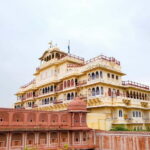
The City Palace is one of those places where scale doesn’t require height. It takes up space in central Jaipur and feels like a working museum of royal power and design.
The tour plans 1 hour 30 minutes here. You’ll see the blend of Rajput and Mughal architecture, and the palace is connected to Maharaja Sawai Jai Singh II. The guide typically helps you understand the different parts—royal halls, courtyards, and the overall layout—so you’re not just drifting from room to room.
As with other major stops, the City Palace entrance is listed as not included unless you choose the entrance-fee option.
If you want a sense of what Jaipur felt like at its core, City Palace is where that feeling connects.
Jantar Mantar: the world’s largest stone sundial explained
Then you hit Jantar Mantar, a UNESCO World Heritage Site and an 18th-century astronomical observatory built by Sawai Jai Singh II. The tour gives you about 1 hour, which is the right time window for this kind of place: there’s a lot to see, but the explanations help it click quickly.
The highlight is the world’s largest stone sundial, plus a collection of 19 unique instruments. Without context, it can read like “cool rocks.” With a guide, you start understanding what each instrument was designed to measure and why the layout matters.
This is also where a good guide earns their keep. Clear, friendly explanations—like the kind mentioned for guides such as Vishal ji—make the science feel grounded, not intimidating.
Entrance fees for Jantar Mantar are also not included unless you choose the option that includes monument entries.
Timing and comfort: why 7 to 8 hours works (if you pace yourself)
The tour’s total duration—7 to 8 hours—is long enough to cover the full loop of Jaipur icons without turning it into a 12-hour marathon. But it still includes multiple architectural stops, a workshop, and several transfers.
Plan for:
- Comfortable walking shoes (palaces and stepwell areas involve stairs and uneven steps)
- Water, since the car includes bottled water but you’ll still use it
- A willingness to pause for photos, especially at Hawa Mahal and the viewpoints near Jal Mahal
Because this is private, you can keep the rhythm you like. If you prefer slightly more time at Amber or photos at Hawa Mahal, this format is usually easier to manage than a fixed group schedule.
Who should book this tour—and who might skip it
This tour is a strong fit if you:
- Want a first-time Jaipur day that covers the big hits without navigating transport
- Like history, but also appreciate practical guidance and clear explanations
- Prefer a craft experience like block printing instead of only monuments
- Care about photo angles and guided stops that help you get the shot
You might skip it if:
- You want total freedom and you’re happy to self-drive and self-guide through all entrances
- You’re trying to do a “lowest cost only” trip, since monument entrances add a chunk to the base price
- You’re arriving during hours when you’d rather spend more time at a single site than cover eight stops
Should you book this Jaipur city luxury private tour?
Yes, if you want a single day that actually teaches you what you’re seeing—and you want it delivered with minimal hassle. The value is in the combination: AC pickup, a structured route, guided context, and stops that go beyond the same fortress photos.
If you’re cost-sensitive, do the math before you commit. Ask what’s included in the entrance option, since the tour’s base price doesn’t automatically include all major monument entries. If you confirm that up front and plan for lunch, you’ll get a smooth, satisfying Jaipur day.
FAQ
How long is the Jaipur City Full Day Luxury Private Tour?
It runs for about 7 to 8 hours.
Where does the tour start and where do you end?
The tour starts at Sanganeer Airport in Jaipur and ends back at the same meeting point.
What time does the tour begin?
The start time is 9:00 am.
Is this tour private?
Yes. It’s a private tour/activity, and only your group participates.
What’s included in the price?
The tour includes an air-conditioned private vehicle for sightseeing, hotel/airport pickup and drop, bottled water, a professional tour guide, parking fees, and fuel/toll taxes.
Are monument entrance fees included?
Entrance fees are not included by default, with an entrance fee amount listed at $20 per person. The tour also notes that entrances can be included if you choose that option.
Is there a craft stop included?
Yes. You’ll visit Jaipur block printing for about 1 hour, where you can watch artisans at work.
What weather does the tour require?
The experience requires good weather. If it’s canceled due to poor weather, you’ll be offered a different date or a full refund.
What is the cancellation policy?
There’s free cancellation. You can cancel up to 24 hours in advance for a full refund.
Is tipping included?
No. Tips/gratuities are optional and are not included in the price.