REVIEW · JAIPUR
Jaipur 2 Day Private Car Tour
Book on Viator →Operated by Nahargarh Adventure Tour · Bookable on Viator
Two days, one Pink City plan. This private Jaipur tour is built around major sights with a real local guide and a professional driver, plus hotel pickup and drop-off in an air-conditioned car. I love the human touch here, especially the kind, funny way drivers like Narendra share what you’re seeing, and how the route gets handled even when the city feels chaotic. I also love that you get the big hitters like Amber Fort and Jantar Mantar, so history feels tangible instead of like a checklist.
One catch to plan for: monument entrance tickets aren’t included, and a couple of stops are more about views than full entry (like Jal Mahal, where you mainly photograph from the lakefront).
In This Review
- Key Things You’ll Actually Like
- Jaipur in Two Days: Private Car Comfort Meets Real Sights
- The Fort-to-Palace Day 1 Plan: Amber Fort First, Always
- Jaigarh Fort: The Cannon on Wheels + Big Aravalli Views
- Nahargarh Fort: Jaipur From Above, With Royal Purpose
- Jal Mahal and Galtaji: Two Quiet Stops That Break Up the Heavywalking
- Day 2 Starts at the Royal Cenotaphs: Gaitore Ki Chhatriyan
- Hawa Mahal: The Palace of Wind and 953 Windows
- Jantar Mantar and City Palace: UNESCO Science Meets Royal Living
- Albert Hall Museum and Birla Mandir: Artifacts, Paintings, and White Marble Calm
- Money and Tickets: What You Get for $75 and What’s Extra
- Getting Through Jaipur Traffic Like a Pro
- Who This Tour Fits Best
- Should You Book This Jaipur Private Car Tour?
- FAQ
- Are monument entrance tickets included in this tour price?
- Does the tour include hotel pickup and drop-off?
- What type of vehicle is used?
- Are any stops free to visit?
- How long is the tour overall?
- Is there a guided component?
- Can I adjust my pace during the tour?
- Is cancellation allowed if plans change?
Key Things You’ll Actually Like
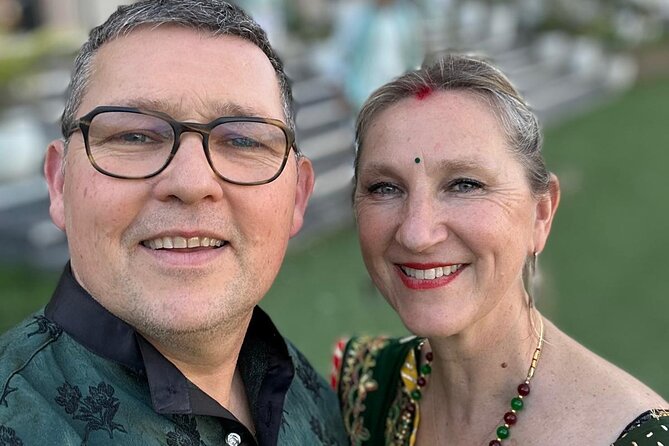
- Private, guided two-day route through Jaipur’s top forts and palaces, not a crowded bus day
- AC car with bottled water, which matters fast in Jaipur heat
- Local driving + on-time timing, including safe handling of heavy traffic (even during Diwali)
- Big-photo viewpoints at Jaigarh Fort and Nahargarh Fort over the Aravallis
- UNESCO-listed Jantar Mantar and Amber Fort in one efficient schedule
- Some free stops like Jal Mahal viewing and Birla Mandir, to stretch your budget
Jaipur in Two Days: Private Car Comfort Meets Real Sights
If you only have a short window in Jaipur, the hardest part is not seeing things. It’s moving between them without wasting half your day stuck in traffic or wandering with a half-charged phone battery. This tour solves that with a private car, hotel pickup and drop-off, and an expert local guide doing the heavy lifting on timing and context.
The other big win is that this isn’t just transportation. Your guide explains what you’re looking at while you walk. That turns the main monuments from pretty photos into places with clues: why a fort is shaped the way it is, why a palace window arrangement matters, and what ancient science was doing on stone in the 1700s.
And yes, the driving side matters. In the feedback shared with this operator, drivers like Narendra (and sometimes Mukesh, when he’s the one behind the wheel) are described as punctual, safe, and calm even when Jaipur traffic gets intense. That’s exactly what you want for a two-day plan where one bad detour can wreck your pacing.
You can also read our reviews of more private tours in Jaipur



The Fort-to-Palace Day 1 Plan: Amber Fort First, Always
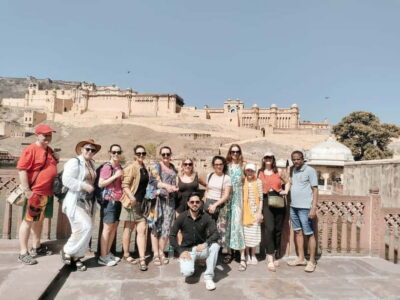
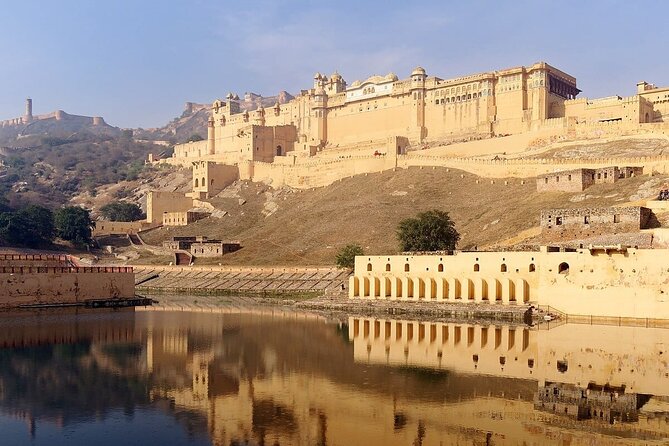
Day 1 starts with Amber Fort, and that’s smart. Amber is the kind of place you feel immediately, because it’s dramatic and layered: a hilltop setting with a mix of Hindu and Mughal architectural styles. You’ll spend about two hours here, and that’s enough time to see the highlights without rushing like you’re trying to win a race.
Inside, don’t skim past the Sheesh Mahal (Mirror Palace). The name says it all, and it’s one of those spaces where details jump out once you’re standing in the right spot. You’ll also see key halls like Diwan-e-Aam and Diwan-e-Khas, which help you understand how royal life moved between public display and private court access.
Practical note: Amber Fort is a walk-heavy site. Wear shoes you trust and keep water handy, even though you’ll have bottled water in the car for between-stop travel.
Jaigarh Fort: The Cannon on Wheels + Big Aravalli Views
Next up is Jaigarh Fort, with about 45 minutes on the clock. This is the stop that makes your camera work harder. Jaigarh is known for the world’s largest cannon on wheels, a real jaw-drop moment if you like military-industrial history.
The other reason to come here is the view. From Jaigarh, you get panoramic sightlines across the Aravalli Hills and the surrounding area. It’s the kind of lookout that makes you understand why forts were built where they were—control and visibility were everything.
If you’re the type who enjoys quick, high-impact stops, Jaigarh delivers. If you’re hoping for a long, museum-style wandering session, you might find it a bit short. But paired with the next stop, it works well as part of a fort chain.
Nahargarh Fort: Jaipur From Above, With Royal Purpose
Nahargarh Fort is where you shift from architecture to panorama. You’ll have about two hours here, and it’s a great place to slow down a little. The setting looks out over Jaipur, and you get the sense of how the city spreads across the region.
The fort also served as a defense mechanism and later as a retreat for the royal family. That mix—protection first, comfort second—adds a human layer to what could otherwise feel like cold stone.
This is also a strong “timing” stop. If your schedule gives you the chance to linger, you’ll enjoy it more. Views are better when you can stand still and let the scene change.
Jal Mahal and Galtaji: Two Quiet Stops That Break Up the Heavywalking
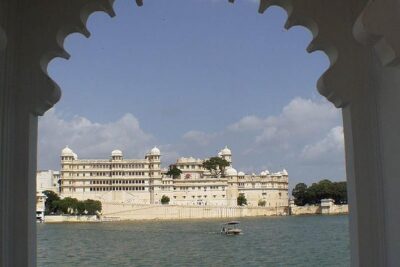
Between big forts, you’ll pause at Jal Mahal, the palace in the middle of Man Sagar Lake. Entry is restricted, so you’re mainly there for photographs from the lakefront, which is exactly how this stop works best.
You get about 30 minutes here, and the value is visual. Even without full entry, the contrast of a palace sitting on water is memorable, and it adds variety to the day so it doesn’t feel like only fort walls and gates.
Then comes Galtaji Temple (Galta Ji), with around one hour. This temple complex is known for natural springs and bathing ghats, and yes—there are lots of monkeys. It can be fun and chaotic in the way that only temple life can be, but you’ll also appreciate the setting if you like places where the focus is spiritual rather than royal.
One useful tip: if you’re visiting during hotter hours, plan to keep your pace steady and don’t treat it like a speed-run. A temple stop is one of those moments where calm beats sprinting for the next photo.
You can also read our reviews of more tours and experiences in Jaipur





Day 2 Starts at the Royal Cenotaphs: Gaitore Ki Chhatriyan
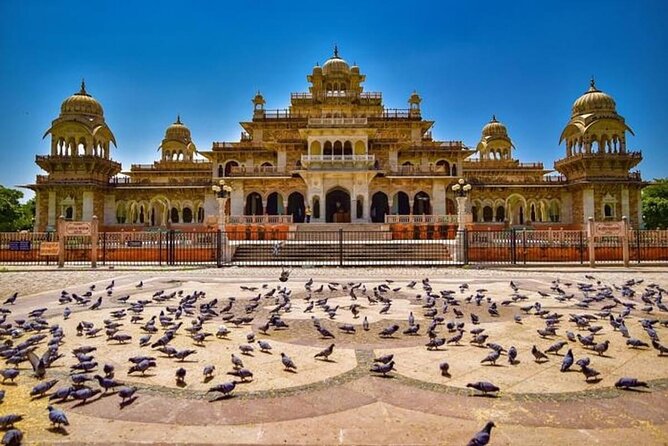
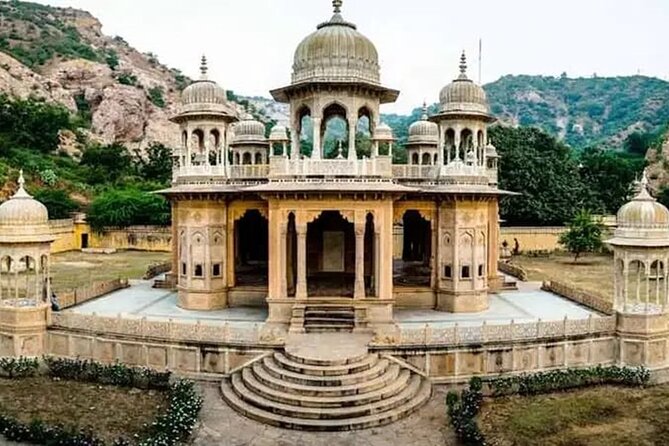
Day 2 begins at Gaitore Ki Chhatriyan, the royal cenotaphs of Jaipur. It’s set at the foothills of Nahargarh Fort and has a quieter mood than the big fort entrances. You’ll spend about 45 minutes here.
This is a cremation ground tied to the Kachwaha dynasty, which helps you connect the dots between Jaipur’s royalty in life and in legacy. Even if you’re not a deep genealogy person, the setting and the purpose make it meaningful.
Hawa Mahal: The Palace of Wind and 953 Windows
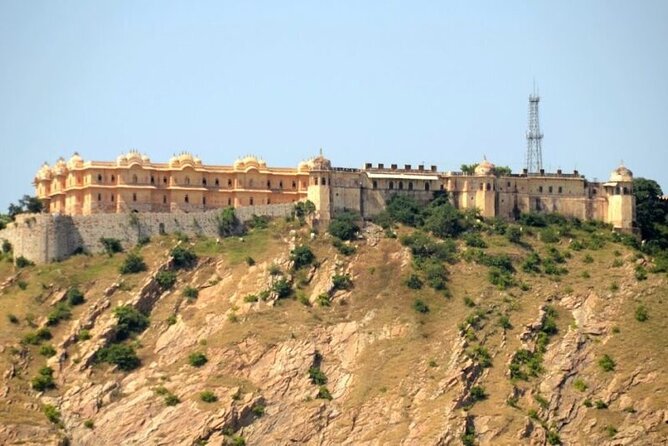
Then you head to Hawa Mahal, the iconic five-story palace with the pink sandstone facade. Expect about one hour at this stop, and don’t reduce it to its famous photo. The point of Hawa Mahal was practical: royal women could observe street festivals without being seen.
The detail everyone talks about is the 953 windows. More than the number, it’s the idea behind them—privacy and visibility managed at once. Your guide can help you spot how the windows relate to light, movement, and street-level activity.
This is also a good place to slow down for a moment, because Hawa Mahal is more than a stop. It’s a symbol. If you’re trying to understand why Jaipur earns the nickname Pink City, this is where it starts to make sense.
Jantar Mantar and City Palace: UNESCO Science Meets Royal Living
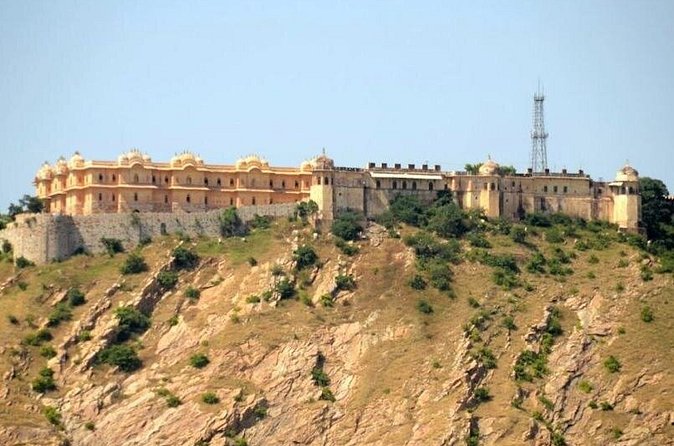
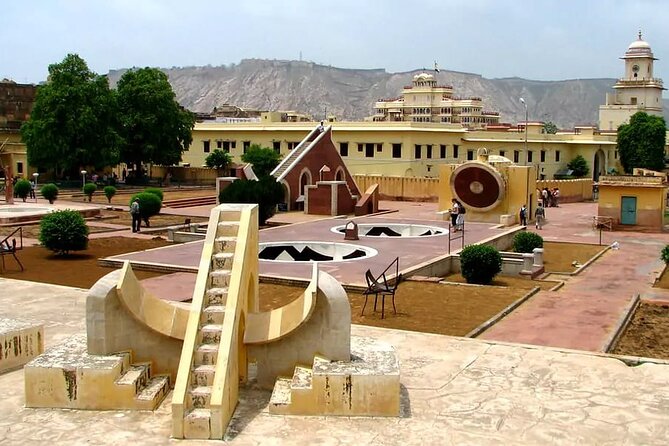
Next is Jantar Mantar, the UNESCO-listed astronomical observatory. You’ll have around 45 minutes here, and it’s one of those sites where ancient India’s scientific thinking feels surprisingly modern. The standout is the world’s largest stone sundial, but the broader observatory layout shows how measurements were built into public space.
If you like hands-on learning, Jantar Mantar is worth your full attention. Even without technical background, you can appreciate the scale and the logic of the instruments.
After that, you’ll move to the City Palace of Jaipur for about one hour. City Palace works like a live bridge between reign and museum storytelling. You’ll see the royal residence and a museum that presents artifacts and exhibits tied to Jaipur’s regal heritage.
What I like about City Palace as a pairing is the pacing. Jantar Mantar is about observing the sky and measuring time. City Palace is about controlling life on the ground—how power showed up in daily spaces.
Albert Hall Museum and Birla Mandir: Artifacts, Paintings, and White Marble Calm
Albert Hall Museum is next, with about 45 minutes. It’s Rajasthan’s oldest museum and it covers a broad range: artifacts, paintings, metalwork, and carpets. If you like variety in a single stop, this is a solid choice because you’re not stuck with one theme.
Then you’ll finish with Birla Mandir Temple. This one is about 45 minutes too, and it’s a free stop. It’s a white marble temple dedicated to Lord Vishnu and Goddess Lakshmi, known for intricate carvings and a serene ambiance.
Birla Mandir is a good closing note because it’s calmer than the royal sites. After two days of forts, gates, and palaces, you get a softer kind of beauty.
Money and Tickets: What You Get for $75 and What’s Extra
At $75 per person for a two-day private car tour, the value comes from the combination: AC comfort, hotel pickup and drop-off, a professional driver, bottled water, and guided visits to major attractions. Entrance fees are not included, so the best way to think about the price is as transport + guide + time saved.
Here’s what that means for your planning:
- Most monuments on the route require separate admission tickets.
- Some stops are free, including Jal Mahal for viewing and Birla Mandir.
- Your biggest extra cost is usually the entry tickets at the major forts and museums.
If you’re traveling with a group of friends, the per-person cost tends to feel fair because the private logistics are still shared by fewer people than a large group tour. If you’re going solo, you’ll pay the same per-person rate, but you still get the advantage of controlling pace and not waiting for slow walkers.
Tips for the driver/guide are optional, so you can decide what feels fair based on service.
Getting Through Jaipur Traffic Like a Pro
Jaipur’s streets can be a test. That’s where a skilled driver becomes part of your experience, not just a background detail. In the shared experience notes for this tour, drivers were described as friendly and funny, and also safe and confident even during Diwali traffic.
You can’t control traffic, but you can control whether your day plan includes buffer time. With a private car and a local professional behind the wheel, your day stays more predictable.
Two practical wins:
- You don’t need to reorganize your sightseeing when a detour happens.
- You keep energy for walking and looking, instead of spending it on navigation.
Who This Tour Fits Best
This is a good match if you want a structured two-day plan with big-name sights, but you also care about how you get there. The private format works for:
- Couples who want comfort and shared pacing
- Families who want fewer logistics headaches and consistent pickup/drop-off
- Solo travelers who want a local guide to decode what they’re seeing
If you hate being herded, you’ll appreciate that this is built around your group only. If you love deep, all-day wandering in one monument, you might feel a little time-compressed at some stops. The schedule is efficient by design.
Should You Book This Jaipur Private Car Tour?
Yes, if you want a smooth, organized two days that hits Jaipur’s essential sights without turning your vacation into a logistics project. The price makes sense when you factor in private AC transport, hotel pickup/drop-off, and guided context at major sites like Amber Fort and Jantar Mantar.
I’d think twice if you’re trying to minimize extra spending on entrance tickets, because monument fees are not included. Also, if you want uninterrupted access everywhere, remember that a stop like Jal Mahal is mostly a view-and-photo moment due to restricted entry.
FAQ
Are monument entrance tickets included in this tour price?
No. Monument entrance tickets are not included, so you’ll need to budget separately for sites that require admission.
Does the tour include hotel pickup and drop-off?
Yes. The tour includes hotel pickup and drop-off in Jaipur.
What type of vehicle is used?
You’ll travel in a private air-conditioned car with a professional driver.
Are any stops free to visit?
Yes. Jal Mahal viewing is listed as free, and Birla Mandir is also listed as free.
How long is the tour overall?
The tour runs for approximately 2 days.
Is there a guided component?
Yes. The tour includes guided touring with an expert local guide.
Can I adjust my pace during the tour?
Yes. The itinerary is described as flexible, so you can explore at your own pace within the overall plan.
Is cancellation allowed if plans change?
Yes. Free cancellation is offered, with a full refund if you cancel at least 24 hours before the experience’s start time.