REVIEW · JAIPUR
Cyclin’Jaipur – Pink City Heritage walking Tour
Book on Viator →Operated by CyclinJaipur · Bookable on Viator
Jaipur wakes up fast, and so will you. Cyclin’Jaipur’s Pink City Heritage walking tour strings together the best “old city” scenes with a real guide, starting at Hawa Mahal and moving through City Palace, temples, and working markets. What I like most is the small group size and the chance to spend time with craftspeople and market sellers, not just photo stops, with guides such as Virendra and Raju often praised for how well they explain what you’re seeing.
You get real-life textures: tea breaks, snack breaks, and conversations that help the Pink City feel like a place people live in, not a backdrop. One thing to consider: it’s still a walking tour in busy lanes, and there’s a dress code (no short pants or sleeveless), so wear shoes you can handle for a few hours.
If you’re a first-timer in Jaipur, or you’ve been before and want a better way to understand the city, this format works well. It’s short enough to fit into a busy schedule, but structured enough that you won’t wander in circles.
In This Review
- Quick reasons this Pink City Heritage walk works
- Where this tour fits in a Jaipur itinerary
- Starting at Hawa Mahal: more than a photo viewpoint
- City Palace complex: the royal anchor point
- Watching Hindu prayer at a major temple
- Markets that show how Jaipur eats, trades, and works
- The biggest vegetable wholesale market
- The flower market on the way
- Craft streets and artisan workshops: the Jaipur trade route
- Pace, group size, and what to wear
- What’s included in the $18.50 price
- Best for who, and who might want something else
- Should you book Cyclin’Jaipur’s Pink City Heritage walking tour?
- FAQ
- How long is the Cyclin’Jaipur Pink City Heritage walking tour?
- What does the tour cost?
- Do I get a choice of departure time?
- What’s included during the walk?
- Where do I meet the guide?
- Is hotel pickup and drop-off included?
- How many people are in a group, and is there a dress code?
- What if I need to cancel?
Quick reasons this Pink City Heritage walk works
- Meet at Hawa Mahal and get street-level context from a local guide right away
- City Palace complex access gives you a strong anchor point for Jaipur’s story
- Temple prayer ceremony viewing adds meaning beyond architecture photos
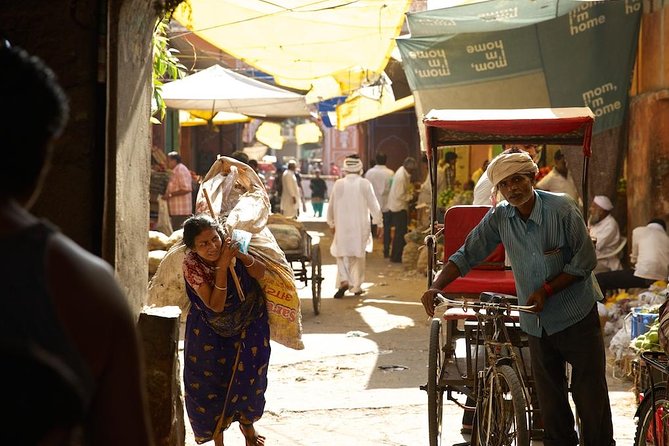
- Vegetable wholesale market + flower market show how daily commerce moves
- Marble carver’s district craft stops put traditional trades (silversmiths, bangle makers, metal workers) on your route
- Water, snacks, and coffee/tea help you stay comfortable on the half-day pace
Where this tour fits in a Jaipur itinerary
Jaipur can feel like a lot when you first arrive. Big landmarks, long distances, and traffic can make it hard to connect the dots. This walking tour is designed to solve that problem with a tight route inside the old city area, focused on how Jaipur functions day to day.
The timing matters too. You can choose a morning or afternoon departure, which helps you match your energy level and the rest of your day. If you’re the kind of person who wants to see markets while they’re in full operation, the morning option usually fits that mood better. If you want a calmer afternoon plan, you can do the same stops later.
The good news: the tour is about 3 hours, so you’re not committing to a full day of walking just to get your bearings. That’s especially useful if you’re also planning forts, museums, or a second tour.
You can also read our reviews of more walking tours in Jaipur



Starting at Hawa Mahal: more than a photo viewpoint
Most people think of Hawa Mahal as a stop you glance at, snap a few pictures, and move on. This tour uses it as a launching point. You meet your local guide at Hawa Mahal, and from there you get the kind of explanation that makes the rest of the walk click.
Why that matters: the Pink City isn’t laid out like a grid. Once you step into the older lanes, you’ll see why local knowledge helps. A guide can point out what to notice, what to ignore, and how different spots connect.
You’ll also enter the City Palace complex during the walk. That stop is important because it gives you a “royal heritage” anchor before you bounce into commerce, crafts, and everyday religious life. In other words, you get both the symbolic Jaipur and the working Jaipur on the same route.
Guides like Viru (Virendra) and Raju are especially noted for making the route feel understandable, not random.
City Palace complex: the royal anchor point
Once you’re inside, you’re looking at the connection between power, design, and daily rhythms. The City Palace complex visit on this tour is meant to ground you before the rest of the walk shifts into markets and neighborhoods.
What you’ll feel here is contrast. You go from grand palace space—where you can spot the style choices—to the dense streets where families shop, artisans work, and prayers happen. This sequence helps you build a mental map fast.
Even if you’ve seen palace architecture before, I like how this tour keeps the focus practical: you’re not just collecting details. You’re collecting context—what connects the landmark world to the street world.
Watching Hindu prayer at a major temple
One of the most memorable parts is the chance to walk up to the most famous temple of Jaipur and witness a Hindu prayer ceremony. This isn’t framed as a “spectacle” stop. It’s presented as an actual moment of religious practice you can observe while you’re already in the old-city flow.
This kind of stop can change the way you see a city. Jaipur becomes more than walls and crafts. It becomes a living place with ongoing rituals. You also get a clearer sense of how spirituality sits alongside business—temples aren’t separated from daily life here.
Practical note: because this is a religious setting, dress and manners count. You’ll already be getting the tour’s dress guidance (no short pants or sleeveless), and you should plan to move quietly and respectfully during the ceremony.
Markets that show how Jaipur eats, trades, and works
The tour’s market section is the heart of what makes the Pink City feel real.
You can also read our reviews of more city tours in Jaipur





The biggest vegetable wholesale market
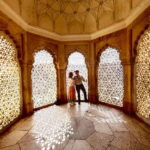
You’ll visit the biggest vegetable wholesale market of Jaipur, where the action is tied to supply chains and daily cooking realities. Wholesale markets can be loud, busy, and visual in a way that a typical souvenir market never matches.
What to expect here: lots of movement, strong colors, and a sense that you’re watching work happen. This is also where a guide helps you sort out what you’re seeing—especially if you don’t know what different stalls or goods represent.
The flower market on the way
You’ll also stop for the flower market, encountered on your route. Flowers matter in Jaipur for everyday use and ceremonies, so this isn’t just a pretty break. It gives you another layer to the city’s daily rhythms and ties back to what you saw at the temple.
If you like taking photos, this is one of your better windows. If you like sensory experiences more than images, it’s still worth it—the scale and variety can be surprising.
Craft streets and artisan workshops: the Jaipur trade route
Jaipur is famously a craft city, and this tour makes you walk through that reality. After the markets, you go toward the marble carver’s district, where you’ll meet local artisans and see traditional work close up.
The tour mentions artisans such as:
- sculptors
- silversmiths
- bangle makers
- metal workers
That’s the kind of lineup that matters because Jaipur’s craft identity isn’t only one industry. It’s a chain of skills—cutting, shaping, finishing, and producing items people use and buy every day.
What I like about this craft-focused approach: it doesn’t try to sell you on an idea. It puts you in front of the people doing the work and gives you a reason to ask questions. With guides like Sid and Parveen also mentioned positively for guiding quality, the explanations can make the difference between watching and understanding.
Pace, group size, and what to wear
This is a walking tour with a maximum of 8 travelers, which is a sweet spot. It keeps things personal enough for questions and photos, without turning into a tiny private tour that’s harder to schedule.
Physical fitness: the tour says you should have moderate physical fitness. That means you should be comfortable with steady walking and moving through busier areas. If your legs get tired easily, plan on taking water breaks and pacing yourself.
Dress code is clear: no short pants or sleeveless attire. This matters most for the temple experience, but it’s good to follow the whole tour’s standard from start to finish. Bring:
- comfortable walking shoes
- a light layer you can keep on in temples and busy streets
- water is provided, but having a small habit of sipping helps
What’s included in the $18.50 price
At $18.50 per person for about 3 hours, the value is in what you get bundled together.
Included:
- bottled water
- snacks
- coffee and/or tea
- a guide (the tour lists a red card guide)
That may sound simple, but it adds up on a walking itinerary. Markets and temple visits can run long without notice, and the snack + tea stops keep the experience comfortable rather than rushed.
Also, this tour uses a mobile ticket, and you’ll receive confirmation within 48 hours of booking (subject to availability). That’s helpful if you’re planning a tight Jaipur schedule.
Not included:
- hotel pickup and drop-off if you don’t select that option
So you should be prepared to get yourself to the meeting point at Hawa Mahal.
Best for who, and who might want something else
This tour is a great match if you:
- want a first-time friendly way to understand Jaipur’s old city
- enjoy markets and crafts more than only museums
- prefer a shorter format that still hits major anchors (Hawa Mahal, City Palace complex)
- want a guide who helps you read the city, including prayer ceremony context
It might be less ideal if you:
- don’t do well with walking through crowded lanes
- need long indoor breaks and low foot traffic
- get uncomfortable in religious spaces and prefer purely sightseeing experiences
If you’re the type who likes learning the “how do people live here” side of travel, this format will likely feel like your best use of a half-day.
Should you book Cyclin’Jaipur’s Pink City Heritage walking tour?
I think it’s an easy yes for most people doing Jaipur for the first time. You get the major landmarks framed in a way that doesn’t stop at photos—plus working markets and a craft district visit that helps Jaipur feel like a real place.
Book it if you want value for money without sacrificing depth, and if you’re comfortable with a few hours of walking and respectful temple attire. Skip or consider an alternative only if your mobility is limited or you want a more transportation-based sightseeing day.
If your goal is to walk away with a clearer sense of how Pink City life moves—palace to prayer to wholesale markets to craft streets—this is the kind of half-day plan that delivers.
FAQ
How long is the Cyclin’Jaipur Pink City Heritage walking tour?
The tour lasts about 3 hours.
What does the tour cost?
The price is $18.50 per person.
Do I get a choice of departure time?
Yes. You can choose either a morning or an afternoon departure time.
What’s included during the walk?
The tour includes bottled water, snacks, and coffee and/or tea, plus a guided experience.
Where do I meet the guide?
You meet the local guide at Hawa Mahal.
Is hotel pickup and drop-off included?
Hotel pickup and drop-off is not included unless you select that option.
How many people are in a group, and is there a dress code?
The group is limited to a maximum of 8 travelers, and the tour requests no short pants or sleeveless attire. It also notes you should have moderate physical fitness.
What if I need to cancel?
Free cancellation is available. You can cancel up to 24 hours in advance for a full refund.