REVIEW · JAIPUR
Hands-on Block Printing Workshop
Book on Viator →Operated by Creatis · Bookable on Viator
Block printing turns Jaipur into a workshop. In a small class at Creatis, you learn Sanganeri the way it’s practiced locally, then leave with two stoles you printed yourself. What I like most is the calm, patient teaching and the fact you’re working with real pigments and real block styles, not just watching. One thing to consider: if the class runs in a larger group, you may get slightly less say in color and complexity than in the smaller setup.
You’ll travel on your own to the studio area and settle in for about two hours of hands-on work. The whole vibe is relaxed, with step-by-step guidance, and you get a real souvenir at the end rather than a souvenir-shaped photo op.
In This Review
- Key things I’d zero in on
- Getting oriented at Creatis in Jaipur’s Sudarshanpura area
- The Sanganeri method: Gad, Rekh, Datte, and why it helps you succeed
- Layering colors with water-based pigments (and the test piece moment)
- Picking your motif: how you get creative without losing control
- From printing to finished stoles: what happens after you lay the pigment
- Price and value: what $25.16 actually buys you in real life
- Logistics that matter: timing, dress, fitness, and group size
- Who this workshop is best for
- Quick practical tips so your stoles turn out how you hope
- Should you book Hands-on Block Printing in Jaipur?
- FAQ
- How long is the Hands-on Block Printing Workshop?
- What is the price per person?
- How many people are in the class?
- What will I make and take home?
- Where is the meeting point?
- Do I need hotel pickup?
- What should I wear and what is the age requirement?
- Is cancellation free?
Key things I’d zero in on
- Small-group style tutoring so you’re not stuck copying someone else’s mistakes
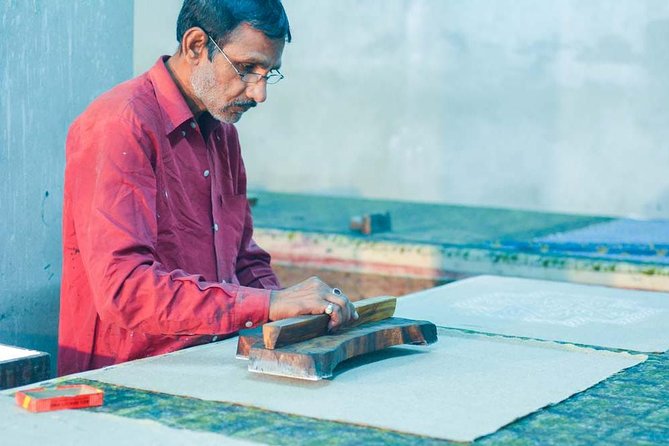
- Sanganeri block basics including Gad (ground), Rekh (outline), and Datte (filler)
- Layering with water-based pigments to build motifs the right way
- Two finished stoles with printed design work done by you
- Machine-embroidered borders for a crisp, finished look
- Optional extra printing time for those who want to try additional items, if the team can accommodate
Getting oriented at Creatis in Jaipur’s Sudarshanpura area
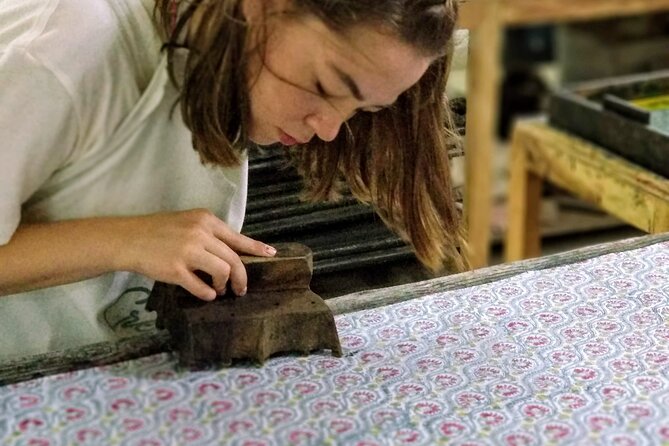
This workshop happens at Creatis, in Sudarshanpura (near industrial landmarks, including Tata Motors Service Center). The meeting point is specific, and because there’s no hotel pickup, you’ll want to plan an easy ride there using public transport or a taxi.
Once you arrive, the setup matters more than people expect. The studio shares space with an active textile business operation, so it feels practical and real. You’re not being ushered through a staged show. You’re learning inside a working craft space where materials, blocks, and fabrics are handled all day.
The class itself keeps things human-sized. It’s capped at six people for personalized tutoring, and the overall activity has a max group size. In practice, that usually means you can ask questions and get corrections without feeling rushed.
You can also read our reviews of more tours and experiences in Jaipur


The Sanganeri method: Gad, Rekh, Datte, and why it helps you succeed
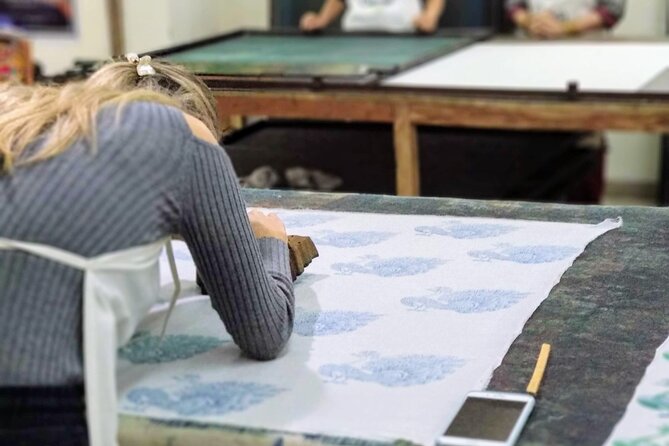
Before ink meets fabric, you get an overview of the art form and what makes Sanganeri special in the Jaipur region. You’ll hear how block printing became part of local identity long before mass-produced textiles took over elsewhere.
Then the “how” starts, and the language helps. You learn about three block roles:
- Gad (ground): the base coverage that sets the rhythm
- Rekh (outline): the lines that define shapes and structure
- Datte (filler): the extra details that make patterns feel complete
This matters because block printing isn’t just stamping randomly. Each block has a job, and the sequence affects how your motif reads once the colors overlap. Even if you’re creative, a method keeps your result from turning into a busy mess.
You’ll also get familiar with the tools and materials used in this traditional workflow. Expect to work with water-based pigments, blocks, and the process of aligning designs correctly from one color layer to the next.
Layering colors with water-based pigments (and the test piece moment)
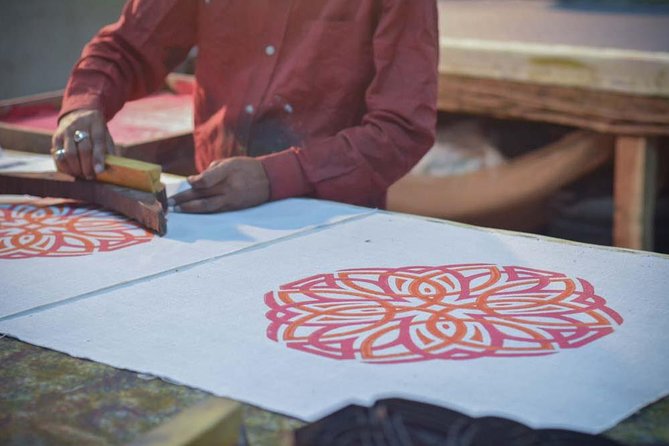
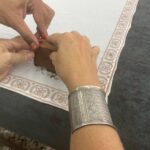
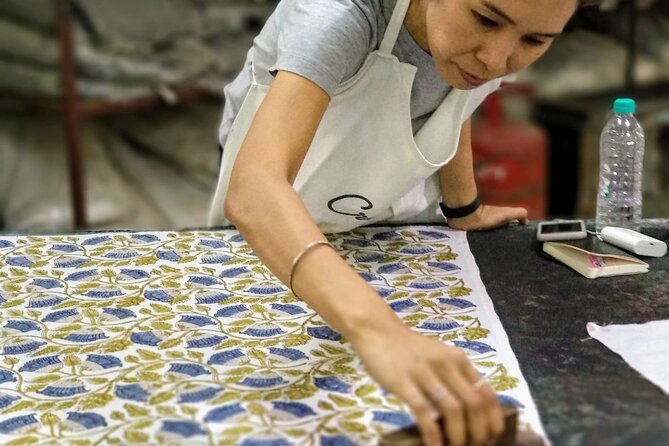
The core skill in Sanganeri is layering. You apply pigment, print a layer, and then move to the next color with careful placement. The goal is a clean overlap where each layer looks intentional, not accidental.
I like that the workshop teaches layering with practical pacing. You get hands-on instruction on where to position blocks and how to keep your alignment consistent. That’s the part that makes the difference between a print that looks charming and one that looks professionally done.
Most classes like this include a short practice or test piece step, and it’s genuinely useful here. It helps you learn how the block edges behave on fabric and lets you “find the eye” for placement before your final stoles.
One practical heads-up: color previews can be misleading. If you’re choosing pigments from swatches, the final printed tones may not match exactly what you expect in a sample. The good news is you can ask about adjustments if the test doesn’t feel right, so you’re not stuck hoping it improves on the finished piece.
Picking your motif: how you get creative without losing control
You’ll choose from designs inspired by Sanganeri prints. The studio also has a fabric collection, which gives you options beyond a single fixed template. The key is that you’re not just selecting a picture. You’re choosing an approach to difficulty and style.
From the teaching style, you can tell the team expects different comfort levels. People can start with a plan that’s more straightforward and then push into a more intricate stencil path if they feel steady. That balance is important in a craft class because block printing rewards patience.
You’ll work to create a one-of-a-kind item during the session. In this workshop, that means your own design work on your stoles. And because you’re layering multiple color steps, your “personality” shows up in small choices: how crisp your outlines are, how consistently you place fills, and whether your pattern feels balanced across the fabric.
From printing to finished stoles: what happens after you lay the pigment
At the end of your printing sequence, you’ll have stoles that you designed and printed. The borders get finished with machine embroidery. That hybrid approach is smart: it saves time for the workshop, while still giving you a polished result that looks complete rather than unfinished craft-table art.
The workshop time is long enough to get you to a finished souvenir, not a half-day project that waits weeks for drying and extra steps. You leave with usable pieces, not just a printed panel.
If you’re the type who wants to try something extra, ask questions. Some people have successfully printed additional items they brought, but you’ll only know what’s feasible by talking with the team during your session. In a small class, the staff can usually tell you quickly what they can accommodate without slowing everyone down.




Price and value: what $25.16 actually buys you in real life
The price is listed at about $25.16 per person for roughly two hours. That’s not a lot for a craft class that results in two finished stoles, pigment work, and guided instruction on a traditional technique.
The value angle isn’t just the final product. It’s the tuition component:
- You get step-by-step guidance through a technique that takes practice to get right.
- You’re learning block roles (ground, outline, filler) so you understand what you’re doing.
- You’re working with layered color printing, which is harder than stamping one flat design.
Taxes are included, and GST is included too. You’re not walking into surprise fees for the session itself. What you do pay with is your time and your transport to the studio, because hotel pickup is not included.
Also consider the “opportunity cost.” In Jaipur you can easily spend two hours queuing for sights. This is a different kind of payoff: a souvenir that’s personal, made by your hands, and tied to a local craft method rather than imported-looking mass tourism goods.
Logistics that matter: timing, dress, fitness, and group size
Plan for a studio visit rather than a quick stop. The experience is about two hours, and there’s no hotel pickup. The smart way to handle that is to build a buffer into your day so you’re not sprinting to make it on time.
Dress code is smart casual. Wear something comfortable enough to sit and work, since block printing involves repetitive hand motions. The activity also notes a moderate physical fitness level, which likely reflects typical workshop movement rather than anything extreme.
The studio is near public transportation, so you can get there without needing a car. Still, because the meeting point is specific, it’s worth double-checking your route before you go.
Group sizing is capped for personalized tutoring, and that’s where you feel the difference. You’ll learn faster and get better corrections. If you end up in a bigger cohort, you might see fewer choices in design complexity or color selection.
Who this workshop is best for
This is a great pick if you want a hands-on break from sightseeing and shopping. If Jaipur feels like information overload, printing gives you a quiet focus.
It’s especially good for:
- Adults who like crafts and want a practical skill, not just a purchase
- Couples or friends who enjoy doing something together for a shared souvenir
- Anyone who wants to understand what they’re seeing when they walk past printed textiles across the city
It’s also a good “Jaipur skill memory” choice. You’ll walk away knowing what Gad, Rekh, and Datte mean and why layering matters. That knowledge follows you into future shopping and helps you spot quality.
Quick practical tips so your stoles turn out how you hope
- Bring comfortable clothing in smart casual style, and expect some pigment mess risk even if it’s controlled.
- Pay attention to the test piece. It’s where you catch color mismatch and alignment issues early.
- Don’t be shy about asking for help during color changes. Getting the next placement right is the whole game.
- If you’re picky about color tones, treat swatches as guidance, not a guarantee, and use that test step to steer your final choices.
- If you’re tempted to print something you brought, ask early so the team can tell you what’s possible.
Should you book Hands-on Block Printing in Jaipur?
Yes, I’d book it if you want a meaningful, hands-on Jaipur souvenir. The pricing feels fair for two finished stoles and real instruction, not just a cultural lecture. The workshop’s best strength is the combination of a working studio environment, structured Sanganeri process learning, and time to actually print.
Skip it or consider another option only if you strongly prefer full control over every design choice in a high-volume setting. If the class ends up running with lots of people, color and stencil options can feel more limited. For most people, that tradeoff is worth it because you still leave with a finished piece you made yourself.
If you have room in your schedule and want a craft experience that you can wear, this one earns a spot on your Jaipur plan.
FAQ
How long is the Hands-on Block Printing Workshop?
It runs for about 2 hours.
What is the price per person?
The price is listed at about $25.16 per person.
How many people are in the class?
It’s capped at six people for personalized tutoring, with the overall activity having a maximum of 15 travelers.
What will I make and take home?
You’ll print designs using pigments and create two block-printed stoles to keep. The borders are machine-embroidered.
Where is the meeting point?
CreatisA12 Sudarshanpura RIICO, behind Tata Motors Service Center, Industrial Area, Sudarshanpura, Bais Godam, Jaipur, Rajasthan 302006, India. The activity ends back at the meeting point.
Do I need hotel pickup?
No. Hotel pickup is not included.
What should I wear and what is the age requirement?
Dress code is smart casual. The minimum age is 18 years.
Is cancellation free?
Free cancellation is available. You can cancel up to 24 hours in advance for a full refund; within 24 hours, the amount paid is not refunded.