REVIEW · JAIPUR
Jaipur: Half or Full-Day Sightseeing Tour with Flower Market
Book on GetYourGuide →Operated by Jaipur tour taxi cab · Bookable on GetYourGuide
Jaipur wakes up with marigold-scented streets. This half- or full-day tour hits two things I really like: the Jaipur Flower Market in the morning and the way the day balances famous royal sights with quieter stops like Panna Meena ka Kund.
One thing to consider: it’s a packed route with multiple short walks and photo breaks, so if you like slow museum-style time, you’ll want the half-day option or a bit of patience with crowds.
In This Review
- Key things to notice before you go
- Starting the day in Jaipur’s flower market lanes
- Gaitore Ki Chhatriyan and Jal Mahal: quick contrasts that matter
- Amber Fort: the royal storytelling stop you’ll actually remember
- Panna Meena ka Kund stepwell: geometry you can feel
- Block printing workshop: where Jaipur’s craft becomes real
- Old Walled City hits: Hawa Mahal and City Palace
- Jantar Mantar and the Monkey Temple option
- Price and value: what $4.39 per person really buys
- Timing, comfort, and the guide-driver team
- Half-day vs full-day: choosing the right amount of Jaipur
- Should you book this Jaipur flower market and sightseeing tour?
- FAQ
- How long is the Jaipur half-day or full-day sightseeing tour
- Where does pickup and drop-off happen
- What is the difference between the half-day and full-day options
- What’s included in the tour price
- Are attraction entrance fees and meals included
- What languages are tour guides available in
- What is the cancellation policy
Key things to notice before you go
- Morning flower market first for garlands, fragrance, and a real feel for daily ritual
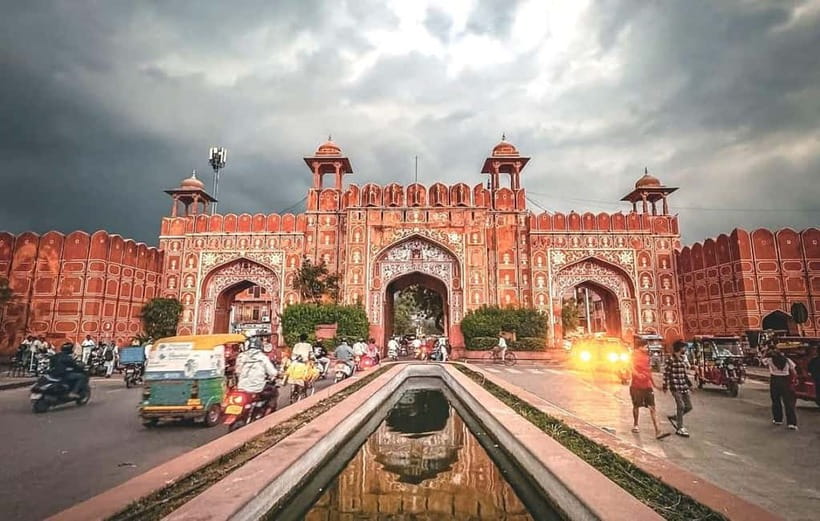
- Amber Fort as the anchor stop with guided context that makes the architecture click
- Short, calm detours at places like Panna Meena ka Kund and Gaitore Ki Chhatriyan
- Hands-on block printing in a local workshop, with a try-it moment
- Old City highlights in the right order including Hawa Mahal, City Palace, and Jantar Mantar
- Safe, practical transport with a private setup (car or tuk-tuk depending on your option)
Starting the day in Jaipur’s flower market lanes
If you want Jaipur before it turns into postcard mode, start where the city’s rituals begin: the flower market. Early on, vendors unload marigolds, roses, and jasmine in fragrant heaps. You’ll see how flowers become practical things fast—garlands for temples and ceremonies—and how people move with purpose through narrow lanes.
This is one of the best parts of the day because it sets your eyes and nose for the rest of the route. After this, the big monuments feel less random. They start to feel like part of the same cultural system: color, worship, craft, and public life all connected.
Time-wise, plan on roughly an hour here, with enough time to walk, look closely, and grab photos without feeling like you’re sprinting. If you’re the type who likes taking in the little details (hands tying garlands, the rhythm of unloading, the way sunlight hits petals), this stop delivers.
You can also read our reviews of more tours and experiences in Jaipur



Gaitore Ki Chhatriyan and Jal Mahal: quick contrasts that matter
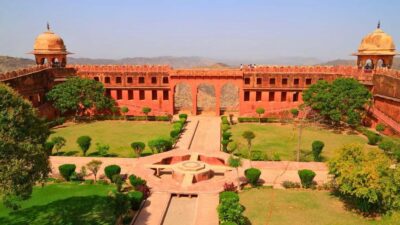
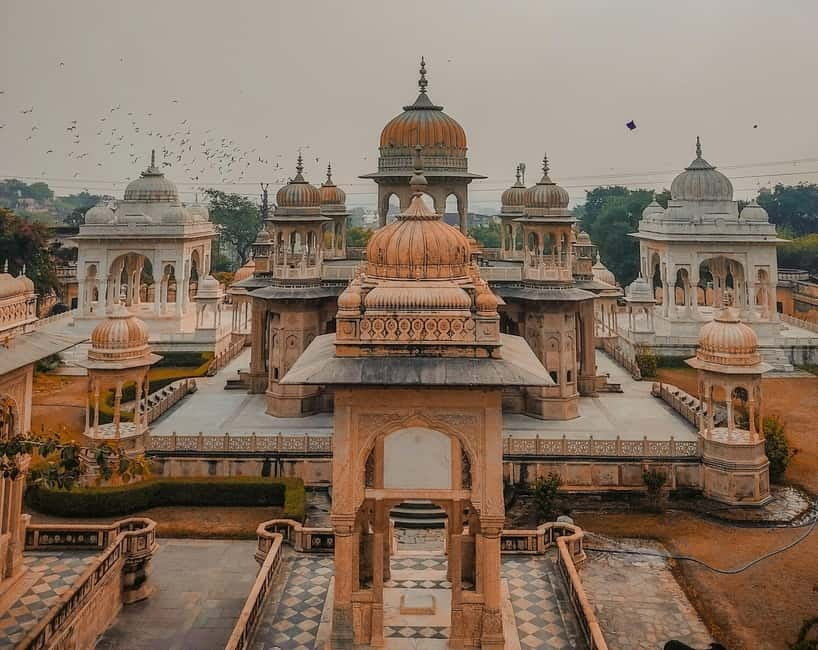
After the morning buzz, the itinerary shifts gears. One stop that adds breathing room is Gaitore Ki Chhatriyan, where you’ll visit peaceful cenotaphs dedicated to Jaipur’s Kachwaha rulers. It’s a calmer kind of “royal” than the main forts—more quiet stone and intricate carving than crowds.
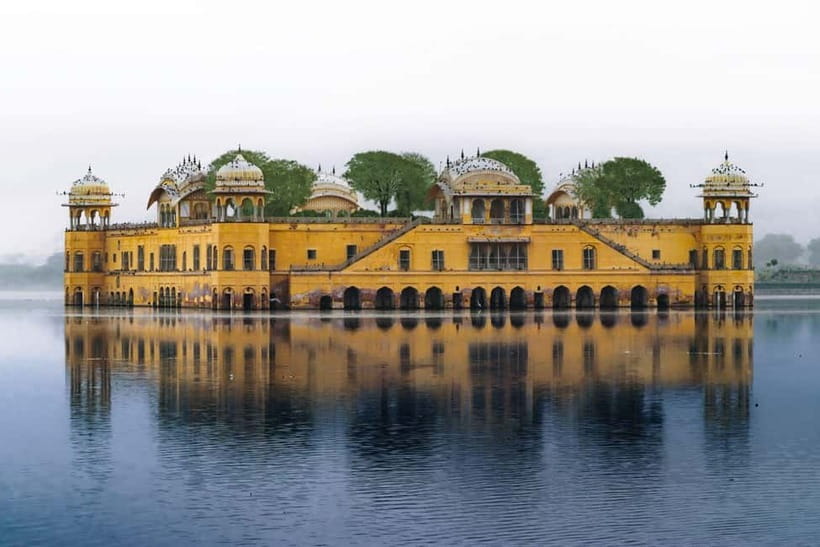
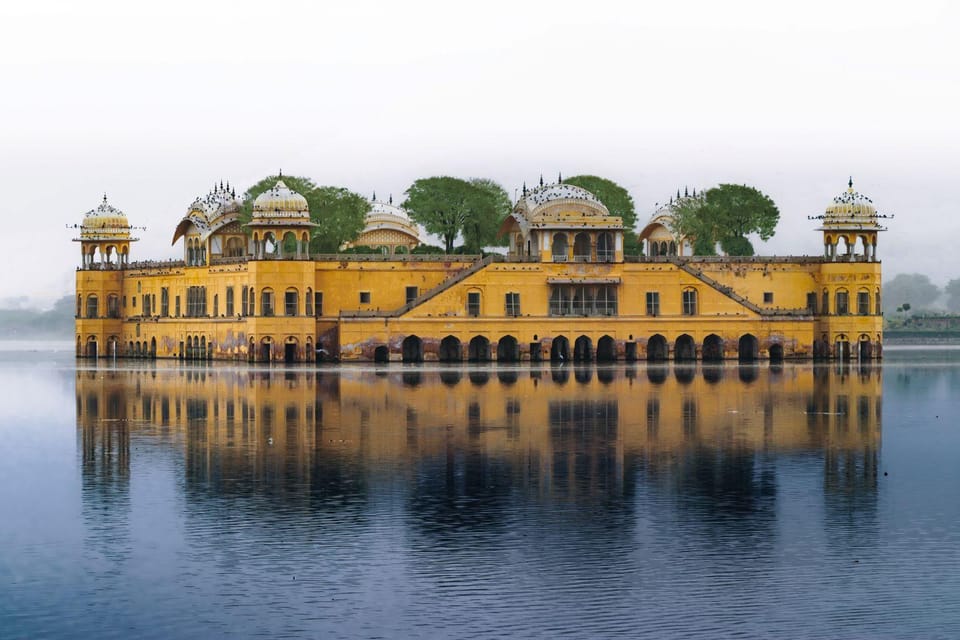
Then there’s Jal Mahal, the palace sitting in the water at Man Sagar Lake. You’ll get a photo moment and a sense of the place from the outside. It’s not the longest stop, but it works as a visual palette cleanser. If your morning is full-on sensory input, seeing something framed by water and hills helps you reset.
These contrast stops are the difference between a tour that’s just a checklist and one that helps you understand how Jaipur changes by neighborhood—spiritual lanes, royal memorial grounds, then a palace in the middle of the lake.
Amber Fort: the royal storytelling stop you’ll actually remember
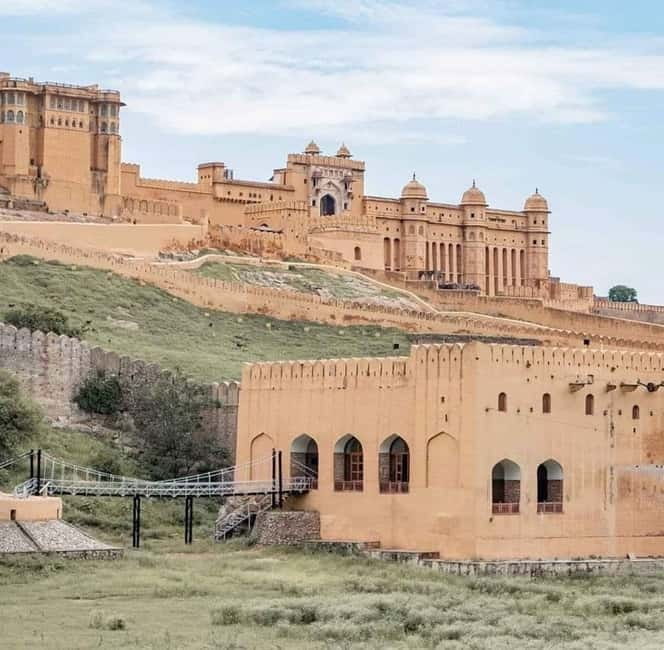
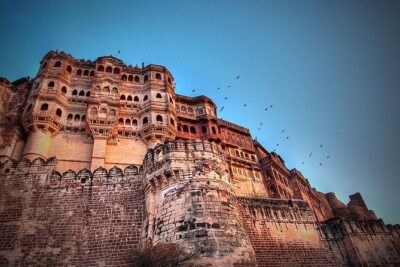
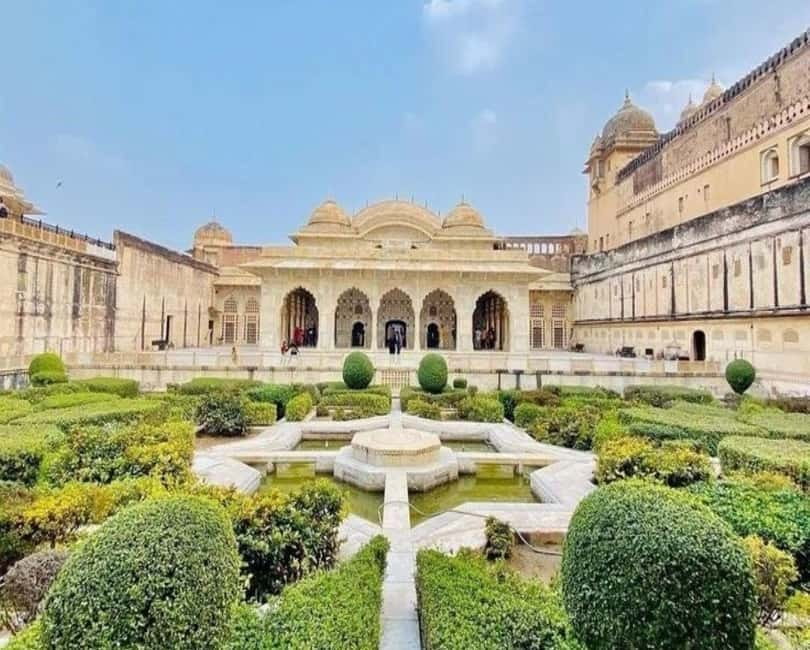
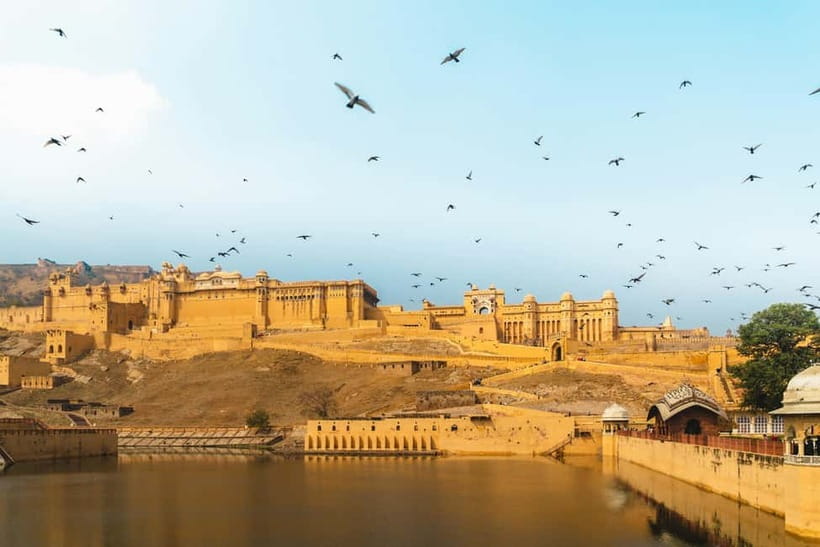
Most Jaipur days revolve around Amber Fort, and this one puts it where it can do the most good. The fort isn’t just about views. With an expert guide, you’ll explore ornate spaces, courtyards, and the kind of defensive and royal planning that explains why the layout looks the way it does.
Here’s what makes Amber Fort valuable on a guided route: it helps you read the building. You’re not only looking at the architecture; you’re learning what the spaces were for—public face, private life, and the logic behind the fort’s structure.
This stop is also where you may feel the “tour rhythm” most. You’ll have time to explore, but you won’t be wandering alone for hours. If you’re the type who wants to linger, aim to treat this as your main focus of the day. Everything else can be shorter because Amber is the core.
A practical tip that comes from how these tours flow: keep your energy for the fort. It’s the one place where your attention pays off the most.
Panna Meena ka Kund stepwell: geometry you can feel
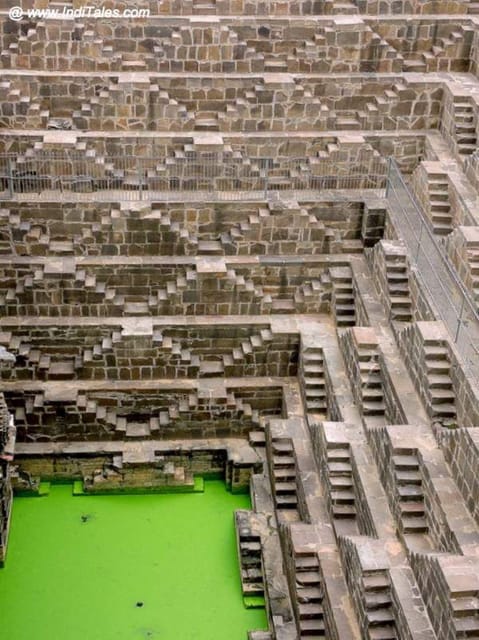
Next up is Panna Meena ka Kund, a stepwell known for its strong symmetry and calm atmosphere. The thing you’ll likely notice first is how engineered it feels—straight lines, repeating sections, and a clean visual order that’s almost soothing after the louder parts of Jaipur.
This is also the kind of stop that makes the tour worth doing even if you’ve seen photos online already. A stepwell doesn’t just look impressive; it changes how light behaves as you move through viewpoints. And because it’s shorter on most schedules, it doesn’t drain your day.
Your visit here is brief, but it’s structured enough to let you understand the space instead of just passing by. If you like places that are photogenic without being overly busy, this is one of the best value moments on the itinerary.
Block printing workshop: where Jaipur’s craft becomes real
If you only do monument stops, you can leave Jaipur knowing the landmarks but not the working culture behind them. This is why the workshop stop matters.
You’ll visit a traditional block printing studio, watch artisans using long-practiced techniques to create patterns on fabric, and then you may get a chance to try block printing yourself. Even if your first print isn’t museum-perfect, the experience is still useful because it turns a souvenir idea into something you understand—how designs transfer, how rhythm matters, and why Jaipur patterns have their own logic.
This part of the day adds texture. It also gives you a tangible memory you can carry home, instead of only photos and postcards.
One more benefit: a workshop gives your feet and eyes a break. After forts and palaces, it’s a different kind of focus—close-up, hands-on, and quieter than sightseeing.
You can also read our reviews of more tours and experiences in Jaipur






Old Walled City hits: Hawa Mahal and City Palace
Once you’re back in the Old Walled City, the tour leans into the famous skyline of Jaipur.
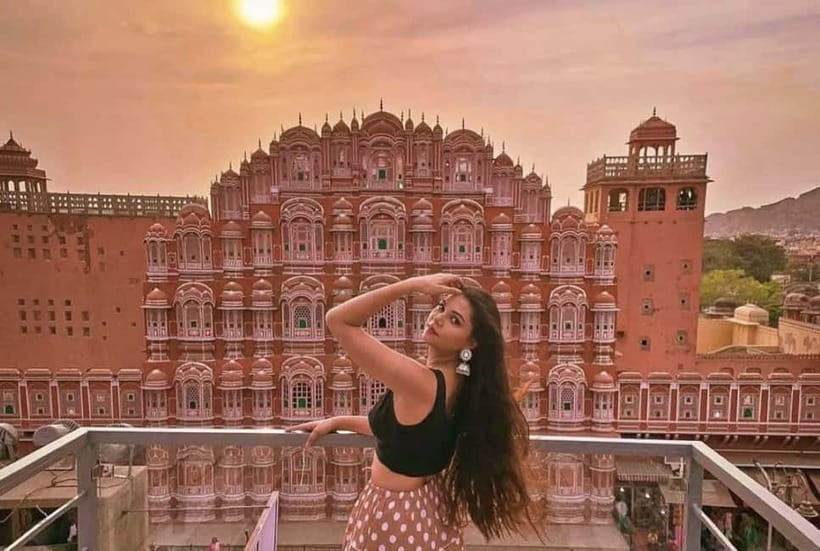
First is Hawa Mahal (Palace of Winds). Expect a photo stop and a guided look at why the honeycombed windows matter. The design was made for royal women to observe street processions without being fully seen. That context turns the building from a pretty façade into a functional piece of royal life.
Then comes City Palace, still partly home to the former royal family. This is a longer stop, and it’s where you get courtyards, galleries, and armory spaces that show how the monarchy organized power and daily movement. Even if you’re not a “history hours” person, the variety of spaces helps.
And if you choose the full-day option, you’ll add time for shopping at arts and crafts markets. That makes the day feel less like you’re being transported and more like you’re actually spending time in the neighborhood.
My take: the pairing of Hawa Mahal plus City Palace works well because Hawa shows how the royal world watched the city, while City Palace shows how it lived with the city.
Jantar Mantar and the Monkey Temple option
The itinerary also includes Jantar Mantar, the astronomical marvel with massive instruments built in the 18th century. It’s not just a monument you photograph. With guidance, you’ll understand how the instruments were designed to track celestial events with precision.
This stop is ideal if you enjoy the intersection of science, design, and public knowledge. It’s also a good fit near the end of the day because it’s more “focus your attention” than “run from one viewpoint to another.”
Your highlights also mention the Monkey Temple as a possible start or end point. If your schedule includes it, you’ll get hilltop views and a lively scene with playful monkeys. It’s a very Jaipur-feeling contrast to all the formal royal architecture—less museum, more street energy.
Price and value: what $4.39 per person really buys
At about $4.39 per person, this is priced in a way that surprises people. The key isn’t luxury; it’s logistics and guided efficiency.
What you’re getting included:
- Hotel or airport pickup and drop-off
- Transportation via private air-conditioned car (with driver) or private tuk-tuk (with driver) depending on your option
- A certified guide if you select that option
- Sealed bottled water
- Tea or coffee with snacks
- Taxes and parking fees, plus fuel surcharge
What you’re not getting:
- Attraction entrance fees
- Meals (except when you choose the full-day version, which includes lunch)
So the value equation is straightforward: the tour price pays for your movement, your basic on-route comforts, and (if selected) your guide. Entrance fees and meals are extras, but they’re usually easy to budget since you’ll be dealing with specific paid sites.
If you’re traveling as a couple or small group and want private transport without hiring separate guides for every stop, this is where the pricing can make sense fast.
Timing, comfort, and the guide-driver team
This is a private group tour, so you’re not stuck with random pace or mass departures. You also have language options: English, Italian, Spanish, French, and German.
Transport matters in Jaipur, and the tour’s setup is designed to keep you moving. In the experiences people share from this kind of private day, the driver role gets praised for being responsible, helpful, and careful through intense traffic. You might even be paired with driver-guides named Ravi or guided by people like Abdul or Khalid, depending on availability.
Also note: the private car is air-conditioned in the car option, and that’s not a small deal in Rajasthan heat. If you can choose, consider prioritizing the option that keeps you comfortable between longer sightseeing stops.
Half-day vs full-day: choosing the right amount of Jaipur
This is built as either 5 to 8 hours, with a half-day or extended full-day format.
- Choose half-day if you want the strongest highlights without turning your day into a marathon.
- Choose full-day if you want the added rhythm of a Rajasthani lunch plus extra shopping time in arts and crafts markets.
Given the number of landmarks packed into the day, full-day is great when you want variety: flowers, forts, royal buildings, a workshop, and astronomy—plus a meal break that keeps you human.
Should you book this Jaipur flower market and sightseeing tour?
I’d book it if you want a Jaipur day that mixes the iconic hits with at least a couple of quieter, more personal-feeling stops. The flower market start is the strongest reason to do this route at all, and Amber Fort plus City Palace are the payoff that most “random monument days” miss.
Skip it or switch your expectations if you hate tight schedules. This tour works best when you’re okay with short stops that still pack in context—especially since entrance fees and meals aren’t included by default.
If you can, pick the option that includes a certified guide, choose the format that matches your energy (half-day vs full-day), and plan to treat this as an organized day of highlights rather than a slow exploration.
FAQ
How long is the Jaipur half-day or full-day sightseeing tour
The duration is listed as 5 to 8 hours.
Where does pickup and drop-off happen
Pickup and drop-off are included from your hotel or from the airport, railway station, or another preferred location you specify.
What is the difference between the half-day and full-day options
The full-day version includes a delicious Rajasthani lunch and extends the day with additional time for sightseeing and shopping.
What’s included in the tour price
Included items are hotel or airport pickup and drop-off, private transport (car with driver or tuk-tuk with driver if selected), sealed bottled water, tea or coffee with snacks, and taxes and parking fees. A certified guide is included if you select that option.
Are attraction entrance fees and meals included
No. Attraction entrance fees and meals are not included.
What languages are tour guides available in
Tour guides are available in English, Italian, Spanish, French, and German.
What is the cancellation policy
Free cancellation is available up to 24 hours in advance for a full refund.