REVIEW · JAIPUR
Walking Tour Jaipur India
Book on Viator →Operated by pinkfoots travel · Bookable on Viator
A two-hour walk that turns Jaipur on fast. This tour is built around storytellers who use infotainment tricks to keep the old-town streets interesting, not lecture-y. I love that you cover the big highlights without needing to plan every turn—and you still get the human stories behind the stones.
Two things I especially like: the quick, practical flow (about 20 minutes per stop) and the included tea with snacks plus bottled water, so you can actually keep moving. One possible drawback: monument entry tickets aren’t included, so if you want inside access, you’ll need extra cash on the day (the tour notes about ₹100 per person, roughly $10 extra).
If you want a short, guided way to get your bearings in Jaipur’s Pink City, this walk makes sense. Just keep an eye on the weather, and be ready to pay for any optional entry fees you choose.
In This Review
- Key things to know before you go
- Entering Jaipur’s old town: the pace and the promise
- Price and tickets: what you’re really paying for
- Hawa Mahal: wind-catching windows and women’s chambers
- City Palace Complex: Mughal-Rajput power in one walled space
- Jantar Mantar: astronomy built in stone
- Isarlat (Sargasuli): the 140-foot tower at the bazaar gates
- Indian Crafts Bazaar: textile shopping that feels guided
- Giriraj ji temple: color and a quick out-of-town stop
- Guide energy, group size, and how to make it worth it
- Who should book this Jaipur walking tour
- Should you book it?
- FAQ
- How long is the Jaipur walking tour?
- What is the starting point of the tour?
- Does the tour include monument entry tickets?
- What’s included in the price?
- Is there a mobile ticket?
- How many people are in the group?
- Does the tour run in bad weather?
- What is the cancellation policy?
Key things to know before you go
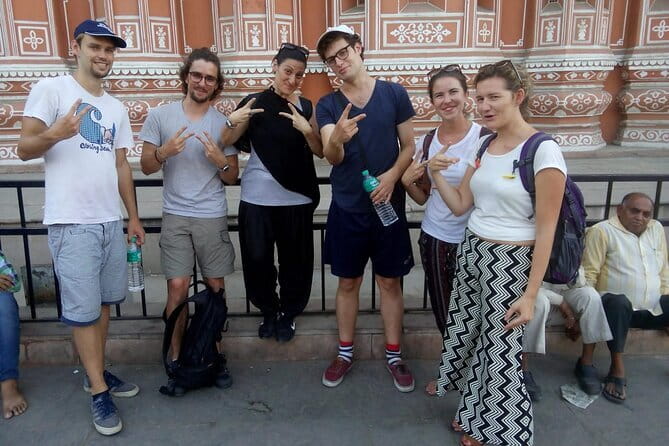
- Short 2-hour format with ~20 minutes at each major stop, so you see more without getting stuck.
- Story-led “infotainment” that explains history and culture in street-friendly ways.
- Included tea, snacks, and bottled water, useful in Jaipur’s heat.
- Optional monument entries cost extra, so decide what you want to go inside.
- Max group size of 20 keeps the walk from feeling chaotic.
- Starts at Hawa Mahal Road and returns to the same meeting point.
Entering Jaipur’s old town: the pace and the promise
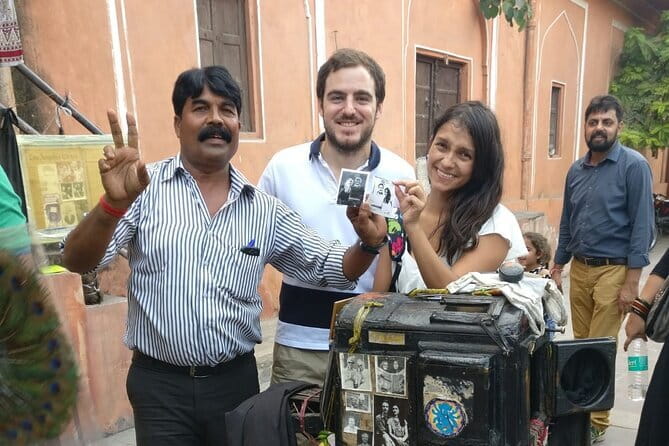
This walking tour is designed for momentum. You meet near Hawa Mahal Road in Jaipur’s Pink City, then head out on an easy-going walking circuit that loops back to the same spot. The tour length is about 2 hours, with stops timed at roughly 20 minutes each, which is a nice match for first-time visitors who still want to do other things later in the day.
The main idea is storytelling. The guides are described as trained storytellers, and the format is meant to keep you engaged whether you love history or you just want good context while you walk. That matters in Jaipur, because you’ll be looking at impressive architecture and crowds, but the real payoff is understanding why these places matter to the city and its people.
You also get small-but-important comfort touches: bottled water and tea with snacks are included. I like that because it turns the walk from a “stand around and listen” situation into something you can comfortably sustain.
You can also read our reviews of more walking tours in Jaipur



Price and tickets: what you’re really paying for
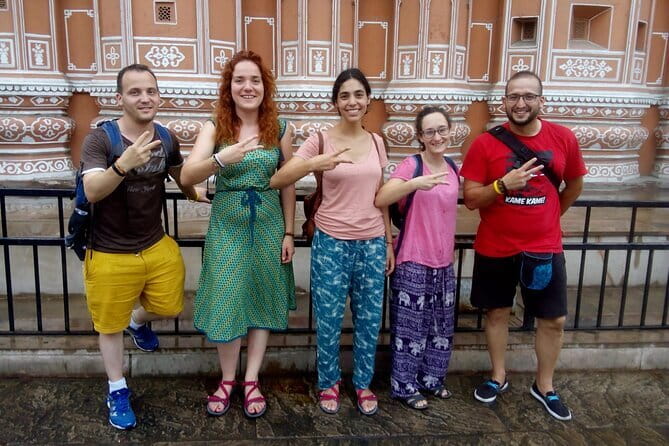
The price is $20 for roughly 2 hours with a guide, plus tea with snacks and bottled water. That’s strong value if you’re the type who wants guidance and context, not just a list of monuments.
The one catch is admission tickets aren’t included for the monuments. The notes say tickets are extra (it mentions about ₹100 per person; it also references about $10 extra if you want tickets). So think of the tour price as covering the guided walk and the storytelling, while monument entry is an optional add-on.
Also, the tour uses a mobile ticket, and you’ll get confirmation at booking. If the weather isn’t good, the experience may be canceled, with an option for another date or a full refund. And the group caps at 20, which helps the guide keep things moving without losing the thread.
Hawa Mahal: wind-catching windows and women’s chambers
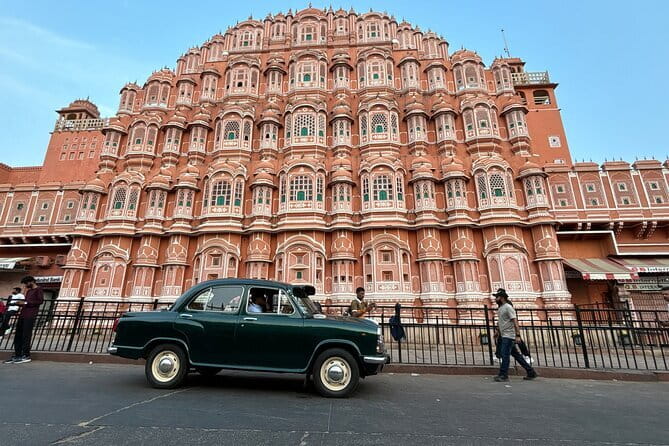
You start at the most iconic Jaipur facade: Hawa Mahal (Palace of Wind). The building is made of red and pink sandstone, and it sits along the edge of the City Palace area while extending toward the Zenana, the women’s chambers.
Even if you’ve only seen photos, standing near it is different. The structure’s whole idea is tied to the way air and privacy could be balanced in the days of palace life. Your guide’s job here is to connect what you see—those repetitive openings and the dramatic facade—with what the palace was meant to do.
Plan for about 20 minutes here. That’s enough time to get good exterior views, understand the layout in plain words, and move on before you start feeling stuck in the crowd.
Consideration: if you decide to pay for monument entry, that could change how much time you spend here. Also, because entry isn’t included, you’ll want to be ready with cash or card if the site requires it on the spot.
City Palace Complex: Mughal-Rajput power in one walled space
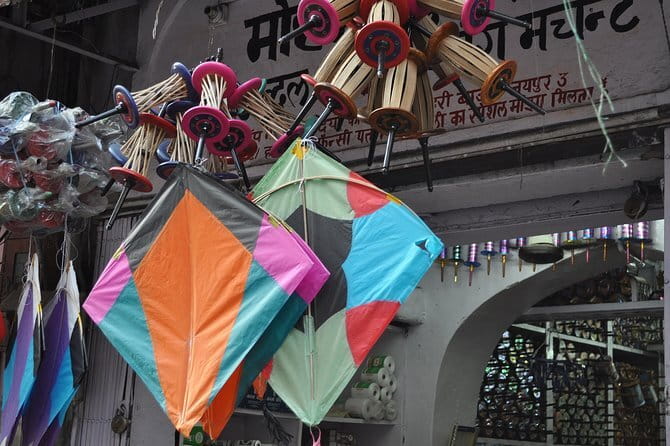
Next is the City Palace Complex, located inside the walled old city. This is a big deal in terms of who built Jaipur and how rulers wanted their presence to feel—because the complex was conceived and built by Maharaja Sawai Jai Singh II, the founder of Jaipur.
The architecture is described as a fusion of Mughal and Rajput styles. That blend is worth noticing as you move: you’re looking for the mix of forms and the way details shift depending on the influence. The other reason this stop matters is that the palace complex is still associated with the last ruling royal family, so it isn’t just a museum piece. It carries real cultural continuity.
You’ll get about 20 minutes at this stop, which is good for an overview. For deeper time inside, you’ll need the extra admission ticket (not included). If you’re short on time and only want the high-value hits, this quick guided visit works well.
Tip: If you care more about photos and orientation than rooms and galleries, you might choose not to add entry tickets here and instead enjoy the exterior context and stories from the guide.
Jantar Mantar: astronomy built in stone

From palace architecture you shift to Jantar Mantar, Jaipur’s famed astronomical site. The tour frames it as proof of Rajput-era architectural brilliance and astronomy innovations, built by Maharaja Sawai Jai Singh II and completed in 1734.
Here’s where I think this tour scores for people who don’t consider themselves history lovers: astronomy sites are easy to misunderstand when you’re just looking at shapes. The guide’s job is to make it click—how these instruments and structures were meant to measure and observe, and how the design is tied to that purpose.
You’ll have around 20 minutes at Jantar Mantar, which gives you enough time to understand the big idea and identify the key parts without getting bogged down. Again, monument entry tickets aren’t included, so your inside-or-outside decision can affect your total time at the stop.
Consideration: this is also a popular photo spot, so if you’re sensitive to crowds, choose your moments carefully—ask your guide when to pause and where to stand for the cleanest views.






Isarlat (Sargasuli): the 140-foot tower at the bazaar gates
Then you hit Isarlat, a tower also popularly known as Sargasuli. The name is explained as meaning passage to heaven, and the tower is noted at 140 ft tall. It’s located near the meeting point of Tripolia Bazaar and Gangori Bazaar, close to Chhoti Chaupar Chowk and Tripolia Gate.
This stop is a great break from big-ticket monuments, because it places you in a more street-level rhythm. You’re seeing Jaipur as a city that trades, walks, and moves—not only a city of palaces.
Because it’s roughly 20 minutes, you’ll likely focus on exterior sightlines and the cultural explanation of what the tower represents in the city layout. It’s also a useful stop for understanding the bazaar geography—how these gates and crossings shape where people go.
Practical note: the bazaar area can be active, so keep your phone secure and your pacing flexible. If you’re shopping later, this is also the moment to mentally map where you are.
Indian Crafts Bazaar: textile shopping that feels guided

The tour then goes to a shopping-oriented stop connected with Jaipur textile exports, specifically called out as Indian Crafts Bazaar Jaipur textile exports and associated with Sireh Deori Bazaar Jaipur.
This part is designed for street-level shopping that feels less random. Instead of wandering, you’re brought to a place where textiles and crafts are a major focus. Your guide can help you identify what you’re looking at—so you’re not just buying based on a pretty display. You’ll get about 20 minutes, and this is long enough to browse and decide if you want to make a purchase.
The tour notes say this stop includes admission ticket included, which is important if you’re wondering whether you’ll pay extra again here. In other words: your guided time at the bazaar-style shopping stop is set up to be easier on your budget than some monument sites.
Consideration: shopping time is limited. If you love textiles and want to spend longer comparing colors and materials, you may want to do a follow-up shopping walk on your own after the tour.
Giriraj ji temple: color and a quick out-of-town stop
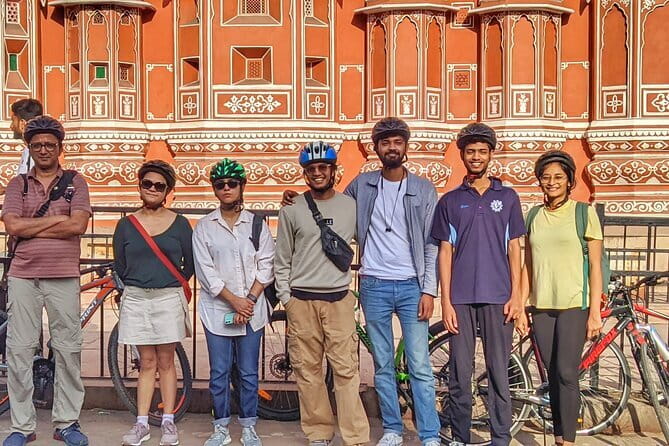
The final notable sightseeing stop is Giriraj ji temple. It’s described as bright and colorful and located on the Agra-Jaipur Road, just east of Dausa.
This is a nice contrast to the old city core. Temples on major roads often feel like living places tied to daily movement, not only heritage attractions. And because it’s on a route outside the densest old-city lanes, it can reset your headspace before you finish the walk back at the meeting point.
You’ll have about 20 minutes here. The tour notes also say admission ticket included for this stop, so you may not face the same extra-fee decision as with some other monuments.
Practical tip: this is a good time to slow down. Look up, notice colors, and take a break. You’ll be glad you did when you head back into busier street areas.
Guide energy, group size, and how to make it worth it
A walking tour lives or dies on the guide and pacing. Here, the structure matters: guided storytelling, scheduled stops, small group size (up to 20), and short time windows that keep the walk from dragging.
The tour is also described as comfortable and safe in experience accounts, with a warm, welcoming feel. That kind of guidance is helpful in Jaipur because street scenes can move fast—vendors, vehicles, and crowds all mix together. When your guide sets the pace and keeps you oriented, you spend less energy figuring things out and more energy actually enjoying the day.
If you’re booking through pinkfoots travel, the service is also described as responsive and organized in Rajasthan planning. Names like Varsha appear in service acknowledgements, which is a sign they pay attention to details beyond just showing up with a guide.
Who should book this Jaipur walking tour
This tour is a good fit if:
- You want a first-date with Jaipur that doesn’t require a full day.
- You like stories with your sightseeing, not just photos.
- You want a guided orientation through the old-town highlights.
- You’re okay with paying optional monument entry fees if you want inside access.
It might not be ideal if:
- You want a long, deep visit inside museums and palace rooms.
- You dislike spending extra money once you’re already on-site.
- Weather is unpredictable for your dates and you hate plan changes.
Should you book it?
If you’re trying to decide between DIY wandering and a guided sampler, I’d lean toward booking—especially for your first time in Jaipur. For $20, you get a structured route, a guide, included tea with snacks, and a smooth path through the city’s most recognizable sights: Hawa Mahal, City Palace, Jantar Mantar, Isarlat, a textile-focused bazaar stop, and Giriraj ji temple.
My advice: commit to the walk, then decide on monument entry case-by-case. If you want inside access, bring some extra spending money. If you’re happy with exterior views and the guide’s explanation, you can keep the cost closer to the base price.
FAQ
How long is the Jaipur walking tour?
It runs for about 2 hours (approx.), with multiple stops around the old town.
What is the starting point of the tour?
The tour starts at Hawa Mahal Road (Hawa Mahal Rd, Badi Choupad, J.D.A. Market, Pink City, Jaipur).
Does the tour include monument entry tickets?
No. Monument entry tickets are not included, and the tour indicates an extra cost (it mentions ₹100 per person and also notes about $10 extra if you want tickets).
What’s included in the price?
The price includes a guide, bottled water, and tea with snacks.
Is there a mobile ticket?
Yes, the tour uses a mobile ticket.
How many people are in the group?
The tour has a maximum of 20 travelers.
Does the tour run in bad weather?
The experience requires good weather. If canceled due to poor weather, you’ll be offered a different date or a full refund.
What is the cancellation policy?
You can cancel up to 24 hours in advance for a full refund. If you cancel less than 24 hours before the start time, the amount paid is not refunded.