REVIEW · JAIPUR
4 Days Guided Jaipur, Ranthambore Tigers & Udaipur Tour With Safari & Hotels
Book on Viator →Operated by Unseen Tours and Travels · Bookable on Viator
Four days, three cities, one tiger quest. I like this tour because it strings together Jaipur landmarks, a Ranthambore wildlife day, and Udaipur’s royal scenery with AC car comfort. It’s also structured as a private experience, so the plan can stay tight without the usual group chaos.
My favorite part is the local guidance in the main cities, including a named Jaipur guide (Singh) and consistently praised drivers like Ram and RamNiwas. One catch: you’ll need to budget for monument entry fees (listed as $100 per person) and lunches/dinners that aren’t included unless you select the $60 per person option.
In This Review
- Key highlights worth planning around
- Jaipur gets you oriented fast: Amber Fort, Jal Mahal, City Palace
- City Palace and Jantar Mantar: why you’ll remember the math
- Hawa Mahal: the women’s chambers vibe you should look for
- Ranthambore safari day: the best reason to commit to this tour
- Udaipur after the wild day: Lake Pichola sets the tone
- Jagdish Temple and Saheliyon ki Bari: two different kinds of Udaipur
- Price and value: what $288 covers, and what to budget
- Who this Rajasthan combo suits best
- Should you book this 4-day Jaipur–Ranthambore–Udaipur tour?
- FAQ
- How long is the tour?
- Which cities and major stops are included?
- Is pickup offered?
- Do I need to pay monument entry fees?
- Are lunch and dinner included?
- Is the safari included, and is it shared?
- What’s included for meals?
- Are hotels included?
- Will there be an English guide?
- What is the cancellation policy?
Key highlights worth planning around
- AC car & driver between spread-out sights, so you’re not baking between photo stops
- English guides in Jaipur and Udaipur to make the big monuments make sense fast
- One sharing safari in Ranthambore National Park, with the park itself marked free
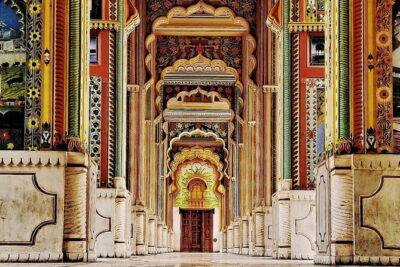
- Jaipur power combo: Amber Fort, City Palace, Jantar Mantar, Hawa Mahal
- Udaipur calm time: Lake Pichola plus palaces and temples in a slower rhythm
Jaipur gets you oriented fast: Amber Fort, Jal Mahal, City Palace
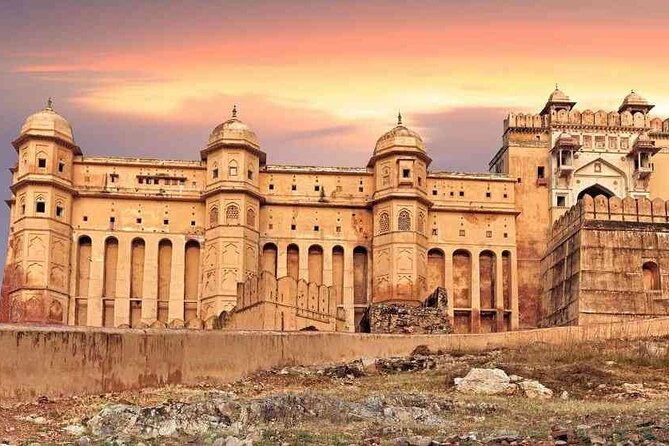
Jaipur can feel like a visual firehose on day one. This route helps you get your bearings quickly by starting at Amer Fort and building outward to the rest of the Pink City icons. Amer (also written as Amber) is about 11 kilometers from Jaipur, which is perfect for a proper arrival day: you get out of the city heat early, then come back toward the center for the architectural highlights.
At Amer Fort, you’re looking at a fort complex tied to Rajput power and royal planning. Even if you don’t memorize dates, you’ll feel the layout: courtyards, ramp-like approaches, and viewpoints that explain why forts were built for defense and dominance, not just scenery.
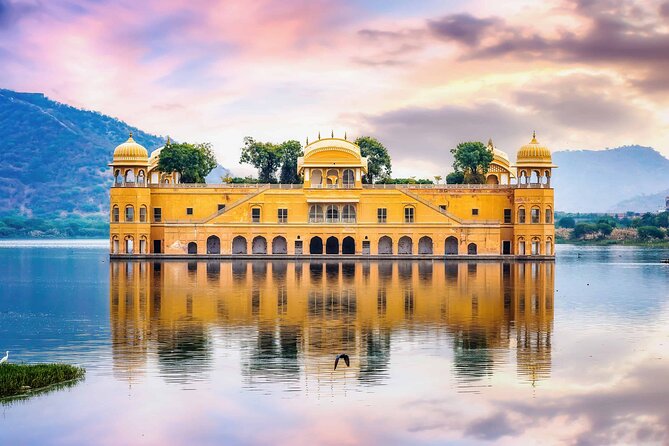
Then comes Jal Mahal, the palace sitting in the middle of Man Sagar Lake. The building dates to 1699, and the lake-and-palace setting is the key idea here: it looks like a mirage when you first catch sight of it from the shore. It’s a great stop for photos, but I’d also treat it like a mental reset between heavy walking areas—short, scenic, and very Jaipur.
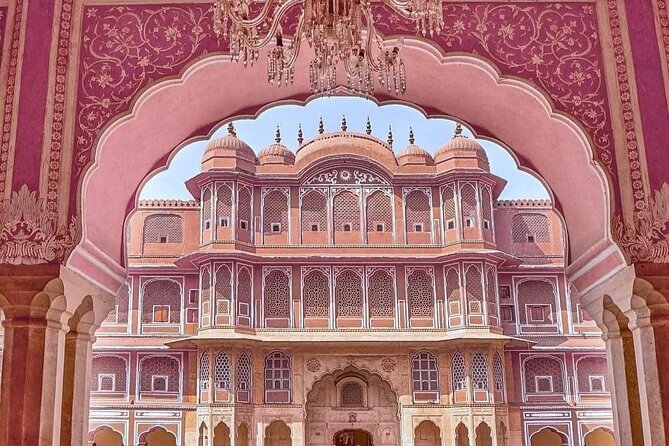
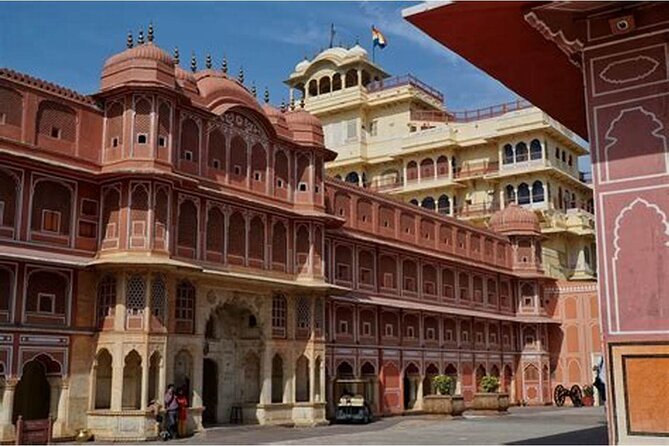
From there, you move into the royal core with City Palace. This is where you see how the city was designed around power, because Jaipur’s court history links straight into the palace story. City Palace is tied to Maharaja Sawai Jai Singh II, who moved the court from Amber to Jaipur in 1727. That context makes the buildings feel less random and more like a lived-in system.
You can also read our reviews of more guided tours in Jaipur



City Palace and Jantar Mantar: why you’ll remember the math
If Jaipur’s forts are about muscle and control, Jantar Mantar is about measurements. The site was completed in 1734 and features 19 astronomical instruments. That’s the headline, but the real value is the explanation you get while you’re there: these aren’t just old gadgets. They’re tools built to track the sky with the precision that mattered in that era.
A guide helps a lot here. Without that context, it can become a quick “interesting to look at” stop. With it, you get a sense of how the instruments relate to time, angles, and observation—so your photos aren’t just pretty rocks and towers. They’re part of a functioning worldview.
Just a heads-up: this sort of stop works best when you’re patient. Expect some reading, some listening, and a bit of head-tilting at the sky instruments. If you rush, you’ll miss the point.
Hawa Mahal: the women’s chambers vibe you should look for
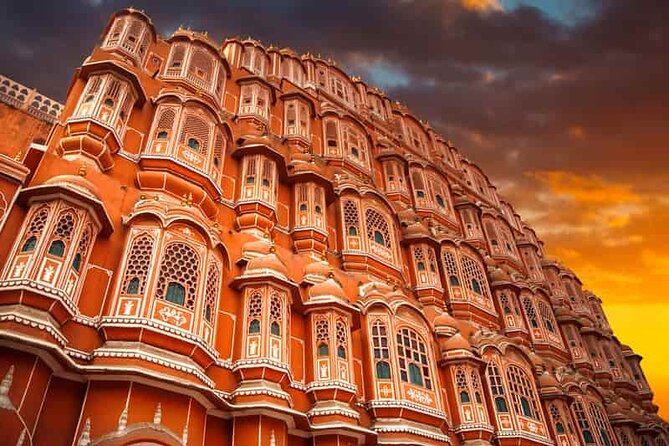
Hawa Mahal is one of those monuments that everyone knows by name, but few people understand on a first pass. It’s built from red and pink sandstone and sits right on the edge of City Palace, extending toward the Zenana—women’s chambers.
That Zenana connection is the real lesson. The windows and facade aren’t just decorative; they’re part of how people could observe city life while maintaining privacy. When you have a guide, you get that nuance. When you don’t, you mostly get the postcard version.
And yes, it’s also a fantastic photo stop. The trick is timing and posture: try to look at it from different angles and keep your eye on how it connects to the palace complex nearby. Even in a short visit, it clicks.
Ranthambore safari day: the best reason to commit to this tour
The big reason this itinerary works is that it doesn’t treat the safari as a random side quest. Ranthambore National Park is a former royal hunting ground, and it’s known for tigers, plus leopards and even marsh crocodiles. The park is listed with free admission on the schedule, but the main thing you’re paying for is the on-the-ground safari experience.
This tour includes one sharing safari. Sharing matters. It affects crowd noise in the jeep, seating comfort, and how often you can pause for wildlife spotting when another group’s sightline changes. The upside is cost control and a broader chance to see activity, because the vehicle routing is designed around the park’s conditions rather than one vehicle going rogue.
What I’d plan mentally: you’re going to Ranthambore to look for something rare and unpredictable. Your best strategy is to stay calm, keep eyes open during repositioning, and treat the whole drive as part of the experience—not just the moment a tiger appears. When you’re locked into the flow, the day feels purposeful, even if sightings are brief.
Also, since this is a guided tour with a driver, you’re not stuck figuring out logistics between jeep timing and park access. That’s worth real energy.
Udaipur after the wild day: Lake Pichola sets the tone
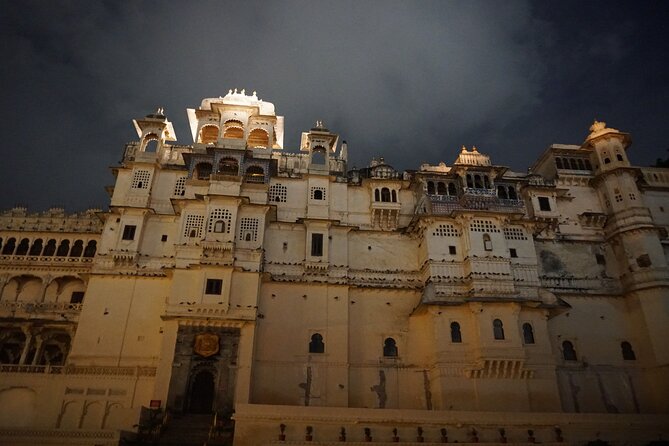
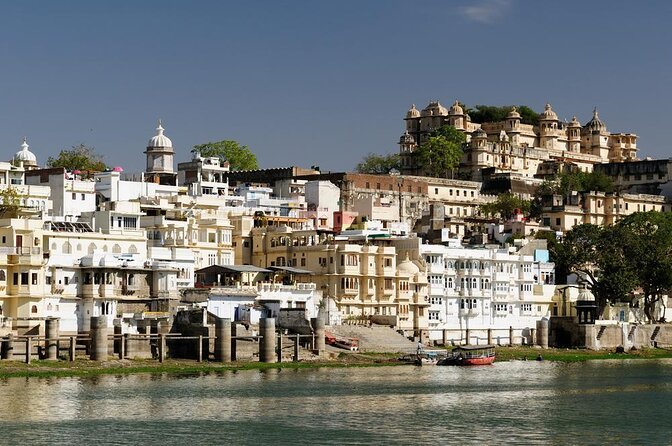
After Ranthambore, Udaipur can feel like the planet exhaling. You start with Lake Pichola, an artificial fresh water lake created in 1362 and named after nearby Picholi village. It’s one of a connected chain of lakes, and the setting makes the city’s palace architecture look even more dramatic.
This stop is short, but it functions like a thermostat. You get water views that balance the intensity of the tiger day. If your mind is still racing from wildlife scanning, Lake Pichola helps you reset without feeling like you lost a day.
Then you head to City Palace, Udaipur, built over nearly 400 years, with contributions from rulers of the Mewar dynasty. That long build period is why it feels layered. Instead of one single-style palace, it reads like multiple eras stacked together—each adding something to the royal statement.
You can also read our reviews of more tours and experiences in Jaipur






Jagdish Temple and Saheliyon ki Bari: two different kinds of Udaipur

After palaces, you get a big, living religious site: Jagdish Temple. It’s a large Hindu temple just outside the royal palace area, and it’s been in continuous worship since 1651. That date isn’t just trivia. It helps you understand why this place feels active rather than staged.
You’ll also appreciate the contrast: one moment you’re looking at royal spaces, the next you’re in a temple that’s about daily practice. Even a short stop can feel meaningful because the scale of Jagdish Temple is hard to fake.
Then the tour shifts into garden time at Saheliyon-ki-Bari. This is a garden with fountains and kiosks, a lotus pool, and marble elephants. It’s the kind of place where you can walk slowly and let the visuals settle. If Jaipur felt like your brain was doing math and decoding at every turn, Udaipur gives you room to just watch—water features, stonework, and the gentle rhythm of a tourist-friendly garden layout.
If you’re tired, this is where you’ll want to slow down on purpose. Take your time here. It’s part of why this circuit feels balanced instead of overly packed.
Price and value: what $288 covers, and what to budget
The listed price is $288 per person for the full 4-day guided circuit. That price makes sense when you look at what’s actually included:
- Dedicated AC car & driver across the whole route, which is a big deal in Rajasthan heat
- English guide coverage in Jaipur and Udaipur for a day
- Meals tied to the hotel: breakfast and dinner are included (with hotel options)
- Accommodation in 4 or 5 star hotels if you select that option
- One sharing safari in Ranthambore
Now the extras you should plan for:
- Monument entry fees are not included and are listed as $100 per person
- Lunch or dinner isn’t included unless you choose the $60 per person option
So the value depends on your travel style. If you want guided explanations and you’ll accept that monument fees are part of the deal, this package is a solid way to avoid logistical headaches. If you travel very light, skip optional add-ons, and plan to eat out every lunch, your total spend could climb faster than you expect once entry fees hit.
One more practical note: a private tour means you aren’t sharing the experience with strangers. That usually improves comfort and pace, even if your group count stays small.
Who this Rajasthan combo suits best
This tour is a good match if you want:
- A first-timer-friendly route through Jaipur and Udaipur without having to connect everything yourself
- Air-conditioned transport between spaced-out sights
- Guidance that turns major monuments into something you understand, not just something you photograph
- A single safari day in Ranthambore without committing to a longer wildlife circuit
It’s also a smart pick if you prefer clear structure. The flow from Jaipur monuments to Ranthambore to Udaipur keeps you moving, but not randomly.
If you’re the kind of person who hates time limits and prefers wandering solo for hours, you might feel constrained. But if you’re okay with guided pacing and want the highlights done well, this plan fits.
Should you book this 4-day Jaipur–Ranthambore–Udaipur tour?
I’d book it if you want a guided, comfortable route that hits the big cultural markers in Jaipur, adds a real safari day in Ranthambore, and finishes with Udaipur’s lakes, palaces, temple life, and garden calm. The combination of AC transport plus English guiding in the main cities is where the comfort-to-value ratio lands.
I’d think twice if monument fees feel like a deal-breaker, or if you don’t want to pay extra for meals. The safest way to make this trip painless is to assume entry fees and lunch/dinner costs are part of your total budget.
FAQ
How long is the tour?
It runs for about 4 days.
Which cities and major stops are included?
Jaipur includes Amber Fort, Jal Mahal, City Palace of Jaipur, Jantar Mantar, and Hawa Mahal. Ranthambore focuses on Ranthambore National Park. Udaipur includes Lake Pichola, City Palace of Udaipur, Jagdish Temple, and Saheliyon-ki-Bari.
Is pickup offered?
Yes, pickup is offered.
Do I need to pay monument entry fees?
Yes. Monument entry fees are listed as $100 per person and are not included.
Are lunch and dinner included?
Breakfast is included. Lunch and dinner are not included unless specified, with an option listed at $60 per person.
Is the safari included, and is it shared?
Yes. The tour includes one sharing safari in Ranthambore.
What’s included for meals?
Breakfast is listed as included for 3 mornings, and dinner is included for 2 evenings, with breakfast and dinner tied to the selected hotel option.
Are hotels included?
Accommodation in 4 or 5 star hotels is included if you select that option.
Will there be an English guide?
Yes. An English guide is included in Jaipur and Udaipur for a day.
What is the cancellation policy?
You can cancel up to 6 days in advance for a full refund, or 2–6 days in advance for a 50% refund. If you cancel less than 2 full days before the start time, no refund is available.