REVIEW · JAIPUR
From Delhi: Private 4-Day Golden Triangle Tour with Pickup
Book on GetYourGuide →Operated by Hello India Tours · Bookable on GetYourGuide
Three cities, one smooth private route. This is a private Golden Triangle that pairs the big-ticket moments with hands-on street time, especially Taj Mahal sunrise and a real rickshaw ride through Chandni Chowk. I also like that you get local guides in each city, not just a driver who drops you off. One heads-up: monument entry tickets aren’t included and run about $80 per person for Delhi, Agra, and Jaipur.
You start with pick-up from your hotel or the airport across Delhi and the nearby areas, then settle into an air-conditioned private car or bus-coach for the day’s pace. The trip is designed so you’re not stuck planning between stops, and you get guided visits with time to actually look, not just pose for photos.
The main consideration is that this is a driving-focused route, so expect long road stretches and full days. If you’re pregnant, this tour is listed as not suitable.
In This Review
- Key things I’d circle on your map
- Why This Golden Triangle Route Feels More Comfortable Than DIY
- Day 1 in Delhi: Old Delhi by Rickshaw, then the New Delhi Landmarks
- Agra Day 2: Taj Mahal Sunrise, Agra Fort, and the Views from Mehtab Bagh
- Day 3 on the Road to Jaipur: Fatehpur Sikri, Abhaneri Stepwell, and Galtaji
- Day 4 in Jaipur: Amer Fort, City Palace, Hawa Mahal, and Jantar Mantar
- Hotels and Room Sharing: What Your Star Level Actually Buys
- Price and Entry Tickets: The Real Budget Math
- Getting Around Comfortably: Private Transport, E-Vehicles, and Road Time
- Timing, Tickets, and Practical Small-Bill Tips
- Who This Tour Fits Best (And Who Should Skip It)
- A Note on Guides and Drivers You Might Be Paired With
- Should You Book This Private 4-Day Golden Triangle Tour?
- FAQ
- What cities are included in the 4-day Golden Triangle?
- Are monument entry tickets included in the price?
- What’s included for transport and guides?
- Where do pick-ups happen?
- Are breakfasts and hotels included?
- Can I cancel and get a full refund?
Key things I’d circle on your map

- Taj Mahal sunrise with a guide and a calmer start before the crowds
- Rickshaw ride in Old Delhi through narrow streets near Chandni Chowk
- Agra Fort + Baby Taj + Mehtab Bagh in one efficient day
- Fatehpur Sikri, Abhaneri stepwell, and Galtaji Temple on the way to Jaipur
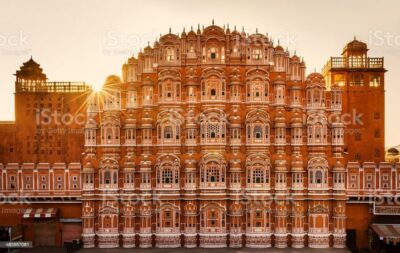
- Amer Fort and City Palace plus major Jaipur sights like Jantar Mantar and Hawa Mahal
- Skip-the-line ticket handling while keeping monument tickets as a separate cost
Why This Golden Triangle Route Feels More Comfortable Than DIY
Doing Delhi, Agra, and Jaipur on your own can turn into a juggling act: guides, transport, timing, and queues all compete for your energy. This private setup makes the trip feel calmer because your logistics are handled end to end, from pick-up to drop-off.
I also like the way they build in guided context. When you hear what you’re looking at—marble inlay at Agra’s tombs, Mughal planning at Fatehpur Sikri, or the function behind Jantar Mantar—you spend less time guessing and more time appreciating.
Finally, it’s good value if you care about comfort. You’re paying for a private, air-conditioned vehicle and local guides across three cities, plus bottled water and fuel coverage.
You can also read our reviews of more private tours in Jaipur



Day 1 in Delhi: Old Delhi by Rickshaw, then the New Delhi Landmarks
Day 1 starts in Old Delhi near Jama Masjid. From there, you slide into the kind of street scene you can’t replicate from a bus window—especially the rickshaw ride in the Chandni Chowk lanes. This is one of the best parts of the whole trip because it’s not just sightseeing; it’s getting your bearings in a living neighborhood.
After the rickshaw experience, you get the big highlights around central Delhi. You’ll pass Red Fort, India Gate, and the President Palace area as you move through the city.
Then the tone shifts to New Delhi icons: Qutub Minar, Humayun’s Tomb, and the Lotus Temple. Qutub Minar is the “wow” monument early on, and Humayun’s Tomb gives you a great start for understanding Mughal-era design. The Lotus Temple is a different kind of experience—clean lines and a quieter feel compared to Old Delhi.
Practical note: for Day 1, wear shoes you can walk in for a couple of hours. The mix of monuments plus Old Delhi streets adds up faster than you expect.
Agra Day 2: Taj Mahal Sunrise, Agra Fort, and the Views from Mehtab Bagh

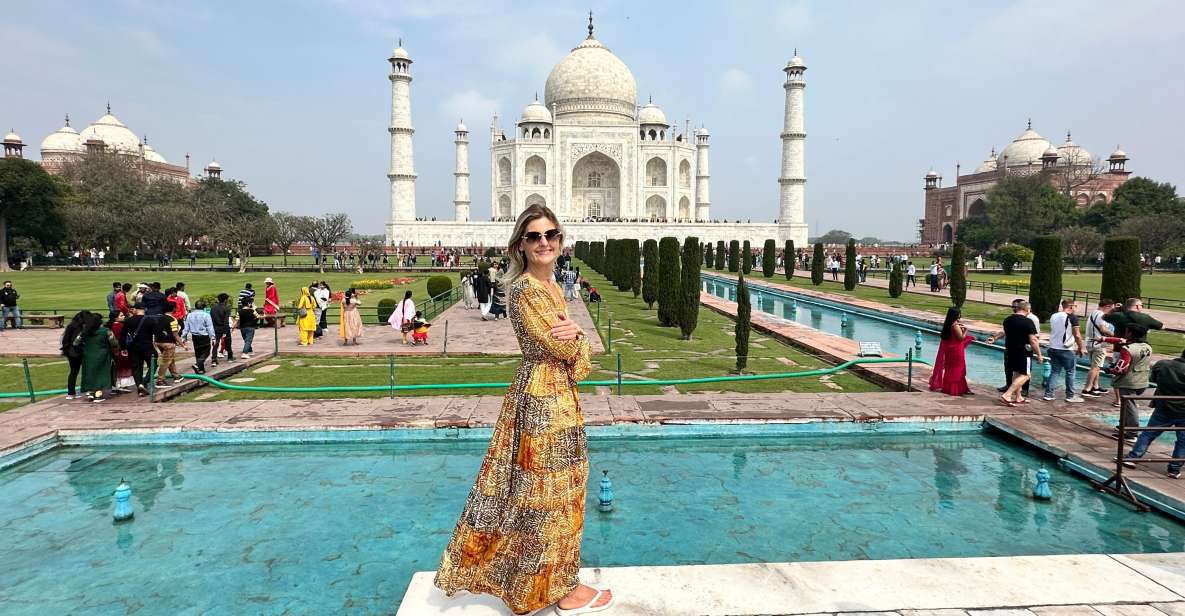
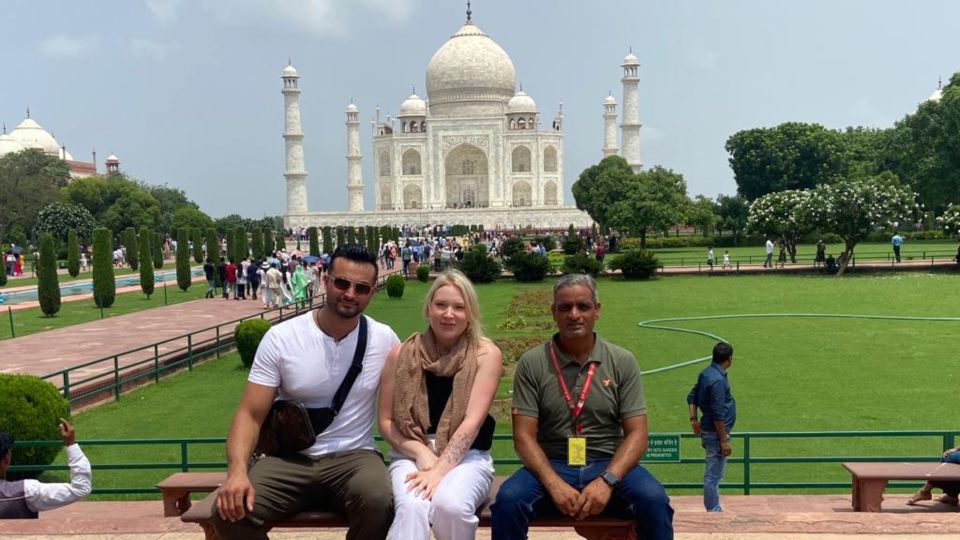
Agra is where the itinerary earns its reputation. The day begins early for a sunrise view of the Taj Mahal with your guide. Seeing it at first light is worth it because the light softens the marble and the morning air tends to make the whole setting feel easier to take in.
After sunrise, you head back for breakfast, then you’re ready for the afternoon’s heavy hitters.
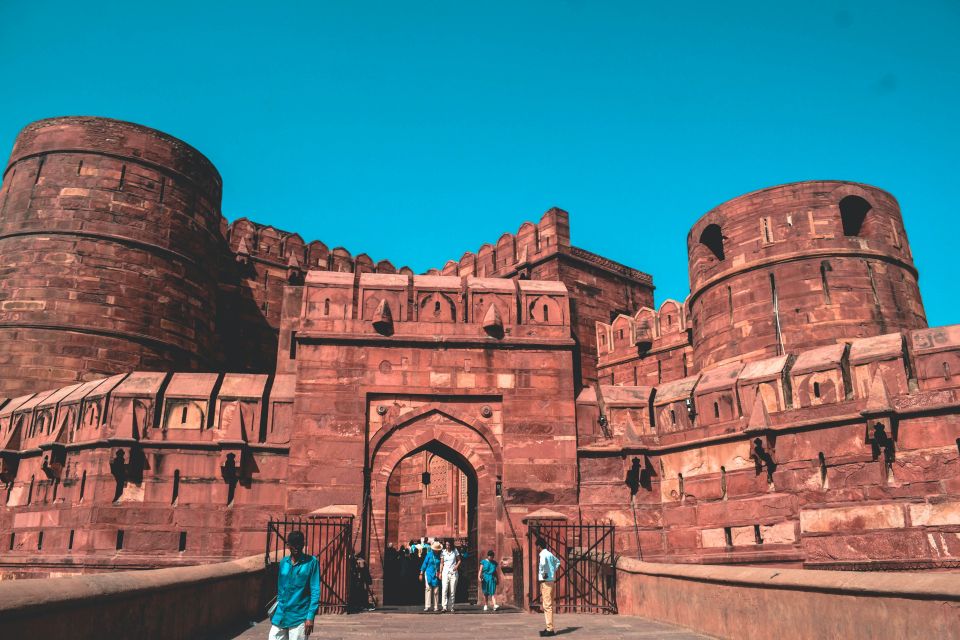
Agra Fort is next. It’s a larger, more complex site than people expect, so a guide really matters here—especially for understanding how the fort’s structure relates to the people who lived and ruled within these walls.
You also visit Baby Taj (the Tomb of I’timād-ud-Daulah), known for its intricate marble inlay work. This stop often surprises people because it’s more detailed and delicate than the bigger, more famous Taj Mahal.
The day finishes with Mehtab Bagh, which gives you views across the Yamuna River. Even if you’ve seen Taj photos online, the river-framed perspective is a different way to read the monument.
Comfort tip: the Taj Mahal area can involve moving between parking and sites. The tour includes an e-vehicle ride to and from the Taj Mahal parking, which helps you conserve energy for photos and walking time.
Day 3 on the Road to Jaipur: Fatehpur Sikri, Abhaneri Stepwell, and Galtaji
This is your longest-feeling day, but it’s also where the tour gets more interesting than the usual Delhi-Agra-Jaipur loop.
You start early leaving Agra for Fatehpur Sikri, a UNESCO World Heritage Site. It’s a Mughal masterpiece: big gateways, ceremonial spaces, and architecture that rewards patient looking. The highlighted stops here include Buland Darwaza and the Jama Masjid within the complex.
After Fatehpur Sikri, you’ll have a lunch break and then keep going toward Abhaneri. The stepwell at Abhaneri is known for its striking design, and it’s a nice change of pace after the grand Mughal buildings. It’s also a great spot for photographs if you’re willing to climb around a bit.
From Abhaneri you head to Galtaji Temple, a Hindu pilgrimage site surrounded by natural beauty. It’s especially memorable because of the monkeys around the area. Expect them to be curious, not aggressive—still, keep your bag zipped and avoid sudden gestures.
Then you continue to Jaipur and check into your hotel for the night.
Optional add-on: you can choose dinner at Green Pegion with folk dance, though it costs extra. If you want a cultural evening that isn’t another monument run, it’s a solid match for this day’s pace.
Day 4 in Jaipur: Amer Fort, City Palace, Hawa Mahal, and Jantar Mantar

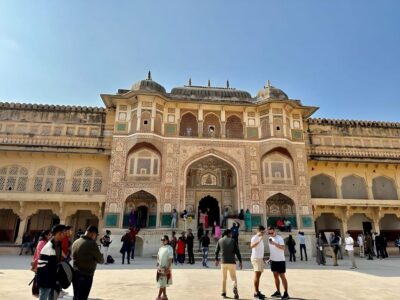
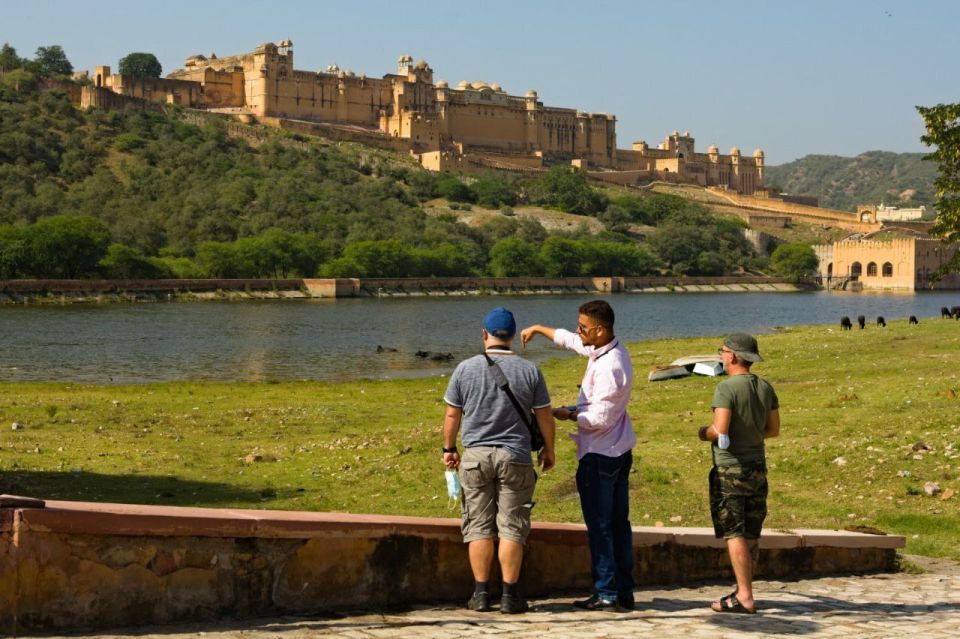
Jaipur is about royal scale and clever design. Your day begins with Amer Fort, where you’ll see the culture and power of the Rajputs expressed through fortifications and palace spaces. Amer Fort is one of those sites that grows on you the more you move through it, but it’s also a “take your time” stop, not a sprint.
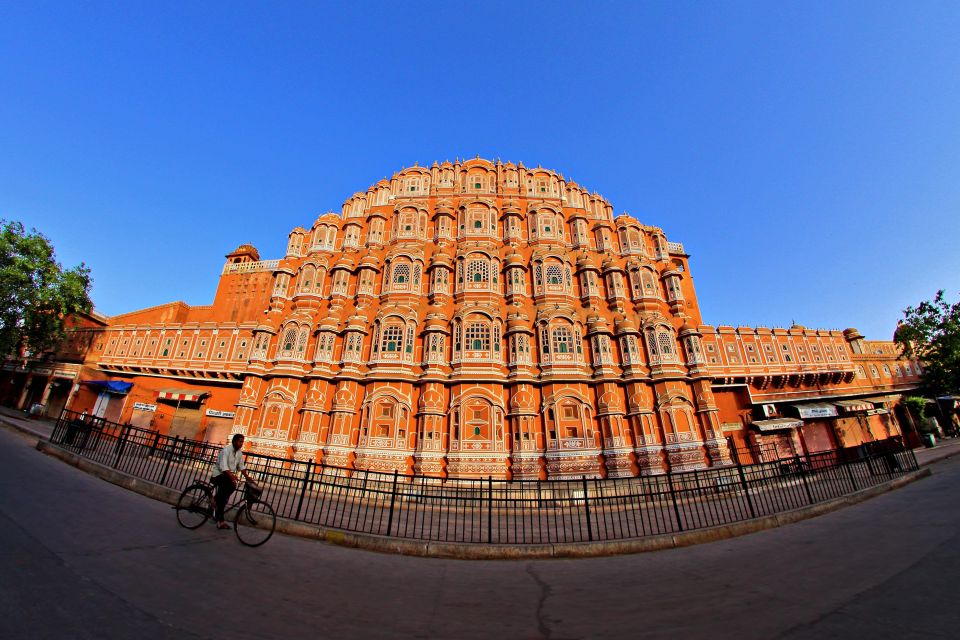
Next, you’ll pass key viewpoints and photo stops like Jal Mahal and Hawa Mahal. Jal Mahal is eye-catching because it looks like it’s floating, and Hawa Mahal is instantly recognizable with its honeycomb-like facade.
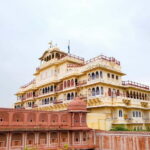
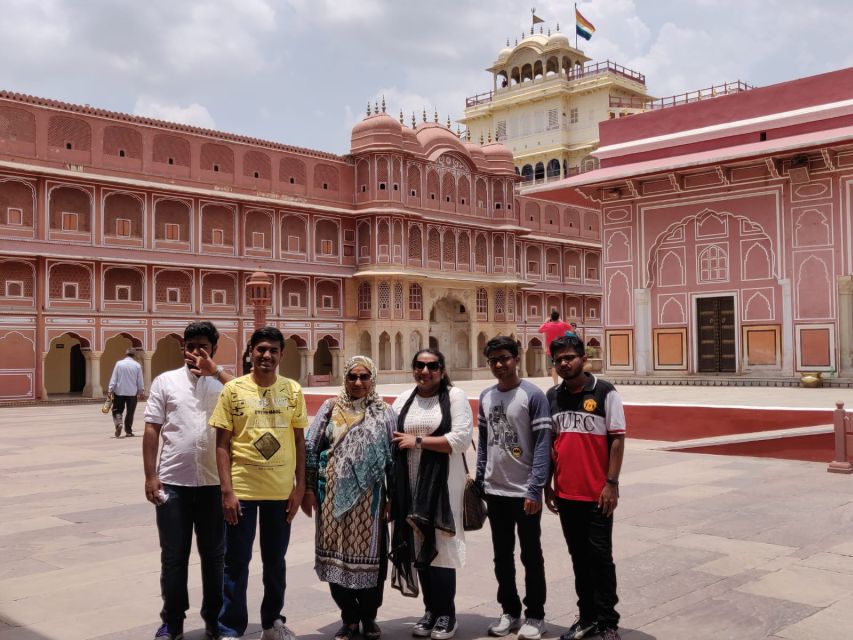
Then you step into City Palace, the royal residence and a major anchor of Jaipur’s identity. This is a good place to learn how the city’s rulers shaped the culture around them.
After that comes Jantar Mantar, the world’s biggest observatory mentioned in the tour description. This is less about buildings and more about function. You’ll see scientific instruments designed to measure time and the sky, and the whole place becomes more interesting once you understand what each instrument is trying to do.
By the end of the day, you take the route back to Delhi, where the driver drops you at your chosen location.
You can also read our reviews of more tours and experiences in Jaipur






Hotels and Room Sharing: What Your Star Level Actually Buys
Hotels aren’t included in every booking the same way, so check what you selected. The tour offers 3 nights accommodation if you choose that option, and breakfasts are included only if that option is selected too.
Agra hotel options run from 3-star to 5-star, with examples like:
- 3-star: Hotel Taj Vilas or Hotel Regal Vista (or similar)
- 4-star: Hotel Grand Mercure or Radisson (or similar)
- 5-star: DoubleTree by Hilton or Courtyard by Marriott (or similar)
Jaipur options similarly range:
- 3-star: Hotel Vesta Maurya Palace or Hotel Lilypool (or similar)
- 4-star: Hotel Sarovar Premiere (or similar)
- 5-star: Hotel Indana Palace or Hotel Trident (or similar)
One practical detail that matters: rooms are generally twin-sharing. In a booking of 3 people, rooms are provided on a triple-sharing basis. If 3 participants want 2 separate rooms, there’s an extra charge in cash depending on travel months.
So if you’re traveling with friends and care about sleeping arrangements, this is the moment to clarify expectations early.
Price and Entry Tickets: The Real Budget Math
At around $123 per person, this private tour price is aimed at covering what DIY travel often costs in time and stress: a private AC vehicle, pick-up and drop-off, and local guides for each city.
But monument entry tickets are separate. You should budget around $80 per person for tickets in Delhi, Agra, and Jaipur. That means your all-in figure is closer to about $200 per person, depending on how ticket totals land in practice.
Where the value shows up:
- You’re paying to avoid coordination headaches between cities.
- You get guided time at multiple major monuments instead of figuring out context on your own.
- You’re not stuck doing long transfers without help.
Where the cost surprise can happen: people underestimate how quickly entry fees add up across three cities. If you plan for the $80 estimate up front, the rest feels straightforward.
Getting Around Comfortably: Private Transport, E-Vehicles, and Road Time
Your ground travel is part of the deal. The tour uses an air-conditioned private car or bus-coach depending on group size—4-seater sedan for 1–2 people, 6-seater wagon for 3–4 people, and a 10-seater minivan for 5–10 people.
Because the Golden Triangle is a road trip, you’ll likely spend significant time in the vehicle. One review I saw even suggested bringing a cushion for comfort—honestly, that’s good advice. A small travel cushion and water go a long way.
Also included:
- bottled mineral water
- fuel surcharge
- e-vehicle ride for Taj Mahal parking access
This matters because it reduces “dead time” and helps you stay fresher for each monument visit.
Timing, Tickets, and Practical Small-Bill Tips

Timing is built into the big moments. The Taj Mahal sunrise start is the highlight for early mornings, and that sets the rhythm for Agra Day 2.
On ticket handling: the tour says you can skip the ticket line, but entry tickets themselves are still paid separately. So plan on paying tickets at the monuments, then rely on the provided setup to reduce waiting.
Now the tip reality check. You may encounter people trying to get tips for small favors, especially around luggage and movement in busy areas. The easiest fix is to carry plenty of small bills, so you’re not scrambling in the moment.
Other practical items that will help:
- Comfortable shoes for walking inside fort areas and temple zones
- A light layer, especially for mornings
- Passport or ID card for everyone traveling
Who This Tour Fits Best (And Who Should Skip It)
This tour is a strong match if you want:
- a private experience with a personal guide
- major highlights without managing transport logistics
- guided context at Taj Mahal, Agra Fort, Amer Fort, and Jantar Mantar
It’s also a good fit for solo travelers. The private setup tends to feel safer and less stressful than hopping between group tours, and the drivers and guides are set up to manage punctual pick-ups and city navigation.
It’s not suitable for pregnant women, per the tour’s restrictions.
A Note on Guides and Drivers You Might Be Paired With
The tour uses English-language local guides, and it also lists other languages such as French, Spanish, Japanese, German, Chinese, Hindi, and Portuguese. In real service, guide quality makes a noticeable difference in sites like Agra Fort, where understanding the architecture changes the whole experience.
Names that have come up include:
- Delhi guide: Bawesh (also mention of Salim Khan for Red Fort time)
- Agra guide: Rashid and Moshing (both associated with explaining Taj and Agra Fort)
- Fatehpur Sikri guide: Ali
- Jaipur guide: Mischi (also mention of Mishi / Maharishi Mishra)
For drivers, names that appear include Bhola, Mehboob Khan, Rahul, Shahid, and others. You don’t need to chase specific names, but it helps to know the experience is built around actual people handling navigation and timing—not just a generic script.
Should You Book This Private 4-Day Golden Triangle Tour?
If you want the Golden Triangle without stress, I’d book it. The private AC vehicle, city-by-city local guides, and the early Taj Mahal sunrise are the core reasons. The rickshaw ride in Old Delhi also adds a street-level memory that most shortcut tours skip.
I’d only hesitate if:
- You hate driving days and prefer slower travel.
- You’re extremely strict about budgets and the extra monument tickets could be a problem.
- You need flexibility on hotel room type for a group of three.
If you’re okay with a full schedule and you plan for the approximate $80 entry ticket cost, this tour is a practical way to see Delhi, Agra, and Jaipur like someone local is running the show.
FAQ
What cities are included in the 4-day Golden Triangle?
The tour covers Delhi, Agra, and Jaipur, with sightseeing in all three cities over 4 days.
Are monument entry tickets included in the price?
No. Entry tickets are not included and are approximately $80 USD for monuments in Delhi, Agra, and Jaipur.
What’s included for transport and guides?
You get pick-up and drop-off at hotels (or airport in the Delhi region), a private air-conditioned car or bus-coach, and local tour guides for sightseeing. An e-vehicle ride to and from the Taj Mahal parking is also included.
Where do pick-ups happen?
Pick-up is available from hotels or the airport in Delhi, Noida, Gurugram, Ghaziabad, Faridabad, and nearby areas.
Are breakfasts and hotels included?
Hotels are included for 3 nights only if you select the accommodation option. Breakfast at the hotels is included only if that option is selected too.
Can I cancel and get a full refund?
Yes. Free cancellation is available up to 24 hours in advance for a full refund.