REVIEW · JAIPUR
4 Day Golden Triangle Tour to Agra and Delhi From Jaipur
Book on Viator →Operated by Imperial Holidays · Bookable on Viator
Golden Triangle in four days, in comfort. This private, customizable route strings together Jaipur, Agra, and Delhi with local guiding, a private air-conditioned car, and a timed sunrise Taj Mahal visit. I like how the plan is built for first-timers: you get structure, transport, and experts handling the details so you can focus on the sights.
I also really appreciate the practical touches: hotel breakfasts plus hands-on help with monument tickets so you’re not stuck in ticket lines. One possible drawback: you’ll trade freedom for a packed schedule, and the early Taj timing can mean an early start—plus you’ll want to budget extra for monument entrance fees.
In This Review
- Key highlights that make this tour worth a look
- The Value of a Private Golden Triangle From Jaipur
- Pickup, Comfort, and How the Car Plan Helps You Move Smart
- Day 1 in Jaipur: Forts, Palaces, and Astronomy That Still Feels Ahead of Its Time
- Jaipur City Tour: Getting Oriented Fast
- Amber Fort Area: What to Expect at Amer
- Jal Mahal: The Water-Palace View
- Jantar Mantar: Jaipur’s Observatory in Plain Sight
- City Palace and Hawa Mahal: Two Sides of Royal Jaipur
- End of Day: Transfer to Your Jaipur Hotel
- Day 2 Beyond the Big Names: Step Wells and Fatehpur Sikri on the Way to Agra
- Chand Baori (Abhaneri): 3,500 Steps and a Lot of Contrast
- Fatehpur Sikri: Mughal Architecture That Feels Like a Timeline
- Arrive Agra and Check In
- Day 3: Sunrise Taj Mahal, Agra Fort, and the Baby Taj Moment
- Taj Mahal at Sunrise: Why the Timing Matters
- Agra Fort: More Than a Backup Plan
- Itmad-ud-Daula (Baby Taj): The Jewel-Box Stop
- Day 4 in Delhi: Qutub Minar, India Gate, and Parliament-Axis Views
- Delhi City Tour: A Quick Map of the Power Axis
- Qutub Minar: The UNESCO Anchor
- India Gate: War Memorial Along the Main Avenue
- Rashtrapati Bhavan and Sansad Bhavan Areas
- Agrasen Ki Baoli: The Quieter Detour
- Drop-Off After Delhi Tour
- What’s Included (and What You Need to Budget) for This 4-Day Ride
- Included perks that usually cost extra on your own
- Entrance fees are extra
- Tips aren’t included
- Hotel Setup: Twin Sharing and a Real-World Room Note
- Who This Tour Fits Best (and Who Might Want Something Else)
- Service That Can Make or Break the Trip
- Should You Book the 4 Day Golden Triangle Tour From Jaipur?
- FAQ
- What is the duration of this tour?
- Where does the tour start?
- Is transport included?
- Are hotel breakfasts included?
- How many nights of accommodation are included?
- What sights are included in Jaipur?
- What about Agra and the Taj Mahal?
- Is there help with monument tickets?
- Are entrance fees included in the price?
- What is the cancellation policy?
Key highlights that make this tour worth a look

- Private, air-conditioned transport across Jaipur–Agra–Delhi, with door-to-door pickup and drop-off
- Sunrise Taj Mahal with a guided inside visit and included battery-bus ride to the monument area
- Three nights of hotel stays with breakfast to keep mornings from feeling rushed
- Guided Jaipur full of signature stops, from Amer fort area to Jantar Mantar and City Palace
- Ticket handling support so your guide helps you buy entrance fees without waiting in queues
The Value of a Private Golden Triangle From Jaipur
This 4-day Golden Triangle plan is designed to do a lot without making you do the logistics math. You start in Jaipur, then roll to Agra for the big Mughal hits, and finish with a half-day Delhi circuit of key landmarks.
The price you’ll see—about $174.01 per person—matters less than what’s wrapped into it. You’re paying for private transport, private local guiding, three hotel breakfasts (when you pick the hotel option), and a smooth flow between cities.
And yes, there’s an extra cost: monument entrance fees total $60 per person and are not included. For many people, that’s still a good deal because the tour bundles guidance and reduces the hassle factor of figuring out ticket logistics on the fly.
You can also read our reviews of more tours and experiences in Jaipur



Pickup, Comfort, and How the Car Plan Helps You Move Smart

From the start, this tour is built around convenience. You can be picked up from your hotel, airport, or railway station in Jaipur, and you’ll be dropped off in Delhi at your desired location.
Transport is in a private air-conditioned car, with vehicle type depending on group size (sedan for 1–2, 6-seater wagon for 3–4, 10-seater van for larger groups). That matters in North India, where distances are real and traffic can turn a simple transfer into a stressful day.
A nice, small practical upgrade: you get bottled mineral water and soft drinks during journeys. On a route like this, hydration and snacks keep you from feeling worn down before you ever reach the monuments.
Day 1 in Jaipur: Forts, Palaces, and Astronomy That Still Feels Ahead of Its Time
Day 1 is your Jaipur “orientation day,” and that’s a smart way to begin. You start with a guided city tour, then spend time at the major icon stops around the old city and hills—so by the time you leave Jaipur, you understand what you’re looking at.
Jaipur City Tour: Getting Oriented Fast
The guided circuit is the kind of start that helps you later. Jaipur’s sights can look like separate worlds—forts, stepwells, palaces, observatories—but a guide ties them together with the why, not just the what.
If you’re visiting for the first time, this is where you get your bearings fast. You’ll also learn how locations connect spatially, which makes later independent wandering easier.
Amber Fort Area: What to Expect at Amer
The tour includes Amer Fort (often called Amer Fort/Amber Fort). This is one of Jaipur’s big “wow” stops because it sits high on the hill and feels designed for views.
Practical note: expect walking and changes in elevation. It’s not the place to treat as a quick photo stop if you want the full feel.






Jal Mahal: The Water-Palace View
Next up is Jal Mahal, the palace sitting in the middle of Man Sagar Lake. It’s one of those sights that looks better from the right angle than from close-up crowding, so your timing and viewing approach matter.
This stop is short but effective. It breaks the day into something more scenic before you jump back into architectural icons.
Jantar Mantar: Jaipur’s Observatory in Plain Sight
You’ll visit Jantar Mantar, the UNESCO-listed astronomical instrument complex credited to Sawai Jai Singh II. This is the kind of place where “science” doesn’t feel like a museum—your eyes start noticing patterns in the structures themselves.
The tour allots time (about an hour), which is enough to appreciate the purpose rather than just rush through.
City Palace and Hawa Mahal: Two Sides of Royal Jaipur
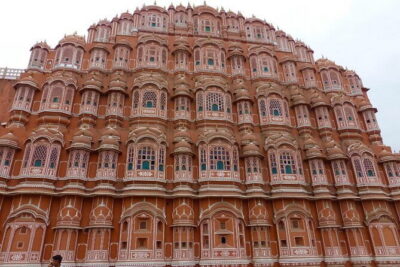
Then comes City Palace of Jaipur and Hawa Mahal. City Palace helps you understand how the royal administration connected to the city. Hawa Mahal’s façade—built into the street-edge—gives you that instantly recognizable pink-sandstone look.
If you like architecture, this pairing works. You see both the governing space and the dramatic decorative face of royal Jaipur.
End of Day: Transfer to Your Jaipur Hotel
After the sightseeing, you’ll be transferred to your hotel in Jaipur. This is a relief after a day of multiple stops, and it sets you up for the next day’s longer travel.
Day 2 Beyond the Big Names: Step Wells and Fatehpur Sikri on the Way to Agra
Day 2 is where the Golden Triangle starts to feel like a real journey, not just a checklist. You’ll head toward Agra, but you stop first at two sites that add depth and variety.
Chand Baori (Abhaneri): 3,500 Steps and a Lot of Contrast
Your first major stop is Chand Baori, Abhaneri, the famous stepwell reached by about 3,500 steps. Even if you don’t go all the way down, the sheer scale is the point.
This is also where you’ll want to think about comfort. The steps are real. If you’re sensitive to stairs or uneven ground, take it slow and focus on the viewing areas that work for you.
Fatehpur Sikri: Mughal Architecture That Feels Like a Timeline
Then you visit Fatehpur Sikri, a former Mughal city founded in the 16th century, near Agra. The red sandstone buildings cluster at its center, with major structures and gates anchoring the scene.
This stop adds variety to the Mughal story before you reach Agra. It’s not the same feel as the Taj, and that difference is useful when you’re cramming three cities into four days.
Arrive Agra and Check In
After reaching Agra, you check in at your hotel for an overnight stay. This gives you recovery time before the big sunrise day.
Day 3: Sunrise Taj Mahal, Agra Fort, and the Baby Taj Moment
Day 3 is the headline day. The tour schedules Taj Mahal at sunrise, then pairs it with Agra Fort and Itmad-ud-Daula (often called the Baby Taj).
That flow is smart: you get the emotion and symmetry of the Taj first, then you move into fortifications and smaller, quieter mausoleum beauty.
Taj Mahal at Sunrise: Why the Timing Matters
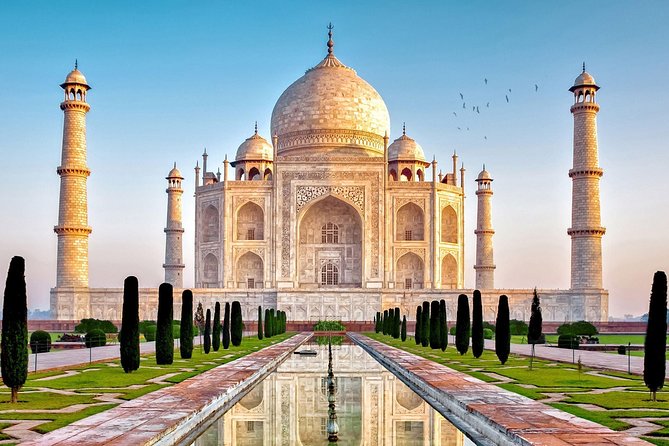
You’ll visit Taj Mahal at sunrise and get a guided tour inside for about two hours. Sunrise isn’t just romantic branding. Earlier light makes the marble look different—so your experience can feel more magical than midday photos suggest.
You’ll also get an included battery bus ride from the Taj parking area to the monument approach. That saves energy and time, especially when mornings are still cool and your group wants to stay efficient.
Agra Fort: More Than a Backup Plan
Next is Agra Fort, the Mughal stronghold connected to the era when Agra mattered politically. It’s allotted about one hour, which is tight but fair given you already spent time at the Taj.
Agra Fort helps you understand the bigger story: mausoleums don’t appear out of nowhere. They come from empires with centers of power.
Itmad-ud-Daula (Baby Taj): The Jewel-Box Stop
Finally you visit Itmad-ud-Daula, a Mughal mausoleum often described as the Baby Taj. Your time here is about 45 minutes, which is enough to notice details without turning it into a sprint.
This is a good “breather” stop. If you feel Taj fatigue on day three, this monument’s scale and style can be a welcome change of pace.
Day 4 in Delhi: Qutub Minar, India Gate, and Parliament-Axis Views

Day 4 is a half-day in New Delhi before you’re dropped off in Delhi, Noida, or Gurugram. The tour targets key landmarks rather than trying to cover every neighborhood.
This makes sense. You’ve already spent two full days on UNESCO-level sights in Jaipur and Agra. Delhi on a 4-day plan needs a focused hit list.
Delhi City Tour: A Quick Map of the Power Axis
You begin with a guided city tour (about half a day). This helps you connect what you’ll see next: the ceremonial axis, the government zone vibe, and the way older and newer Delhi overlap.
For many first-time visitors, this is the best use of time. Otherwise, Delhi’s size can make you feel like you’re only stuck in traffic.
Qutub Minar: The UNESCO Anchor
Then comes Qutub Minar, part of the Qutb complex and a UNESCO World Heritage Site. It’s about one hour in the schedule, which is enough for the main viewing and the surrounding context.
If you only have time for one Delhi monument, this is one of the best choices. It’s iconic and distinctive.
India Gate: War Memorial Along the Main Avenue
You’ll also visit India Gate, with a short stop. It’s not about museums here. It’s about location—sitting along the ceremonial axis and giving you a sense of the monumental scale of central Delhi.
Rashtrapati Bhavan and Sansad Bhavan Areas
Your plan includes Sansad Bhavan (Parliament building) and Rashtrapati Bhavan (President’s residence) areas. The allotted time suggests viewpoint stops rather than long interiors, which fits a half-day itinerary.
This part works well if you like seeing how architecture communicates power and order.
Agrasen Ki Baoli: The Quieter Detour
Finally, you visit Agrasen Ki Baoli. It’s a protected monument, and the time slot is short. Still, it adds texture to your Delhi day with a step-well atmosphere that feels different from the marble-and-monument scale elsewhere.
Drop-Off After Delhi Tour
After the Delhi circuit, you’ll be dropped at your desired location in Delhi, Noida, or Gurugram. That’s helpful if you’re connecting onward the same day.
What’s Included (and What You Need to Budget) for This 4-Day Ride
To judge value, I like to translate what’s included into what you’d otherwise pay for yourself.
Included perks that usually cost extra on your own
This tour includes:
- Private, air-conditioned car for the whole itinerary
- All sightseeing with private local guides
- Daily hotel breakfast (when you select the hotel option)
- Three nights accommodation (again, tied to the option including hotels)
- Battery bus ride to and from the Taj Mahal parking area
- Bottled mineral water and soft drinks during journeys
- Pickup and drop-off (hotel/airport/railway in Jaipur, and your chosen location in Delhi)
- All taxes and service charges
- Personal care and attention, plus a mobile ticket
Entrance fees are extra
You’ll pay $60 per person for entrance fees in total for the monuments. The tour data also says your guide will help you buy entrance fees so you’re not waiting in queues for tickets.
That’s important. Buying tickets in advance, finding ticket windows, and managing lines can waste a surprising amount of time when you’re moving fast.
Tips aren’t included
Gratuities are optional. If you’re the kind of traveler who likes to be sure everything is smooth, plan a budget for them rather than treating it as a last-minute decision.
Hotel Setup: Twin Sharing and a Real-World Room Note

Your accommodation is generally twin-sharing on each booking. If you book for three people, rooms default to triple-sharing unless you request a different setup.
If three guests prefer two rooms, there can be an additional charge. This is one of those details that’s easy to miss when you’re booking quickly, so it’s worth checking before you confirm.
Also, because the tour says rooms are provided on standard sharing rules, you should expect that your actual room style depends on the hotel category you select.
Who This Tour Fits Best (and Who Might Want Something Else)
This kind of Golden Triangle tour is built for travelers who want:
- A structured first visit to Jaipur, Agra, and Delhi
- Private guidance so the monuments make sense, not just look impressive
- Comfortable transfers with minimal planning effort
- A sunrise Taj experience with support around logistics
It’s also a strong pick for couples and families who don’t want to navigate trains, buses, or ride-hailing between major cities while coordinating tickets.
If you’re the type who loves going slow, getting lost, and making spontaneous side detours, you may feel boxed in. A four-day plan is tight by nature, and you’ll cover a lot of ground with early starts.
Service That Can Make or Break the Trip
Service quality shows up in the small friction points: timing, navigation, and whether you feel safe in traffic.
The trip’s reviews highlight excellent guiding and drivers, with one named driver—Sanjeev—praised as friendly, funny, and patient. That kind of personality matters on long driving days, especially when the schedule is packed.
So when you book, the best approach is to treat this as a “handheld plan.” You’ll get more out of it if you ask your guide questions and use the private car time to adjust pacing when you can.
Should You Book the 4 Day Golden Triangle Tour From Jaipur?
If you want a confident first Golden Triangle experience, I’d say this is a solid booking. The mix of private AC transport, private guides, three nights with breakfast, and the sunrise Taj Mahal plus battery-bus support adds up to a lot of value in convenience.
Go for it if:
- You’re short on time and want the highlights done right
- You’d rather pay for logistics than spend your energy solving them
- You like guided context at major monuments
Consider another option if:
- You hate early mornings and tight schedules
- You’re hoping for long, free-roaming time in each city
- You already know the ticket logistics and prefer fully independent travel
FAQ
What is the duration of this tour?
The tour runs for about 4 days.
Where does the tour start?
It starts in Jaipur, with pickup available from your hotel, airport, railway station, or another desired location in Jaipur.
Is transport included?
Yes. You travel in a private, air-conditioned car for the entire route, with a vehicle type that depends on group size.
Are hotel breakfasts included?
Yes, daily breakfast is included when you book the option that includes hotels.
How many nights of accommodation are included?
The tour includes three nights of accommodation when you book with the option including hotels.
What sights are included in Jaipur?
You visit Jaipur city highlights plus Amer Fort, Jal Mahal, Jantar Mantar, City Palace, and Hawa Mahal.
What about Agra and the Taj Mahal?
You visit the Taj Mahal at sunrise with an included guided inside tour, plus Agra Fort and Itmad-ud-Daula.
Is there help with monument tickets?
Yes. Your guide helps you buy entrance fees so you should not have to wait in queues to purchase tickets.
Are entrance fees included in the price?
No. Entrance fees for monuments total about $60 per person and are not included.
What is the cancellation policy?
Free cancellation is available. You can cancel up to 24 hours in advance for a full refund.