REVIEW · JAIPUR
4 Days Private Golden Triangle Tour
Book on Viator →Operated by Travel Nice India · Bookable on Viator
Marble at sunrise beats any checklist. This private Golden Triangle route ties together Jaipur, Agra, and Delhi with a comfortable, door-to-door setup and major sights built into a tight 4-day rhythm.
I like that the plan mixes top monuments with smart “getting-your-bearings” stops, and you start with pickup included so you don’t waste the first half-day hunting taxis.
Two things I’d highlight: first, the included sightseeing stops in Jaipur and Agra mean you’re not scrambling for tickets mid-day. Second, the driving side seems well managed—recent trips praised drivers like Manipal, Shiv Narayan Pal, and Sudhir for being on time, professional, and focused on safe door-to-door movement.
The one drawback to consider is simple: this is a fast circuit. You’ll have early starts (especially for the Taj) and limited time at each stop—so if you want to linger, you may feel a bit rushed.
In This Review
- Key highlights worth paying attention to
- The route that makes sense in 4 days
- Price and logistics: what $400 really buys you
- Day 1 in Jaipur: palaces, astronomy, and the art of perfect angles
- Jal Mahal: a palace floating on Man Sagar Lake
- Jantar Mantar: timekeeping with astronomical instruments
- City Palace: power and city-making
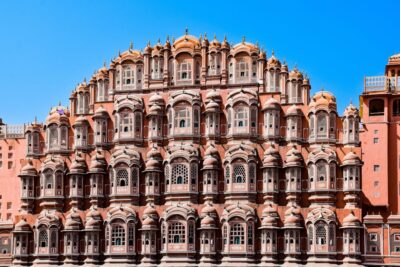
- Hawa Mahal: the pink-and-red honeycomb facade
- Day 2 toward Agra: step wells and Fatehpur Sikri
- Chand Baori: 3,500 steps of concentration
- Fatehpur Sikri: Mughal red sandstone drama
- Transfer to Agra and overnight
- Day 3 in Agra and the drive into Delhi: sunrise Taj + Agra Fort
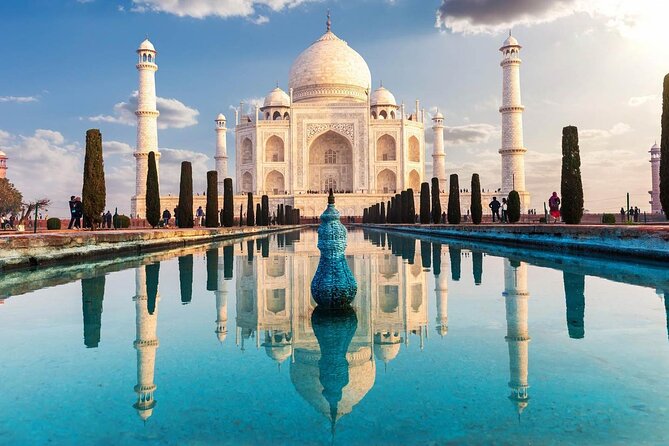
- Taj Mahal at sunrise: the two-hour inside tour matters
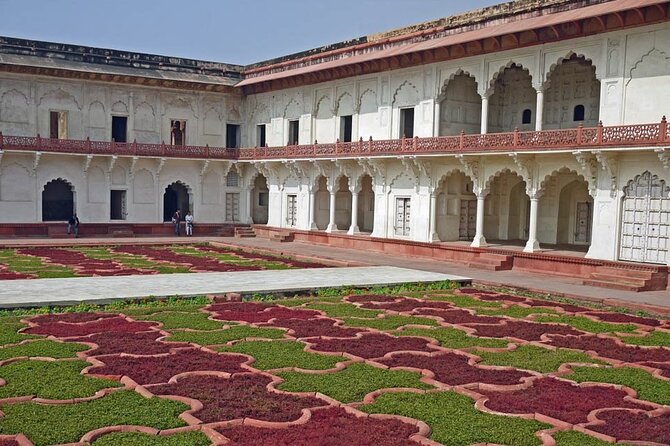
- Agra Fort: Mughal power in stone
- Tomb of Itimad-ud-Daulah: the “Baby Taj” effect
- On to Delhi
- Day 4 in Delhi: Qutub Minar plus iconic national landmarks
- Qutub Minar: UNESCO time and that famous height
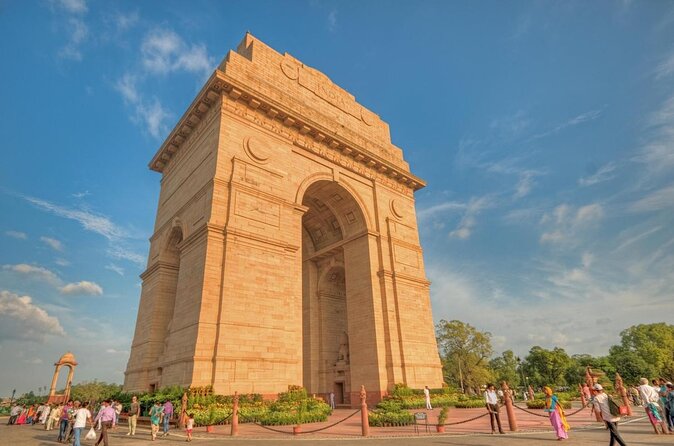
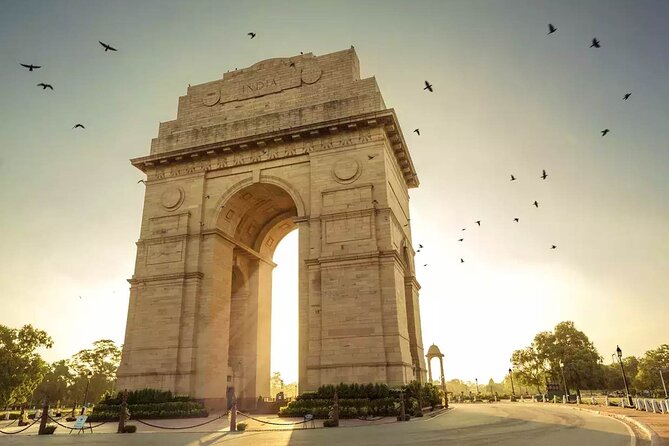
- India Gate: a war memorial along Rajpath
- Parliament House and Rashtrapati Bhavan: government architecture at close range
- Agrasen Ki Baoli: the quiet pocket in the schedule
- Comfort on the road: private A/C vehicle and the driver’s role
- Practical tips so you enjoy this route more
- Who should book this (and who should rethink it)
- Should you book this private Golden Triangle tour from Jaipur?
Key highlights worth paying attention to
- Sunrise Taj Mahal, with an inside guided visit (about two hours inside during the morning visit)
- Jaipur’s big four in one day: Jal Mahal, Jantar Mantar, City Palace, and Hawa Mahal
- Step-well and Mughal city stops on the way to Agra: Abhaneri area + Chand Baori and Fatehpur Sikri
- Agra’s trio of must-sees: Taj Mahal, Agra Fort, and the “Baby Taj” tomb of Itimad-ud-Daulah
- Delhi half-day with UNESCO time at Qutub Minar, plus India Gate and presidential-era landmarks
- Private group feel with flexibility to adjust plans while staying on schedule
The route that makes sense in 4 days
The Golden Triangle—Jaipur to Agra to Delhi—is a classic for a reason. In a short window, you get palace architecture, Mughal-era power, and modern capital landmarks without bouncing around endlessly.
This particular 4-day version keeps the focus on the big hitters while adding two strong “in-between” cultural stops: Abhaneri/step-well country and Fatehpur Sikri on the way to Agra. Those are the kinds of places that make the trip feel more than just three famous photos.
One note to check before you lock it in: the description mentions Udaipur, but the actual 4-day schedule shown is Jaipur, Agra, and New Delhi. If Udaipur matters to you, confirm whether it’s truly part of your 4-day plan.
You can also read our reviews of more private tours in Jaipur



Price and logistics: what $400 really buys you
At $400 per person for about 4 days, the value depends on what you already have lined up—especially hotels. The good news: the price includes a lot of the cost headaches.
Here’s what’s explicitly included:
- Luxury air-conditioned vehicle
- Monument entrance tickets included (with Taj Mahal, Agra Fort, Tomb of Itimad-ud-Daulah, and Qutub Minar marked as included)
- Parking, tolls, fuel, and road tax
- 2 breakfasts and 2 lunches
- Pickup from your hotel/airport/railway station, plus drop-off in Delhi-area locations
What’s not listed as included:
- Tips/gratuities
- Any personal expenses
- Hotel nights aren’t named in the included section. The days say check in at hotels, which usually means you arrange lodging separately.
So the deal is best for you if you want a smooth “transport + tickets + core meals” package and you’re fine managing your own hotel bookings.
Day 1 in Jaipur: palaces, astronomy, and the art of perfect angles
Your first day is a guided Jaipur city tour starting with pickup from your Jaipur hotel, airport, or railway station. That matters here. Jaipur can be busy, and starting cleanly saves you from the first-day stress.
Jal Mahal: a palace floating on Man Sagar Lake
Jal Mahal sits in the middle of Man Sagar Lake. Even with a short stop, it’s an instant mood-setter—soft water reflections and a palace silhouette that looks like it belongs on a postcard. The stop is about 30 minutes, so it’s more about photos and quick orientation than a deep dive.
Consideration: If you love slow, lingering viewpoints, this isn’t that day. It’s designed to pack in several Jaipur icons.
Jantar Mantar: timekeeping with astronomical instruments
Next comes Jantar Mantar, built under the Kachwaha Rajput king Sawai Jai Singh II and completed in 1734. This site is a set of nineteen architectural astronomical instruments.
If you like turning history into something you can actually picture, this stop helps. It’s not just “old stone.” It’s a whole system—measuring the sky with built forms.
You can also read our reviews of more tours and experiences in Jaipur






City Palace: power and city-making
The City Palace of Jaipur connects directly to the founding story of Jaipur itself. It traces to Maharaja Sawai Jai Singh II, who moved his court from Amber to Jaipur in 1727.
Even when you only have about one hour, you’re walking through the center of how Jaipur became the stage for Maharaja power. It’s a good anchor point before you move to the more dramatic viewpoints.
Hawa Mahal: the pink-and-red honeycomb facade
Finally, Hawa Mahal—the Palace of Wind—sits on the edge of the City Palace. It’s built from red and pink sandstone and extends toward the Zenana, the women’s chambers.
You’ll get roughly 30 minutes here. That’s enough for a strong exterior look and a feel for why this facade is so famous—narrow windows and layered structure that create a “facade that performs.”
Day 2 toward Agra: step wells and Fatehpur Sikri
Day 2 starts after breakfast and heads out from Jaipur toward Agra with stops designed to break up a long travel day.
Chand Baori: 3,500 steps of concentration
You’ll visit Chand Baori, the massive ornate stepwell described as dating to the 8th & 9th centuries, reached by 3,500 steps.
This is one of those places where the “main attraction” is the scale. You look down and realize someone had to plan this with serious engineering and labor.
Practical reality: 3,500 steps is a lot. If you plan to go deep into the stepwell area, wear comfortable shoes and pace yourself. If stairs aren’t your thing, you might still enjoy the structure from viewpoints above.
Fatehpur Sikri: Mughal red sandstone drama
Then comes Fatehpur Sikri, a Mughal city founded by a 16th-century emperor. You’ll see red sandstone buildings around the central area, including Buland Darwaza, the grand gate entrance to the Jama Masjid.
The included time is around two hours, which is just enough to understand the city layout and appreciate the architectural style without rushing every doorway.
Transfer to Agra and overnight
By evening, you check in at your Agra hotel for the overnight. After a day with multiple stops, having that reset time matters.
Day 3 in Agra and the drive into Delhi: sunrise Taj + Agra Fort
Day 3 is the heart of the route. The Taj Mahal is scheduled for sunrise, and you’ll have a guided tour inside for about two hours. That’s a big deal because sunrise is when the building looks most “alive” with shifting light and calmer crowd conditions.
Taj Mahal at sunrise: the two-hour inside tour matters
The plan isn’t just exterior sightseeing. You get time inside, which turns the Taj from a view into a story—mughal design choices, marble surfaces, and the layout that was meant to be experienced as a sequence.
The total Taj block is about three hours on the day, with the inside portion called out specifically.
Agra Fort: Mughal power in stone
Next is Agra Fort, visited for about two hours, with admission included. It served as the main residence of Mughal emperors until 1638, when the capital shifted from Agra to Delhi.
Forts like this teach you how rulers thought: defense, administration, and daily life all in one complex. Even if you only spend two hours, the fort’s scale gives you the right perspective for why the Mughal story is so physical.
Tomb of Itimad-ud-Daulah: the “Baby Taj” effect
Then you’ll visit Tomb of Itimad-ud-Daulah, about 45 minutes with admission included. It’s often described as a “jewel box,” and it earned the nickname Baby Taj for a reason—white-marbled detail and refined symmetry that feel like a smaller cousin to the big one.
On to Delhi
After Agra, you arrive in New Delhi and check in at your hotel for an overnight stay. There’s a three-hour block labeled for New Delhi, but the details aren’t broken out in the same way as the monuments—so treat that time as part transfer/settle-in and part guided orientation.
Day 4 in Delhi: Qutub Minar plus iconic national landmarks
Your last day is a half-day guided Delhi city tour after breakfast. This is where you get the classic capital hits without burning the whole day on traffic-choked detours.
Qutub Minar: UNESCO time and that famous height
You’ll visit Qutub Minar at a UNESCO World Heritage site in the Mehrauli area. The height is listed as 72.5 meters, and admission is included.
This stop is worth it even if you’re tired. Qutub Minar is tall in the way that makes you look up automatically. It’s one of those monuments that makes scale feel real.
India Gate: a war memorial along Rajpath
Next is India Gate, a war memorial on the Rajpath. Even with a short stop, it gives you a clear sense of the ceremonial axis concept—why Delhi’s landmarks line up the way they do.
Parliament House and Rashtrapati Bhavan: government architecture at close range
You’ll also see:
- Parliament House (Sansad Bhavan), described as the seat of India’s Parliament
- Rashtrapati Bhavan, the official residence of the President
Both are quick stops—about 15 minutes each—so think of them as landmark recognition points rather than long museum-style visits.
Agrasen Ki Baoli: the quiet pocket in the schedule
Finally, Agrasen Ki Baoli is on the list, a protected monument with measurements listed as 60 meters long and 15 meters wide. It’s a nice contrast to the big-state monuments because it’s more grounded and easier to enjoy when you’re not racing from one ticket line to another.
Comfort on the road: private A/C vehicle and the driver’s role
Most of the “how good was the trip?” feeling comes down to logistics: time, driving, and whether you’re constantly asking where to go next. This tour includes a luxury air-conditioned vehicle plus parking, tolls, fuel, and road tax—so the vehicle side should feel controlled.
Private also matters. Since it’s a private tour/activity with only your group participating, you’re not stuck waiting for strangers to return from a shop stop. That’s a quality-of-life upgrade.
One more thing: the positive feedback repeatedly points to drivers staying on time and door-to-door helpful. Names that came up for safety and professionalism include Manipal, Shiv Narayan Pal, and Sudhir. If you’re booking because you care about stress-free driving, this is exactly the kind of service style you want.
Practical tips so you enjoy this route more
A 4-day Golden Triangle runs on rhythm. Here are the things that will help you keep your energy.
1) Dress for stairs and early mornings.
Chand Baori includes an entry with 3,500 steps. Wear shoes you can trust. For sunrise Taj, plan for cool early air even if afternoons are warm.
2) Expect short stops at the biggest photo sites.
Jal Mahal, Hawa Mahal, and parts of the Delhi landmark day are around 15–30 minutes. If your idea of sightseeing is long, slow museum time, pair this trip with at least one free day later.
3) Lunch and breakfast are covered, but not everything.
You get 2 breakfasts and 2 lunches included. Anything outside those meal blocks is a personal cost, so keep a little budget for snack runs or drinks.
4) Bring small-change patience for monument pacing.
Even with included tickets, you still move through entry points, guide introductions, and photo windows. If you get frustrated easily, this is the moment to practice calm.
5) Confirm the Udaipur question.
The description mentions Udaipur, but this 4-day schedule doesn’t list it. If you’re buying this hoping to add Udaipur, ask directly so there are no surprises.
Who should book this (and who should rethink it)
Book this if you want:
- A private Golden Triangle with A/C transport and major monuments scheduled tightly
- Sunrise Taj Mahal and inside time at the Taj, not just a drive-by
- Stepwell + Mughal city variety without turning it into a 10–12 day mega-trip
Think twice if:
- You hate early starts
- You want to spend long hours inside every monument
- You have mobility concerns about step-heavy sites like Chand Baori
If you’re the kind of traveler who likes seeing a lot, then relaxing later, this schedule fits your style.
Should you book this private Golden Triangle tour from Jaipur?
If your top goal is to hit Jaipur, Agra, and Delhi with included tickets, professional door-to-door driving, and a sunrise Taj Mahal focus, this tour looks like a smart buy for $400. The added value is that you’re not just touring—you’re being moved efficiently between stops in a comfortable vehicle, with meals and key admissions handled.
My advice: confirm the Udaipur question up front, and plan your own expectations around time at each site (shorter at the “icon” stops, longer where it counts like Taj interior and Agra Fort). If that matches your travel personality, you’ll likely leave this trip with the kind of photos and stories that don’t need extra explanation.