REVIEW · JAIPUR
Jaipur: Private Tour for Instagram and Photography Lovers
Book on GetYourGuide →Operated by Rajasthan Tour Driver · Bookable on GetYourGuide
Pink City streets can make your camera do the talking. What I like most is the photo-first route built around Jaipur’s most recognizable angles, and the fact you get a private A/C car with a driver so you’re not wasting the day in traffic. On top of that, guides like Ashwani or Saqlain Gaffar are described as friendly, prompt, and focused on making each stop actually work for your shots.
The trade-off: monument entrance fees and lunch aren’t included, so your final spend depends on how long you stay at each site and what tickets you need. Also, there’s moderate walking, so plan on comfortable shoes and an energy buffer if you’re not used to heat and stairs. The good news is that you’ll have a guide on hand to help with timing and photos so the day stays smooth.
If you want a one-day plan that’s practical, photogenic, and not overly complicated, this tour is built for you. It’s also private, so you can ask for what you care about most—architecture shots, geometric patterns, fort views, or quick street scenes in the Pink City.
In This Review
- Key photo-and-culture wins in this Jaipur day
- The “photo sprint” logic: why this route works
- Pickup and timing: start where you are, then get moving
- Patrika Gate at the start: color, pattern, and fast compositions
- Hawa Mahal: shoot the window lines, not just the building
- Jantar Mantar: UNESCO instruments that reward careful framing
- City Palace: blue accents and big interior energy
- Gaitor Ki Chhatriyan: carved stone monuments and calmer photos
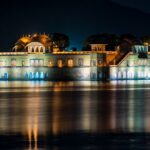
- Jal Mahal: the palace-in-the-lake look, without a long detour
- Panna Meena ka Kund: geometric staircases that photograph well
- Amber Fort: where the day turns from pictures to memories
- Lunch plus a traditional village stop: culture without the long detour
- Pink City at the end: street scenes and color contrast
- Guides and drivers: the real quality factor
- Price and value: $14 sounds low, so know what’s extra
- Who this tour is best for (and who should skip it)
- What to wear and bring for smoother shooting
- Quick practical FAQ for this Jaipur photo tour
- FAQ
- What locations can I be picked up from?
- How long is the tour?
- What’s included in the price?
- Are monument entrance fees included?
- Is lunch included?
- Do I get a guide and in what language?
- Are tickets or entry lines handled for me?
- What should I bring or wear?
- Is the tour suitable for wheelchair users or mobility limits?
- Should you book this Jaipur private Instagram-and-photo tour?
Key photo-and-culture wins in this Jaipur day
- Patrika Gate’s colorful corridors: a strong start for Instagram-style symmetry and texture shots.
- Hawa Mahal + Jantar Mantar: iconic facades plus a UNESCO observatory that rewards close framing.
- Amber Fort time with photo targets: big gates, courtyards, and classic Jaipur drama without rushing every second.
- Jal Mahal from shore angles: that unreal palace-in-the-lake look, timed for quick but memorable photos.
- Pink City street wandering with a guide: practical wayfinding for busy bazaars and photo-friendly corners.
The “photo sprint” logic: why this route works
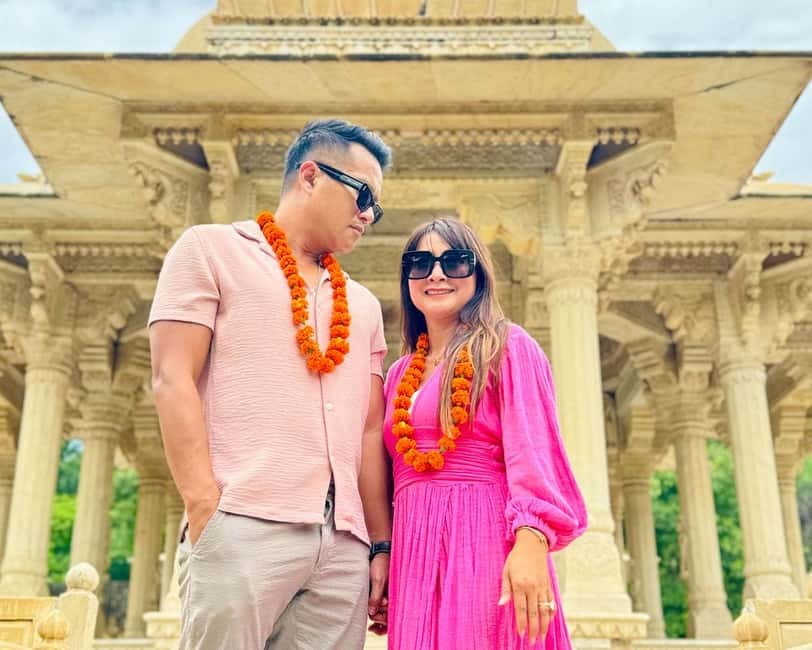
This tour is designed like a photo checklist, but it doesn’t feel like a rushed bus circuit. The order matters: you start with Jaipur’s graphic, Instagram-friendly architecture, then move through the major landmarks and end with street scenes where you can slow down and experiment. That pacing is what helps you come away with a set of images that look like they belong together.
You’re also traveling in a private vehicle with fuel and parking included, which changes the experience. Instead of stacking your day with unpredictable auto-rickshaw bargaining or long detours, you can focus on framing. Your driver is there to do the hard parts—getting you across town when roads are busy—while your guide helps you spot the best angles and keeps the day on track.
You can also read our reviews of more private tours in Jaipur
Pickup and timing: start where you are, then get moving
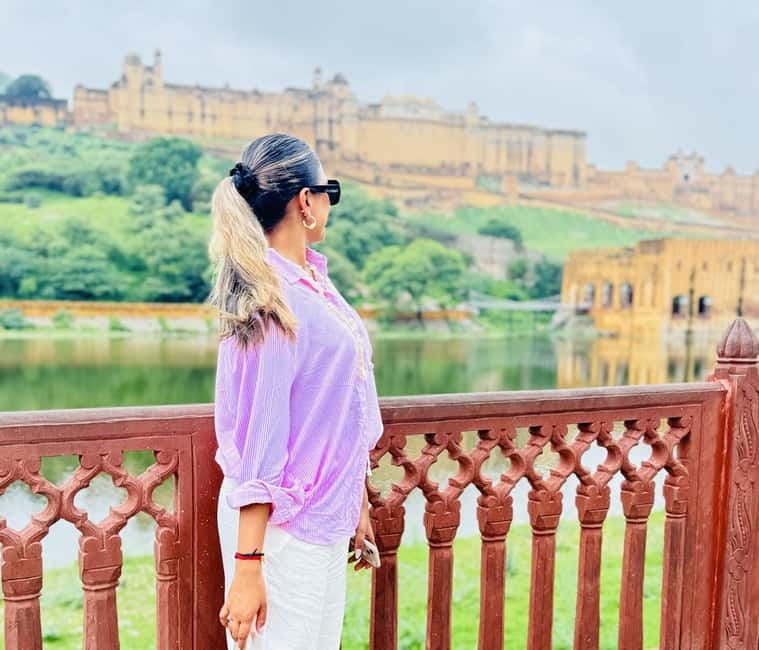
You’ll be picked up from one of two places: Jaipur or Kukas. From there, the day runs about 8 hours, with short, focused stays at each stop rather than long “stand around” gaps.
Car size also depends on group size: a 4-seater sedan for groups of 1–2, a 6-seater SUV for groups of 3–5, and a 12-seater minivan for groups of 5–10. For couples or solo travelers, that matters because you often get quicker movement and easier photo pauses without crowd management.
If you’re hoping to shoot everything, think in terms of “efficient segments.” Your stops are planned to be long enough for a solid photo set, but short enough to keep your day flowing.
Patrika Gate at the start: color, pattern, and fast compositions
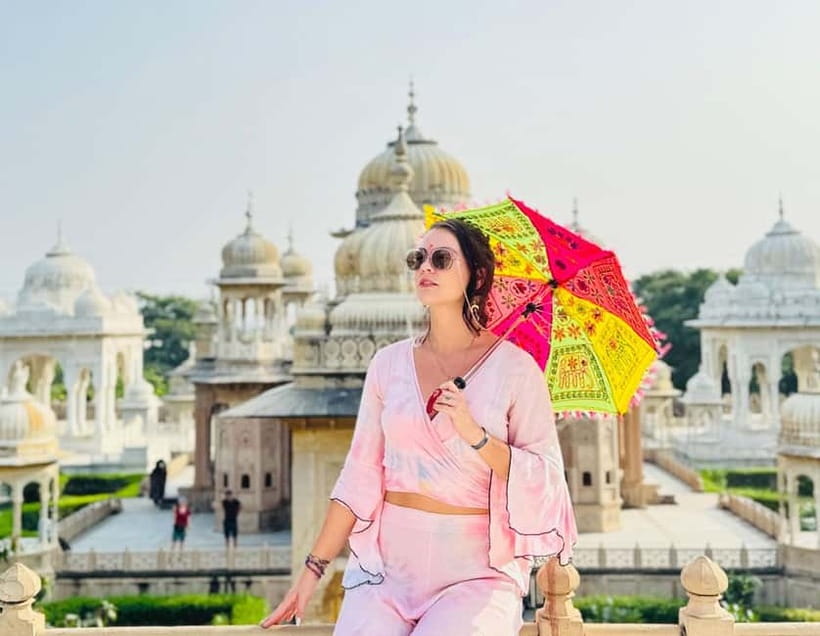
You begin at Patrika Gate, with time for a photo stop and a guided visit of about 30 minutes. This is one of those places where you don’t need fancy gear to get great shots: the corridors and textures are built for framed compositions.
What’s useful here is the early placement in the day. When you start with a visually rich site, you get momentum fast—you’re warming up your eye for symmetry and repeating shapes. You also have a guide on hand to help you find angles that might be easy to miss if you’re just wandering.
A small practical note: shoot both wide and mid-range. Wide shots catch the dramatic corridor effect, while mid-range shots help you capture details like edges, shadows, and patterned surfaces.
Hawa Mahal: shoot the window lines, not just the building
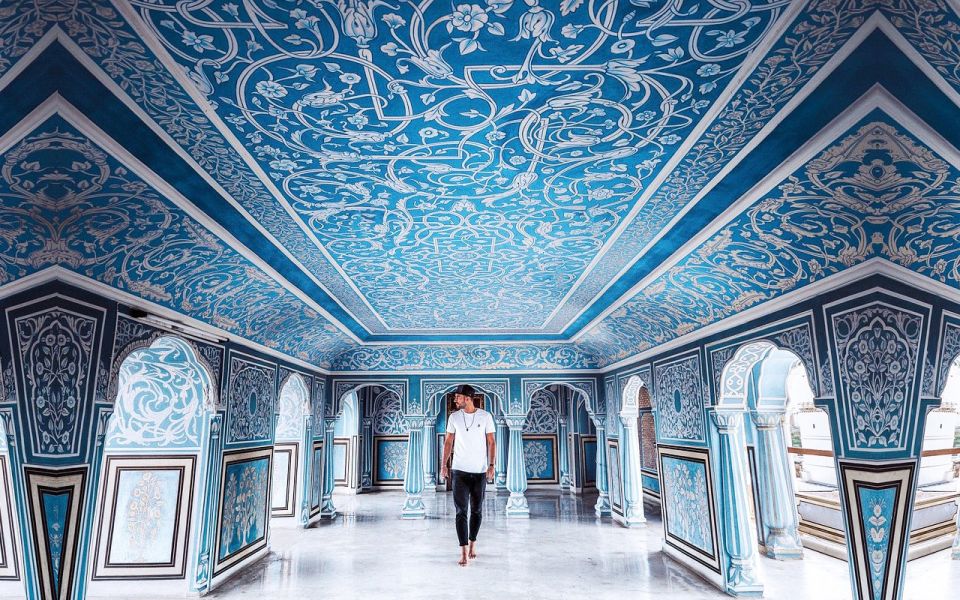
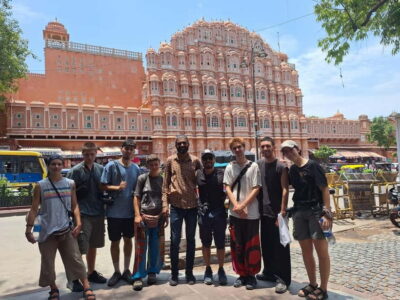
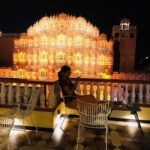
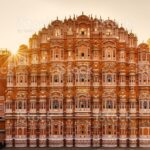
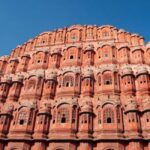
Next comes Hawa Mahal, the Palace of Winds. You get another photo stop plus sightseeing for about 30 minutes, which is a sensible length: it’s enough time to capture the famous facade and then step back for variations.
The trick with Hawa Mahal is to shoot it like a geometry subject. Prioritize:
- Straight-on angles for clean vertical lines
- Angled views for layered depth
- Close frames that highlight the window rhythm
If you’ve got people in your group, you’ll also want to coordinate quickly. This is one of the most photographed places in Jaipur, so moving with your guide and using quick photo bursts keeps your set from becoming a slow crowd shuffle.
Jantar Mantar: UNESCO instruments that reward careful framing
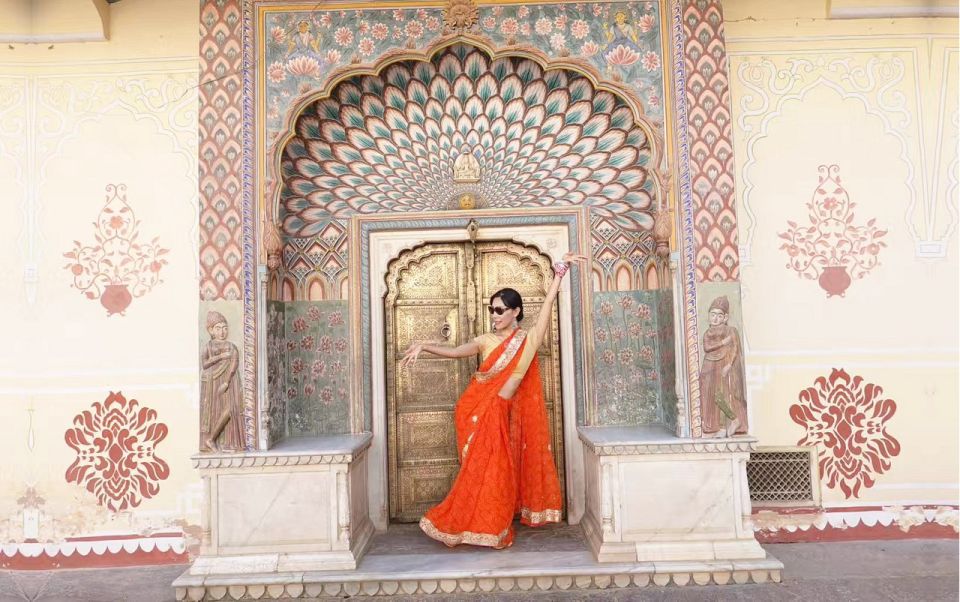
Jantar Mantar is a UNESCO World Heritage site and an observatory with 19 instruments, including the world’s largest stone sundial. You’ll spend about 30 minutes here, with a guided tour and time to photograph.
This stop is where your photos can look more interesting than the standard “famous building” shots. Instead of only wide architecture views, focus on:
- Symmetry and instrument alignment
- Close-ups of stone markings and edges
- Overhead perspectives if accessible
Because the structures are built for measurement and celestial observation, they naturally create strong lines and grids. If your goal is an Instagram feed that mixes architecture and “wow detail,” this is the stop that gives you variety without needing extra locations.
You can also read our reviews of more photography tours in Jaipur
City Palace: blue accents and big interior energy
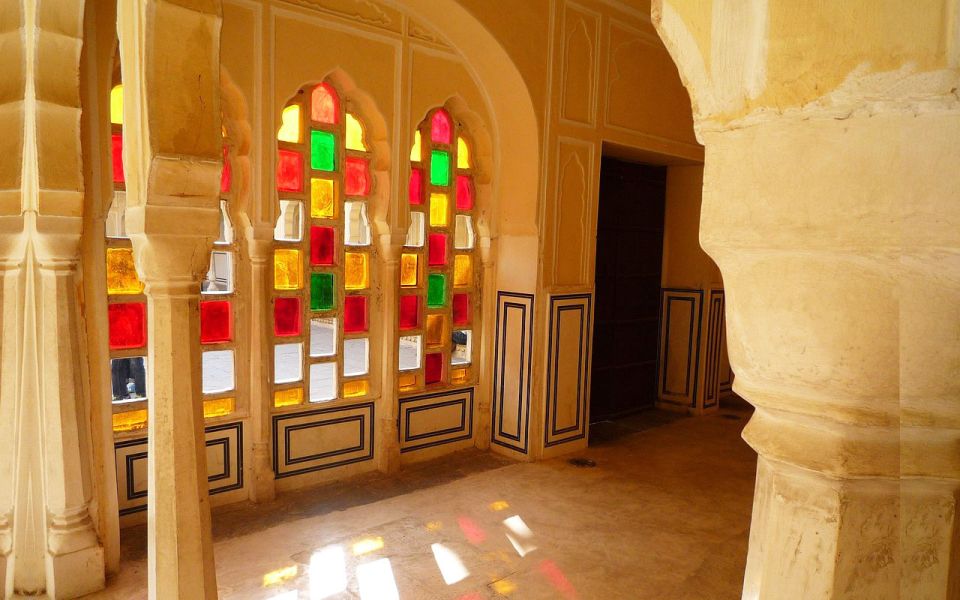
City Palace is next, with a longer sightseeing window of about 1.5 hours. You get time for photo stops and a guided visit, which matters because City Palace isn’t only a facade moment—you’ll want time to understand what you’re looking at so your photos feel purposeful.
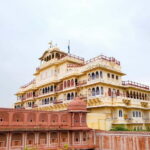
You’ll also get to see Chandra Mahal and its striking blue walls mentioned as a key visual highlight. For photography, I’d suggest using the guide to help you pick which internal viewing areas are most photo-friendly, since indoor lighting can change quickly.
This is also the best place in the day to slow down a little. Even if you’re chasing photos, City Palace can turn into a “take it in” moment because the scale is big and the rooms have character. Build your set with a mix of exterior frames and interior shots.
Gaitor Ki Chhatriyan: carved stone monuments and calmer photos
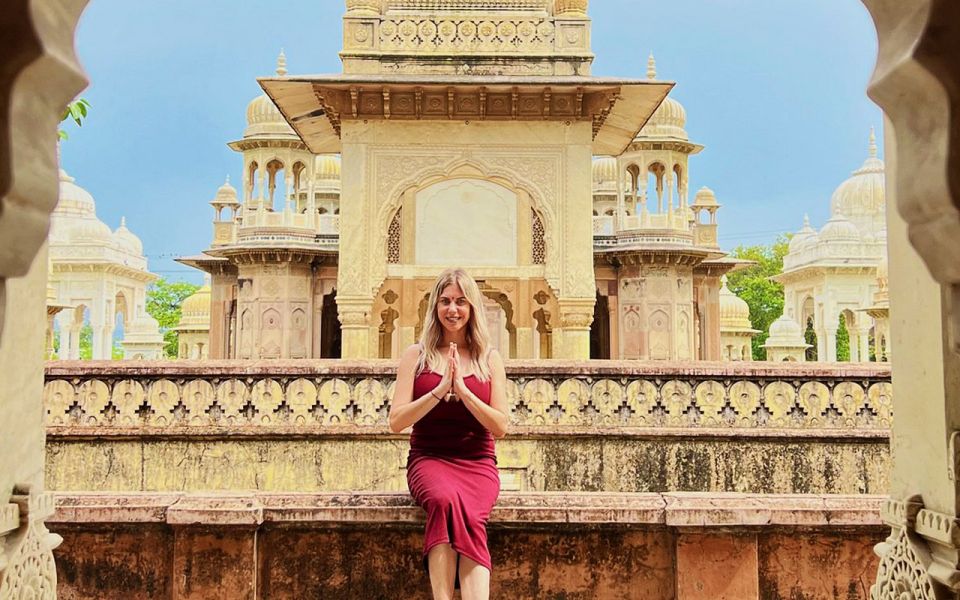
After City Palace, you’ll head to Gaitor Ki Chhatriyan, a royal crematory site known for intricately carved stone monuments. You’ll get about 30 minutes, including a walk and sightseeing.
This stop is quieter than some of the big-name landmarks, which gives you a different kind of photograph. Instead of fighting for the iconic crowd view, you can concentrate on texture: carved patterns, repeated domes, and the way stone catches light.
A practical way to make this useful: shoot at least one “wide story” frame, then follow it with 3–5 detail photos. That mix helps your portfolio feel intentional instead of all one-size images.
Jal Mahal: the palace-in-the-lake look, without a long detour
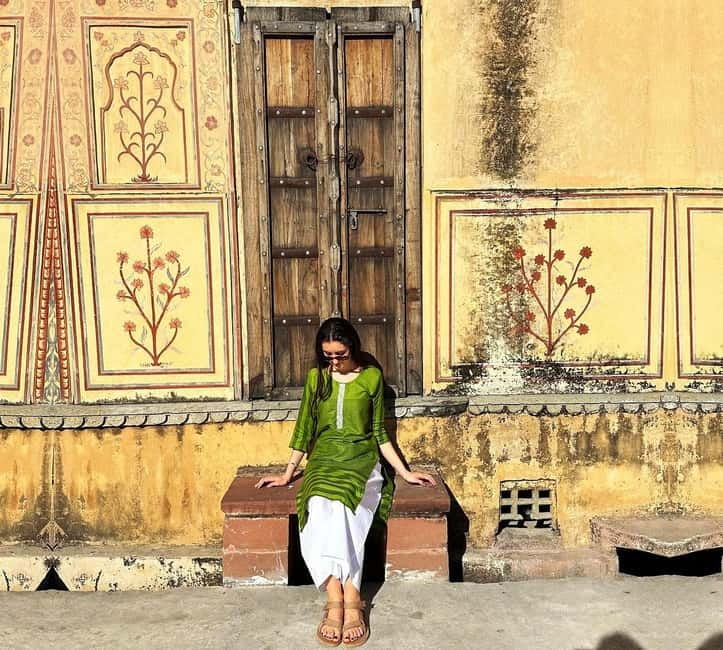
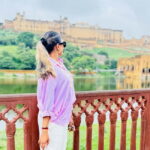
Jal Mahal is next, with a short visit and sightseeing time of about 15 minutes. It’s a photographic destination because it sits in Man Sagar Lake, and the look is so distinctive you can’t really fake it with imagination.
Here’s the key consideration: because the time is short, be decisive. Decide early whether you want:
- Classic wide shots that show the palace silhouette
- Cropped frames that focus on the building’s geometry
- Waterline views if conditions allow
Your guide can help you get to a good photo spot quickly. This stop is more about nailing the iconic look than spending a long session experimenting.
Panna Meena ka Kund: geometric staircases that photograph well
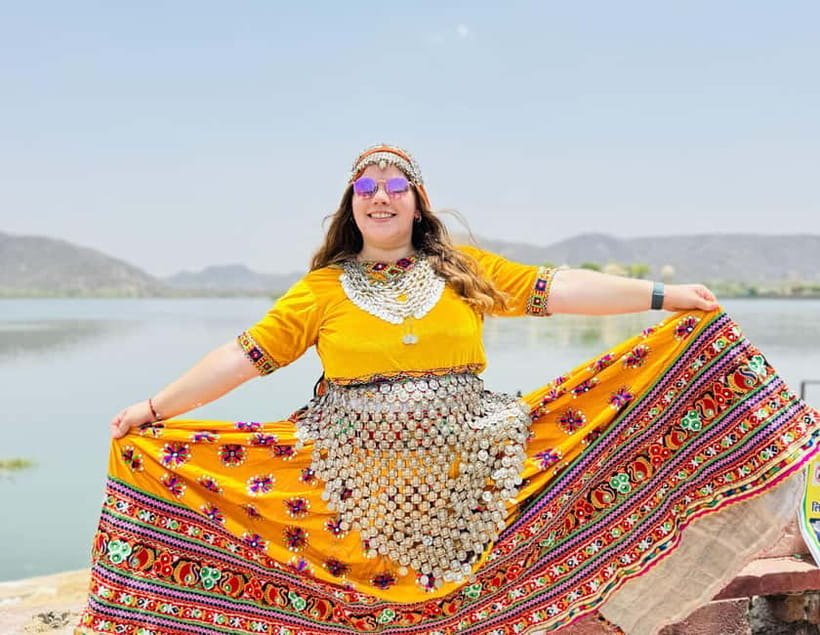
Panna Meena ka Kund (Panna Meena ka Kund) is a historic site famous for geometric staircases. You get about 30 minutes here, with time for photos and sightseeing.
This is the kind of location where “one good shot” is possible, but “a solid set” takes small movements. Try:
- Shooting from angles that show repeating steps
- Using shadows to emphasize depth
- Framing symmetrical sections so your lines feel balanced
If you’re building an Instagram plan, this stop pairs well with Jantar Mantar. Both give you structure, grids, and engineered geometry—great for creating a consistent visual theme across your day.
Amber Fort: where the day turns from pictures to memories
Amber Fort is the big one, and it gets about 1.5 hours with photo time, a visit, and a guided experience. Its ornate gates and courtyards offer classic fort photography: dramatic entrances, stone textures, and wide views that feel very Jaipur.
In practical terms, Amber Fort rewards two strategies:
- Don’t only shoot the biggest gate. Shoot courtyards and side angles too.
- Keep your set varied. Mix a few “hero” frames with smaller detail shots.
Also, expect more walking here than some earlier stops. Comfortable shoes really matter, because you’ll want to move to find good angles without rushing.
Lunch plus a traditional village stop: culture without the long detour
After Amber Fort, you’ll go to a local restaurant for lunch, plus food tasting and a food market visit. Then you’ll visit a traditional village area for arts and crafts shopping, with a short workshop time of about 20 minutes.
This is a smart inclusion for photographers because it breaks the monument loop. You get a chance to shoot daily-life textures and local craft details, not just historic stone and palace facades. It’s also where you can buy small, practical souvenirs without turning the day into a shopping mission.
In terms of pacing, the workshop and market time are short enough to keep you from feeling stuck, but long enough that you can see process, materials, and what people actually make.
Pink City at the end: street scenes and color contrast
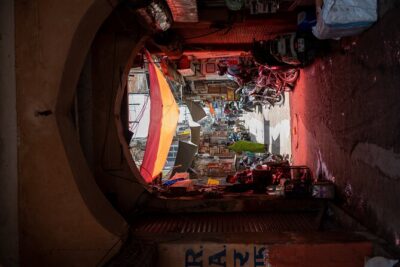
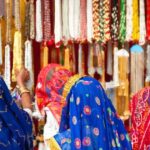
Finally, you return to the Pink City for a photo stop, guided sightseeing, and time in food and arts-and-crafts markets (about 45 minutes total). This is where your Jaipur day becomes less like a checklist and more like a personal travel story.
If you want street-style photos, this is the moment. Look for:
- Contrasts between pink and yellow building facades
- Small storefront details and market textures
- People-in-motion moments without forcing poses
Because you’re still with a guide, you’re less likely to lose time wandering in the wrong direction. You can focus on getting the shots you came for, then use the last stretch to experiment.
Guides and drivers: the real quality factor
This tour’s big advantage isn’t only the sights. It’s the human setup: an English-speaking guide and a professional driver in your private A/C vehicle.
From examples shared with the tour team, you might be matched with a guide like Akram, praised as a best-in-class photographer, or Ashwin, described as exceptionally knowledgeable and friendly. Drivers have also been singled out for careful, kind driving, such as Hasan and Sameer. Some pairs are described as helping avoid traffic and adjusting to your wishes, which matters when you’re trying to hit multiple top photo spots in one day.
Here’s my practical advice: message your priorities ahead of time. If your focus is symmetry, geometry, or fort views, say so. A good photo-oriented guide will shape the day around what will actually give you great images.
Price and value: $14 sounds low, so know what’s extra
At about $14 per person for an 8-hour private, chauffeur-driven day, the value is strong—especially because transportation is handled in an A/C vehicle with fuel and parking included. In many cities, getting that kind of dedicated car alone costs more than this.
But your true cost depends on what you add yourself:
- Monument entrance fees are not included
- Lunch is not included
- Souvenir photos and personal expenses are not included
So, I’d treat the $14 as the base for the plan and the logistics, then budget for tickets and food on top. If you’re coming as a couple or small group, the overall value tends to feel even better because private access is split across fewer people.
Who this tour is best for (and who should skip it)
This works best if you:
- Love photography and want a structured “photo day”
- Prefer private transport with fewer logistics headaches
- Want a one-day sweep of major Jaipur icons without planning each stop yourself
It may not be the right fit if you have:
- Back problems
- Mobility impairments
Even though the tour is listed as wheelchair accessible, the tour also notes moderate walking, and it’s explicitly marked as not suitable for mobility impairments. That combination is a sign to be cautious.
If you’re traveling with kids, they must be accompanied by an adult, and the day involves walking and multiple historic sites.
What to wear and bring for smoother shooting
Bring your camera, plus your passport or ID card, since a valid passport is required on the day of travel. Wear comfortable walking shoes because you’ll be moving at several locations.
Dress code is smart casual. Short shorts and sleeveless tops aren’t recommended where temples are involved. If you want to avoid midday surprises, carry a light layer that covers your shoulders or knees.
Quick practical FAQ for this Jaipur photo tour
FAQ
What locations can I be picked up from?
Pickup options are Jaipur and Kukas.
How long is the tour?
The tour runs for about 8 hours.
What’s included in the price?
Included are hotel/airport/railway station pickup and drop-off, a chauffeur-driven A/C private vehicle, and fuel and parking charges.
Are monument entrance fees included?
No, monument entrance fees are not included.
Is lunch included?
Lunch is not included.
Do I get a guide and in what language?
Yes, there is a live tour guide in English.
Are tickets or entry lines handled for me?
The tour includes skip the ticket line.
What should I bring or wear?
Bring a passport or ID card and a camera, and wear comfortable clothes. Smart casual is recommended; short shorts or sleeveless tops are not advised where temples are involved.
Is the tour suitable for wheelchair users or mobility limits?
It’s listed as wheelchair accessible, but it’s also stated as not suitable for people with mobility impairments and back problems.
Should you book this Jaipur private Instagram-and-photo tour?
I’d book it if you want a guided, structured photo day that hits Jaipur’s biggest visual targets with minimal hassle. The private A/C vehicle plus English guide support makes it feel like someone is managing the messy parts of the day, so you can focus on framing.
Skip it—or at least think twice—if walking is hard for you, because the day includes moderate walking across multiple sites. And before you commit, budget for monument entrance fees and lunch so you’re not surprised by the final total.
If your goal is to come away with a coherent set of Jaipur photos in one day, this tour is built for that exact outcome.