
REVIEW · JAIPUR
Take in the Beauty of an Early Morning with Fresh Flowers
Book on GetYourGuide →Operated by Ultimate Urban Adventures Pvt. Ltd. · Bookable on GetYourGuide
Jaipur smells like flowers at dawn. I love how this short morning walk starts at Hawa Mahal, so you get great photos of the Palace of Winds with calmer streets, then heads straight into the fresh flower and vegetable market for a hands-on look at daily life in the Pink City. It’s the kind of outing that feels local fast: you’re walking, asking questions, and watching how people trade, worship, and sip chai before the day really kicks in.
One consideration: it’s a 1.5-hour walking tour on city streets, so comfortable shoes matter, and it’s not a good match if you have a back problem or need wheelchair access.
Key highlights to know before you go
- Hawa Mahal photo stop at the start: you begin with a landmark that’s best seen and photographed early.
- Blue Gate, Town Hall, and temples on the route: classic Jaipur sights without sitting in a vehicle.
- Flower and vegetable market visit: colorful stalls, strong scents, and a close-up view of how mornings work for vendors.
- Masala chai at a local tea stall: a warm, simple break tied to everyday culture.
- Guide-led timing and safety: you get a safety briefing and help navigating through traffic-heavy areas.
In This Review
- Why this early-morning timing works in Jaipur
- Hawa Mahal first: a Palace of Winds morning photo stop
- Walking past Blue Gate, Town Hall, and temples (with less hassle than you’d expect)
- The fresh flower and vegetable market: where Jaipur’s morning smells like work
- Photo tips that actually help in this kind of market
- The masala chai break: more than a warm cup
- Getting the most from 1.5 hours: what to expect, stop by stop
- Price and value: what you’re really paying for at $16
- Who should book this (and who should skip it)
- FAQ
- FAQ
- Where is the meeting point for the tour?
- How long is the walking tour?
- Is the tour guide available in English?
- What is included in the price?
- Is masala chai included?
- What should I bring, and what’s not allowed?
- Should you book this early morning flower walk?
Why this early-morning timing works in Jaipur
Jaipur can feel busy fast. This is why I like short morning tours like this one: you get the most “real” version of the city before the crowds and heat show up in full force. With only 1.5 hours on the clock, you’re not trying to cover everything—you’re doing the parts that make Jaipur feel like Jaipur.
You’ll walk between major heritage points and the everyday neighborhoods around them. That blend is the point. Landmarks are only half the story; the other half is how people actually start their day—shopping for flowers and vegetables, moving through temple areas, and grabbing chai as part of routine.
Hawa Mahal first: a Palace of Winds morning photo stop
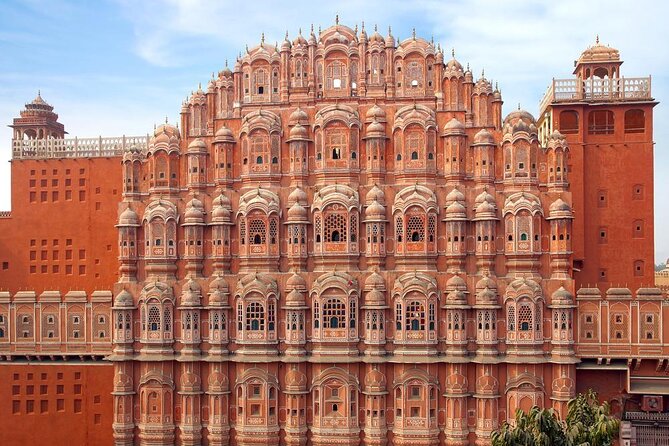
The tour meets just outside Hawa Mahal, next to an ATM. From there, the first moment matters: you get a photo stop right at the building before you’re swallowed by later-day foot traffic.
Hawa Mahal is all about those famous window facades, and mornings help because you’re more likely to get cleaner angles and calmer lighting. Even if you’re not obsessed with architecture photography, you’ll still feel the difference starting here. It’s an easy win: you’re already in the right mindset for the rest of the walk, and you can set your camera settings before the market rush.
If you’re lucky with your guide, you may get extra help for shots—one traveler specifically mentioned a guide who took great photos for them at the stops. Names you might hear include Monty and Ansh, both referenced in participant feedback, and both described as energetic, professional, and strong with photography support.
You can also read our reviews of more tours and experiences in Jaipur



Walking past Blue Gate, Town Hall, and temples (with less hassle than you’d expect)

After Hawa Mahal, you’ll pass the Blue Gate, the Town Hall building, and nearby temples. This is one of those “worth it even if you’ve seen photos” parts. You don’t just look at the buildings—you move through the same streets people use, so the experience feels more grounded.
The walk is also designed for flow. The plan is early, and you enter the market area with no traffic according to the tour information you’re given. That’s a big deal. Less honking, fewer near misses, and smoother walking means you can actually pay attention to what’s around you instead of constantly scanning the road.
Also, you get a safety briefing, which is especially helpful when you’re walking through narrow lanes and crossing between areas that can shift from quiet to busy in minutes.
You might even catch temple energy in action. One participant described arriving while worshippers were singing, playing drums, and throwing flowers. You can’t bank on that exact timing, but it’s the kind of scene that can pop up in the morning, and it’s a meaningful reminder that these spaces aren’t just “tour stops.”
The fresh flower and vegetable market: where Jaipur’s morning smells like work
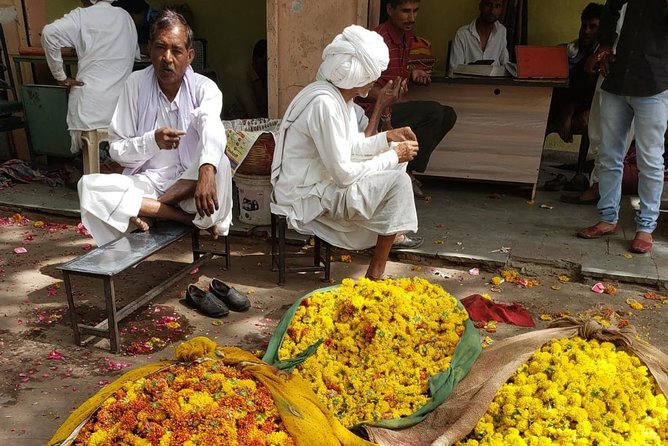
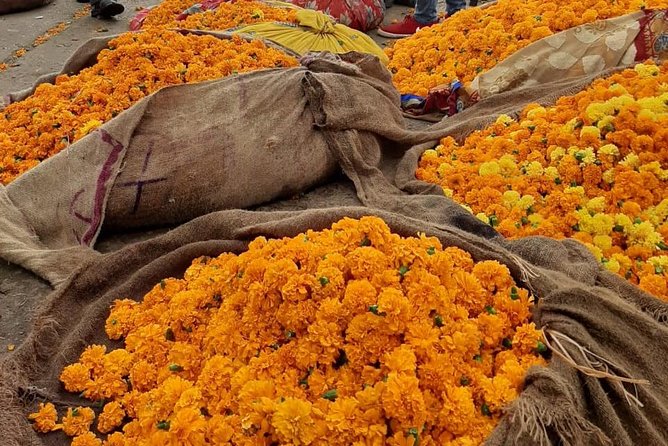
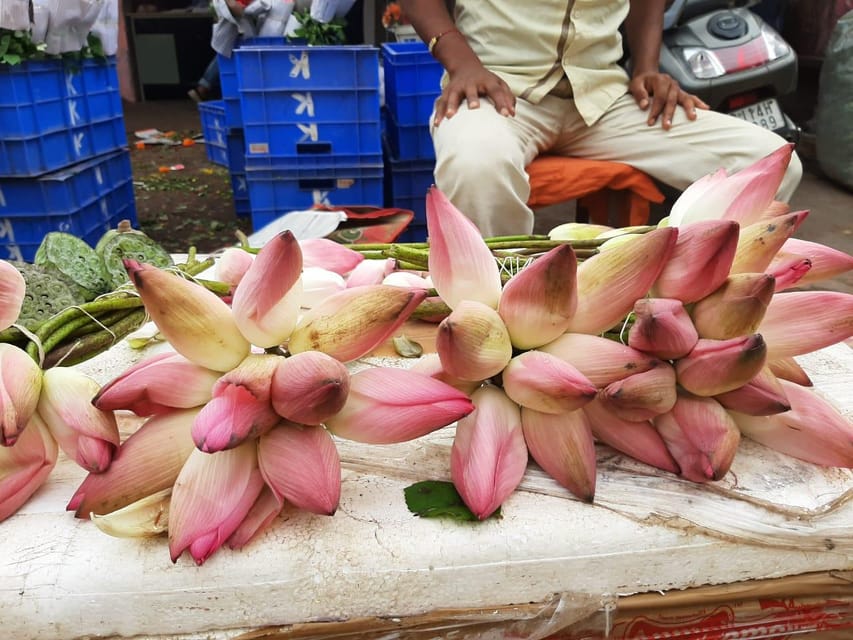
This is the heart of the tour. You’ll step into the local flower and vegetable market and spend time there taking pictures and learning about how the stalls operate.
Here’s what makes it feel special: you’re not just seeing flowers. You’re seeing the rhythm behind the flowers. The tour info highlights how farmers come from villages to sell their blooms, and that matters because you’re watching a supply chain happen in real time—people arriving, sorting, stacking, and bargaining for the morning.
In participant accounts, the flower display was described as deep mounds of marigolds and roses, with bright color everywhere. The scent is part of the experience too. If you’re the type who loves sensory travel—smell, texture, color—this market delivers.
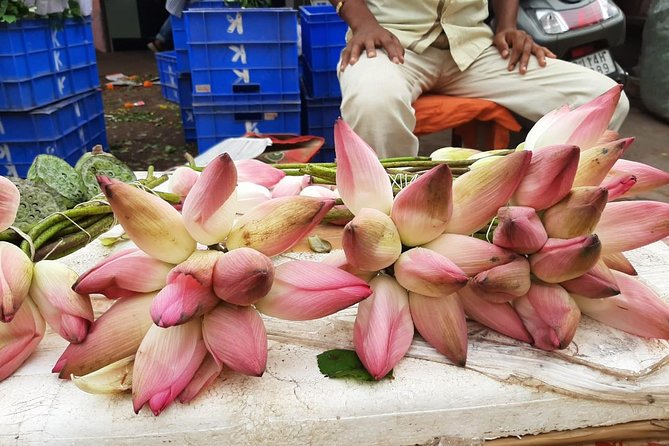
You’ll also see how vegetables and flowers sit side by side in the same ecosystem. That pairing is useful because it helps you understand Jaipur as a working city, not just a museum of monuments.
Photo tips that actually help in this kind of market
You’ll want your camera and a charged smartphone. Don’t show up with a nearly dead battery—this stop is where your photos will multiply fast.
Practical ideas:
- Keep your phone on low shutter delay if you can; people move through stalls quickly.
- Expect different light inside and outside the market area; take a few wider shots first, then zoom in for hands and flower piles.
- Be ready for close distances. Keep your elbows in and don’t block stall counters while someone is serving.
And yes, if your guide is the type who helps with photos, you’ll likely get better framing at key moments. One traveler said their guide was attentive and used their expertise to help them capture photos at every stop.
The masala chai break: more than a warm cup
You’ll enjoy masala chai at a local tea stall during the tour. The chai isn’t just a comfort break—it’s a culture cue. It shows you how everyday Jaipur rhythms work: market work, temple proximity, and quick hot drinks all flowing together.
I like that this is included, because food-and-drink options are one of the hardest things to “guess right” on your first morning. Having a guide who knows where to stop removes stress. You can sip, reset your camera skills, and ask quick questions without feeling like you’re interrupting a landmark schedule.
Some participant stories mention also trying small savory bites alongside chai. Since those snacks aren’t listed as part of the tour inclusions in the details you’re given, I’d treat them as optional add-ons from nearby vendors. The only guaranteed stop you can plan around is the chai itself.
Either way, the chai moment gives the whole tour a natural ending rhythm—warming up in a place that’s still very much “morning life,” not “tour life.”






Getting the most from 1.5 hours: what to expect, stop by stop
Even though this is short, it’s structured so you don’t waste time.
You start with:
- A photo stop at Hawa Mahal
- A walking route that passes heritage points like Blue Gate and Town Hall
- Temple sightlines along the way, with chances to see religious activity in progress
Then you move into:
- A guided visit of the flower and vegetable market
- More time for pictures and a closer look at how farmers and vendors show up and sell their goods
Then you finish around:
- The end point at Chaura Rasta
One extra perk of short tours: you can actually remember what you saw. Your brain doesn’t feel overloaded. You come away with a mental map of Jaipur beyond the big monuments.
Price and value: what you’re really paying for at $16

At around $16 per person for 1.5 hours, the best value here isn’t the monuments by themselves—it’s the context you get by walking with a guide while the city is still waking up.
You’re paying for:
- Guided orientation through the Pink City streets
- Photo opportunities at key heritage points (Hawa Mahal, Blue Gate, Town Hall, and temples)
- The market visit, where a guide helps translate what you’re seeing
- The included masala chai stop
You’re not paying for private transfers, so you should plan to get yourself to the meeting point on your own. That keeps the price low—but it means the morning start is on you. If you’re staying central and can reach Hawa Mahal without a big hassle, it’s a smooth deal.
Who should book this (and who should skip it)
This tour is best for you if:
- You want a first-morning introduction to Jaipur that goes beyond monuments
- You like markets and want to see how people buy and sell everyday items
- You’re traveling solo and want the structure of a guide-led walk (several participants specifically mentioned feeling safe with professional guidance)
- You want a short outing that’s easy to fit into an arrival day
Skip it if:
- You have back problems or difficulty with extended walking
- You need wheelchair access—electric wheelchairs aren’t allowed, and the tour notes it’s not suitable for wheelchair users
One more practical note: winter mornings can be cool. The tour info recommends warm clothing in Nov–Feb, so plan layers even if Jaipur feels mild later in the day.
FAQ
FAQ
Where is the meeting point for the tour?
Meet your guide just outside the Hawa Mahal building next to an ATM.
How long is the walking tour?
The tour lasts about 1.5 hours.
Is the tour guide available in English?
Yes, the live tour guide speaks English.
What is included in the price?
Included items are a guided walking tour, a visit to the fresh flower and vegetable market, photography opportunities at the main stops, and masala chai at a local tea stall.
Is masala chai included?
Yes. You’ll get masala chai at a local tea stall during the tour.
What should I bring, and what’s not allowed?
Bring comfortable shoes, a camera, a charged smartphone, and hand sanitizer or tissues. Electric wheelchairs are not allowed, and the tour is not suitable for wheelchair users or people with back problems.
Should you book this early morning flower walk?
If you want Jaipur in human scale—flowers, chai, temples in motion, and a guide helping you read what you’re seeing—this is an easy yes. It’s short, so you can recover after, and it’s timed to make the city feel more calm and real.
Book it if you’re the type who enjoys markets and likes a walking plan with built-in photo stops. Skip it if walking for 1.5 hours is a problem for your body or you need wheelchair access. If that’s you, you’ll be happier choosing a slower, more accessible option.
If you do book, show up with good shoes and a charged phone. This is the kind of tour where the morning details are the whole point.