REVIEW · JAIPUR
Jaipur: Private Full-Day City Sightseeing with Pick-Up & Drop off
Book on Viator →Operated by Aiza tours · Bookable on Viator
Jaipur can feel like a lot at once. This private full-day plan keeps it human, with hotel pickup and a real guide to connect the dots between the sights. I like that you get big-ticket landmarks with structure (so you know what you’re looking at) and you also get downtime for photos, like the Water Palace stop. The main drawback: monument entrances and meals aren’t fully covered, so your total day cost will depend on what you choose to pay on-site.
What makes this worth your time is the flow: forts in the morning, science and royalty in the middle, and iconic facades near the end. I also value the communication and flexibility shown by guides such as Arvind Kumar and Raghuvir Singh, including patience for longer photo moments. If you’re the kind of traveler who hates rushing, this format is built for your pace.
In This Review
- Key highlights to know before you go
- Jaipur is best when the day has a rhythm
- Amber Fort and Panna Meena ka Kund: the morning power combo
- Gaitore Ki Chhatriyan and Jal Mahal: calm detours and quick picture time
- Jantar Mantar to City Palace: where Jaipur shows its brain
- Hawa Mahal and Patrika Gate: iconic facades at a comfortable pace
- Price and value: what you’re really paying for at about $4.50
- Transportation and timing: how to make the schedule feel easy
- What to expect at each stop, in plain terms
- Tips I’d use so you enjoy every hour
- Should you book this private Jaipur city tour?
- FAQ
- How long is the Jaipur private full-day sightseeing tour?
- Is hotel or airport pickup and drop-off included?
- What transportation do I get during the tour?
- Do I get a live guide, or is this self-guided?
- Are meals included in the price?
- Are monument entrance tickets included?
- Which stops are included during the day?
- Is the tour private, or do I join other groups?
- Can the tour be customized?
- What is the cancellation policy?
Key highlights to know before you go
- Private AC car with a dressed driver means fewer hassles and more comfort between sites
- Amber Fort + stepwell + royal cenotaphs gives you more than postcard Jaipur
- Jantar Mantar and City Palace are UNESCO stops that add real context to the city
- Photo-only timing at Jal Mahal helps you see it without waiting through an entry process
- Hawa Mahal window views without getting stuck in crowds for hours
Jaipur is best when the day has a rhythm
Jaipur is full of visual intensity. You’ll see fort geometry, palace courtyards, bazaar colors, and that signature pink sandstone look that gave the city its nickname. On your own, it can turn into transport puzzles and guesswork about what’s worth your time.
This private format works because it turns Jaipur into a sequence you can actually follow. You move by car between clusters, and your guide gives you the “what am I seeing and why does it matter?” version of each stop. That matters most at the places where the details are easy to miss, like mirror work, stepwell design, and giant instruments built for measuring the sky.
You can also read our reviews of more city tours in Jaipur

Amber Fort and Panna Meena ka Kund: the morning power combo
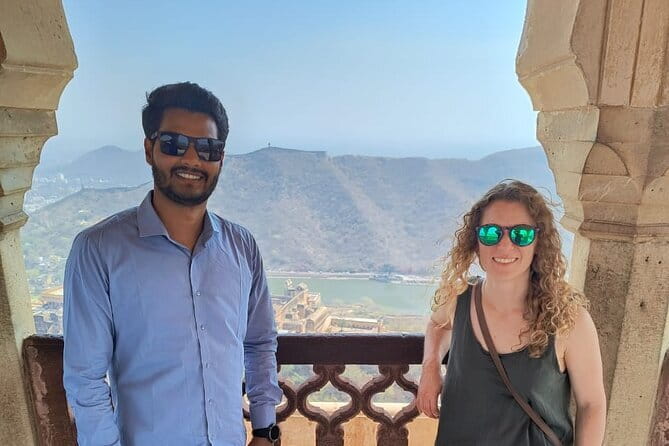
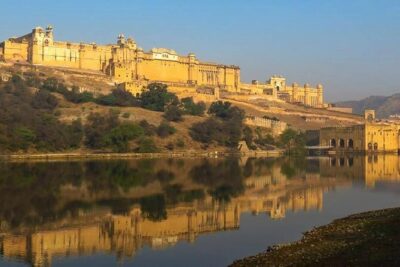
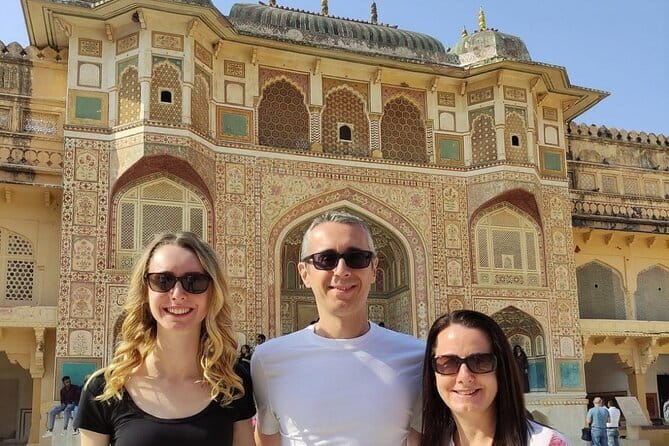
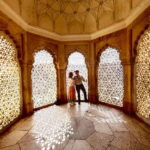
Start with Amber Fort, also called Amer Fort. It’s about 11 km from Jaipur and was built in 1592 under Raja Man Singh I, mixing Rajput and Mughal design in one huge layered complex. If you like architecture, this is where you’ll feel Jaipur’s craftsmanship the strongest: intricate carvings, mirror work in spaces like the Sheesh Mahal, and a maze of courtyards that keep revealing new angles.
You also get the hilltop payoff. Amber Fort sits above the Aravalli Hills, so the views can make the whole morning feel like more than just sightseeing. Plan for photos, because the vantage points help you understand why this fortress location was such a smart choice.
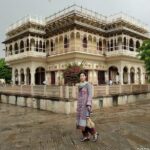
Right after, you’ll pause at Panna Meena ka Kund, a historic stepwell near the fort. Built in the 16th century, it served as a water reservoir and community space. What’s striking is the geometry: symmetrical stairways that guide you down in a clean pattern and show how practical design can also look beautiful.
The practical upside of this pairing is timing. You knock out two major “built for a purpose” sites early, when light and energy are usually best. If you’re photo-focused, this part of the day gives you strong composition options without needing extra tickets at every corner.
Gaitore Ki Chhatriyan and Jal Mahal: calm detours and quick picture time
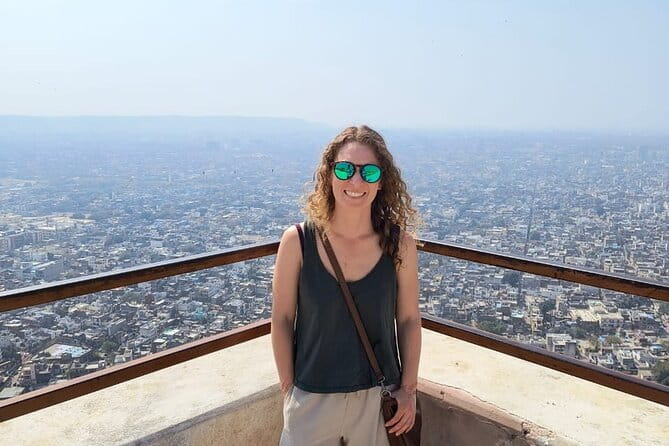
After the big fortress energy, Gaitore Ki Chhatriyan is the breather your day needs. This is a royal cremation ground at the foothills of Nahargarh Fort, with intricately carved cenotaphs made from white marble and sandstone. The mood here is quieter, and the chhatris (domed memorial structures) are detailed enough that you can take your time looking without feeling like you’re wasting the schedule.
The most notable cenotaph is for Maharaja Sawai Jai Singh II. Even if you don’t know the full story, you’ll notice the careful lattice work and the way the architecture honors status through craft and form.
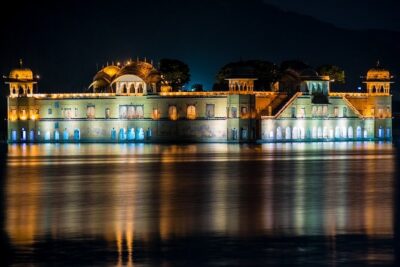
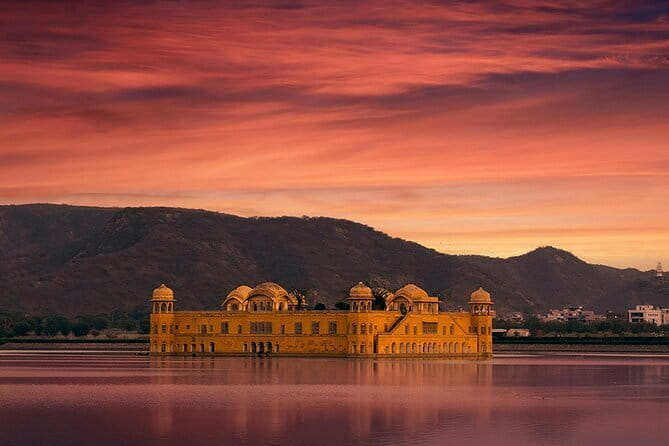
Then comes Jal Mahal, the Water Palace. Here’s the key detail: entrance is prohibited at this monument. You stop for pictures with the palace and the lake around it, and you don’t need to treat it like a full visit. It was renovated and enlarged in the 18th century under Maharaja Jai Singh II of Amber, and seeing it from the waterline perspective is usually the point.
This section is good value because it adds variety. You get royal memorial architecture, then a visual break with a famous reflective scene. The tradeoff is that Jal Mahal won’t scratch your “I want to walk inside” itch since you can’t enter.
Jantar Mantar to City Palace: where Jaipur shows its brain
Next up is Jantar Mantar in Jaipur, a UNESCO World Heritage Site and an 18th-century astronomical observatory. You’ll see 19 giant instruments built under Maharaja Sawai Jai Singh II for measuring celestial events with precision. The big headline is the world’s largest stone sundial, but the real experience is walking among instruments that translate the sky into math you can stand next to.
This is a great stop if you like explanations. With a guide, you’ll get more out of the instruments than just spotting them as “cool old rocks.” Without context, Jantar Mantar can feel like an outdoor museum with a lot of labels. With context, it turns into a story about how Jaipur linked science, power, and practical observation.
After that, you move to City Palace of Jaipur, a royal residence built in the 18th century. It blends Rajput, Mughal, and European architectural influences, and it functions as part-time residence of the royal family. If you want a sense of daily royal life rather than just royal symbolism, museums and courtyards help you get a fuller picture.
The Peacock Gate is one of the recognizably iconic features here. Even if you don’t go deep on every room, the palace layout helps you understand how rulers used space—what they wanted visible, what they kept controlled, and how the palace framed Jaipur’s identity.
Hawa Mahal and Patrika Gate: iconic facades at a comfortable pace
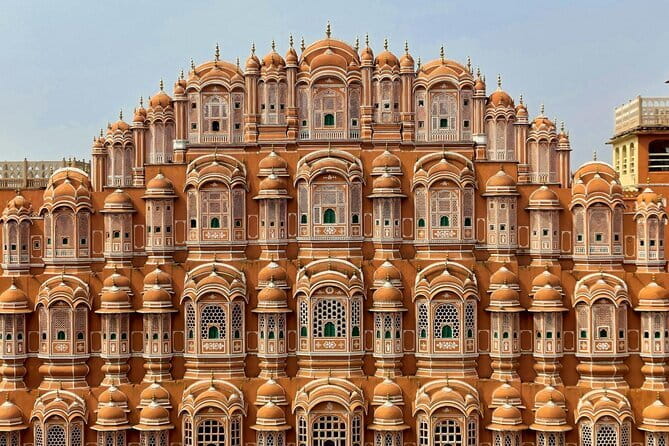
Hawa Mahal, the Palace of Winds, is next. It was built in 1799 by Maharaja Sawai Pratap Singh, and it’s famous for 953 small windows or jharokhas. The concept is clever: royal women could observe street life while remaining unseen from the outside.
I like this stop late-day because it works for quick understanding plus photos. You don’t need hours to appreciate the façade design once you know what the windows were for.
Then you’ll finish near Jawahar Circle at Patrika Gate. It’s a colorful gateway decorated with murals and artwork that reflect Rajasthani heritage, and it’s especially good for photography. This stop is short and focused, so it fits well as a visual finale without dragging your day into exhaustion.
You can also read our reviews of more private tours in Jaipur




Price and value: what you’re really paying for at about $4.50
On paper, the price shows as $4.50 per person, with a duration of about 5 to 8 hours. That can sound almost too low for a private service, so here’s how I’d think about value.
You’re paying for:
- Pickup and drop-off (hotel or airport)
- A private air-conditioned car with a dressed driver
- All parking, fuel, and state toll taxes
- A live guide in your preferred language
- Mineral water bottles in the vehicle
- A mobile ticket feature
What you’ll likely pay separately:
- Meals and drinks are not included
- Monument entrances are listed as not included in the general notes, but the itinerary also marks admission as included at several key stops (and free entry at some points like cenotaphs and certain gates). This means the real “out-of-pocket” number depends on how the operator applies admission across your exact schedule.
If your goal is comfort plus reduced decision-making, the value is strong. The private car alone can save real time and stress in Jaipur traffic, and the guide helps you spend your energy looking, not figuring.
Also note: the day can be customized if you ask after booking. That can turn a good value tour into a better one for your interests—more focus on architecture, photography, or shorter shopping time if you prefer.
Transportation and timing: how to make the schedule feel easy
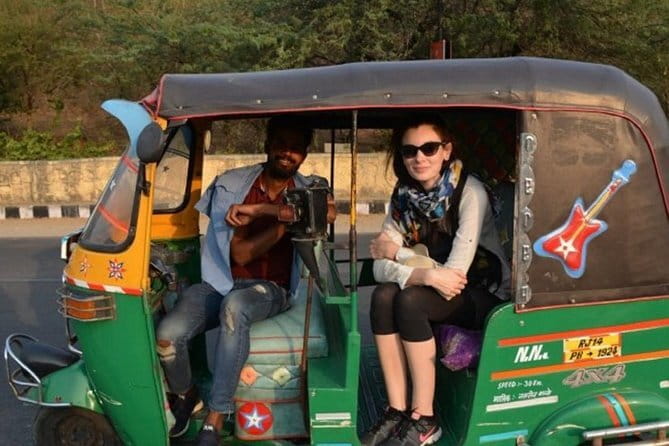
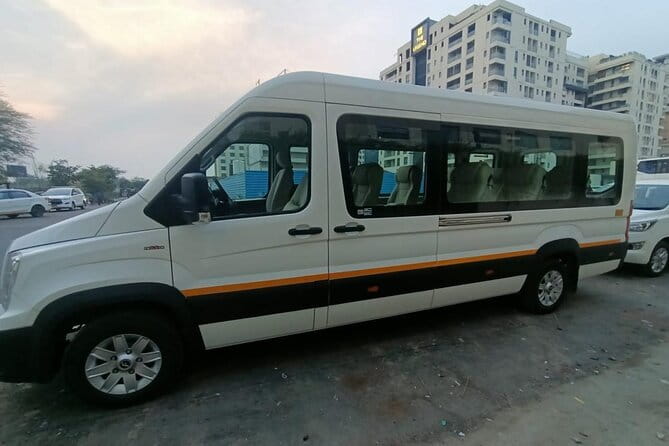
The route is built around clusters, so you’re not constantly crisscrossing the city. Still, Jaipur is a city where traffic and walking add up, so your “5 to 8 hours” range makes sense. If you’re traveling with mobility constraints, the structure helps, but you’ll still have walking at each stop.
The guide-led pace is the part that really protects your day. In the feedback for this experience, guides like Arvind Kumar and Raghuvir Singh were specifically praised for calm, patient guidance and flexibility during longer photo sessions. Translation: if you need extra minutes to get the shot, this tour style is designed to tolerate it.
A small but important detail: service animals are allowed, and the tour is described as near public transportation. That doesn’t mean you’ll use public transport on this day, but it’s a sign the provider thinks about practical on-the-ground needs.
What to expect at each stop, in plain terms
Here’s how the day tends to feel, stop by stop:
- Amber Fort: big walking surfaces, lots of architectural detail, and the best chance for scenic views
- Panna Meena ka Kund: short but visually satisfying, especially for symmetry and geometry photos
- Gaitore Ki Chhatriyan: quieter pace, more time for close-looking at carved cenotaphs
- Jal Mahal: photo stop with entry prohibited, plan for quick pictures then back on the road
- Jantar Mantar: outdoor instruments that become meaningful with explanation
- City Palace: royal residence energy, museums/courtyards vibe, and strong architectural signage
- Hawa Mahal: iconic façade and window concept, good for quick learning plus photos
- Patrika Gate: colorful end stop, generally straightforward and photo-friendly
Tips I’d use so you enjoy every hour
You’ll do best if you treat this as a guided day where photos and context both matter. Wear shoes you’re comfortable walking in, because forts and observatories don’t work well in dressy footwear.
Since meals are not included, I’d plan on lunch as a separate decision. The itinerary mentions you’ll be taken for lunch in a luxury AC restaurant after the Amber Fort segment, so you’ll likely have a comfortable place to sit, cool down, and reset your energy. You’ll just want to budget for food since it’s not listed as included.
Use the water you’re given. Mineral water bottles in the vehicle are part of the included package, and that simple detail helps you stay comfortable between stops.
Finally, if you’re strict about timing, ask your guide to prioritize what matters most to you. With this private setup, adjustments are realistic, and the experience notes flexibility for special requests.
Should you book this private Jaipur city tour?
Book it if you want a structured Jaipur day without the stress of navigation, ticket confusion at every corner, and timing gaps between major sights. It’s especially good if you care about understanding what you’re seeing at places like Jantar Mantar and City Palace, where a guide turns architecture into meaning.
Consider a different option if you’re trying to keep the day ultra-low-cost on entrance fees and meals, since the tour notes show that monument entrances and drinks aren’t fully covered. Also, if your top priority is spending a long time inside every site, remember that Jal Mahal is strictly a photo stop.
For most people, though, this is a smart way to get the big Jaipur hits—Amber Fort, royal landmarks, science, and those unmistakable façades—while keeping the day comfortable and guided.
FAQ
How long is the Jaipur private full-day sightseeing tour?
The duration is listed as about 5 to 8 hours.
Is hotel or airport pickup and drop-off included?
Yes. The tour includes hotel or airport pick-up and drop-off service.
What transportation do I get during the tour?
You travel in a private air-conditioned car with a dressed driver.
Do I get a live guide, or is this self-guided?
You get a live tour guide in your preferred language for the day.
Are meals included in the price?
No. Meals and drinks are not included.
Are monument entrance tickets included?
The tour notes say entrances of monuments are not included, but the itinerary also marks admission tickets included at some stops (and free access at others). I’d confirm the exact admission inclusions when booking.
Which stops are included during the day?
The main stops are Amber Fort, Panna Meena ka Kund, Gaitore Ki Chhatriyan, Jal Mahal (photo stop only), Jantar Mantar, City Palace, Hawa Mahal, and Patrika Gate.
Is the tour private, or do I join other groups?
It’s a private tour/activity, meaning only your group participates.
Can the tour be customized?
Yes. The tour can be customized as per your requirements, if you request it after booking.
What is the cancellation policy?
Free cancellation is available up to 24 hours in advance for a full refund. Cancellation within 24 hours of the start time isn’t refundable.