REVIEW · JAIPUR
Private Natural Dye and Block Print Workshop with Lunch
Book on Viator →Operated by Dye it Yourself · Bookable on Viator
Color turns hands-on fast in Jaipur. This private Natural Dye and Block Print workshop at DIY (Dye It Yourself) in Kokawas teaches natural dye basics, then moves into Shibori tie dye and block printing using colors drawn from nature around you. You’ll also hear how chemical dyes pollute waterways, and why the workshop pushes a sustainability mindset from the start—using kitchen and surrounding waste where possible.
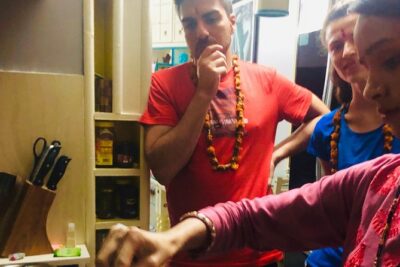
I really like that the experience gives you a clear, practical path: history and fundamentals first, then you actually run the processes yourself with guidance from Sidhant and Vaibhav and their team at Sodhani Biotech. Second, you’re not leaving empty-handed. You get take-home materials: dye packs, an organic cotton garment of your choice, and more—plus a filling vegetarian thali and snacks so your energy stays steady for the whole session.
The one consideration: this is a 5.5-hour practical workshop, and it can be tiring. Plan for some standing, hands-on work, and a bit of mess in the best way—so wear comfortable shoes and come ready to get spattered.
In This Review
- Key takeaways
- Natural dye, Shibori, and block print: why this Jaipur workshop is worth your time
- Where you’ll start in Kokawas (and what that means for your day)
- Inside DIY at Sodhani Biotech: what the three-part workshop structure actually gives you
- Segment 1: Natural dyeing basics, extraction, and hands-on color control
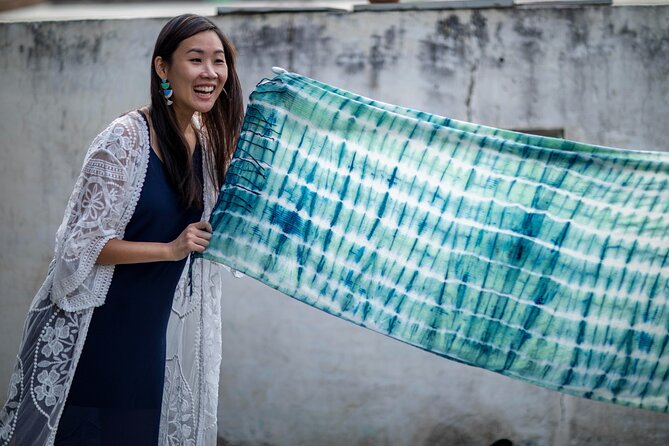
- Segment 2: Shibori tie dye—learning patterns through resistance
- Segment 3: Block printing—turning technique into repeatable design
- Lunch thali plus snacks: a real break that doesn’t break the flow
- What you take home: organic cotton garment, dye packs, and an extra canvas for creativity
- Price and value: what you’re really paying for at $190 per person
- Who should book this DIY workshop (and who might want to skip it)
- Practical tips so you leave with better results (not just stains)
- Should you book Dye It Yourself (DIY) in Jaipur?
- FAQ
- How long is the Private Natural Dye and Block Print Workshop with Lunch?
- What is the price per person?
- What’s included in the workshop?
- Do I get materials to take home?
- Can I bring extra fabric or garments to dye?
- Is private transportation included?
- Where does the experience start and end?
- Is it private for my group?
- What if the weather is poor?
Key takeaways
- Natural dye, Shibori, and block print in one session so you can compare techniques side by side
- Kitchen-waste friendly dyeing approach aimed at reducing chemical pollution
- Organic cotton garment + dye packs to take home so your learning keeps going after Jaipur
- Guides Sidhant and Vaibhav who help you nail the basics without getting lost in theory
- Vegetarian thali, Indian tea, and cookies included so you don’t have to hunt for food mid-workshop
- Private format for your group (with possible group discounts) makes questions easier during hands-on work
Natural dye, Shibori, and block print: why this Jaipur workshop is worth your time
Jaipur is famous for textiles, but this workshop focuses on the chemistry and craft behind the cloth, not just the shopping. The pitch is simple: learn how natural colors are extracted and applied, then build designs with Shibori tie dye and block printing. That matters because dyeing is both science and technique—if you understand the process, you can better judge what you’re buying later.
I like how the workshop ties your hands-on learning to a bigger reason. Natural dyes aren’t just a trend; chemical dyes are described as major sources of textile pollution. DIY’s approach pushes sustainability as a filter before you buy textiles—how you think matters as much as what you buy.
Also, the time investment is real: about 5 hours 30 minutes. You’re not doing a 45-minute demo with no chance to create. You’ll be actively working through the three segments, and the goal is for you to go home with dyed items you actually made.
You can also read our reviews of more private tours in Jaipur

Where you’ll start in Kokawas (and what that means for your day)
You’ll meet at QQ7J+M27 Kokawas, Rajasthan, India, and the activity ends back at the same meeting point. That “back to start” setup is convenient. You don’t have to worry about timing a second pickup or organizing a separate return plan.
The workshop hours run within 10:00 AM to 5:00 PM, and the experience is offered daily (Monday through Sunday). Since the duration is about 5.5 hours, you’ll want to schedule your rest of the day with margin—especially if you plan to add Jaipur sightseeing before or after.
One more practical note: private means only your group participates. That can be a big deal for a workshop like this, where questions pop up as soon as you see how folds, blocks, and dye strengths affect color.
Inside DIY at Sodhani Biotech: what the three-part workshop structure actually gives you
DIY is built around three segments. That structure is the best part for your brain as a traveler.
1) Natural Dyeing focuses on fundamentals and the process of getting color out of natural sources.
2) Shibori Tie Dye trains you to control pattern through binding, folding, and resistance.
3) Block Printing gives you design repeatability—using carved blocks to stamp patterns.
Even if you’ve never dyed anything before, this ordering helps. You learn how color works first, then you practice controlling where color goes (Shibori), then you use tools (block printing) to generate repeatable patterns.
The workshop also frames natural dye as a world you can learn from daily life. You’ll explore the existence of natural colors and how to extract shades like yellows, oranges, browns, pinks, blues, reds, and greens from around you. The exact ingredients can vary, but the takeaway is the same: you learn a method, not just a single finished look.
Segment 1: Natural dyeing basics, extraction, and hands-on color control
The Natural Dye segment is where the workshop earns its credibility. You’re not just told that plant dyes exist; you’re taught the basics and shown how colors are extracted and used.
You’ll get a journey through the fundamentals: what makes natural dyes work, how extraction influences shade, and how those colors behave when you apply them. DIY also emphasizes using waste from your kitchen and surrounding areas when possible. For you, that’s useful because it connects workshop knowledge to real life: the logic becomes easier to transfer when you’re thinking about everyday sources rather than expensive specialty materials.
What to watch for during this segment is process consistency. Natural dyes can be less uniform than chemical dyes, and that’s part of the beauty—but it also means your results depend on technique and timing. When the team shows what to do, pay close attention to the steps you can repeat later at home.
The “practical value” here is that you’ll start to see why natural dye results vary. Once you understand that, you stop judging the outcome as a mistake and start treating it like character.
Segment 2: Shibori tie dye—learning patterns through resistance
Shibori is about planning before dyeing. The workshop’s Shibori tie-dye portion teaches you how folds and bindings create pattern by resisting dye in specific areas. That’s why it’s such a good match with natural dye: you’re creating both color and structure at the same time.
In hands-on workshops like this, your first instinct is often to rush. Don’t. Your design happens when you decide how to fold and bind. Even if you make a mess or miss a neat edge, you’ll still learn what worked and what didn’t.
This segment also has a learning benefit beyond the final design. It teaches you to think like a maker: instead of asking What color is it? you’ll start asking What shape does the resist create? That mindset pays off when you try block printing next, because both techniques are really about control—color placement, not just color preference.
Expect to walk away with a dyed piece and a clearer sense of how to produce the look again.
You can also read our reviews of more tours and experiences in Jaipur


Segment 3: Block printing—turning technique into repeatable design
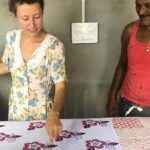
Block printing can feel magical when it works cleanly. It’s also surprisingly logical. You’re using blocks to apply pattern in a controlled way, which means you’re learning how to line up, press, and manage how dye transfers to fabric.
This segment is valuable if you like visual structure. Shibori creates organic pattern from folds; block printing creates geometric or repeatable patterns. Together, they help you understand how different methods create different aesthetics—even when you use the same dye colors.
If you’re thinking ahead to what you might do with your new skills later, block printing is the most transferable. You learn tool use and stamping rhythm, and even basic mistakes show you what affects crispness versus blur.
And yes, it can get tiring. Hands-on craft work is real work—so pace yourself. The goal is quality, not speed.
Lunch thali plus snacks: a real break that doesn’t break the flow
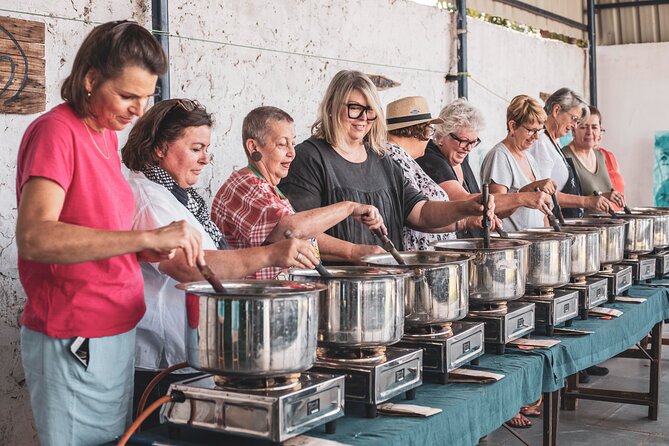
Lunch is included: a Vegetarian Thali with 3 vegetable dishes, chapati (bread), rice, curd, and sweet. Snacks also include Indian tea and cookies, plus bottled water.
This matters more than it sounds. A dye workshop takes attention. If lunch requires a separate errand, you lose momentum and concentration. Here, you can keep your focus on what you learned and what you’re about to try next.
If you’re sensitive to timing, plan your appetite strategically. You’ll likely have dyeing steps before and after lunch, and your energy will affect your technique—especially for Shibori and block printing, where careful handling counts.
What you take home: organic cotton garment, dye packs, and an extra canvas for creativity
This is one of the biggest reasons the workshop feels like value, not just entertainment.
You’ll receive:
- 4 natural dye packs (50 grams each) as takeaways
- An organic cotton garment you can select from (scarf, dress, shorts, placemat, cushion cover)
- An organic cotton bag for takeaways
- The lunch and snacks mentioned above
There’s also an open invitation that’s great if you like experimenting. You can bring as much fabric or garments as you want to dye during the workshop. That means your final take-home can be more than what’s included—assuming you have items you actually want dyed with natural colors.
Practical advice: if you’re going to bring extra fabric, choose cotton or similar natural fibers you expect to work with natural dye. The workshop provides an organic cotton garment, so you’ll have at least one sure-success item even if your extra pieces vary.
Also keep in mind that dye results can vary with the process. That’s normal with natural dyes, and it’s part of why homemade dye crafts can be fun—each batch can be a little different.
Price and value: what you’re really paying for at $190 per person
At $190 per person, you’re paying for more than a guided craft lesson. The price bundles:
- hands-on instruction across three techniques
- the dye packs you keep (4 packs at 50 grams each)
- an organic cotton garment plus an organic cotton bag
- lunch thali, Indian tea, cookies, and bottled water
- a private format for your group
When you look at it this way, the fee starts to make sense. Workshops that are only instructional often cost less, but they don’t usually include take-home dye quantities and an organic garment to practice on. Here, the takeaway is immediate and tangible—you can keep making things after your Jaipur day ends.
The other value element is the sustainability focus. If you care about where textile dyes come from, the workshop gives you a way to evaluate purchases later. You’ll understand the effort behind natural colors and why chemical dyes are a big environmental concern.
Finally, the possible group discount can be worth it if you’re traveling with friends who want to split costs. The experience is still private for your group, so you’re not sacrificing comfort for price.
Who should book this DIY workshop (and who might want to skip it)
This workshop fits best if you want hands-on craft learning in Jaipur, and if you’re curious about sustainable textiles. It’s especially good for:
- people who love arts and crafts with a practical payoff
- anyone in or near textile interests (you’ll get more out of it if you already care about fabrics)
- travelers who like structured learning: fundamentals, then techniques, then your own results
You might consider a different activity if you prefer passive tourism. This is work. You’ll be handling fabric, dyeing, and creating patterns. If your idea of a holiday is mostly walking and looking, you’ll probably find this too hands-on.
Also, wear comfortable shoes. The workshop notes that it might get tiring. That’s not a vague warning. It’s the kind of craft day where your feet and hands both do their share.
Practical tips so you leave with better results (not just stains)
Here’s how to make this day smoother:
- Wear comfortable shoes. Plan to stand and move.
- Expect mess. Bring clothes you don’t mind getting dye on.
- Think ahead about extra fabric. The workshop allows you to bring items you want dyed, so bring pieces you genuinely plan to use.
- Ask questions early. In a private group format, you can get answers while the technique is still fresh.
- Choose your take-home garment thoughtfully. Pick something that matches what you like wearing or using later (scarf, dress, shorts, placemat, cushion cover).
If you’re the type who likes to recreate your results, pay attention to the steps you feel you can repeat later. Natural dyeing is teachable, but the details you notice today become your recipe tomorrow.
Should you book Dye It Yourself (DIY) in Jaipur?
If you want a Jaipur experience that’s more than a souvenir factory, I’d book it. You learn natural dye, Shibori tie dye, and block printing in one day, and you don’t just watch. You create, then you take materials home—plus an organic cotton garment and dye packs to keep experimenting.
Book it if:
- you enjoy hands-on workshops
- you care about sustainable textiles
- you want a real outcome you can use later, not just photos
Skip it if:
- you dislike practical work or long sessions
- you want a light, low-effort cultural stop
Bottom line: this workshop is a smart use of half a day in Jaipur because it gives you both technique and take-home value, with a sustainability angle that’s easy to carry into how you shop next.
FAQ
How long is the Private Natural Dye and Block Print Workshop with Lunch?
It lasts about 5 hours 30 minutes.
What is the price per person?
The price is $190.00 per person.
What’s included in the workshop?
You get 4 natural dye packs (50 grams each), an organic cotton garment to choose from, an organic cotton bag, vegetarian thali lunch, snacks (Indian tea and cookies), and bottled water.
Do I get materials to take home?
Yes. You’ll take home the 4 natural dye packs and your dyed organic cotton garment, plus the organic cotton bag.
Can I bring extra fabric or garments to dye?
Yes. You can bring as much fabric or garments as you want to dye during the workshop.
Is private transportation included?
No. Private transportation is not included.
Where does the experience start and end?
It starts at QQ7J+M27 Kokawas, Rajasthan, India, and ends back at the same meeting point.
Is it private for my group?
Yes. It’s listed as a private tour/activity, so only your group participates.
What if the weather is poor?
The experience requires good weather. If it’s canceled due to poor weather, you’ll be offered a different date or a full refund.