REVIEW · JAIPUR
Pink City Walking Tour With Us ( A Haritage Walk in Jaipur)
Book on GetYourGuide →Operated by Elephant With Jaipur | Jaipur Walking Tour · Bookable on GetYourGuide
Jaipur feels different on foot with a local guide. You get a Pink City walking route that mixes big landmarks with everyday street scenes, with a strong focus on culture, religion, and Rajput and Mughal architecture through real local context.
I like how this tour keeps it human and personal, led by Mudassir (born and raised in Jaipur). I also like the practical breaks: chai, coffee, and water are built in, not an afterthought.
The main thing to watch is the pace in hot weather. At about 3 hours, you’ll want sun protection and comfortable shoes, and it’s not set up for people over 95.
In This Review
- Key highlights I’d plan around
- Entering Jaipur on foot: why this walk works
- Meet Mudassir at Hawa Mahal: the tour’s tone in the first 20 minutes
- City Palace: royal architecture explained in plain language
- Govind Dev Ji Temple and the Krishna ceremony moment
- Sabji Mandi Janta Market: vegetable life that shows the city rhythm
- Phool Mandi: the flower market stop that adds color and context
- Jantar Mantar: observatory time with coffee or tea
- Tripolia Bazar and the older market feel
- Chai, coffee, water, and heat management that actually helps
- Why $12 makes sense (and why tips matter)
- What to wear, what to bring, and what not to carry
- Language and pace: English and Spanish with room for questions
- Should you book Mudassir’s Pink City walking tour?
- FAQ
- How long is the Pink City Walking Tour with Us in Jaipur?
- How much does the tour cost?
- Where do I meet the guide?
- What’s included in the price?
- What languages are offered?
- What should I bring, and what is not allowed?
Key highlights I’d plan around
- Krishna-focused temple time that explains faith in daily Jaipur, not just the building.
- Hawa Mahal as the starting anchor, with photo time and a guided orientation right away.
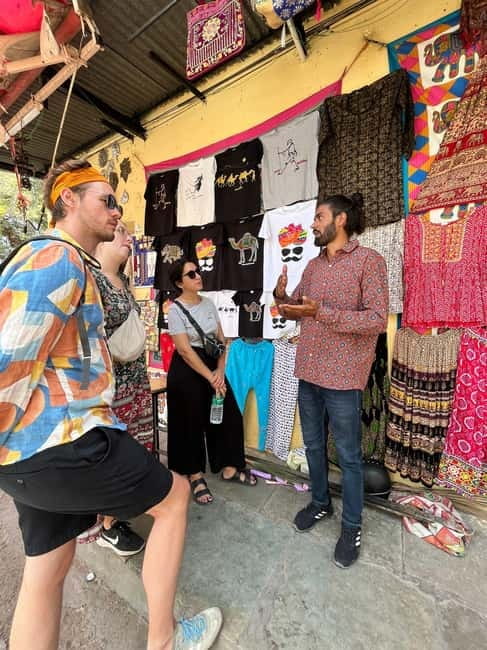
- Market walking that feels local, including a vegetable market (Sabji Mandi) and a flower market (Phool Mandi).
- Jantar Mantar stop with a break, plus coffee or tea included during the visit.
- English and Spanish live guiding, so you can ask questions and keep up without second-guessing.
Entering Jaipur on foot: why this walk works
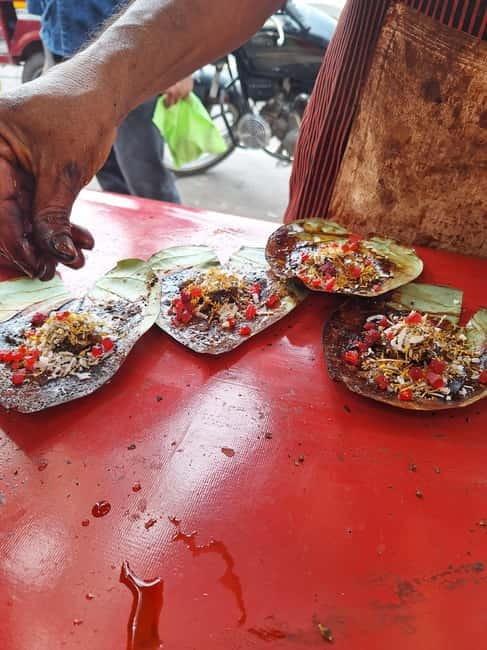
This is the kind of Jaipur tour that helps you get your bearings fast. Starting at Hawa Mahal (the Wind Palace) gives you a visual anchor, then you work your way through the older core of the city by feet and steps.
What makes it interesting is the mix: royal-era sites like City Palace and the observatory Jantar Mantar, plus places that show how Jaipur actually functions day to day. The guide frames the route around architecture and culture, not just a checklist.
The other thing I appreciate is the promise of ethical, authentic stops. You’re not just collecting photos. You’re learning how people live, what they value, and how religion shows up in public spaces.
You can also read our reviews of more walking tours in Jaipur



Meet Mudassir at Hawa Mahal: the tour’s tone in the first 20 minutes
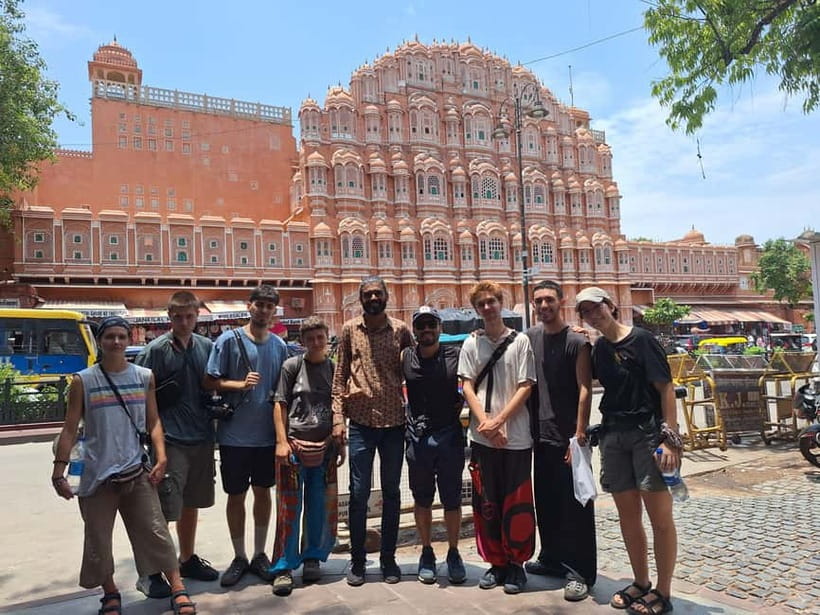
You’ll meet in front of Hawa Mahal and look for Mudassir, described as a tall guy with a ponytail near the Tattoo Cafe side. That matters because it keeps the start simple, even when you’re trying to find the right group in a crowded area.
From there, the tour includes a photo stop and a guided walk-and-look approach at Hawa Mahal. You also get a small window of free time, which I recommend using to orient yourself before the deeper history talk begins.
If you’re the type who hates being rushed, this format helps. Photo time is short, guided time is clear, and you’re not spending the whole morning stuck standing still.
City Palace: royal architecture explained in plain language
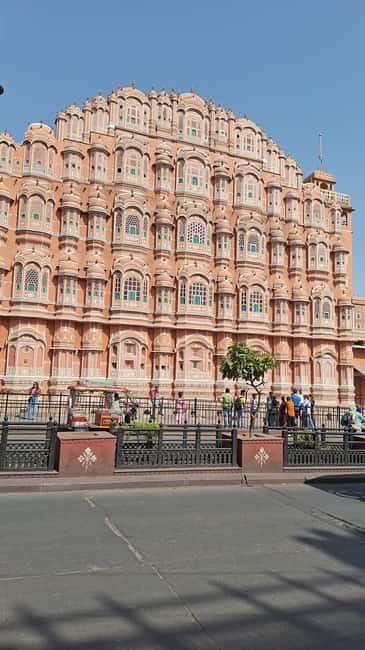
After the Hawa Mahal start, the route moves to City Palace with another photo stop and guided visit. This is where the tour’s focus on history and architecture becomes the main event.
The guide is set up to explain the real background behind Rajput & Mughal architecture, and also how religions and culture shaped how buildings and public spaces were used. The value here is interpretation. You don’t just see a palace complex; you understand why it feels the way it does in Jaipur.
A practical tip: City-center crowds can be real, and you’ll be walking. Keep your pace steady and save phone battery for the parts you really want to photograph.
Govind Dev Ji Temple and the Krishna ceremony moment
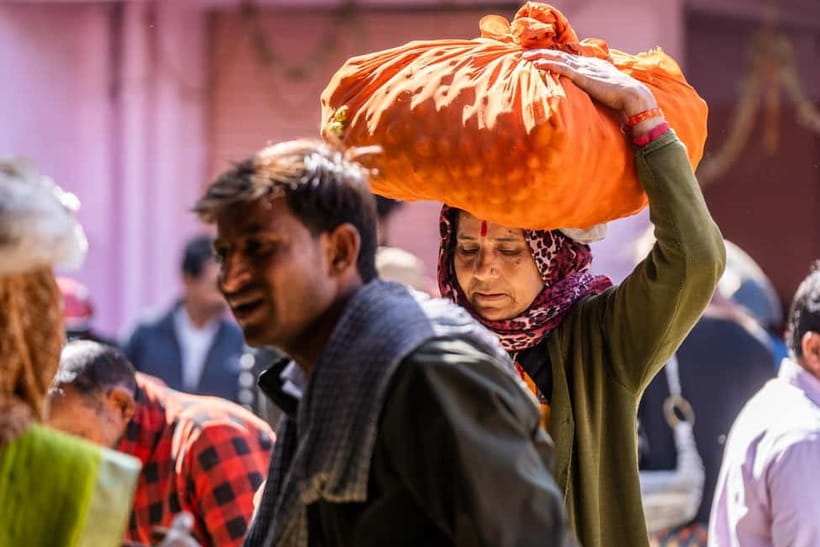
One of the most meaningful stops is Govind Dev Ji Temple, tied to the tour’s highlight: a Krishna ceremony. This is not presented as a quick photo mission. The goal is to help you understand what you’re seeing through religion and daily life.
Even if you’re not religious, this kind of temple stop can be a turning point in a trip. It shifts your view from monuments to meaning. You’ll also hear how beliefs show up in public routines, and how that connects to what you’ll see later in markets.
Just be ready for a respectful setting. The tour requests long pants and a scarf, which is a good reminder that you’re stepping into a working place of worship, not a theme park stop.
Sabji Mandi Janta Market: vegetable life that shows the city rhythm
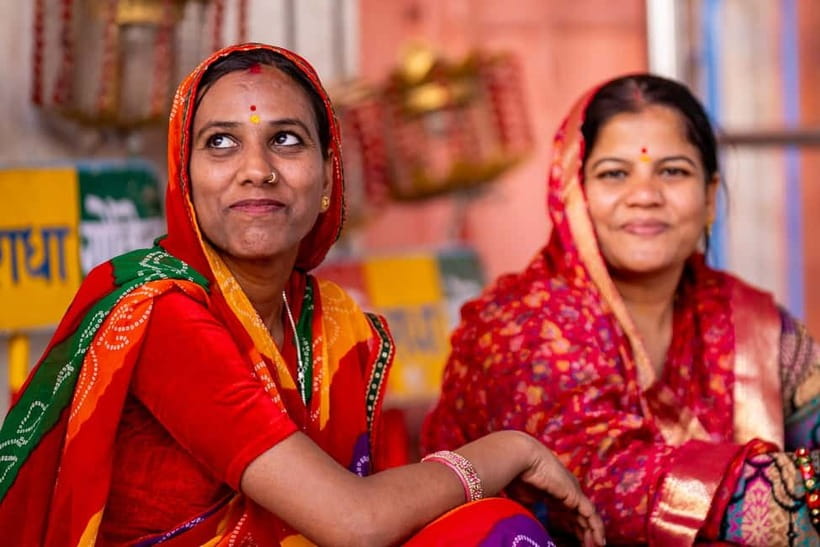
Next comes Sabji Mandi Janta Market, a stop designed for street-level understanding. The tour includes guided time plus free time, so you can look without feeling trapped in constant motion.
This is where the phrase local life stops being abstract. You get to see the everyday market world that supports Jaipur, and the guide connects it back to culture and how the city functions. It’s one of those stops that makes Jaipur feel less distant.
If you get heat-sensitive, use your free time smartly. Shade can be limited on walking routes, so take breaks when you can, not when you’re already exhausted.
You can also read our reviews of more city tours in Jaipur





Phool Mandi: the flower market stop that adds color and context
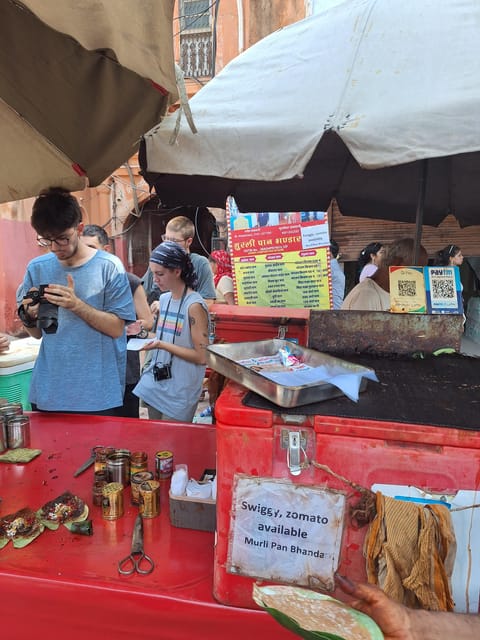
From vegetables to Phool Mandi (the flower market). This stop is shorter—just enough time to learn what matters here and look around without dragging the day out.
The guide’s angle stays consistent: religion and daily practice show up in market life. Flowers are often tied to ceremony and devotion, and you’ll get that context rather than only seeing the products.
This is also a good stop to reset your senses. Markets can be intense, so stepping into a different kind of sensory world can make the overall walk feel balanced.
Jantar Mantar: observatory time with coffee or tea
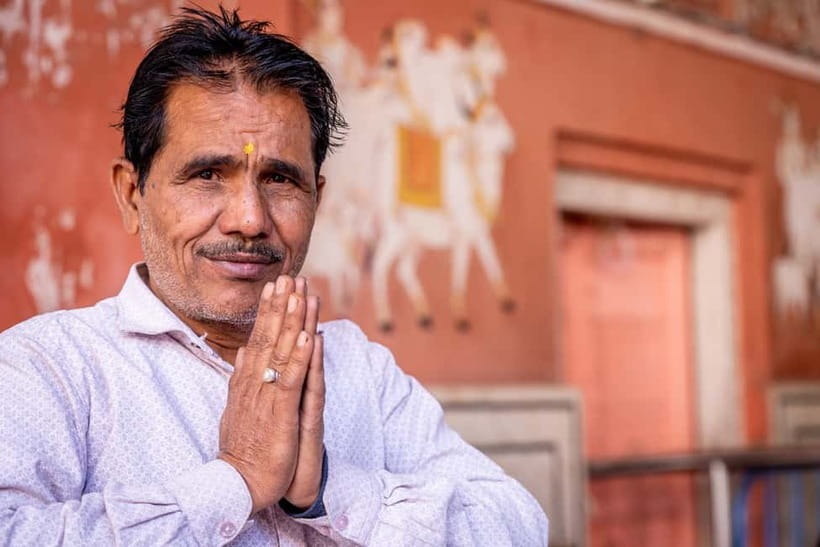
Now for Jantar Mantar, described as the observatory. The tour gives you a photo stop, a visit, plus coffee or tea during the break. That little pause is practical, and it helps you keep attention when the sun is strong.
The guide continues the theme of history and architecture, explaining the broader story behind what you’re seeing. Even if you don’t read every detail on your own, the guided explanation helps you understand why Jantar Mantar fits into Jaipur’s larger identity.
Bring your sun hat. The tour requests it for a reason. Even a good morning walk can turn rough if you’re exposed for too long.
Tripolia Bazar and the older market feel
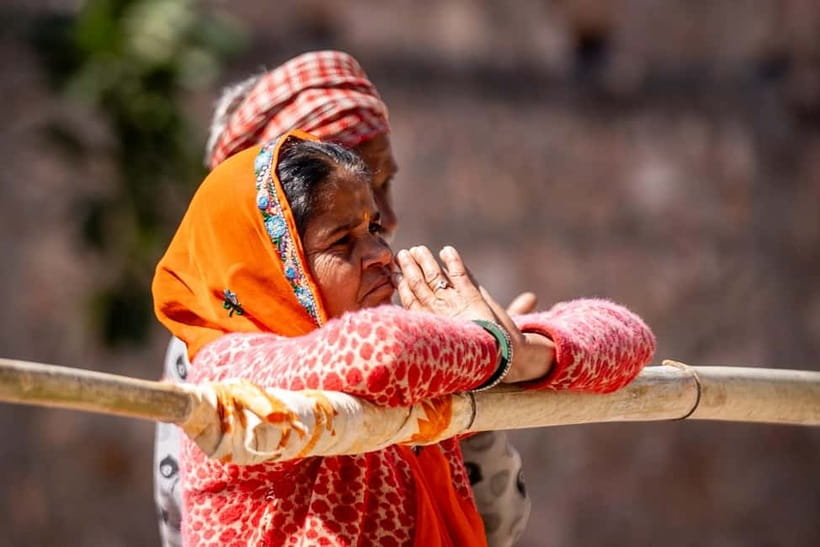
The route then reaches Tripolia Bazar with a longer stop than some of the earlier points. This is where the walking tour starts to feel like a real stroll through the older city core.
Expect guided time and free time, so you can see the market approach from both sides: what to look for with the guide, then what you notice when you’re on your own for a bit. The tour also frames this part as a way to understand Jaipur’s city-center life, including older market culture.
My advice: when you get free time, don’t just wander randomly. Pick a direction, look at a few stalls or shopfronts, and come back. It keeps you from losing the thread when the group moves on.
Chai, coffee, water, and heat management that actually helps
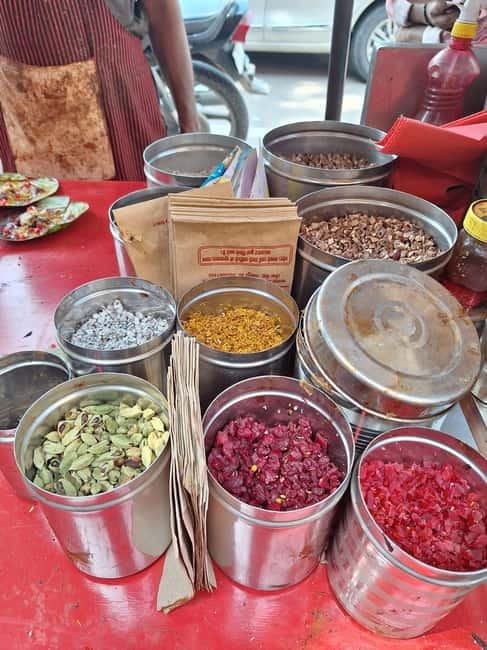
This tour includes water, plus chai and coffee. It also offers coffee or tea at the Jantar Mantar stop. That’s not just kindness; it’s logistics. In Jaipur heat, hydration and small breaks keep the tour from turning into a struggle.
You’ll also get guidance on do’s and dont’s in Jaipur, which I find underrated on walking tours. Small etiquette reminders help you avoid awkward moments and let you focus on the experience.
One note: the tour is about three hours, and people can find Jaipur hot. The route design includes short free-time windows at several stops, so you can cool down and regroup instead of being forced to stay in motion the whole time.
Why $12 makes sense (and why tips matter)
At about $12 per person for roughly 3 hours, this price feels positioned for value—especially because drinks are included and you’re getting guided context that ties multiple areas together. You’re not paying for a single monument. You’re paying for a whole story across the city center.
Also, the guide is transparent about pricing. He notes the tour price is kept low due to platform commission, and that the experience depends on tips. In other words: treat the $12 as the base, not the full salary.
If you want the most out of the tour, plan to tip. Bring cash if you can, and tip based on time and effort, not on the idea that $12 should already cover everything.
What to wear, what to bring, and what not to carry
This tour asks for practical gear: comfortable shoes, a sun hat, long pants, and a scarf. That combination matters because you’ll walk between several sites, likely in strong sun, and you’ll enter religious spaces where dress matters.
The tour also lists clear restrictions: no pets, no alcohol and drugs, no bikes, no scooters, and no speakers. The point is simple: keep the area respectful and keep the group moving safely.
If you’re carrying a backpack, keep it manageable. You want free hands for photos and for sudden shade breaks.
Language and pace: English and Spanish with room for questions
The guide works in English and Spanish, which is a major plus if you’re not traveling with a full group that speaks the same language. It also makes the explanations easier to follow when you’re learning about architecture, religions, and city rules.
One of the best things about the guiding style here is responsiveness. If you ask questions, the tour can run longer when needed. That flexibility is worth something on a walking tour, because it means the guide isn’t rushing you through canned explanations.
If your group struggles with heat or slow walking, this kind of adjustment helps you keep the experience enjoyable instead of turning it into stress.
Should you book Mudassir’s Pink City walking tour?
Book it if you want Jaipur’s city-center life with real context. This tour fits well if you like walking, enjoy markets, and want the Krishna temple stop to mean something beyond a quick look.
Pass or reconsider if you hate heat exposure or you need a slower pace. And take seriously the note that it is not suitable for people over 95.
If you’re on a first trip to Jaipur and you want a route that connects big sights like City Palace and Jantar Mantar with everyday places like Sabji Mandi and Phool Mandi, this is a strong pick—especially at $12, as long as you also plan a tip.
FAQ
How long is the Pink City Walking Tour with Us in Jaipur?
The tour lasts about 3 hours.
How much does the tour cost?
The price is $12 per person.
Where do I meet the guide?
Meet in front of Hawa Mahal. The guide is described as a tall person with a ponytail just down the side of the Tattoo Cafe.
What’s included in the price?
The tour includes guide fee, guided sightseeing from outside, and drinks such as chai, coffee, and water. It also states skip the ticket line.
What languages are offered?
The live tour guide is available in English and Spanish.
What should I bring, and what is not allowed?
Bring comfortable shoes, a sun hat, long pants, and a scarf. Not allowed includes pets, alcohol and drugs, bikes, scooters, and speakers.