REVIEW · JAIPUR
Jaipur Pink City Heritage Tour: Book By Car with Guide
Book on GetYourGuide →Operated by Nahargarh Travels · Bookable on GetYourGuide
Jaipur in one day? You can do it well with this guided car tour. I like the all-in-one route that strings together big sights like Amber Fort and the forts in the hills, without you having to plan transport. I also like that you get expert local guidance so the architecture and royal stories make sense as you move from place to place.
The main thing to consider is simple: entry fees are not included, and it is a long day with a moderate amount of walking. If you hate stairs, standing in heat, or long transfers between sites, plan your pace and bring water early.
In This Review
- Key points worth knowing before you go
- A one-day heritage hit: what this Jaipur car-and-guide day covers
- Getting started at Albert Hall Museum (the smart warm-up)
- Amber Fort and Sheesh Mahal: the place where Jaipur’s power shows
- How you reach the fort: elephant or jeep
- What to watch for
- Nahargarh Fort: a viewpoint stop that actually pays off
- Jaigarh Fort and Jaivana Cannon: the “war machine” side of the city
- Jal Mahal and the Man Sagar Lake scene: quick, scenic, and easy
- Gatore Ki Chhatriyan: royal cenotaphs with real craft
- City Palace: where Rajasthan and Mughal style shake hands
- Jantar Mantar and the logic of astronomy
- Hawa Mahal: the photo wall that teaches how the building works
- Galtaji Temple: springs, temples, and monkeys at the edge of the city
- Shopping time in Johari Bazaar or Bapu Bazaar (with a guide’s help)
- Rajasthani dance performance: a included cultural pause
- Price and logistics: does $22 per person really make sense?
- What to bring and how to keep the day comfortable
- Who this tour fits best (and who should rethink it)
- Should you book this Jaipur Pink City heritage tour?
- FAQ
- What’s the duration of the Jaipur Pink City Heritage Tour?
- Does the price include entry fees?
- What’s included in the tour besides sightseeing?
- Are flash photos allowed?
- What languages is the live guide available in?
- Is the tour suitable for wheelchair users?
Key points worth knowing before you go
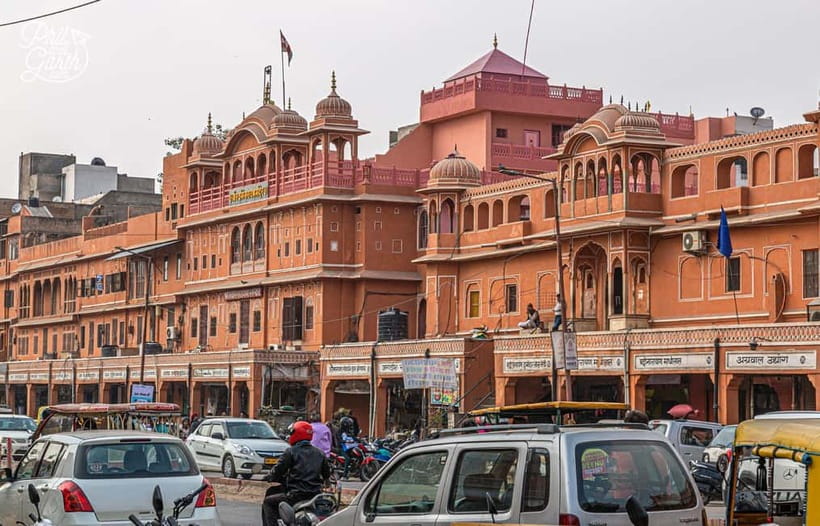
- Amber Fort and Sheesh Mahal (Mirror Palace): a UNESCO highlight with strong photo energy.
- Aravalli fort circuit: Nahargarh and Jaigarh Fort add dramatic viewpoints over Jaipur.
- Big landmark trio: City Palace, Hawa Mahal, and Jantar Mantar help you see Jaipur’s design and science side.
- Museum start and temple finish options: Albert Hall Museum (Indo-Saracenic) and Galtaji Temple (monkeys and springs) round out the day.
- Evening markets + Rajasthani dance: shopping time at Johari Bazaar or Bapu Bazaar, plus a cultural performance included.
A one-day heritage hit: what this Jaipur car-and-guide day covers
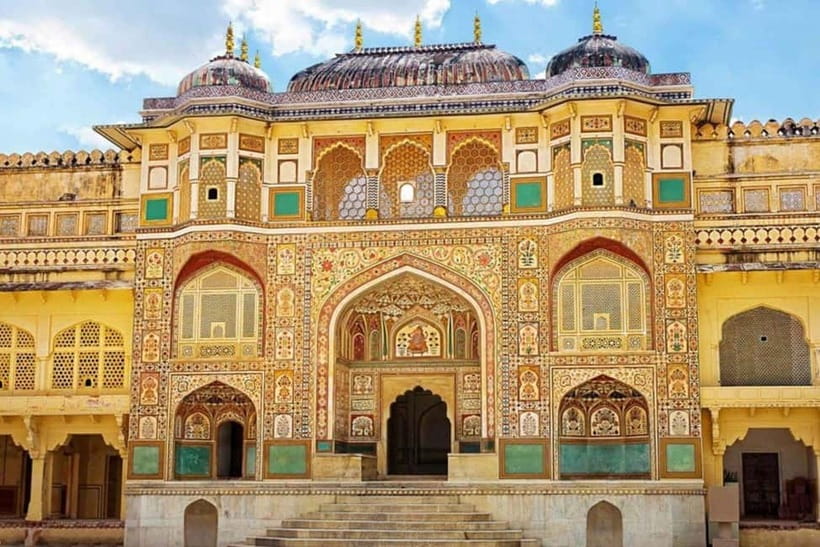
This is the kind of tour you book when you want Jaipur’s headline sights in 1 day, but you don’t want to juggle tickets, routes, and timing. You’re picked up from central Jaipur, driven between attractions, and met by a guide who explains what you’re looking at. The result is a smoother experience, especially if you’re new to India logistics or you only have a short stay.
The day is built around Rajasthan’s royal past, with stops that show off forts, palaces, and the city’s signature architecture. You’ll spend time at UNESCO-listed areas like Amber Fort, Jantar Mantar, and you’ll finish with the iconic facade of Hawa Mahal.
Do note the pace. The itinerary includes multiple guided blocks and plenty of photo stops, so even though it’s a “heritage tour,” it is also a full-day outing. I’d treat it like a structured sightseeing day, not a slow wander.
You can also read our reviews of more guided tours in Jaipur


Getting started at Albert Hall Museum (the smart warm-up)
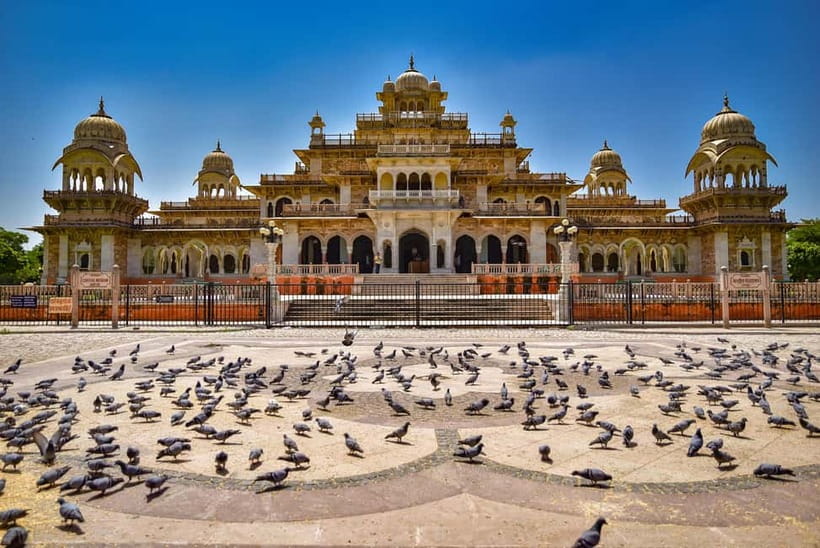
A good Jaipur day needs context. Starting with Albert Hall Museum helps you understand why Jaipur’s rulers invested in arts, craftsmanship, and public-facing grandeur. This museum is the oldest in Rajasthan, and it’s known for its Indo-Saracenic architecture. Even if you only spend about an hour, it sets the tone for what you’ll see later: stonework, ornament, royal collections, and period weapons and artifacts inside.
Practical tip: Museums are where you’ll feel the most benefit from a guide. They can point out what matters, explain why specific objects were collected, and help you connect the museum pieces to what you’ll see in the palaces and forts.
Amber Fort and Sheesh Mahal: the place where Jaipur’s power shows
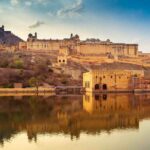
Your day’s cornerstone is Amber Fort, a UNESCO World Heritage Site and one of the most photogenic forts in India. The focus here is on the fort’s courtyards and palaces, plus the Sheesh Mahal (Mirror Palace). The mirrorwork is the kind of detail that’s easy to miss if you’re just walking through on your own, so having a guide matters.
How you reach the fort: elephant or jeep
You have options for the final approach:
- An optional elephant ride
- Or a jeep if you prefer not to ride
I usually recommend the jeep if you’re traveling with time pressure or if you’d rather avoid the extra logistics that come with an animal ride. But if an elephant ride is important to you culturally and you’re comfortable with the idea, it’s offered as an option.
What to watch for
Amber Fort involves walking around courtyards and up-and-around spaces. Wear shoes you can trust on stone, and plan for sun exposure. Photography is generally allowed, but flash restrictions can apply in certain areas, so keep your camera settings ready.
You can also read our reviews of more city tours in Jaipur



Nahargarh Fort: a viewpoint stop that actually pays off
Next up is Nahargarh Fort, perched on the Aravalli Hills. The big payoff here is the view of Jaipur. This is a stop built for photography: wide angles, changing light, and the feeling that the city spreads out below you.
Even if you only have about an hour with guidance, it’s enough time to learn the fort’s basic story and then spend time looking for photo angles. If your schedule allows, focus your photos toward the direction you expect the light to hit best. The fort’s position makes lighting change fast.
If you’re chasing sunset energy, there’s a note from a past booking that a quick ride arrangement (even a motorcycle lift for the moment) can happen depending on your transport and driver plan. If that sounds appealing, ask your driver ahead of time what the ride options are that day.
Jaigarh Fort and Jaivana Cannon: the “war machine” side of the city
A short drive later, Jaigarh Fort adds a different mood. It’s known for panoramic views as well, but it’s also a place that leans into military engineering and power. One of the featured sights is the world’s largest cannon on wheels, Jaivana.
This is the stop where you’ll get a clearer sense of why these forts mattered beyond decoration. The fort’s design is about defense, sightlines, and controlling movement. With a guide, you get more than a metal object behind a barrier—you learn what it represented and why it was built that way.
Photo stop note: The drive plus the viewpoints give you a lot of “pull over and shoot” moments. It’s a good day for a camera you can reach quickly without fumbling.
Jal Mahal and the Man Sagar Lake scene: quick, scenic, and easy
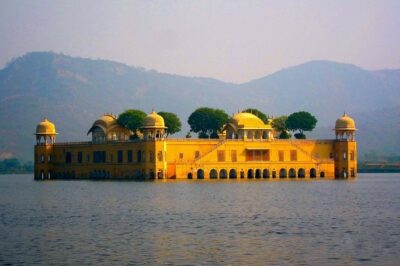
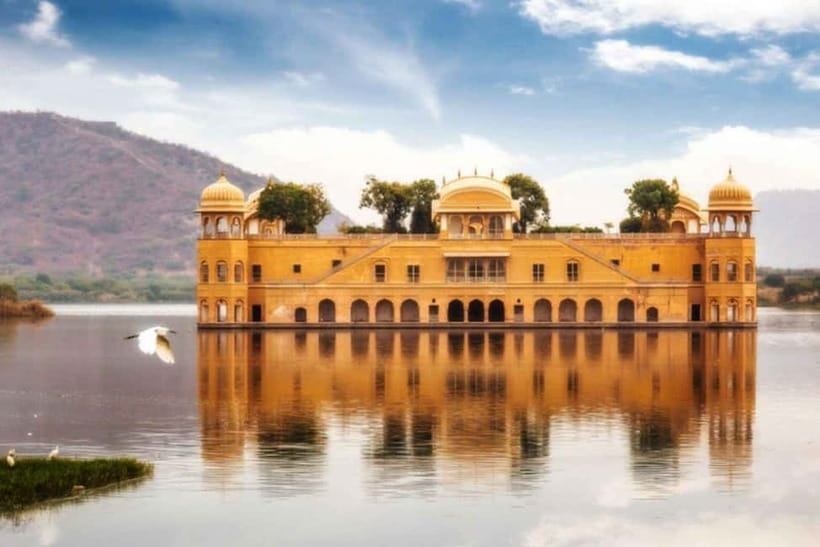
On the way back from Amber, you’ll stop at Jal Mahal (Water Palace). It sits in the middle of Man Sagar Lake, and even if it’s a brief stop, it’s worth it for the unusual setting.
This is also a good time to reset. Your feet might feel it by now, so use the pause for photos and a drink of water. Just keep in mind that your photos will depend on weather and light. Overcast days can make the palace look softer; bright sun makes it pop.
Gatore Ki Chhatriyan: royal cenotaphs with real craft
Gatore Ki Chhatriyan is one of those Jaipur stops that feels more “about people” than about grand halls. These royal cenotaphs have intricate architecture and tie into the city’s funerary traditions for rulers.
If you care about ornament—carving patterns, stone shapes, and how designs repeat across structures—this is a rewarding stop. It also balances the day’s mix: after cannon and forts, it gives you a different kind of royal story.
City Palace: where Rajasthan and Mughal style shake hands
After lunch, you’ll explore City Palace, a blend of Rajasthani and Mughal architecture. This is a major center of the city’s royal heritage, and it’s not just about walking in courtyards.
Inside, there are museums with royal artifacts, costumes, and weapons. This is where you get “how people lived” context, not only how palaces looked. A guide helps you make sense of what you’re seeing—especially the weapon and costume sections, which can be hard to interpret without explanation.
Tip for the best experience: take time in the museum spaces even if you’re tempted to rush. The palace architecture is striking, but the artifacts are where the day starts to feel personal.
Jantar Mantar and the logic of astronomy
Next is Jantar Mantar, an astronomical observatory and UNESCO World Heritage Site. The big headline here is the world’s largest stone sundial, but you’ll likely see multiple instruments designed to measure time and celestial movement.
This stop is great for travelers who like history that isn’t only political. It’s also a nice contrast to the more decorative palaces—here, Jaipur shows its brainpower.
A guide matters again. The instruments can look like clever stone sculptures unless someone explains the purpose and how they were used. Even a short explanation can turn “cool objects” into real understanding.
Hawa Mahal: the photo wall that teaches how the building works
End your sightseeing loop with Hawa Mahal (Palace of Winds). This is the iconic facade that looks like a crown of windows. It’s one of those places where you’ll feel the whole world holding a camera, but the guide explanation makes it more than a postcard.
Hawa Mahal is about design and privacy, and it helps explain the practical side of how rulers lived within strict social expectations. If you’re walking a lot that day, treat this stop as a final visual reward: stand close to the facade, then step back for wide shots.
Flash photography may be restricted in certain areas, so keep your flash off.
Galtaji Temple: springs, temples, and monkeys at the edge of the city
To round out the day, you can visit Galtaji Temple (Monkey Temple). This complex is known for natural springs, temples, and a large population of monkeys. It’s also positioned to offer nice city views, so it works as both a spiritual stop and a photo finish.
This is a stop where you should slow down and keep your belongings secure. If monkeys are active, don’t tease them or react too dramatically. Just enjoy the setting and watch your step.
Shopping time in Johari Bazaar or Bapu Bazaar (with a guide’s help)
A key part of the included package is the chance to explore Johari Bazaar or Bapu Bazaar. This is where you’ll find traditional jewelry, textiles, and handicrafts. Having shopping time in a guided itinerary is valuable because you’re not stuck figuring out what’s worth your money while navigating a busy market alone.
How to make this work:
- Go with a rough idea of what you want (jewelry, textiles, small crafts).
- Compare prices and don’t feel rushed.
- Treat it as browsing plus one “real purchase,” not a shopping marathon.
If you’re sensitive to bargaining, tell your guide what you prefer. It can help you shop smarter and avoid awkward moments.
Rajasthani dance performance: a included cultural pause
The tour also includes a cultural performance with traditional Rajasthani dance. This is a nice break after hours of walking and driving. It’s also a good reset for your energy, especially if you’re traveling with kids who might not keep interest for another fortress courtyard.
Don’t expect it to replace the historical explanations—you’ll get those at the monuments—but it adds a sense of place. It’s part of the value here because it fills time that would otherwise be travel-between-stops.
Price and logistics: does $22 per person really make sense?
The price listed is $22 per person for a 1-day tour. That price can be good value if you’re thinking about what’s bundled: pickup and drop-off from central Jaipur, guided explanation, transportation between many distant sites, shopping time, and a cultural performance.
The catch is clear: entry fees are not included for sites like Amber Fort, City Palace, Hawa Mahal, Jantar Mantar, and Albert Hall Museum. So your real total cost will be entry fees plus anything you buy at markets.
Still, the tour can be a bargain if you’d otherwise pay for separate local guides or private transport for each day’s long stretches. The route includes places outside central Jaipur, so a car-and-guide setup saves real time and stress.
Also consider the day length. One past booking mentioned the outing ran about 10 hours. That’s normal for this kind of itinerary, but it’s long. If you love structure and you want to see a lot, it’s a plus. If you prefer a lighter day, you might find it exhausting.
What to bring and how to keep the day comfortable
This tour is outdoors-heavy and walking-heavy enough to matter. Bring:
- Comfortable shoes
- Sunglasses
- Hat
- Camera
- Sunscreen
- Water
And follow the simple rules:
- No smoking
- Flash photography is restricted in certain areas
Dressing for all-weather is smart since the tour runs in different conditions. If it’s hot, water and shade breaks become your best friends. If it’s windy or cooler, a light layer helps.
Who this tour fits best (and who should rethink it)
This tour fits well if:
- You want a one-day overview of Jaipur’s royal sites.
- You prefer having a guide connect the dots between architecture, rulers, and design.
- You’d rather handle pickup and transport once than plan multiple rides and tickets.
You might rethink it if:
- You’re not comfortable with a moderate amount of walking and a full day out.
- You need frequent, long breaks to rest your body.
- You rely on mobility assistance. The details list wheelchair access, but the tour also says it isn’t suitable for wheelchair users or people with mobility impairments—so this is worth confirming directly with the provider before you book.
Should you book this Jaipur Pink City heritage tour?
Book it if your priority is seeing major Jaipur highlights in a single day with minimal headache, especially the forts and UNESCO stops. At this price point, the value is strongest when you count the transportation and guide time as part of the deal, not just the sightseeing list.
Skip or adjust your plan if you want a slower pace, have strong mobility limits, or you dislike paying separate entry fees on top of the tour price. If you do book, prepare for sun, wear good shoes, and treat it as a structured day—so you get the most out of every stop.
FAQ
What’s the duration of the Jaipur Pink City Heritage Tour?
The tour is listed as 1 day.
Does the price include entry fees?
No. Entry fees are not included for sites such as Amber Fort, City Palace, Hawa Mahal, Jantar Mantar, and Albert Hall Museum.
What’s included in the tour besides sightseeing?
The package includes hotel/airport/railway station pickup and drop-off, a guided tour, transportation between attractions, a shopping experience in Jaipur’s local markets, and a cultural performance with traditional Rajasthani dance.
Are flash photos allowed?
Flash photography is restricted in certain areas, so you’ll need to follow on-site rules.
What languages is the live guide available in?
The live guide can be available in English, German, French, Chinese, Japanese, Dutch, Hindi, Russian, and Spanish.
Is the tour suitable for wheelchair users?
The details include wheelchair accessible, but the activity also states it is not suitable for wheelchair users and for people with mobility impairments. It’s best to confirm suitability directly with the provider before booking.