REVIEW · JAIPUR
Jaipur City Tour with Traditional Flower Market Visit
Book on Viator →Operated by Rajasthan India Tour Driver · Bookable on Viator
Nine to ten hours in the Pink City. This is a private Jaipur day with a friendly driver, built around big-name sights plus a morning walk at the Flower Market. I especially like the way the route mixes royal monuments with street-level life, so Jaipur doesn’t feel like a photo checklist. One thing to note: entrance fees for the main monuments are not included, so the total cost depends on how many sites you plan to enter.
I also like the practical pacing: you get pickup and drop-off, bottled water, and a guided plan that helps you avoid getting lost in traffic. Having a local guide matters when you’re bouncing between places like Hawa Mahal, City Palace, and Jantar Mantar. The only real drawback is that it’s a long day with several stops, so you’ll want comfortable shoes and a little patience for queue time at popular monuments.
In This Review
- Key Highlights You’ll Actually Use
- The Big Idea: A Private Jaipur Route That Feels Like a Day, Not a Circuit
- Flower and Vegetable Market Walk: Morning Energy, Local Reality
- Hawa Mahal Photo Opportunity: The Wind Palace Before the Walking
- Tea and Snacks at Old Local Food Stores: A Small Break That Saves Your Day
- Amer, Panna Meena ka Kund, and Royal Gaitor: Royal Power Meets Quieter Corners
- Jal Mahal: The Palace in the Lake Photo Moment
- City Palace and Jantar Mantar: Royal Jaipur Meets Built Math
- Isarlat/Sargasuli Tower and Albert Hall Museum: Views and Indo-Saracenic Style
- Galta Ji Temple: Sacred Water Tanks and Hilltop Views
- Optional Markets After Sightseeing: Shopping Without Losing the Day
- Price and Value: Cheap Car, Paid Entrances, Clear Trade-Off
- Logistics That Affect Your Comfort: Time Windows, Weather, and Walking
- Who This Tour Fits Best (and Who Might Want Something Else)
- Should You Book This Jaipur City Tour With the Flower Market?
- FAQ
- Do I get hotel pickup and drop-off?
- What’s included in the tour price?
- Are entrance fees included for the monuments?
- If I choose the 7:00 AM to 8:00 AM slot, what changes?
- How long is the tour?
- Is this tour private or shared?
- Is it suitable for most people?
Key Highlights You’ll Actually Use
- Morning Flower Market option (7:00–8:00 AM) for an early look at how Jaipur trades in flowers and vegetables
- Hawa Mahal photo stop before the market walk, so you get that iconic facade without rushing later
- Tea/coffee/lassi stop with samosa or kachori at older local food stores—simple, local fuel
- A classic royal-and-astronomy loop: Amer, Panna Meena ka Kund, Jal Mahal, Royal Gaitor, City Palace, Jantar Mantar
- Optional add-on feel built in: Albert Hall Museum, Isarlat/Sargasuli Tower views, and Galta Ji’s temple complex
The Big Idea: A Private Jaipur Route That Feels Like a Day, Not a Circuit
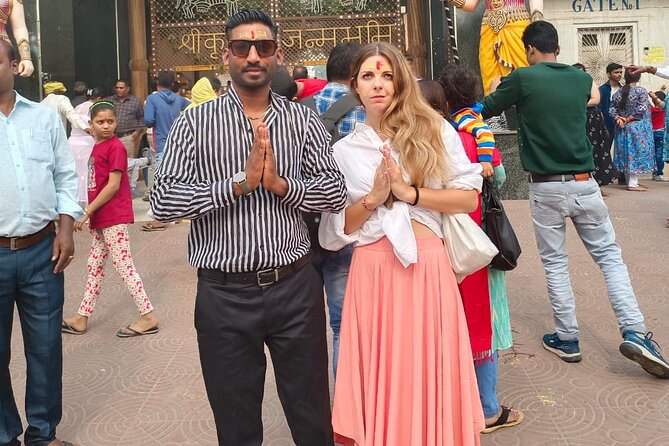
This tour is designed for people who want the main Jaipur highlights without the stress of arranging transport between scattered sites. You start with hotel pickup in an air-conditioned car, then spend the day moving through landmarks in the Pink City area and a few nearby stops. It’s private, so it’s just your group—no awkward sharing with strangers or getting shuffled around someone else’s pace.
Where it gets smart is the structure. You don’t just hop from monument to monument. You also get a morning market visit, a snack break, and several “pause-and-look” points where Jaipur’s details are the whole point—like the stepwell at Panna Meena ka Kund and the cenotaphs at Royal Gaitor.
You should also know the day has two possible “shapes,” depending on your start time. If you choose the 7:00–8:00 AM window, the Flower Market walk becomes a centerpiece. If you don’t, the rest of the sights still happen, but that early market texture may be skipped.
You can also read our reviews of more city tours in Jaipur

Flower and Vegetable Market Walk: Morning Energy, Local Reality

If you pick the 7:00–8:00 AM slot, you’re taken to the Flower Market early enough to see how people actually buy and sell. Before you start walking, you get a quick drive-by photo stop at Hawa Mahal, which is a nice trick. You can catch the facade in the morning light and then switch from grand architecture to real daily life fast.
When you walk toward the flower and vegetable market, you pass an 18th-century heritage building on the way. It’s the kind of detail that turns a short transfer into something worth noticing. You’ll also learn the local way of selling flowers and vegetables—how the trade works, what people focus on, and why the whole market feels like it has a rhythm.
This part is especially good if you’ve already seen plenty of palaces in other cities. Jaipur has that too, but the market gives you something tactile: color, scent, and the everyday craft side of the city.
Hawa Mahal Photo Opportunity: The Wind Palace Before the Walking
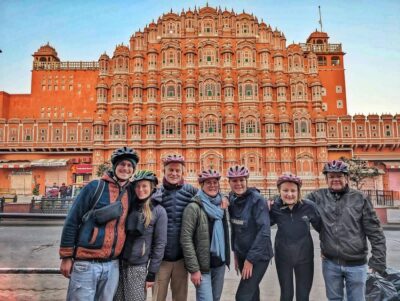
Hawa Mahal, or the Wind Palace, is the star facade people recognize from Jaipur postcards. The building is five stories tall, and it’s famous for being constructed without foundations, while leaning into a pyramidal shape. It’s dedicated to Lord Krishna, which gives the structure a purpose beyond looks.
In this tour, you get a photo opportunity early. That matters because later in the day you can hit crowds and glare. Here, you’re more likely to get photos that don’t look like they were shot through a wall of tripods.
Also, it’s a helpful mental switch. After you see Hawa Mahal, you’re about to walk through market life. The tour uses that contrast on purpose: big identity, small details.
Tea and Snacks at Old Local Food Stores: A Small Break That Saves Your Day
Right after the market visit, you’ll go to the oldest local food stores to enjoy masala chai and snacks. The snack options are samosa or kachori, and they come with the tea/coffee/lassi as part of the included refreshments.
This is one of those “small” inclusions that actually changes how you enjoy the rest of the day. A long Jaipur loop works better when you’re not hungry and caffeine-deprived. It also keeps the experience grounded. Instead of just seeing sights, you’re doing normal human things—drinking tea and eating something hot.
If you’re sensitive to spice, chai is still your safety net. The snack choice gives you a simple way to match your appetite.
Amer, Panna Meena ka Kund, and Royal Gaitor: Royal Power Meets Quieter Corners
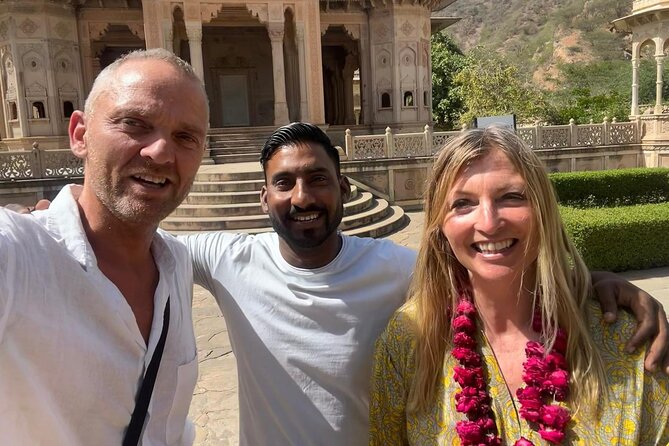
After the morning food and market rhythm, the route turns royal again. First up is Amer (often spelled Amber in other places), about 11 kilometers from Jaipur. Amer is known for Mughal and Rajput architecture blending together, with palaces, temples, and carvings that show off Rajasthan’s royal style.
A couple of named stops help you focus your attention. You’ll see Sheesh Mahal, also called the Mirror Palace, and the Sila Devi Temple. Even if you’re not the type to read every plaque, these are anchor points. They give you a “what to look for” list: reflection effects at Sheesh Mahal, and temple details at Sila Devi Temple.
Next is Panna Meena ka Kund, a 16th-century stepwell that sits in the shadow of a fortress. Stepwells are often overlooked because people chase palace gates, but this one has a strong “pause here” feeling. The layered stone, the age, and the way it sits near a fortress make it feel like a hidden function of the city: water, architecture, and power all in one.
Then comes Royal Gaitor on the Nahargarh foothills. Royal Gaitor is described as restful, and it fits the route’s emotional logic. You’ve had palace energy and market energy; now you get carved stone and cenotaphs.
You’ll see cenotaphs for Maharaja Pratap Singh, Madho Singh II, and Jai Singh II. Jai Singh II’s marble cenotaph is highlighted for its dome supported by 20 carved pillars. That’s the kind of detail you’ll notice only if you slow down and look up, which this tour’s pacing supports.
You can also read our reviews of more tours and experiences in Jaipur






Jal Mahal: The Palace in the Lake Photo Moment
From Royal Gaitor, the tour includes a stop at Jal Mahal—the palace standing in the middle of Man Sagar Lake. It’s one of those Jaipur sights that’s best when you’re not thinking too hard. Just look at how the palace shape sits in water, and let it be the visual break in the middle of a full day.
This is also a good time to re-check your energy. You’ll likely have a lot of walking and stairs later at places like City Palace and Galta Ji. Jal Mahal is a “reset” pause.
City Palace and Jantar Mantar: Royal Jaipur Meets Built Math
At City Palace, you’re inside the walled city core. The complex was conceived and built by Maharaja Sawai Jai Singh II, and it’s a Mughal-Rajput fusion. One important detail for expectations: a private section is still home to the last ruling royal family, so the complex doesn’t feel purely museum-like.
City Palace is one of those stops where you can appreciate scale even if you move quickly. Look for how the buildings blend styles, and remember this wasn’t just decoration—it was the operational heart of court life.
Then you head to Jantar Mantar, an astronomical observation site built in the early 18th century. It includes around 20 main fixed instruments. You don’t need to be a science nerd to enjoy it. The main value is realizing this is a city where math and architecture were not separate worlds. They were built into public space.
If you like things that make you look twice, Jantar Mantar does that. It turns sightseeing into curiosity.
Isarlat/Sargasuli Tower and Albert Hall Museum: Views and Indo-Saracenic Style
The route also includes the Isarlat or Sargasuli Tower, a seven-storied monument built in 1749 by Sawai Ishwari Singh. The big perk is simple: you can experience panoramic city views from atop this prominent minaret.
That viewpoint helps you connect the dots. When you’ve been moving through forts, palaces, and structured cities, a high vantage point makes Jaipur feel organized in your head.
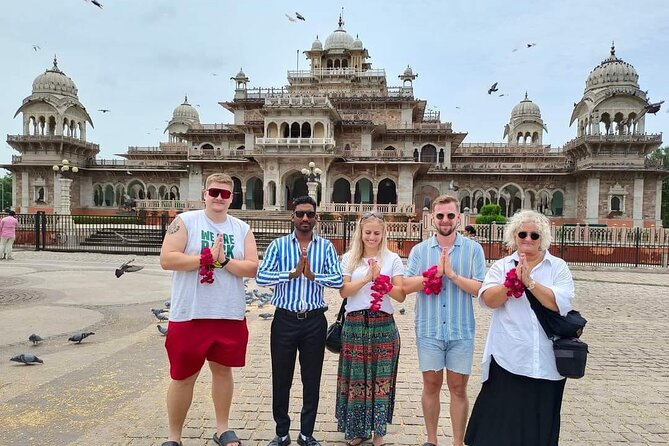
Next is the Albert Hall Museum, described as the oldest museum of the state and functioning as Rajasthan’s state museum. The building is an example of Indo-Saracenic architecture, and it’s located in Ram Niwas’s garden outside the city wall opposite New Gate. Even if you don’t plan to spend hours inside, the architectural setting is part of the experience.
Galta Ji Temple: Sacred Water Tanks and Hilltop Views
If your day includes it, Galta Ji Temple is a standout change of pace. It’s about 10 km from Jaipur and is an ancient Hindu pilgrimage site made of temples built into crevices of hills surrounding the city. Natural spring water flows down and fills sacred kunds (water tanks) where pilgrims bathe.
You’ll also have the option to ascend further up to reach a hilltop temple. From there, you can enjoy views across the valley floor, including Jaipur’s fortifications. This is the stop that rewards you for planning your energy. If you go in with a calm pace, it feels rewarding instead of tiring.
Galta Ji is also a good reminder that Jaipur isn’t only about palaces and photography. It’s lived religion and daily pilgrimage, with spring water doing the heavy lifting.
Optional Markets After Sightseeing: Shopping Without Losing the Day
After the main sightseeing, your driver can take you to famous Jaipur markets if you want extra shopping time. The tour mentions you can look for fabrics, sandals, bags, and more at low prices and with good quality.
This is where a private driver helps. You’re not stuck wandering with no plan once you’re tired. You can ask for a sensible shopping window and then head back rather than getting pulled into hours of detours.
If shopping isn’t your thing, this is also a relief. The core tour still hits the major monuments and viewpoints.
Price and Value: Cheap Car, Paid Entrances, Clear Trade-Off
The tour price is $13.59 per group for up to 3 people, which is unusually low for a full-day private car with pickup/drop-off and a local guide. If you’re traveling as two or three, the math often looks friendly because your transport cost is shared across the group.
But there’s one big “pay attention” item: entrance fees are not included. The combined entry fees for Jaipur’s popular tourist monuments are listed at $30.00 per person, plus camera fees at the monuments. Tips are also recommended.
So the real value equation is this:
- You’re paying extra only if you want to enter ticketed sights (which this tour covers)
- You’re not paying for transportation and guiding twice
- You’re getting included refreshments and bottled water, which adds up on a long day
If you’re trying to do Jaipur on a strict budget, this tour can still work well. Just plan your total cost around that $30-per-person monument entry amount and decide how many paid sites you want to enter.
Logistics That Affect Your Comfort: Time Windows, Weather, and Walking
This is a 9 to 10 hour day, so schedule your buffer time. Jaipur traffic can be unpredictable, and you’ll be moving between attractions with different walking needs.
Your chosen start time matters most for the Flower Market experience. If you want that market walk specifically, pick the 7:00–8:00 AM slot. If you don’t, you’ll lose that early local trade texture.
Weather also matters because the tour notes it requires good weather. If weather is poor, the tour may be offered on a different date or you might get a full refund.
Finally, remember that you’re going to places with stairs and viewpoints, including temple areas and tower top views. You don’t need heavy hiking gear, but you do want footwear you can trust.
Who This Tour Fits Best (and Who Might Want Something Else)
This tour fits best if you want:
- A private AC car day with pickup and drop-off
- A local guide to connect the dots between monuments
- Both royal landmarks and a morning market experience
- A schedule that still gives photo time and tea breaks
It may not be ideal if you hate long days or you’re someone who prefers to linger at only one or two sights. The route covers a lot, and while you’ll get walking breaks like tea and market pacing, it’s not a slow, deep sit-down style day.
If you’re traveling with kids, the private setup can help keep things calmer. But the day is still long and includes walking sections, so plan for energy and breaks.
Should You Book This Jaipur City Tour With the Flower Market?
Yes, if your goal is a high-value, first-time-friendly Jaipur day. The private transport and local guiding make the route easier, and the Flower Market morning adds a real slice of daily life that most monument-only plans miss. The name Vinod shows up repeatedly in the guidance quality, and that kind of friendly, organized support is exactly what turns a long day into a smooth one.
If you’re mainly chasing the cheapest possible sightseeing, the entrance fees may change the feel of the deal. Still, the included car, guide, and refreshments can keep the overall experience cost-effective.
FAQ
Do I get hotel pickup and drop-off?
Yes. Pickup and drop-off are included from your hotel in Jaipur City, and you’ll be taken back to your hotel or another desired place in Jaipur after the tour.
What’s included in the tour price?
The tour includes bottled water, private transportation, fuel/parking/taxes, a local tour guide, and complementary tea/coffee/lassi with samosa or kachori.
Are entrance fees included for the monuments?
No. Entrance fees are not included. The combined entry fees for Jaipur’s popular tourist monuments are listed at $30.00 per person, and camera fees at the monuments are also not included.
If I choose the 7:00 AM to 8:00 AM slot, what changes?
You’ll start with the flower and vegetable market visit during that window. You’ll get a drive to Hawa Mahal for a photo opportunity first, then walk to the market.
How long is the tour?
It runs about 9 to 10 hours.
Is this tour private or shared?
It’s private. Only your group will participate.
Is it suitable for most people?
The tour says most travelers can participate, and it notes it is near public transportation.