REVIEW · JAIPUR
7 Days Private Luxury Heritage Rajasthan Tour from Jaipur
Book on Viator →Operated by Rajasthan Tours Holidays · Bookable on Viator
Rajasthan, without feeling rushed. This private loop from Jaipur to Pushkar hits major heritage stops with a driver and city guides, so you spend more time looking and less time coordinating. I like the UNESCO anchor at Jantar Mantar in Jaipur, and I like how the days are spaced so big sights don’t feel like a race. The one drawback to plan for: monument entrance fees are not included, so your final cost will depend on which ticketed sites you choose.
You also get practical support built into the tour: pickup and drop-off, air-conditioned private transport, and bottled mineral water during drives, plus breakfast for six days. Hotel stays are not included, so you’ll want to book those separately (often on a twin-sharing basis, with triple-sharing by default if you’re three). If you’re traveling as a group, it’s set up for only your party, which usually makes the experience feel smoother and more personal.
In This Review
- Key highlights worth knowing before you go
- Why This Jaipur–Udaipur–Jodhpur–Pushkar Loop Works
- Private driver, local guides, and the comfort-factor that matters
- Day 1 Jaipur: Patrika Gate and Birla Mandir as your gentle start
- Day 2 Jaipur essentials: Jal Mahal, the stepwell, and the UNESCO hit
- Day 3 Udaipur: check-in time that keeps you from burning out
- Day 4 Udaipur by Lake Pichola: palaces, temple steps, and one skippable museum
- Day 5 Jodhpur: a smoother transfer and an easy market introduction
- Day 6 Mehrangarh Fort plus the museum trio: the big Jodhpur payoff
- Day 7 Pushkar: Brahma Temple and Brahma Ghat rituals
- Price and value: what $356.72 gets you (and what it doesn’t)
- Practical tips to make this trip run smoothly
- Who should book this tour?
- Should you book this 7-day private luxury heritage tour?
- FAQ
- Is hotel accommodation included in the tour price?
- Are entrance fees to monuments included?
- Is this tour private or shared with other groups?
- Does the tour include airport or hotel pickup and drop-off?
- Are flights or train tickets included?
- How many breakfasts are included?
Key highlights worth knowing before you go
- Private driver and private local guides, not a bus-and-hope setup
- Jantar Mantar in Jaipur as the clear UNESCO hit on the route
- Lake Pichola + City Palace + Jagdish Temple in one focused Udaipur day
- Bagore Ki Haveli Museum is optional, so you can keep your pace
- Jodhpur Fort and cenotaph sights packed into a single day with minimal backtracking
- Good real-world service: drivers like Surendra, Suresh, Vinod, and Manish are praised for punctual, safe, comfortable driving and helpful suggestions
Why This Jaipur–Udaipur–Jodhpur–Pushkar Loop Works
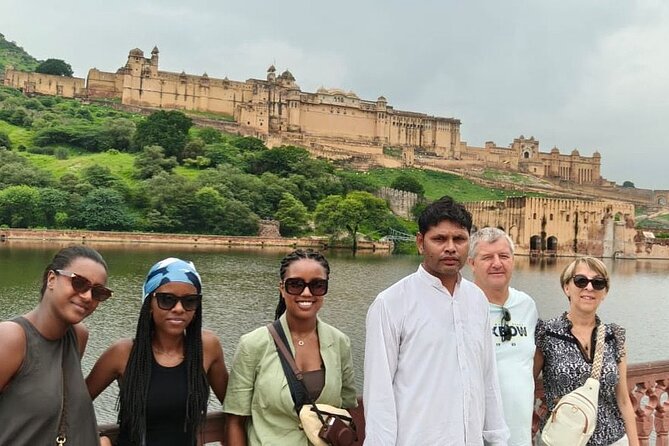
This tour is built around a clean north-to-south heritage route that makes sense geographically. You start in Jaipur, then work your way to Udaipur, continue on to Jodhpur, and finish with the spiritual side of Pushkar. That order matters, because it reduces constant long-distance re-routing and lets each city feel like a destination, not a detour.
The second thing I like is the pacing. Jaipur can easily swallow an entire day on its own, but here you get the major hits without feeling like you’re sprinting between ticket lines. Same idea in Udaipur and Jodhpur: you get grouped sights that sit near each other, with private transport doing the heavy lifting.
There’s also a built-in “choose your pace” feel. One stop (Bagore Ki Haveli Museum) is explicitly skippable, which is rare. If you’re the type who gets tired of indoor museums, that flexibility helps you keep the day from dragging.
You can also read our reviews of more private tours in Jaipur



Private driver, local guides, and the comfort-factor that matters
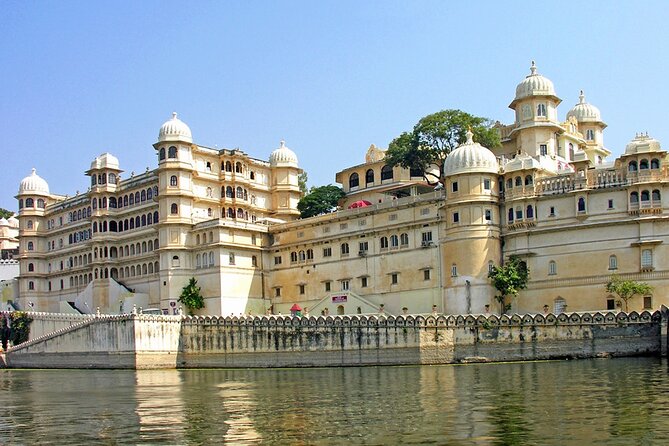
A private vehicle with an air-conditioned setup and a dedicated driver is more than a luxury label. On this kind of heritage trip, it’s what keeps you from losing hours to transit stress, wrong turns, and waiting for strangers to return from side streets.
The tour also includes city local guides for the sightseeing blocks. That matters most when you’re at places like City Palace and the stepwell, where the details are hard to “get” just from walking around. Guides help you connect the dots—who built what, why the architecture looks the way it does, and what to notice as you move.
Small comfort touches show up too. You’ll have bottled mineral water during journeys, and pickup and drop-off are included, which cuts down on your first-day anxiety. And yes, it’s set up as a true private tour, meaning it’s only your group.
Day 1 Jaipur: Patrika Gate and Birla Mandir as your gentle start
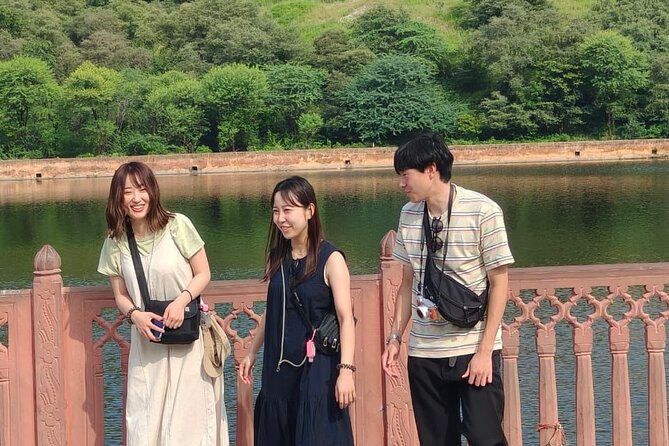
Jaipur doesn’t always start quietly, but your first day leans more calm than chaotic. After you arrive and check in, you head out to Patrika Gate and Birla Mandir—both are close enough to act like an easy introduction to the city.
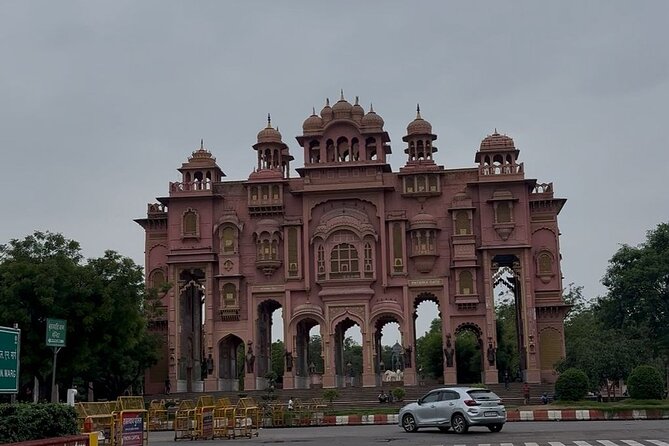
At Patrika Gate, you’re essentially looking at a gateway that doubles as storytelling. The design is made to feel like Rajasthan itself—painted panels, arches, and pillars that reflect local culture. It’s short and photogenic, and you get an early sense of how much Jaipur uses art and geometry as identity.
Then comes Birla Mandir Temple, the white marble Lakshmi Narayan temple built by the Birla family. Even if you’re not a hardcore temple person, the clean look and the calm atmosphere make it an ideal “first night in Jaipur” stop. It’s also a smart move because you’re not yet trying to absorb forts, stepwells, and palaces all in one day.
What to consider: because this is a light start, your real first big sightseeing day is Day 2. If you arrive exhausted, it’s a benefit. If you arrived super energized, you might wish the schedule went deeper on Day 1.
Day 2 Jaipur essentials: Jal Mahal, the stepwell, and the UNESCO hit
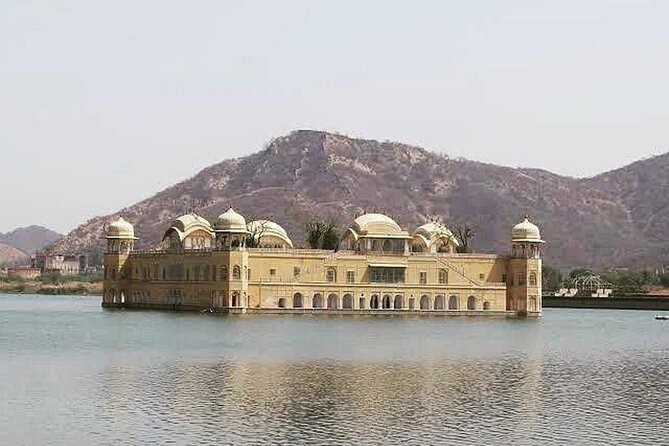
Day 2 is where Jaipur flexes. The day is designed around a classic set of highlights: a major palace near Jaipur (the tour labels it as Jaipur’s famous palace near the city), then Jal Mahal, Panna Meena ka Kund, and the big City Palace/observatory cluster.
You’ll pass by Jal Mahal, the palace that appears to float on Man Sagar Lake. It’s not just a pretty stop. It’s also a good reminder that Jaipur’s “heritage look” isn’t only forts and temples. It’s water, gardens, and visual tricks too. The stop is brief, which is perfect for avoiding the feeling of “drive-by sightseeing.”
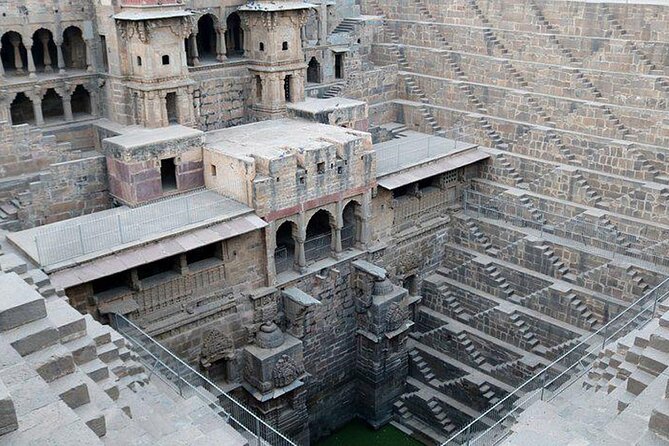
Next is Panna Meena ka Kund, the symmetrical stepwell. This is one of those places where you’ll either love it or wish it were longer. The reason it lands: the staircase pattern is easy to see and compare from different angles, so your eyes start doing the work. It’s a great contrast after palace-and-lake visuals.
Then you move to City Palace of Jaipur. Plan on spending around an hour here. It’s not only a royal seat; it also functions as a ceremonial and administrative center historically. In practical terms, it helps you understand the logic of Jaipur’s power center before you jump into the science-and-architecture stops.
Now the standout: Jantar Mantar, the UNESCO World Heritage astronomical instruments. You’re looking at 19 architectural devices built under Sawai Jai Singh II. Even if you don’t read the theory, you can still appreciate the scale and intent. The “aha” moment is realizing this was built to measure the sky with serious design, not just as decoration.
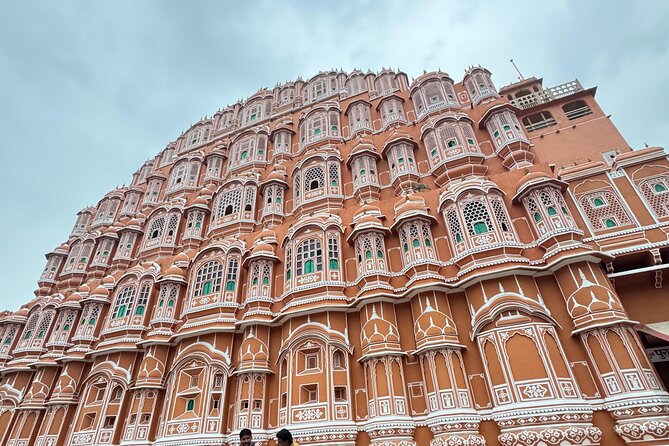
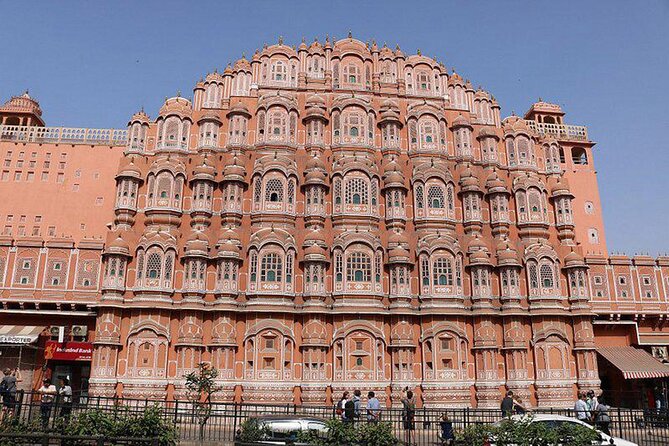
The day finishes with Hawa Mahal, the Palace of Wind with its five-storey façade made of red and pink sandstone. It’s iconic from the outside, and the shape helps you understand why Jaipur’s streets and viewpoints matter.
Finally, there’s shopping time in the Pink City. You can spend as much time as you want in jewelry shops and other local stalls, with your driver taking you to popular areas.
Day 3 Udaipur: check-in time that keeps you from burning out
Day 3 is simple on purpose. You arrive in Udaipur and check in at your hotel, then you’re overnighted there. There’s no long sightseeing block listed on this day, which is a smart design choice.
That downtime matters in Rajasthan. Long road days can be deceptively tiring, even when the car feels comfortable. By keeping Day 3 lighter, you arrive in Udaipur still able to enjoy the city without feeling like you’re catching up.
You can also use this time to plan your evening. If you prefer quieter nights, you’ll have room for that. If you’re itching to walk, you have a base and a next-day plan.
You can also read our reviews of more tours and experiences in Jaipur


Day 4 Udaipur by Lake Pichola: palaces, temple steps, and one skippable museum
Day 4 is the “big Udaipur” day, built around Lake Pichola and the surrounding heritage cluster. It starts with the lake, then moves into City Palace and Jagdish Temple, and finishes with Bagore Ki Haveli Museum.
At Lake Pichola, boating is a key option. You can take a private boat ride around the lake and even stop near Jagmandir Palace on the island. The boat part is typically the experience that makes Udaipur feel uniquely “Udaipur,” because it changes your perspective on the palaces and the shoreline.
Next is City Palace of Udaipur, located along the lake. It’s a visual and a collections stop. You’ll see weapons, guns, sedan chairs, tiger cages, and pictures. Even if you’re not into royal artifacts, the sheer variety helps you understand how many roles palaces served—ceremony, power, and display.
Then comes Jagdish Temple, within the City Palace complex. It’s described as Indo-Aryan style, and it’s a strong cultural contrast after lake views. Temples like this are best with a guide, because they’re packed with meaning that’s hard to read quickly.
Finally, Bagore Ki Haveli Museum comes with a helpful option: you can do it with guided context or skip it entirely. That’s great for groups with mixed interests. If you’d rather keep your day outdoors, you can.
Day 5 Jodhpur: a smoother transfer and an easy market introduction
Day 5 starts with an early morning drive to Jodhpur. After breakfast, you’re transported and then check in. The tour then keeps you focused on the main orientation sights, including the Clock Tower Market.
You’ll get a first look at Jodhpur’s famous “blue city” areas from the road and around town. Even without a long fort day on Day 5, you still get the visual identity: that tight, historical look that makes Jodhpur feel like a living heritage set.
Then you’re taken to the Clock Tower Market. The tour frames it as built during Maharaja Sardar Singh’s reign in the late 19th to early 20th century. Markets are usually where heritage turns practical—local life, everyday commerce, and the feel of streets that have changed slowly.
What to consider: markets can be intense on the senses. If you’re sensitive to crowds, you might want to keep your shopping time short and save energy for the fort day on Day 6.
Day 6 Mehrangarh Fort plus the museum trio: the big Jodhpur payoff
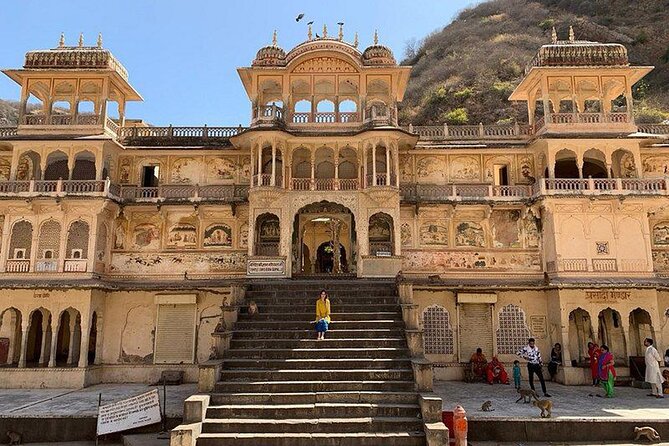
This is your “royal height” day. Mehrangarh Fort sits on a rocky outcrop, and it’s set up as a museum now, with weapons, paintings, and elaborate royal palanquins. The fort is more than a photo stop—it’s where you see how power and defense worked together. You also get the sense of elevation and why the city grew below.
After that, there’s Umaid Bhawan Museum. The tour describes the palace as one of the world’s largest private residences, built with dun-colored golden-yellow sandstone, and its museum use lets you shift from fort warfare into palace life.
Then you finish with Jaswant Thada, often compared to the Taj Mahal of Jodhpur. It’s a marble cenotaph and also a mausoleum for kings of Marwar. This stop is a good bookend to the fort because it’s more restful in feel while still tied to royal storylines.
What I’d watch: this day packs three substantial stops back to back. Private touring helps, but if you don’t like museum interiors, you’ll want to pace yourself and take short breaks when you can.
Day 7 Pushkar: Brahma Temple and Brahma Ghat rituals
You end in Pushkar, with check-in on arrival and then a focused sightseeing day. Pushkar is smaller and more spiritual than the earlier cities, and the schedule reflects that.
First is the Brahma Temple, described as the only Brahma temple in the world. The stop is short, but it’s built around architecture and mythology, which fits Pushkar’s identity as a pilgrimage hub.
Then you head to Brahma Ghat near Pushkar Lake, where prayers and rituals take place. The tour notes family people offering prayers for happiness and tribute to the dead souls. This is the part of the trip that feels most human and present—less about royal artifacts, more about daily faith.
If you’re visiting at a time when people gather, the ghat can feel intense. Keep respectful distance, dress appropriately, and let your guide tell you when to move closer and when to step back.
Price and value: what $356.72 gets you (and what it doesn’t)
At $356.72 per person for roughly 7 days, the value depends heavily on the parts included. This price covers a private tour, air-conditioned transport with driver, pickup and drop-off, and private local guides for sightseeing blocks. It also includes bottled mineral water during journeys and breakfast for 6 days.
Hotel accommodation is not included, and monument entrance fees are not included either. That means your real budget is a two-part equation:
1) the tour package cost, and
2) what you pay for lodging plus ticketed entries.
Still, for first-time visitors, the private driver and guides often feel like the difference between reading guidebooks and actually understanding what you see. You also avoid a lot of logistical friction when your transport is handled city to city.
One more value note: the reviews you’ll find around this kind of tour often focus on smooth driving and quick, helpful coordination. Drivers like Surendra and Suresh are praised for safe, comfortable rides and good suggestions. That kind of service can save time and stress, even if you never notice it on paper.
Practical tips to make this trip run smoothly
Plan for ticket spend. Since monument entrance fees aren’t included, keep a cash buffer or card budget ready for sites that require tickets.
Choose how you shop. Jaipur includes shopping time in the Pink City. If you’re aiming to buy jewelry or crafts, decide a budget before you arrive so you don’t feel rushed.
Use the skippable option. Bagore Ki Haveli Museum can be skipped. If you’re tired, that’s a real lever for controlling your day.
Expect twin-sharing logic. Rooms are generally twin-sharing. If there are three people in one booking, triple-sharing is the default unless you pay extra for two rooms.
Let the driver help with pacing. Many drivers associated with this tour are praised for being punctual and friendly, plus they’ll share suggestions. Ask for practical guidance: best times to move between stops, and where to take breaks without losing the day.
Who should book this tour?
This tour is a good match if you want:
- A private, low-stress way to cover Jaipur, Udaipur, Jodhpur, and Pushkar
- Major heritage clusters without the chaos of public transport
- Local-guided context for palaces, temples, and stepwell architecture
It may be less ideal if you want total freedom to wander without structure. The sightseeing blocks are scheduled, even though private transport gives you flexibility. Also, if you hate paying monument tickets, you’ll need to budget.
Should you book this 7-day private luxury heritage tour?
I think you should book it if you’re a first-time Rajasthan visitor who wants the highlights with a real driver-and-guide team. The route is logical, the pacing is restrained, and the sightseeing mix hits both the showpieces and the cultural texture.
I’d only hesitate if entrance fees would be a deal-breaker for your budget, since the tour doesn’t include them. Also, because hotels are not included, make sure you’re comfortable handling lodging separately and matching it to the twin-sharing/triple-sharing setup.
If you want a heritage-first trip that keeps you moving while still giving you time to look, this one is a strong candidate.
FAQ
Is hotel accommodation included in the tour price?
No. Hotel accommodation is not included. Pickup and drop-off are included, and breakfasts for 6 days are listed as included, but you’ll need to arrange your own lodging.
Are entrance fees to monuments included?
No. Monument entrance fees are not included. Some stops are marked as admission ticket free, but the overall package notes that monument fees aren’t included.
Is this tour private or shared with other groups?
This is a private tour/activity. Only your group participates.
Does the tour include airport or hotel pickup and drop-off?
Yes. Hotel or airport pick-up and drop-off are included, and the tour uses a private air-conditioned vehicle with a driver.
Are flights or train tickets included?
No. Travel insurance and flight or train ticket are not included.
How many breakfasts are included?
Breakfast is included for 6 days.