REVIEW · JAIPUR
Jaipur Full Day Attractions Tour by AC Car with Local Guide
Book on Viator →Operated by Credible India Tour · Bookable on Viator
A full day in Jaipur without the stress. This AC car sightseeing tour strings together the city’s top landmarks with a licensed guide, so you can focus on the sights instead of traffic math. You’ll hit eye-catching icons like Hawa Mahal, the regal City Palace, and the big-hitter Amber/Amer Fort.
I especially like the practical pickup-and-drop setup and the comfort of an air-conditioned vehicle for a long day. I also love that you get a real person in your corner: in past trips, guides like Khan (and driver Almas) have made the experience feel friendly and easy, with stories that add meaning to what you’re seeing.
One thing to plan for: not all stops include admission. Several key sites list admission as not included, so you should budget extra on the day, plus meals since food isn’t part of the package.
In This Review
- Key highlights at a glance
- Jaipur in 7–8 hours, with an AC car and a real guide
- Where this tour really shines
- One reality check
- Amer Fort (Amer Palace and Fort) and the Sheesh Mahal effect
- What you’re likely focusing on
- How to make the most of Amer
- Panna Meena ka Kund: the stepwell with stairs on all sides
- Why this stop is worth it
- Jal Mahal: the water palace in Man Sagar Lake
- The practical value of this stop
- Hawa Mahal: the Palace of Breeze and royal surveillance
- What to notice
- City Palace: the royal complex that still feels lived-in
- Why this stop works in one day
- Jantar Mantar: Jaipur’s 19 astronomical instruments
- A great fit for curious travelers
- Flower market near Johari Bazaar: color, craft, and quick shopping
- How to use this time well
- Royal Gaitor Tombs: wall carvings and an 18th-century reminder
- Why the carvings matter
- Jaipur block printing area: a hands-on look at Mughal-era craft
- What to expect
- Local guide Khan and driver Almas: what makes this tour feel easy
- Tickets and timing: what to budget for so the day stays stress-free
- Price value: how $14 fits a full-day “highlights” plan
- Who this tour is best for
- Should you book this Jaipur full-day AC attractions tour?
- FAQ
- What’s included in the Jaipur full-day tour?
- How long is the tour?
- Which attractions are included in the route?
- Are admission tickets included for each monument?
- Is pickup available from my hotel, airport, or railway station?
- Is food included in the price?
Key highlights at a glance
- AC pickup-and-drop inside Jaipur (up to 10 km): less hassle before you even start sight-hopping
- A licensed local guide: you get context for places like Hawa Mahal and Jantar Mantar
- A tight route of major sights: Amer, Panna Meena ka Kund, Jal Mahal, Hawa Mahal, City Palace, Jantar Mantar
- Craft stops included: flower market near Johari Bazaar and a block printing area visit
- Some admissions aren’t included: you’ll likely pay extra at a few monuments
Jaipur in 7–8 hours, with an AC car and a real guide
If you only have one day in Jaipur, your schedule usually comes down to one question: can you see the big stuff without burning time negotiating rides and directions? This tour is built for that exact problem. It runs about 7 to 8 hours, with round-trip pickup and drop from your hotel, airport, or railway station (within the city limit mentioned).
I like that the transport is handled for you. You’re not coordinating drivers or playing guess-the-route in a busy city. You get an air-conditioned vehicle, plus fuel and parking costs are covered, so the experience feels smoother from the first ride.
The other big win is the guide. With a Govt. approved tour guide (when that option is chosen), you’re not just collecting photos. You’re hearing why each monument was built and how Jaipur’s rulers thought about visibility, astronomy, and power.
You can also read our reviews of more guided tours in Jaipur


Where this tour really shines
You’re basically getting a “best-of” day with structure. The stops cover different sides of Jaipur: royal palaces, water-and-mirrors architecture, and even the city’s science/astronomy displays.
And because it’s private for your group, you don’t feel rushed by strangers. That matters when you’re stopping for viewpoints, photos, or a few extra minutes to understand a feature you’d otherwise miss.
One reality check
Because it’s a full day with many sites, your time at each location is measured. Expect to move on fairly quickly unless your guide adjusts timing on the spot.
Amer Fort (Amer Palace and Fort) and the Sheesh Mahal effect

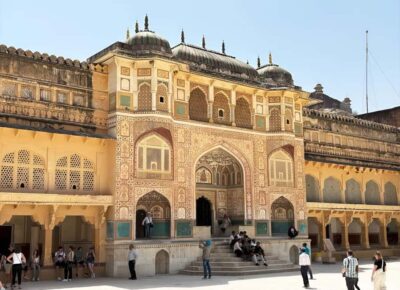
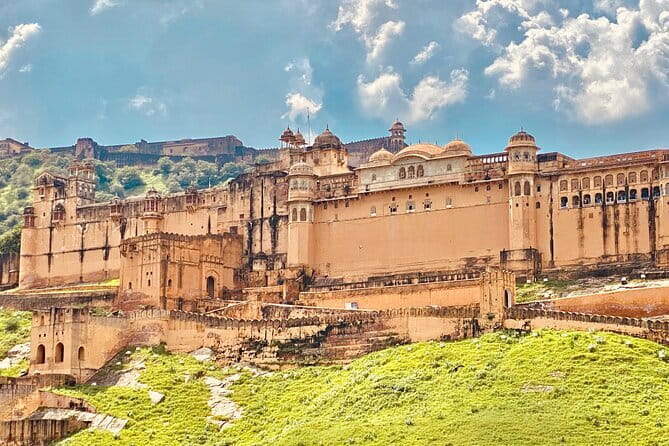
Your day starts with Amer (Amer Palace and Fort), the older capital area before Jaipur became the main hub. The site is tied to Raja Man Singh, with the fort constructed in 1592, and the architecture reflects the era’s royal ambition.
This stop is listed as about 2 hours, which is a sensible amount of time for one of Jaipur’s most famous complexes. You’re there long enough to understand the layout and to focus on the parts that matter.
What you’re likely focusing on
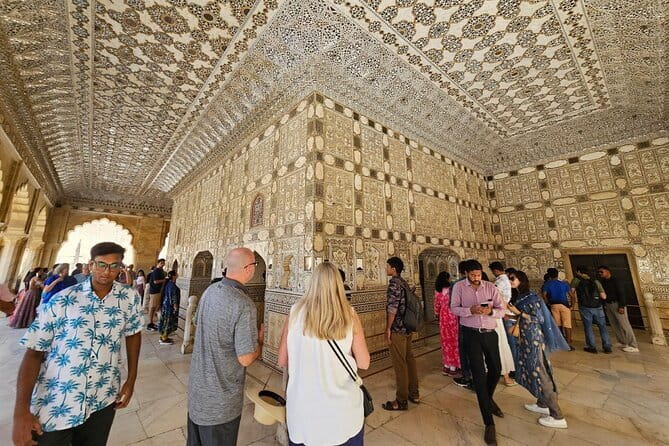
From there, the tour includes a separate stop for Sheesh Mahal at Amer Fort, known as the Palace of Mirrors. The key detail is right in the name: the rooms feature thousands of tiny mirrors that can sparkle like stars, giving that signature royal glow.
Important planning note: Sheesh Mahal is listed with admission as not included. So you may need to pay an entry fee depending on what you want to see inside.
You can also read our reviews of more tours and experiences in Jaipur





How to make the most of Amer
This is the type of place where the best learning comes from slowing down just a touch. If your guide offers context about what you’re looking at, take the extra minute. Little details at Amer and its mirrored halls are exactly what you’d otherwise overlook.
Also, wear shoes that can handle stone floors. You’ll likely be doing a fair bit of walking, even if the schedule is timed.
Panna Meena ka Kund: the stepwell with stairs on all sides
Next up is Panna Meena ka Kund, a distinctive square-shaped stepwell. What makes it special is how it’s laid out: stairs run on all four sides, and there’s a chamber on the northern wall. It also has religious importance, which helps explain why it’s more than just an architectural curiosity.
The time here is around 30 minutes, and admission is listed as not included. That usually means you can plan your visit as a shorter stop focused on viewing and photos, then pay any required entry separately if you want inside access.
Why this stop is worth it
In Jaipur, it’s easy to get stuck in palace-and-fort mode. This stepwell gives you a different angle on how the city thought about water, community space, and ritual. It’s also a great contrast point after the royal visuals of Amer.
If you like architecture that rewards observation, you’ll probably enjoy spotting the geometric pattern and understanding the layout your guide points out.
Jal Mahal: the water palace in Man Sagar Lake
Then comes Jal Mahal, the water palace in the Man Sagar Lake area. It’s framed as a Rajput-culture architectural feature, and it’s one of those places that feels instantly “Jaipur,” even if you’re only seeing it from a specific angle.
Your scheduled time is about 30 minutes, with admission listed as not included. So treat it as a scenic stop: enough time to see the palace from the lake setting and to capture photos.
The practical value of this stop
Jal Mahal can be a pressure-release moment during a long day. After strong visuals like Hawa Mahal and Amer, it gives you a quieter, more reflective scene. It also breaks up the day’s energy before you move into the busiest landmark zone.
Hawa Mahal: the Palace of Breeze and royal surveillance

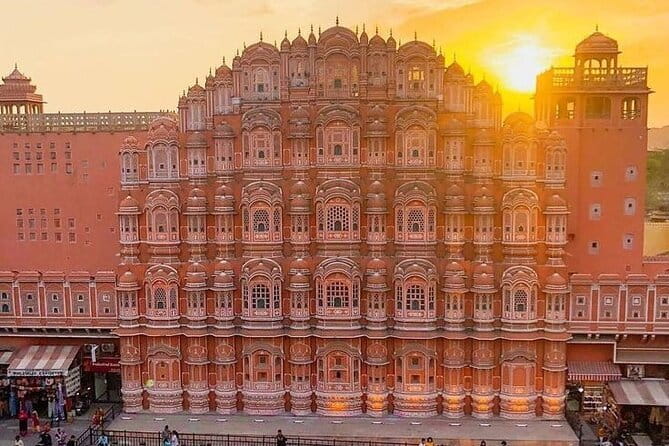
If there’s one stop designed for instant recognition, it’s Hawa Mahal, also called the Palace of Winds. It was constructed by Sawai Pratap Singh, and the idea is clever: the royal family could observe daily life discreetly.
The tour allots about 30 minutes here, and admission is listed as not included. So plan on a focused look at the iconic facade and key design features, guided by explanations from your local expert.
What to notice
Try to look at Hawa Mahal as “architecture with a job,” not just a pretty building. Your guide’s story about why it was designed the way it was adds a layer you’d miss if you simply walked by taking selfies.
This is also one of the most photo-friendly stops on the route. If you want a few angles, go early in your photo window rather than waiting until the last minute.
City Palace: the royal complex that still feels lived-in
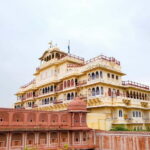
City Palace is next, with about 1 hour allocated. The tour describes Jaipur’s foundation as tied to Maharaja Jai Singh, an astronomer, and City Palace as the home complex connected to the former royal family—where a portion still serves as a residence.
Admission is listed as not included, so you may pay separately if you want entry to specific parts.
Why this stop works in one day
Hawa Mahal and Amer explain royal style. City Palace helps you connect that style to how power was organized in daily life. You’ll also get a chance to see how the royal complex acts as a center of city identity, not just a single monument.
If you’re short on time, your guide can point you toward what’s most meaningful to look for rather than letting you wander aimlessly.
Jantar Mantar: Jaipur’s 19 astronomical instruments
Then you reach Jantar Mantar – Jaipur, described as a collection of 19 architectural astronomical instruments built by Sawai Jai Singh. One highlighted feature is the world’s largest stone sundial.
Time here is about 1 hour, with admission listed as not included. Expect this to be more interpretive than decorative. You’ll get more out of it if your guide shows you how the instruments work and what you’re looking at.
A great fit for curious travelers
This is for you if you like science stories and you enjoy seeing how design can express knowledge. Jantar Mantar is the kind of place where you can stare at structures and still miss the point unless someone gives you the explanation.
If you enjoy photo stops, you’ll still get them here. Just try to ask your guide what to focus on before you take shots. That one move makes the difference between pictures and understanding.
Flower market near Johari Bazaar: color, craft, and quick shopping

After the big monuments, the tour shifts into street-level Jaipur with a stop at the Flower Market, near the famous Johari Bazaar. The idea is simple: you’ll spend around 30 minutes looking at fresh flowers and how the market works.
Admission is listed as free here, so it’s mostly a strolling stop. The tour description emphasizes how active vendors can be, and the sensory side is part of the appeal—smell, color, and fast-moving daily commerce.
How to use this time well
Go with a light touch. This isn’t the place to overplan. It’s a chance to feel Jaipur’s everyday rhythm after palace-heavy sightseeing.
If you want souvenirs, you might find small items connected to the market, but the tour data mainly frames this as a viewing and photo moment.
Royal Gaitor Tombs: wall carvings and an 18th-century reminder
Next are the Royal Gaitor Tombs, an 18th-century landmark known for exquisite wall carvings. The tour allocates about 30 minutes, and admission is listed as not included.
This stop can add contrast. It’s not a palace in full glory mode or a science instrument display. Instead, it’s a reminder of funerary art and the craftsmanship Jaipur is known for.
Why the carvings matter
If you like architectural details, this is a good place to slow down. Wall carvings reward close looking. Your guide can help you see patterns and features you would otherwise treat as decoration.
Jaipur block printing area: a hands-on look at Mughal-era craft
After monuments, the tour includes a visit to a block printing area in Jaipur. Time is about 30 minutes, and admission is listed as free.
The tour notes that block printing flourished during the Mughal era, which gives the craft a deeper historical anchor than a modern souvenir shop. This is the portion of the day where you can switch from sight-seeing to seeing how work is done.
What to expect
You’ll likely be walking through the process area and watching how prints are made using carved blocks and dyes. If you’re considering textiles back home, this is a useful stop because it helps you understand what you’re buying.
Don’t rush it. If you’re interested, ask questions and focus on quality details you can spot visually.
Local guide Khan and driver Almas: what makes this tour feel easy
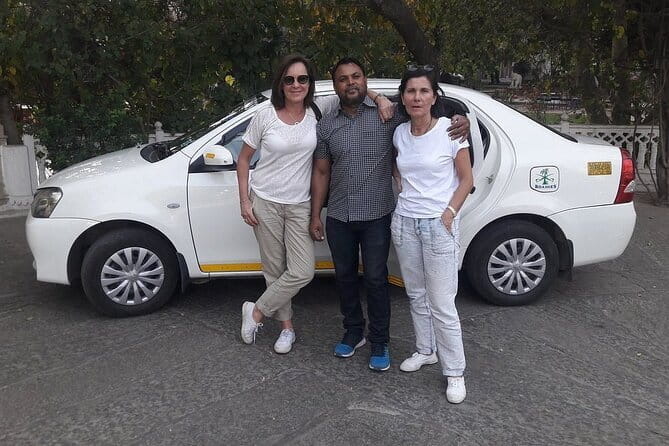
One of the most praised parts of this experience is the human side. In feedback from past visits, Khan has been singled out as a very experienced guide who’s extremely friendly. Almas, the driver, also comes up for being a strong, reliable presence.
That combo matters. You’re moving through a tight schedule. When your guide explains what you’re seeing clearly and your driver gets you where you need to be without drama, the day feels lighter.
You’ll also hear the guest-warmth philosophy Atithi Devo Bhava, which is basically the idea that hosting is a form of care. When that shows up in the day-to-day interaction, it’s not just nice—it keeps the trip from feeling stressful.
Tickets and timing: what to budget for so the day stays stress-free
Here’s the practical part. Admission is listed as free for Amer, but not included for several other major stops like Panna Meena ka Kund, Jal Mahal, Hawa Mahal, City Palace, Jantar Mantar, Royal Gaitor Tombs, and Sheesh Mahal.
So if your goal is to go inside every listed site, expect extra spending on the day. The good news is you’re not guessing blindly: your schedule and the inclusion list give you clear signals about what’s covered and what isn’t.
Also plan for meals. Meal expenses are not included, so you’ll want to decide ahead of time whether you’re comfortable grabbing something simple during the day or keeping it minimal.
For a day like this, it’s worth carrying small cash for quick purchases. And even though the tour includes a separate mineral water bottle, you should still pace yourself in Jaipur’s heat.
Price value: how $14 fits a full-day “highlights” plan
At $14 per person, this is priced like a budget-friendly way to see Jaipur’s greatest hits. The value comes from what you’re getting alongside the sights: an air-conditioned vehicle, fuel, parking fees, and pickup and drop within the city limit.
In other words, you’re paying for transportation comfort plus guided interpretation. That can be a better deal than piecing together separate taxis and paying for guidance separately.
The trade-off is that some monument admissions aren’t included. If you add up entry fees for the sites marked not included, the final number will rise. Still, the overall structure remains good value because the route is packed into one efficient day.
Who this tour is best for
I’d point you toward this tour if you:
- have one day in Jaipur and want a solid overview route
- prefer comfort over figuring out local rides
- want a guide to explain why things were built the way they were
- like mixing major monuments with craft culture like block printing
Should you book this Jaipur full-day AC attractions tour?
Book it if you want a straightforward day plan with pickup, AC comfort, and a local guide handling the hard parts. It’s especially appealing for first-timers because the route covers both the famous icons and the craft side of Jaipur, without turning the day into a logistics contest.
Skip or adjust expectations if you’re the type who wants very long time inside every site. Because multiple stops list admission as not included and the day is time-boxed, you’ll likely be paying extra and moving on quickly.
If you want one day that feels guided, organized, and easy on your feet, this is a strong choice.
FAQ
What’s included in the Jaipur full-day tour?
Pickup and drop within the city limit (up to 10 km), an air-conditioned vehicle, fuel surcharge, parking fees, and a separate mineral water bottle are included. A govt. approved tour guide is included if you choose that option.
How long is the tour?
The tour runs about 7 to 8 hours.
Which attractions are included in the route?
You’ll visit Amer, Panna Meena ka Kund, Jal Mahal, Hawa Mahal, City Palace, Jantar Mantar, the Flower Market near Johari Bazaar, Royal Gaitor Tombs, a Jaipur block printing area, and Sheesh Mahal.
Are admission tickets included for each monument?
Admission ticket inclusion varies by stop. Amer is listed as free, while several other sites are listed as not included, so you may need to pay on site for entry.
Is pickup available from my hotel, airport, or railway station?
Yes. Pickup and drop are offered from your hotel, airport, or railway station, within the city limit mentioned.
Is food included in the price?
Meal expenses are not included, so you’ll handle lunch and snacks on your own during the tour.