REVIEW · JAIPUR
Jaipur : Cultural & History Tour With Private Guide
Book on GetYourGuide →Operated by Rajasthan Cultural Tours · Bookable on GetYourGuide
Jaipur gets complicated fast—this tour keeps it simple. In a tight 7-hour private route, you’ll get a local’s way of seeing Jaipur, with guides like Vivek, Raj, or Sandeep bringing the sights to life in English or Hindi. I particularly love how the day moves logically, so you’re not bouncing across town with no plan.
I also like the mix of “wow” and “why”: Hawa Mahal’s jharokhas, the stepwell geometry at Panna Meena ka Kund, and the science behind Jantar Mantar aren’t just photo stops. One consideration: the schedule is compact, so you’ll want comfortable shoes and a heat-smart pace—especially around Amber Fort and the walking bits between stops.
In This Review
- Key Points You’ll Feel Immediately
- The 7-Hour Private Route That Works in Real Life
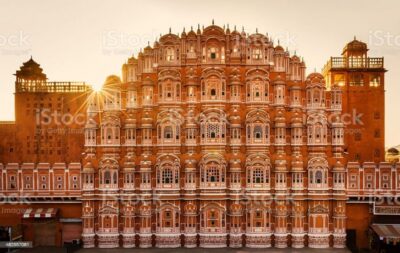
- Hawa Mahal’s Jharokhas: the 953-Window View Game Plan
- Panna Meena ka Kund Stepwell: the Symmetry That Catches Your Eye
- Amber Fort on a Hill: Red Sandstone, Marble, and the Hindu-Mughal Blend
- Jal Mahal and Gaitore: Water Views and Royal Cenotaphs
- Tea, Local Food Time, and a Sensible Lunch Plan
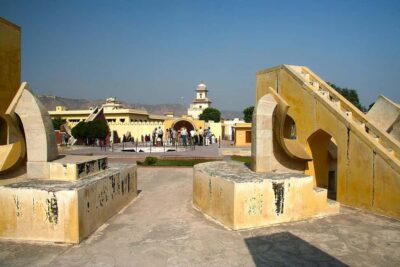
- Jantar Mantar: Ancient Astronomy That Still Feels Practical
- City Palace: Mubarak Mahal, Chandra Mahal, and the Museum Moment
- The Pink City Markets: Shopping With Guidance and Less Guesswork
- Price and Logistics: Why $24 Can Make Sense Here
- What to Bring and How to Make the Day Feel Easy
- Who This Tour Suits Best
- Should You Book This Jaipur Private Cultural and History Tour?
- FAQ
- How long is the Jaipur cultural and history tour?
- Is this experience a private tour?
- What languages are the live guides?
- Do I get hotel or airport pickup?
- Is transport included?
- Are entrance fees included?
- Is lunch included in the price?
- Are there tickets involved, and can I skip the ticket line?
- What should I bring with me?
- What is the cancellation policy?
Key Points You’ll Feel Immediately
- A private, air-conditioned vehicle with a driver means you’re not stuck with slow group transfers.
- Skip-the-ticket-line helps you spend more time actually looking.
- Hawa Mahal’s 953 jharokhas makes even a short stop feel detailed and worth it.
- Jantar Mantar and City Palace get explained in practical, plain terms, not just dates.
- Photo-friendly pacing includes Jal Mahal views and panoramic lookouts from forts.
- Time for markets at the end gives you a chance to shop without the usual rushing.
The 7-Hour Private Route That Works in Real Life
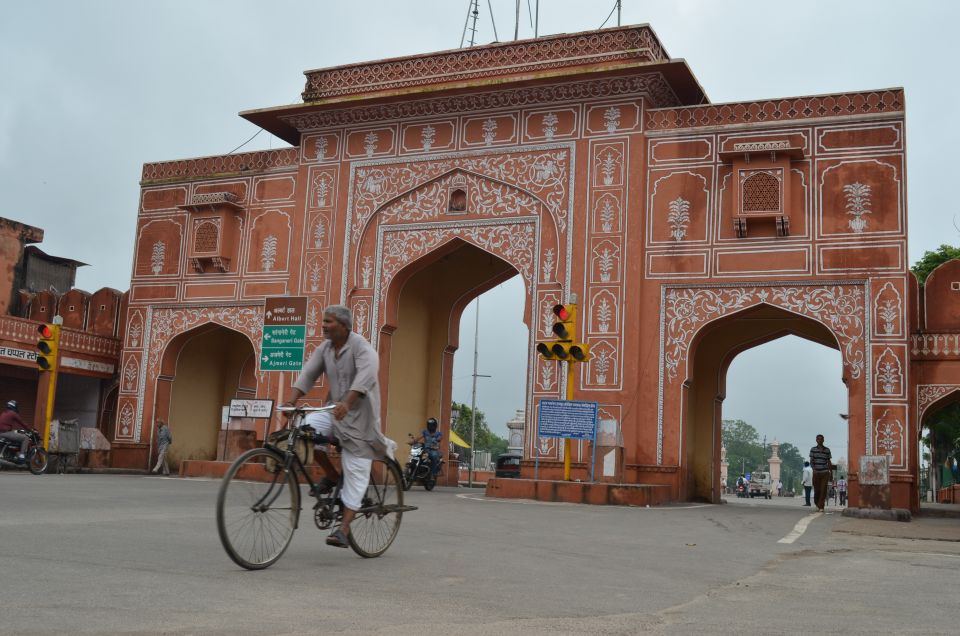
This is the kind of Jaipur day you’ll appreciate if you only have a short stay. You start with pickup in Jaipur—hotel, railway station, or even the airport—and then you get a private, climate-controlled ride between sites.
The payoff is focus. You hit major landmarks in a sequence that feels efficient, and the private guide controls the pace, so you can spend more time where you’re actually interested.
You can also read our reviews of more guided tours in Jaipur


Hawa Mahal’s Jharokhas: the 953-Window View Game Plan
Hawa Mahal (Palace of Winds) is one of those buildings that looks amazing from the outside, but it’s the details that make it unforgettable. This five-story palace is covered in intricate latticework and famous “jharokhas,” with 953 small windows that once helped let air move through the structure—hence the nickname Palace of Winds.
You’ll get a short photo stop, then time to explore and learn. Even if you’re not a palace person, the guide’s explanation helps you see why the design matters. Plan to look up a lot—this is a place where the story is in the pattern, not just the architecture’s size.
One practical tip: bring your phone battery charger plan mentally. Between photo angles and bright midday light, you’ll burn through time quickly.
Panna Meena ka Kund Stepwell: the Symmetry That Catches Your Eye

Next you’ll head to Panna Meena ka Kund, a historical stepwell known for its symmetrical design. This water reservoir wasn’t just functional; it was also a community meeting spot in ancient times.
Here’s what I like about the stop: you don’t need a long visit to get something out of it. With the guide’s framing, you start noticing the geometry—how the steps and layout create a visual balance. You’ll have time for photos, but you’ll also benefit from slowing down for a couple minutes just to look at how the lines align.
If you’re visiting in warmer months, it’s also a nice change of pace from the big open courtyards elsewhere on the route.
Amber Fort on a Hill: Red Sandstone, Marble, and the Hindu-Mughal Blend
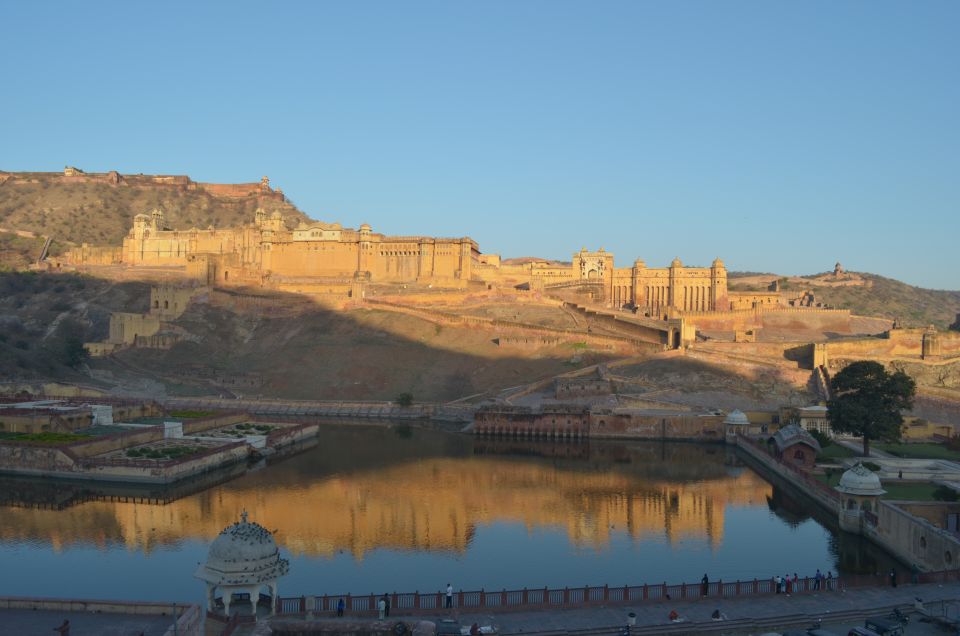
Amber Fort (often paired with the city’s broader fort stories) is your big “time investment” stop, with about 105 minutes set aside for sightseeing and walking. It’s a UNESCO World Heritage site on a hilltop, built with red sandstone and marble, and it’s known for combining Hindu and Mughal architectural styles.
This is where you’ll feel the value of having a private guide. The fort can look like a lot of stairs and walls if you’re just scanning. With a guide, you’ll understand what you’re seeing—courtyards, palaces, and the way the design creates dramatic sightlines.
You’ll also enjoy the panoramic views from the fort area. That’s a big part of why Amber Fort is worth the trip: you’re not only looking at history, you’re seeing Jaipur’s geography through the eyes of the people who built these places for power and control.
Jal Mahal and Gaitore: Water Views and Royal Cenotaphs
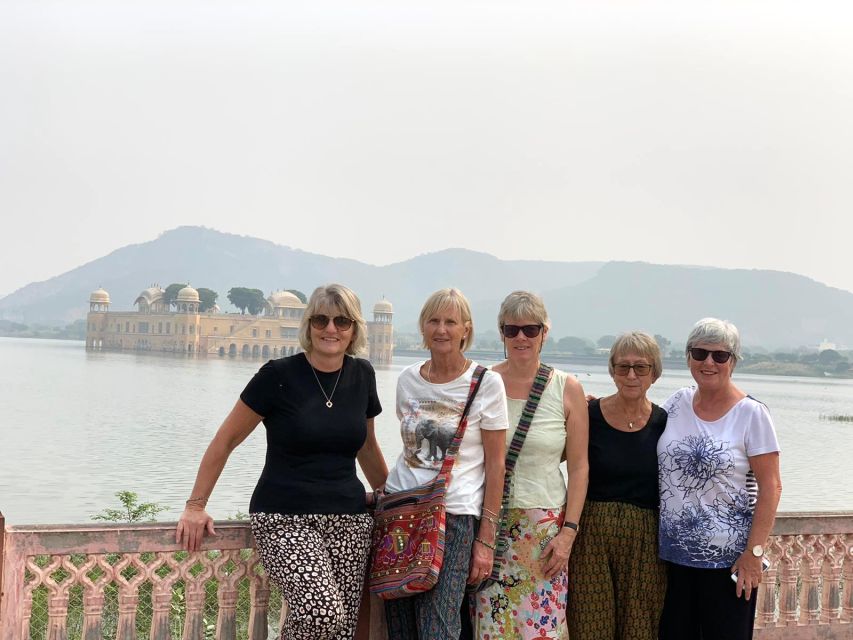
After Amber Fort, you’ll head toward Jal Mahal (Water Palace) in the middle of Man Sagar Lake. You can’t enter the palace itself, but the outside view is still one of Jaipur’s more memorable scenes: the palace rises out of the water with the Aravalli hills behind it, and that contrast makes photos look better than you might expect from a quick stop.
You’ll also have time to enjoy the lakeside area at an easy pace—good if you want to catch your breath before the next big indoor/exploration sites.
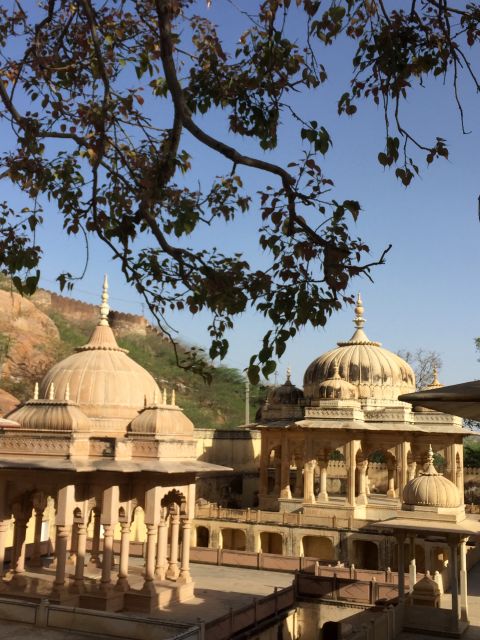
Then there’s Gaitore (Gatore/Gaitor), the cenotaphs area with finely carved structures tied to Maharajas and royal family members cremated there. Each cenotaph reflects the architectural style of its ruler’s period. The main highlight is the cenotaph of Maharaja Jai Singh II, the founder of Jaipur, which is the most prominent structure on the site.
If you enjoy royal details but don’t want only museums, this stop adds a different mood to the day. It’s also a reminder that Jaipur isn’t just about palaces you enter—it’s also about memorial architecture and craftsmanship.
You can also read our reviews of more private tours in Jaipur




Tea, Local Food Time, and a Sensible Lunch Plan
Your day includes a lunch stop and time for tea and local snacks. The catch: lunch isn’t listed as included, so treat this as a paid meal during the tour window rather than something you can ignore in your budget.
What’s smart here is having your guide handle where to eat. You’re not asking yourself in the middle of sightseeing, Should I eat here or gamble later? Instead, you sit down, order Rajasthani food, and get back to the program.
If you’re picky about spice, tell your guide early so the meal fits you. Jaipur menus can run hot.
Jantar Mantar: Ancient Astronomy That Still Feels Practical
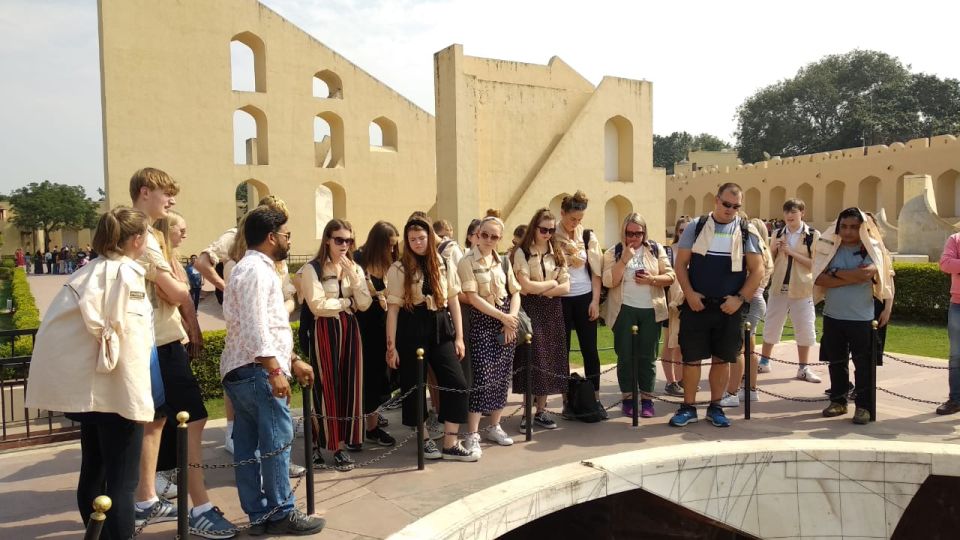
Next up is Jantar Mantar, the astronomical observatory built by Maharaja Jai Singh II. This is a set of instruments used for astronomical calculations, and the guide’s job is to make it understandable without turning it into a lecture.
What makes Jantar Mantar worth your time is that it rewards curiosity. You’ll see instruments designed to track celestial patterns, and your guide can explain what each device was meant to observe. Even if you only catch the main idea, you’ll walk away with a clearer sense that science was part of court life here—not just art and architecture.
You’ll also have some time for free exploration, which helps. Jantar Mantar looks like it’s made for walking and looking from different angles, so don’t rush the first viewpoint.
City Palace: Mubarak Mahal, Chandra Mahal, and the Museum Moment

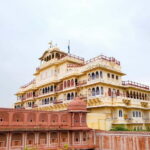
Then comes City Palace, the residence of the Maharaja of Jaipur and a large complex of palaces, courtyards, gardens, and museums. It combines Rajasthani and Mughal architecture, so it feels like a summary of Jaipur’s identity in one place.
During your visit, you’ll be able to focus on key areas such as Mubarak Mahal, Chandra Mahal, and the Diwan-i-Khas. The guided portion helps you understand how the spaces relate to each other, instead of treating it like a checklist of rooms.
I like City Palace most when I take my time with the courtyards and transitions between buildings. Even in a packed day, the guide can help you notice what’s decorative versus what’s functional, and why that matters.
The Pink City Markets: Shopping With Guidance and Less Guesswork
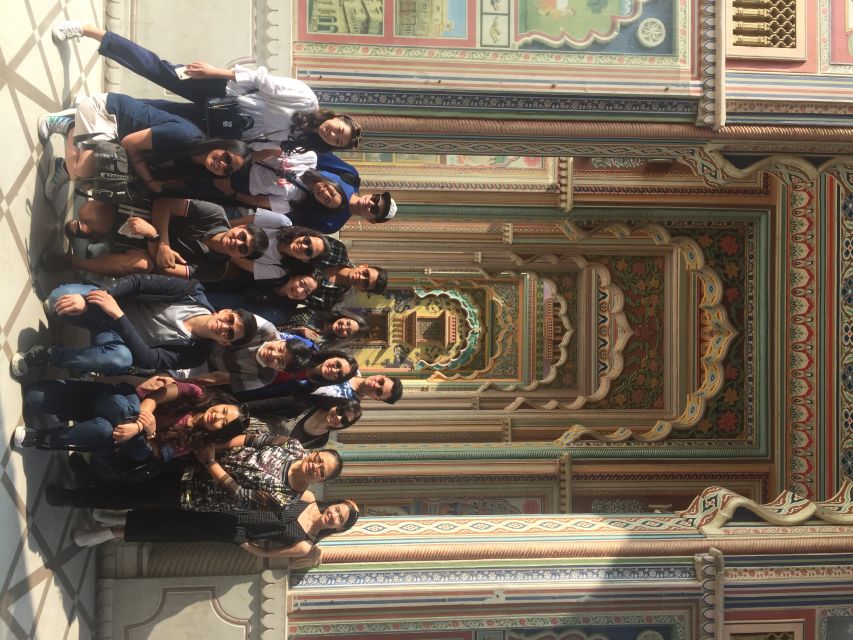
At the end, you’ll get time for the markets of the Pink City, with a focus on handicrafts, textiles, and jewelry. The point isn’t to force you to buy—it’s to give you a window where you can browse confidently.
This is the part I think many first-time visitors appreciate most, because it turns Jaipur from sightseeing into souvenirs you actually want. If you’re looking for textiles or smaller gifts, 45 minutes can be enough if you have a plan: set a budget, decide what you’re buying, and let your guide point you toward places selling the styles you like.
Also, if you’re sensitive to pressure selling, tell your guide what you prefer. A private day makes it easier to stay relaxed.
Price and Logistics: Why $24 Can Make Sense Here
At $24 per person for a 7-hour private day, this tour can be strong value—especially because you’re paying for three expensive things in one package: a guide, private transport, and time-saving ticket handling.
Here’s what to double-check before you assume it’s fully all-inclusive:
- Entrance fees may be extra unless your option includes them.
- Lunch and dinner aren’t included, though there is a lunch window in the schedule.
- You do get bottles of mineral water during the tour, which is genuinely helpful in Jaipur heat.
Comfort matters too. The tour uses a private air-conditioned vehicle, sized by group size—sedan for 1 to 2 people, MPV for 3 to 4, van for 5 to 10—so you’re not cramped.
For me, the best value angle is the guide. A good guide doesn’t just point at buildings; they give you reasons to care, like why Hawa Mahal’s design works, or what Jantar Mantar’s instruments were built to measure.
What to Bring and How to Make the Day Feel Easy
Bring comfortable shoes—there’s walking time at multiple sites, including Amber Fort. Also carry your passport or ID card since it’s specifically mentioned as needed. If you have medications, pack them so you’re covered without relying on finding a pharmacy mid-tour.
And don’t underestimate sun and heat. Even with air-conditioned driving, you’ll spend time outdoors. A hat and sunscreen will make your day smoother, even though they’re not listed—just use your common sense.
Who This Tour Suits Best
This tour fits best if you:
- Have one day and want the major Jaipur sights without the hassle of arranging everything.
- Prefer a private guide that can adapt your pace.
- Like architecture with context—palaces, forts, and the design logic behind them.
- Want a balance of big landmarks and smaller stops like stepwell design and cenotaphs.
If you want a slow, deep museum day with no time pressure, you might feel rushed. This schedule is built for people who want to see a lot and understand the highlights quickly.
Should You Book This Jaipur Private Cultural and History Tour?
Yes, if your goal is a well-paced, private 7-hour taste of Jaipur—Hawa Mahal, Amber Fort, Jal Mahal, Jantar Mantar, City Palace, plus markets—without wasting time.
I’d especially book it if you value guided explanations in English or Hindi, and if you want a guide who can connect the details (like jharokhas or astronomy instruments) to something you can actually picture. The presence of experienced guides such as Vivek, Raj, and Sandeep in past tours is a good sign that you’re likely to get strong storytelling, not just directions.
If you’re mostly interested in one or two sites and want to linger for hours, then spending a full day on a packed route might feel like too much. But for a first Jaipur day, this is a practical plan with strong value and clear payoff.
FAQ
How long is the Jaipur cultural and history tour?
It lasts 7 hours.
Is this experience a private tour?
Yes. It’s a private group tour.
What languages are the live guides?
The live tour guide is available in English and Hindi.
Do I get hotel or airport pickup?
Yes. Pickup is offered from the airport, railway station, hotel, or any pickup location in Jaipur.
Is transport included?
Yes. You’ll have transport by a private air-conditioned vehicle with a driver.
Are entrance fees included?
Entrance fees are included only if you choose the option for monument entrance fees. Otherwise, entrance fees are not included.
Is lunch included in the price?
No. Lunch and dinner are not included, though the day includes a lunch time window.
Are there tickets involved, and can I skip the ticket line?
The tour includes skip-the-ticket line.
What should I bring with me?
Bring comfortable shoes, passport or ID card, and personal medication.
What is the cancellation policy?
You can cancel up to 24 hours in advance for a full refund.