REVIEW · JAIPUR
Jaipur Sightseeing by Tuk-Tuk
Book on Viator →Operated by Rajasthan India Tour Driver · Bookable on Viator
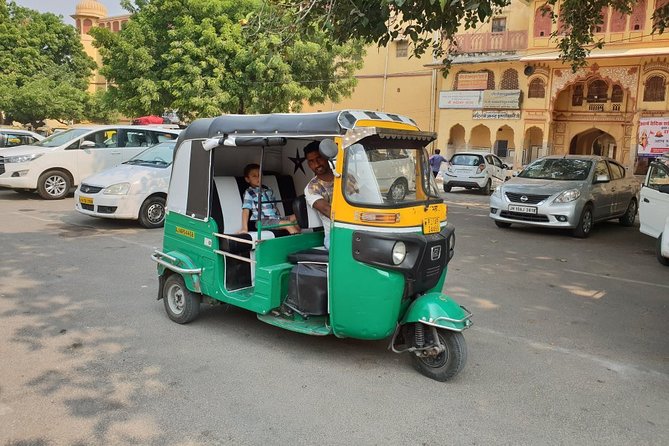
Jaipur is a city you feel in your bones the moment you roll through the streets. This tuk-tuk sightseeing day is a fun way to see major sights without being stuck in a stiff car schedule, and I love the hotel pickup/drop-off plus the driver who can shift the plan on the fly. The best part is how easy it is to get close to the action and keep moving at a human pace. One drawback to plan around: you’ll still pay separate entrance fees for key monuments and meals.
You’re looking at an 8 to 9 hour day that mixes hilltop views, palace architecture, and an observatory that still makes people pause. It’s also a private setup for your group, so you’re not trapped behind strangers while you’re trying to take photos or catch your breath. If you like your sightseeing active and flexible, this is a strong match. If you need every ticket and meal included in the price, you’ll want to budget ahead.
In This Review
- Key things I’d pay attention to
- Why a Jaipur tuk-tuk day is a smart way to move
- Price and value: what you’re really paying for
- The morning strategy: lining up the best sites early
- Stop 1: Amer (Aamer Palace Fort) and the hilltop wow-factor
- Stop 2: Jal Mahal (Water Palace) and the calm break
- Stop 3: Royal Gaitor Tumbas under Nahargarh
- Stop 4: Hawa Mahal (Palace of Breeze) and its honeycomb façade
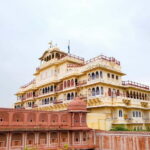
- Stop 5: City Palace and a more inside-the-city perspective
- Stop 6: Jantar Mantar and the astronomy angle that still impresses
- Stop 7: Albert Hall Museum and the Rajasthan state museum feel
- The guide-driver effect: why this tour feels personal
- What’s included (and what you’ll need to handle yourself)
- Who this tour is best for
- Should you book this Jaipur tuk-tuk sightseeing tour?
- FAQ
- How long is the Jaipur sightseeing tour by tuk-tuk?
- Is hotel pickup and drop-off included?
- What is included in the price?
- Are entrance fees included?
- Are meals included?
- Is this tour private or shared?
- Do I need a mobile ticket?
- What happens if weather is bad?
- Can I cancel for a refund?
Key things I’d pay attention to
- Private tuk-tuk with fuel, parking, and tolls covered so you’re not doing math mid-day
- Hotel pickup and drop-off, which matters in Jaipur traffic and for tiring days
- A stop list built around variety, from Amer hilltop to Hawa Mahal to Jantar Mantar
- Most entrance fees are extra, including Hawa Mahal, Jantar Mantar, and Albert Hall
- Start early if you can, since the day is long and sites need time to enjoy
- Good weather is required, so keep an eye on the forecast
Why a Jaipur tuk-tuk day is a smart way to move

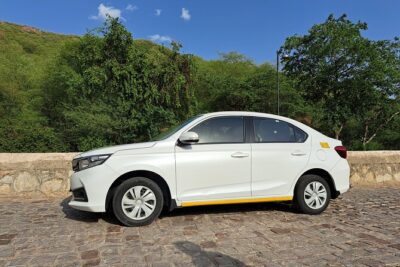
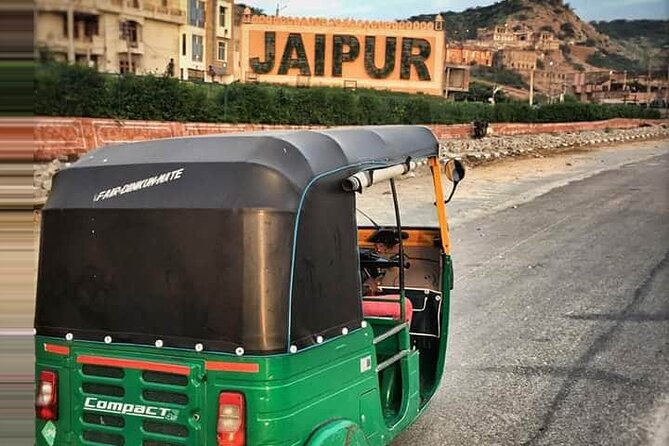
A tuk-tuk isn’t just a cute ride. It’s a practical choice for Jaipur. Smaller vehicles help you slip into the city rhythm, and the pace feels easier on your legs than long walks or repeated stop-starts of trying to grab transport on your own. You’ll still cover real distance, though—this day isn’t only about hopping around one neighborhood.
What makes this tour work is the way it handles the logistics that often ruin sightseeing days: parking, tolls, and hotel transfers are included. That means your time stays focused on the sights, not on figuring out where to park or how long you’ll wait. Bottled water is also included, which is a small detail that pays off when you’re in the sun.
I also like the flexibility built into the private setup. It’s designed as a customizable itinerary on a tuk-tuk, so you’re not stuck with a one-size-fits-all rigid route. In past outings, guides like Khalif, Aadil, Nawab Khan, Vinod, Ali, Adil, Shrif, and Shahrukh have been praised for being helpful at each stop and adjusting the day based on what you want to see.
You can also read our reviews of more tours and experiences in Jaipur.


Price and value: what you’re really paying for
The headline price is $4.92 per person, and the real value story is what that price includes. You’re paying for the private tuk-tuk vehicle with hotel pickup and drop-off, plus fuel, parking charges, toll taxes, interstate taxes, and bottled water. That’s a solid package if you want a day of reliable transport and a guide-driver who can take you from site to site without friction.
The costs that aren’t included are the real budgeting item: entrance fees and meals. The tour lists extra entry fees for major stops such as:
- Hawa Mahal: $9.00 per person
- Jantar Mantar: $9.00 per person
- Albert Hall Museum: $9.00 per person
- City Palace (excluding Blue Room): $12.00 per person
- Jaipur Fort and Royal Gaitor: $8.00 per person
Two things to keep in mind:
1) Some sections of the schedule show admission ticket Free, but the add-on fee list clearly calls out fees for Fort/Royal Gaitor and for specific monument sites. Plan to budget for entries, not just the ride.
2) Meals cost extra, so if you have a tight day plan, decide in advance where you’ll eat. You can always adjust once you’re out there.
Bottom line: if you’re happy to pay monument entry fees and you want transport that’s simple and private, the overall value can be excellent.
The morning strategy: lining up the best sites early
The day runs 8 to 9 hours, so timing matters. You’ll hit several major landmarks, plus scenic or optional-feeling stops. The advice that consistently makes sense is simple: start early, even if it means you need a quick breakfast. In practical terms, starting early helps you avoid the most crowded feeling at the popular sites and gives you more relaxed time to look closely.
This route also includes a hilltop fort (Amer) and a palace set in a lake (Jal Mahal). Those spots are more enjoyable when you’re not racing through them. You want enough time to actually read the architecture, notice details, and take photos without the pressure of catching the next stop.
Stop 1: Amer (Aamer Palace Fort) and the hilltop wow-factor
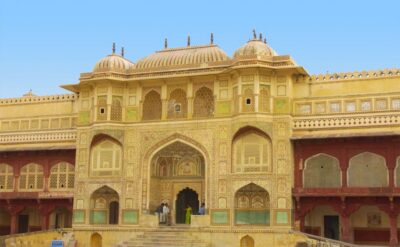
Amer is one of Jaipur’s top sights, and it’s worth the focus. This fort-palace sits on a small hill, about 11 km from the main city, and it’s a huge complex. Expect at least a couple hours here, because it’s not just one building—it’s a layered palace fort with sweeping views over the area below.
Two reasons Amer works especially well on a tuk-tuk day:
- You’re transported directly and dropped near where you need to be, saving time compared with figuring out local transport.
- You can pause for photos and viewpoints without feeling like you’re breaking a walking itinerary.
A small budgeting note: the fort area can involve an entry fee (the add-on pricing lists Jaipur Fort and Royal Gaitor at $8.00 per person). Even if parts of the schedule show free admission, it’s smart to keep some money ready for entry.
If you love architecture and panoramic views, this is the anchor stop of the day.
Stop 2: Jal Mahal (Water Palace) and the calm break
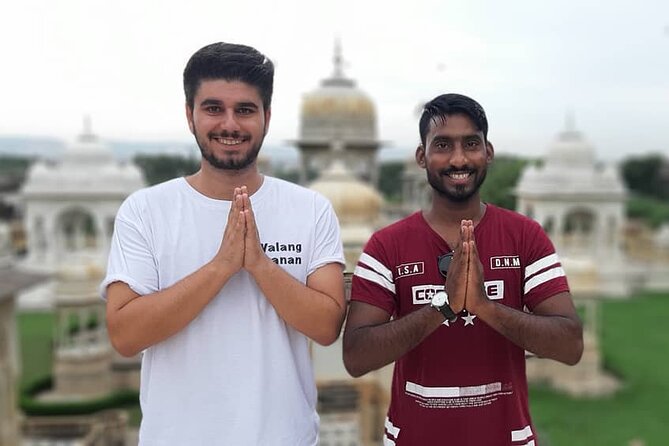
Jal Mahal, the Water Palace, is a palace sitting in the middle of Man Sagar Lake. The palace and the surrounding lake area were renovated and enlarged in the 18th century by Maharaja Jai Singh II of Amber. That story matters because it helps you understand why the palace looks both decorative and strategic—this wasn’t just about aesthetics.
You’ll spend about 30 minutes here. That short time is intentional. Most of the value is in the visual impact: the silhouette, the water setting, and the contrast with the rest of Jaipur’s palace-and-fort focus. You’re not meant to treat this as a long museum-style stop. Think of it as your visual breather between bigger landmark days.
Entry is listed as Free in the schedule, which is nice for a short stop—just don’t expect a long, ticket-based experience.





Stop 3: Royal Gaitor Tumbas under Nahargarh
Next up: Royal Gaitor Tumbas. These are intricately carved stone monuments tied to a royal crematory tradition, located outside the city walls beneath Nahargarh.
What makes this stop special is that it tends to feel less crowded than the headline monuments. The monuments have detailed craftsmanship, and the setting outside the walls can make the experience feel quieter and more “off the main track.” That’s the kind of payoff you want from a day like this—one or two stops that give you more than the standard photo and exit.
Time is listed as about 30 minutes, so keep it tight and focused. This is a great stop for: close-looking, quick photography, and a break from the larger palace complexes.
Again, the add-on fee list suggests Jaipur Fort and Royal Gaitor may involve an $8.00 per person charge. If you’re trying to keep costs controlled, treat this as a likely entry cost.
Stop 4: Hawa Mahal (Palace of Breeze) and its honeycomb façade
Then you hit Jaipur’s most recognizable landmark: Hawa Mahal, the Palace of Breeze. It’s a pink-painted structure with a honeycombed façade rising to five storeys, built in 1799 by Maharaja Sawai Pratap Singh.
You’ll have around 1 hour here, which is enough time to:
- Walk around the outside and take photos from the angles that show the façade depth.
- Spend time understanding the design logic—why it looks the way it does from so many angles.
Entry is listed as not included, with an add-on of $9.00 per person. Plan for that. Also plan for sun. Hawa Mahal is a photo magnet, and Jaipur light can be strong. If you can, time your photos so you’re not stuck squinting.
Stop 5: City Palace and a more inside-the-city perspective
City Palace is your deeper look at Jaipur’s center of power and its layered layout. The tour frames this stop as a private tuk-tuk ride with a friendly local storyteller, and it also includes a drive through Jaipur’s colorful, chaotic streets. That matters because City Palace doesn’t sit in a vacuum—its context is the city itself.
You’ll spend about 2 hours at City Palace, and the fee matters here: the tour lists City Palace (excluding Blue Room) at $12.00 per person. That tells you something important for planning your expectations. You may be able to see plenty, but certain areas like the Blue Room require an additional ticket.
From the variety of experiences shared through the guides’ style, a good City Palace visit usually has two parts: time for architecture, and time to slow down and actually interpret what you’re seeing. Two hours gives you room to do both instead of sprinting through.
If you want a palace visit that feels like it belongs in the city, not just beside it, this stop hits the mark.
Stop 6: Jantar Mantar and the astronomy angle that still impresses
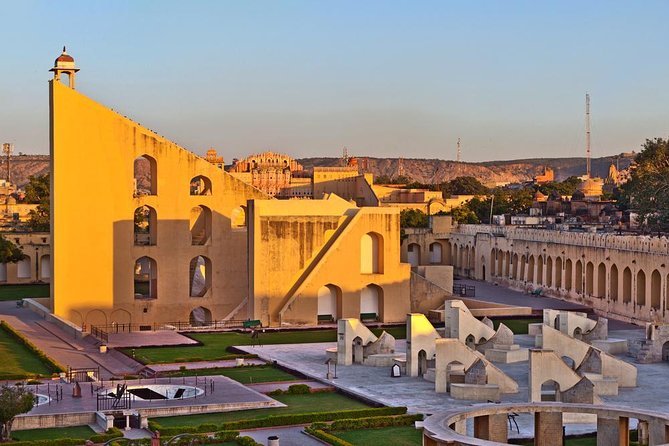
After City Palace, you’ll move to Jantar Mantar—Jaipur’s astronomical observatory. It was constructed by Maharaja Jai Singh of Jaipur in 1724. The objective was to create astronomical tables, which is one reason the structures here feel more engineered than ornamental.
Expect about 1 hour. That’s the right amount of time to walk the grounds, see the big instruments, and read what they’re designed to measure. Even if you’re not a science person, the scale and purpose are hard to ignore.
This site’s entry is not included, with $9.00 per person listed. Make sure you bring what you need for the ticket day—again, the tour includes transport and timing, not the monument fee.
If you like learning while you walk, Jantar Mantar is one of the best places on the list because it turns sightseeing into a real story about how people in the 1700s tracked the sky.
Stop 7: Albert Hall Museum and the Rajasthan state museum feel
The day finishes with Albert Hall Museum, about an 1 hour stop. It’s the oldest museum in the state and functions as the state museum of Rajasthan. The building sits in Ram Niwas garden outside the city wall, and it’s located opposite the New gate area (the description is truncated, but the museum’s setting is clearly outside the walls in a garden space).
What I like about ending here is the shift. By this point, you’ve seen forts, palaces, architecture details, and an observatory. A museum stop gives you a chance to connect dots—how the city preserves artifacts and stories beyond the outdoor landmarks.
Entry isn’t included, with $9.00 per person listed. If you’re museum-leaning, this ending can feel satisfying. If you’re not, you still get a sense of Rajasthan’s broader cultural context without needing more driving.
The guide-driver effect: why this tour feels personal
This is a private tour, so your tuk-tuk driver isn’t just transport. Many people highlight the way their guide offered options at each site and helped shape the day. That’s exactly how you want it. Jaipur has lots of moving parts, and a good guide helps you choose what’s worth your time in the moment.
Specific guide names that show up positively include Khalif, Aadil, Nawab Khan, Vinod, Ali, Adil, Shrif, and Shahrukh. Across those examples, the praise centers on three practical things:
- Clear communication and being helpful
- Taking a safe, organized approach to driving and waiting at sites
- Flexible pacing so you’re not pushed out early
Even if you don’t get one of those specific guides, the style of the experience is clear: you’re meant to be looked after during the day, with guidance that makes the sites easier to understand.
What’s included (and what you’ll need to handle yourself)
Included:
- Private tuk-tuk vehicle
- Hotel pickup and drop-off
- Fuel, parking charges, and toll taxes & interstate taxes
- Bottled water
Not included:
- Entrance fees for Hawa Mahal, Jantar Mantar, Albert Hall (listed as $9.00 each), and City Palace (excluding Blue Room at $12.00), plus Fort/Royal Gaitor ($8.00)
- Tips and gratuities (recommended)
- Meals
That’s a clean setup. You’ll still need to manage daily basics like food and ticket payments, but the heavy lifting—transport and site-to-site flow—is handled.
Who this tour is best for
This is best for you if:
- You want a full-day Jaipur plan that covers major sights without stress
- You like sightseeing with flexibility (and a driver who can offer options)
- You’re okay budgeting for monument entries and meals
It’s less ideal if:
- You need a fully all-inclusive price with every ticket and meal covered
- You prefer very slow, long visits at only a couple of places (this tour is built to move through several highlights)
The tour also says most travelers can participate, and it runs as a private group experience, meaning it’s just your group in the vehicle.
Should you book this Jaipur tuk-tuk sightseeing tour?
I’d book it if you want the smartest use of one day in Jaipur: transport handled, hotel transfers included, and a route that hits the big landmarks plus a couple of quieter, more interesting stops like Royal Gaitor Tumbas and Jal Mahal. The price looks low, but the value comes from what’s included—then you just add your own ticket and meal costs.
Skip it (or adjust your expectations) if you hate paying separate monument fees or you’re hoping meals are included. This is a driver-and-vehicle day with major sights added on, not a fully bundled entry-and-meal package.
If you can start early and you’re comfortable planning a few paid entries, this tour is a practical, fun way to see Jaipur like a local—one tuk-tuk ride at a time.
FAQ
How long is the Jaipur sightseeing tour by tuk-tuk?
The tour runs about 8 to 9 hours.
Is hotel pickup and drop-off included?
Yes. The tour includes handy hotel transfers, including pickup and drop-off.
What is included in the price?
You get a private tuk-tuk vehicle, hotel pickup/drop-off, fuel, parking charges, toll taxes & interstate taxes, and bottled water.
Are entrance fees included?
No. Entrance fees for Hawa Mahal, Jantar Mantar, and Albert Hall are not included, and City Palace (excluding Blue Room) and Jaipur Fort/Royal Gaitor have separate entry fees listed as well.
Are meals included?
No. Meals cost extra.
Is this tour private or shared?
It’s private. Only your group will participate.
Do I need a mobile ticket?
Yes. The tour includes a mobile ticket, and you receive confirmation at booking.
What happens if weather is bad?
The experience requires good weather. If it’s canceled due to poor weather, you’ll be offered a different date or a full refund.
Can I cancel for a refund?
Yes. You can cancel up to 24 hours in advance for a full refund. If you cancel less than 24 hours before the start time, the amount paid is not refunded.