REVIEW · JAIPUR
Jaipur Private Tour with Pickup
Book on Viator →Operated by Rajasthan Private Tour · Bookable on Viator
Jaipur in one long day. You’ll get a smart route that strings together major sights—with pickup, an air-conditioned car, and planned time at each stop—so you’re not wasting hours figuring out logistics. I like the way the itinerary mixes showpiece palaces with off-beat sacred places, which keeps the day from feeling like a checklist.
Two big things I really like: private transportation with hotel/airport pickup and drop-off, and the practical guidance that helps you navigate ticket time and choices without getting nickel-and-dimed. One possible drawback: monument and temple entry costs can be a little confusing because the tour notes an approximate extra fee, so I’d budget for entrances and confirm what’s covered before you go.
In This Review
- Key points at a glance
- What you’re really buying in a Jaipur private highlights day
- The route: Hawa Mahal to Jal Mahal to stepwell and springs
- Hawa Mahal and the City Palace: royal Jaipur in two very different moods
- Stop 1: Hawa Mahal (about 30 minutes)
- Stop 2: The City Palace (about 1.5 hours)
- Jantar Mantar and Jal Mahal: the science-lake pairing that feels made for photos
- Stop 3: Jantar Mantar (about 1 hour)
- Stop 4: Jal Mahal (about 30 minutes)
- Ambikeshwar Mahadev Mandir and Panna Meena ka Kund: sacred calm and engineering brilliance
- Stop 5: Ambikeshwar Mahadev Mandir with Amber Hill View (about 3 hours)
- Stop 6: Panna Meena ka Kund (about 30 minutes)
- Galtaji Temple springs and the Monkey Temple-style atmosphere
- Stop 7: Galtaji Temple (about 1.5 hours)
- Price, tickets, and what you should budget for
- Comfort and timing tips that make this route work
- Who this tour suits best
- Should you book Jaipur Private Tour with Pickup?
- FAQ
- How long is the Jaipur private tour with pickup?
- Do I get pickup and drop-off in Jaipur?
- Is this tour private or shared with other people?
- What major sights are included?
- Are monument entrance fees included?
- What’s included in the transportation and comfort setup?
- What is the cancellation policy?
Key points at a glance
- Private pickup and drop-off in Jaipur, using an air-conditioned vehicle with bottled water
- A tight highlights loop that includes Hawa Mahal, City Palace, Jantar Mantar, Jal Mahal, and more
- Planned time at each stop (most are around 30 minutes to 1.5 hours) so you’re not rushed everywhere
- Mobile ticket plus guidance that can save time at busy entrances
- Strong driver-guides vibe: Ashraf is repeatedly described as kind, attentive, and safe behind the wheel
What you’re really buying in a Jaipur private highlights day

This is the kind of tour that makes sense in Jaipur because the city is spread out, and sight-to-sight travel can eat your day. With pickup and drop-off from your selected location, you start moving quickly instead of hunting for taxis or coordinating meetups.
You’re also buying comfort. The air-conditioned car matters here, especially if your day runs during hotter hours. Parking fees and a fuel surcharge are covered, which removes a few headaches once you’re on the road.
The other value piece is decision-making. One driver-guide named Ashraf is praised for helping people manage ticket purchases and avoid unnecessary payments. If you like having someone who can steer you through the practical bits, this kind of service can be worth it even when the headline price looks low.
You can also read our reviews of more private tours in Jaipur



The route: Hawa Mahal to Jal Mahal to stepwell and springs
The flow of the day is built around moving from famous “postcard” Jaipur to places that feel more local and spiritual. You’ll start with Hawa Mahal, then shift into royal Jaipur at the City Palace and the science-world of Jantar Mantar. After that, you get a dramatic change of mood with Jal Mahal on its lake setting, and then a calmer sequence of temples and stepwell architecture.
Because it’s private, you’re not stuck waiting with strangers at every corner. Your group controls the pacing more than on a shared bus tour. At the same time, this is still a full 8 to 9 hours, so it’s best for people who can handle a long day of walking and standing in sun.
Hawa Mahal and the City Palace: royal Jaipur in two very different moods
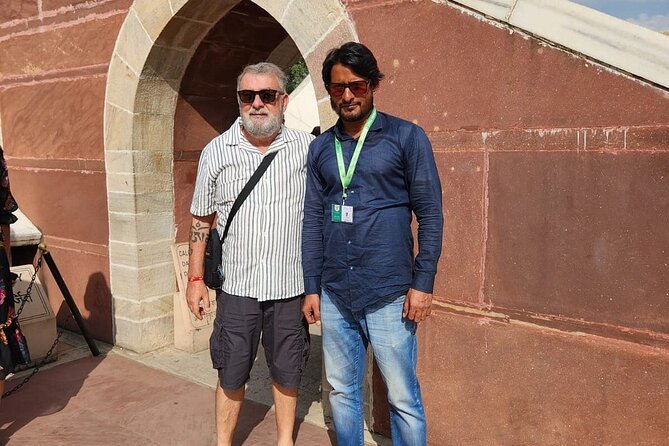
Stop 1: Hawa Mahal (about 30 minutes)
Hawa Mahal, the Palace of Wind, is all about that famous front façade. It’s made of red and pink sandstone, and its five-story design is meant to visually connect with the Zenana, the women’s apartments at the edge of the City Palace complex.
Plan to look closely at the texture and the stacked windows. Up close, it’s not just pretty—it’s a clue to how the palace was used and how architecture supported daily life. If you’re interested in photo angles, aim for your best view early in the stop, because surrounding foot traffic can pick up later.
Stop 2: The City Palace (about 1.5 hours)
Then you step into the royal center of the old Jaipur kingdom. The City Palace is a royal residence and the historic administrative hub, blending Mughal and Rajput architecture. Even more interesting: it’s still home to the country’s last ruling royal family.
This stop is great if you like seeing how power, art, and governance fit together. The longer time block (around 1.5 hours) gives you room to slow down, not just take a quick glance and run. If you’re short on time, you can focus on the areas that interest you most, since you’re not locked into a group pace.





Jantar Mantar and Jal Mahal: the science-lake pairing that feels made for photos
Stop 3: Jantar Mantar (about 1 hour)
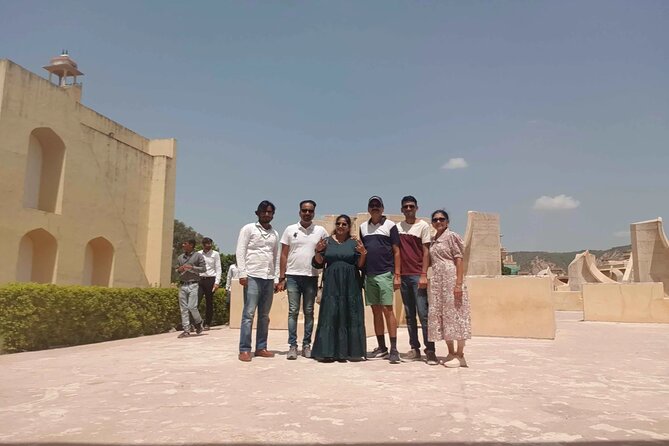
Jantar Mantar is a UNESCO World Heritage Site and a real curveball after palace walls. It’s a collection of 19 astronomical instruments built by Rajput ruler Sawai Jai Singh, and it was completed in 1734.
What makes this place special is how it turns measurement into architecture. Instead of a museum display behind glass, you get massive instruments that look like they should belong outdoors—because they do. Take your time reading what each instrument is meant to observe, because the concepts are easier when you’re physically standing near them.
Stop 4: Jal Mahal (about 30 minutes)
Jal Mahal shifts the mood fast. It’s a palace in the middle of Man Sagar Lake, with a multi-level design where each story gets smaller as you go up. That “floating palace” look is the reason people stop for photos, but it’s also worth noticing how the structure interacts with the water setting.
Because your stop here is shorter, I’d treat it as a reset moment. Walk the viewpoint areas you can reach, get your images, then move on. If your group prefers less photo time, this portion is flexible enough to skip the overlong standing.
Ambikeshwar Mahadev Mandir and Panna Meena ka Kund: sacred calm and engineering brilliance
Stop 5: Ambikeshwar Mahadev Mandir with Amber Hill View (about 3 hours)
This is the longest temple block on your day, so it needs a little planning. Ambikeshwar Mahadev Temple rests on 14 pillars, and its Shivshila is described as 5 thousand years old. It’s also mentioned in Bhagwat Purana, which gives the site a deeper religious footprint than a quick sightseeing stop.
The mention of Amber Hill View matters too. Temple visits can be visually repetitive on a quick tour day, so having a view element helps break the rhythm and gives you something to look at between shrines and quiet areas. This stop can feel like the day’s “breathing space,” especially compared with palace crowds and photo lines.
Because this is a place of worship, you might find that respectful behavior and modest dress expectations apply. I’d pack for that kind of reality and avoid showing up in anything too revealing.
Stop 6: Panna Meena ka Kund (about 30 minutes)
Then you’re back to architecture, but in a different form. Panna Meena ka Kund is a stepwell that draws visitors in the tens of thousands each year. It’s described as a 200-meter-deep stepwell, which is the kind of scale that can stop you mid-walk.
Even if you only have about 30 minutes, you’ll get the point: this is water infrastructure turned into an experience. The steps create a natural route downward, and the idea of reaching water through geometry is easier to appreciate in person than from a photo. If you like engineering and design, this stop is a must-see moment in the day’s mix.
Galtaji Temple springs and the Monkey Temple-style atmosphere
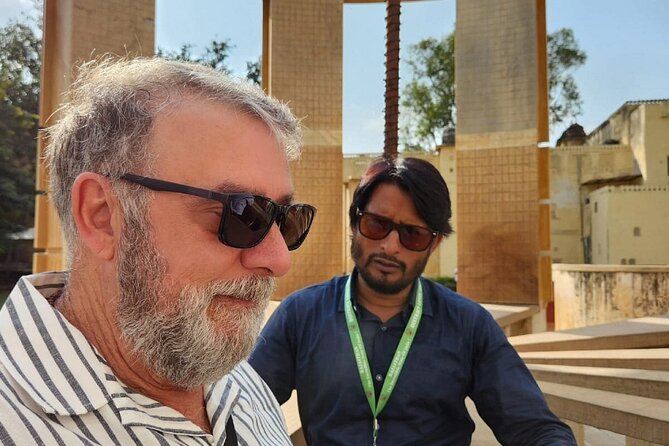
Stop 7: Galtaji Temple (about 1.5 hours)
Galtaji Temple is built at a mountain pass in the Aravalli Hills, about 10 kilometers east of Jaipur. It’s well-known for its natural springs, which collect water in tanks called kunds. Bathing in the temple waters is considered lucky, especially on Makar Sankranti.
This is where the tour feels most like “Jaipur life beyond the postcard.” The setting is more open and hillside-driven than the palace core, and the water feature gives you a different sensory experience.
If you’re traveling with kids, this is often the part where the day becomes fun rather than just educational. And if you’re traveling solo or with a friend, it’s also an easy stop to enjoy at your own pace, since the “spark” of the place is visible without needing a long guide lecture.
Price, tickets, and what you should budget for
On paper, the price is listed at $7 and the tour lasts 8 to 9 hours. That’s the kind of number that makes you double-take, and it should. The important part is where the costs land in real life.
The tour includes private transportation, parking fees, hotel/airport pickup and drop-off, an air-conditioned vehicle, fuel surcharge, and bottled water. That’s a lot of operational cost that many budget tours quietly shift onto you later. So even if the headline tour price looks very low, you may still be getting real value in the way the day is handled.
One caution: monument entrance fees are listed as not included, with an approximate figure of 30 USD per pax, but the stop descriptions also say admission tickets are included for the named sights. I’d treat that as your clue to confirm what you’ll actually pay on arrival or what’s already bundled. It’s a quick question to ask during booking, and it can prevent an awkward moment at a gate.
Comfort and timing tips that make this route work
This itinerary is built for variety, but your comfort depends on how you approach a long day. Here’s what I’d do to make it easy on you.
First, wear shoes you don’t mind getting dusty. You’ll be moving between palaces, open-air areas, and temple compounds. Even when stops are “only” 30 minutes, Jaipur walking adds up quickly.
Second, plan for sun and heat. The tour provides bottled water, but you still need to pace yourself. Start strong, do your main photos early at Hawa Mahal and Jal Mahal, then let the temple and stepwell stops slow you down.
Third, take advantage of the fact that this is private. If you love architecture, you’ll enjoy the City Palace, Jantar Mantar, and Panna Meena ka Kund pairing. If you’re less into that, you can ask your guide for timing adjustments so you don’t spend the full 1.5 hours somewhere you’d rather rush. The flexibility shows up in the way Ashraf is described: attentive, thoughtful, and focused on helping you get the most from the day.
Finally, if you’re a solo traveler, don’t hesitate to ask for help with ticket decisions. Ashraf is singled out for guiding people on ticket sales and avoiding unnecessary extra costs. That’s the kind of advice that turns a chaotic entrance line into a calm process.
Who this tour suits best
This is a good fit if you want a single-day sampler of Jaipur’s big sights plus a couple of slower, more reflective stops. It’s also a great choice if you care about comfort and time savings, because pickup/drop-off and private transport remove a lot of friction.
It’s especially strong for families, couples, and solo travelers who don’t want to play transport roulette across the city. If you’re the type who likes “see it, then move” rather than staying in one neighborhood all day, this route matches that style well.
Should you book Jaipur Private Tour with Pickup?
I’d book it if you want a structured Jaipur day without the stress of navigation, budgeting for taxis, or guessing which entrances to hit first. The value comes from the logistics being handled for you: private AC transport, pickup and drop-off, bottled water, parking, and guidance that can help you avoid waste at ticket counters.
I’d think twice only if you hate long days or you’re trying to keep costs ultra-minimal without confirming entrance fees. Because the tour data contains both ticket-included language and an additional entrance-fee note, do a quick confirmation before you go.
If you line that up, you’ll get a well-paced mix of Hawa Mahal drama, City Palace royal atmosphere, Jantar Mantar’s instruments, Jal Mahal’s lake look, plus temple-and-water stops that add real texture to your Jaipur story.
FAQ
How long is the Jaipur private tour with pickup?
The tour is listed as about 8 to 9 hours.
Do I get pickup and drop-off in Jaipur?
Yes. Hotel/airport pickup and drop-off are included, and you’ll be picked up from your selected location in Jaipur.
Is this tour private or shared with other people?
It’s private. Only your group will participate.
What major sights are included?
You visit Hawa Mahal, the City Palace, Jantar Mantar, Jal Mahal, Ambikeshwar Mahadev Mandir (with Amber Hill view), Panna Meena ka Kund, and Galtaji Temple.
Are monument entrance fees included?
The itinerary notes admission tickets included for the listed stops, but the additional info also states monument entrance fees are not included (approx. 30 USD per pax). I’d confirm what is included in your booking.
What’s included in the transportation and comfort setup?
You get private transportation in an air-conditioned vehicle, bottled water, parking fees, and fuel surcharge.
What is the cancellation policy?
You can cancel for a full refund if you cancel up to 24 hours in advance of the experience start time. If you cancel less than 24 hours before, the amount paid is not refunded.