REVIEW · JAIPUR
Jaipur Private Tour 2 Days with Car & Guide
Book on Viator →Operated by Namaste Jaipur Tours · Bookable on Viator
One big reason Jaipur works as a two-day trip is that it mixes icons with real neighborhoods. This private plan strings the city highlights together with a professional guide and a chauffeur-driven A/C car, so you spend less time figuring out routes and more time seeing the sights in a logical order. You’ll hit the headline monuments on Day 1 and the fort zone on Day 2, plus time in the old markets.
I like that the itinerary is built around the places you actually want to understand: Jantar Mantar’s 1738 astronomical instruments, Hawa Mahal’s 1799 design for royal viewing of daily life, and the fort area where Amer Fort, Jaigarh Fort, and Nahargarh Fort sit over the city like a layered story. I also like the practical extras: pickup and drop-off are included, and the transport covers fuel, parking, and tolls.
One thing to keep in mind: most major monuments are not included in the ticket cost, so budget for entrance fees and camera fees at the gates. If you’re trying to keep the trip ultra-cheap, you’ll want to plan for that upfront.
In This Review
- Key Highlights You’ll Feel Immediately
- Two Days That Actually Cover Jaipur (Without the Guesswork)
- Morning in the Pink City: Hawa Mahal, City Palace, and Jantar Mantar
- Hawa Mahal: The Royal Window to Daily Life
- City Palace: Where Jaipur’s Power Shows Up
- Jantar Mantar: Nineteen Instruments, Real Science
- Isarlat Sargasooli and Albert Hall: Smaller Stops That Add Texture
- Isarlat Sargasooli: A 140-Foot Landmark Near the Bazaars
- Albert Hall Museum: Indo-Saracenic Style and Collected Artifacts
- Birla Mandir and the Market Hour: Jaipur Beyond the Monuments
- Birla Mandir: White Marble Calm in the Middle of the Action
- Old Markets: Johri Bazar and Bapu Bazar
- Day 2: Amer Fort Area, Jaigarh, Nahargarh, and Royal Gaitor Tumbas
- Jal Mahal: A Restricted Palace You Can Still Appreciate
- Amber Fort (Amer Palace Fort): The Big One on Day 2
- Panna Meena Ka Kund: The Stepwell Under the Fortress Shadow
- Jaigarh Fort: Artillery, Jaivana, and the Cannon on Wheels
- Nahargarh Fort: Ghost Story and a Temple Connection
- Royal Gaitor Tumbas: Quiet Tombs Away From the Rush
- The Real Value: What’s Included vs. What You’ll Still Pay
- Timing and Comfort: How This Two-Day Flow Works
- Who This Tour Suits Best
- Should You Book This 2-Day Private Jaipur Tour?
- FAQ
- Is this a private tour or shared?
- How long is the Jaipur tour?
- What time does Day 1 start?
- Are hotel pickup and drop-off included?
- Do I need to pay monument entrance fees?
- Is the car air-conditioned?
- Are meals included?
- Is accommodation included?
- Which sights are marked as free on this itinerary?
- Does the tour work in any weather?
- Can I cancel for a full refund?
Key Highlights You’ll Feel Immediately
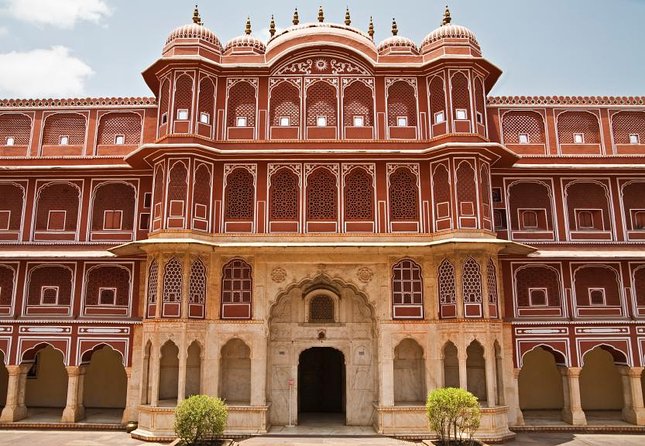
- Private, A/C car for two full sightseeing days with your guide
- Most “big names” covered fast: Hawa Mahal, City Palace, Jantar Mantar, Amer Fort, Jaigarh, Nahargarh
- Old city market time to see Johri Bazar and Bapu Bazar after the monuments
- Fort-zone viewpoints with stops like Jaigarh Fort and Nahargarh Fort
- Multiple stepwell and tomb stops including Panna Meena ka Kund and Royal Gaitor Tumbas
- Some sights with free entry (like Birla Mandir, Jal Mahal view, and several others), helping manage your total cost
Two Days That Actually Cover Jaipur (Without the Guesswork)
Jaipur is the kind of city where “a quick stop” turns into a long day. This 2-day private tour is designed to avoid that. You get a clear path through the old core first, then you move to the Amer fort area and the viewpoints around it on Day 2. It’s a simple rhythm that helps you connect the dots between royal power, astronomy, and everyday market life.
The private setup matters. With a dedicated driver and guide, you can keep a steady pace and ask questions at each stop instead of trying to catch up with a group. And because the vehicle is chauffeur driven and A/C, you’re not stuck baking in traffic between monuments.
Price-wise, $36.74 per person is low for a two-day private car + guide experience in a major Indian city. The trade-off is that many monument entrances are not included, so the total you spend depends on how many ticketed sites you cover (and whether camera fees apply). Still, even with those add-ons, the value is usually strongest if you want a plan with minimal hassle.
You can also read our reviews of more guided tours in Jaipur


Morning in the Pink City: Hawa Mahal, City Palace, and Jantar Mantar

Day 1 starts in the morning, with pickup around 9:00 AM after breakfast. From there, you roll into Jaipur’s signature sights. The best part of this opening set is that it builds understanding before you start wandering through bazaars.
Hawa Mahal: The Royal Window to Daily Life
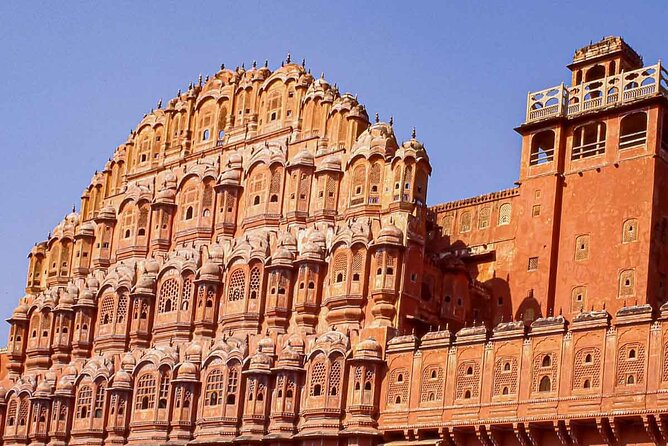
Hawa Mahal is the postcard face of Jaipur, but the guide angle makes it more than a photo stop. It was built in 1799 by Sawai Pratap Singh. The palace of winds was planned so the royal household could look at everyday city life—so it’s not just decorative. Expect to spend a short window here (about 30 minutes), then move on before the crowds build too much around the iconic viewpoints.
One practical note: the stop time is tight. If you love architecture photos, it’s smart to treat it as a “get your angles, then go” moment.
City Palace: Where Jaipur’s Power Shows Up
Next is City Palace, which is one of the most important complexes in Jaipur. It was designed by Maharaja Sawai Jai Singh. This stop is longer (about 2 hours), which gives you enough time to take in how the palace complex works as both a monument and a living part of the city’s identity.
City Palace is ticketed for this tour, so plan for entrance fees and any camera charges.
Jantar Mantar: Nineteen Instruments, Real Science
Then you get to Jantar Mantar, the UNESCO-famous astronomical site. It’s a collection of nineteen architectural instruments built by Sawai Jai Singh and completed in 1738 CE. If you’ve ever wondered how old-school science looked in stone, this is the place.
You only spend around 30 minutes here, but it’s enough time to understand the big idea and to see how the instruments are laid out. Because it’s a ticketed site, this is another place where you’ll want to budget a little.
You can also read our reviews of more private tours in Jaipur




Isarlat Sargasooli and Albert Hall: Smaller Stops That Add Texture
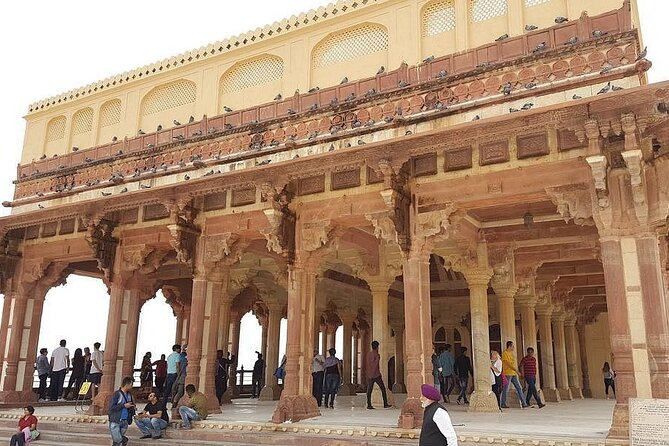
After the major headliners, the tour keeps moving through stops that give Jaipur more texture than a checklist.
Isarlat Sargasooli: A 140-Foot Landmark Near the Bazaars
Isarlat Sargasooli (also known as Sargasuli) stands 140 ft tall. The interesting part is location: it sits at the meeting point of Tripolia Bazaar and Gangori Bazaar, near Chhoti Chaupar Chowk. It’s a great “connect the dots” stop because it sits right where market life happens, so you can feel the city’s layout instead of just seeing monuments.
This is not a long stop (about 30 minutes). It’s best used to orient yourself—then the market time later makes more sense.
Albert Hall Museum: Indo-Saracenic Style and Collected Artifacts
Next up is Albert Hall Museum, known for Indo-Saracenic architecture. The museum holds a large collection of artifacts brought from different regions. You get about 1 hour, which is enough for a focused visit if you’re more into highlights than endless galleries.
Albert Hall is ticketed here. If you’re tight on money, this is one of the places you might consider skipping—though if you like museums, it’s a good “rain plan” type of stop because you’re indoors.
Birla Mandir and the Market Hour: Jaipur Beyond the Monuments
One of the smartest inclusions on this tour is the blend of religious architecture and shopping streets.
Birla Mandir: White Marble Calm in the Middle of the Action
Birla Mandir Temple is free for this tour and typically takes about 1 hour. It’s a Hindu temple built by the B.M. Birla Foundation in 1988, constructed solely of white marble. Even if you’re not on a temple circuit, it’s a peaceful change of pace from fort walls and palace corridors.
Old Markets: Johri Bazar and Bapu Bazar
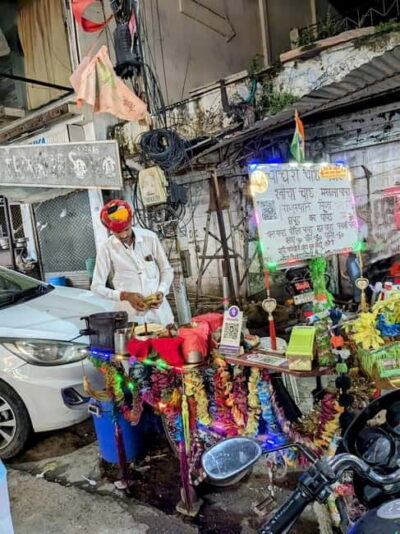
Then you head to Jaipur’s old markets for about 2 hours, including Johri Bazar and Bapu Bazar (plus other nearby spots). This is where the city becomes more than monuments. You’ll see daily shopping streets—perfect for picking up small gifts and snacks and for watching how locals move between stalls.
If you want to buy things, bring cash and keep your eyes open on pricing. A guide helps here, too, because you can ask what’s worth your time without getting swept into a sales pitch.
Day 2: Amer Fort Area, Jaigarh, Nahargarh, and Royal Gaitor Tumbas
Day 2 shifts from the old core to Jaipur’s fort zone. The payoff is big views and a strong sense of where the royal world kept watch.
Jal Mahal: A Restricted Palace You Can Still Appreciate
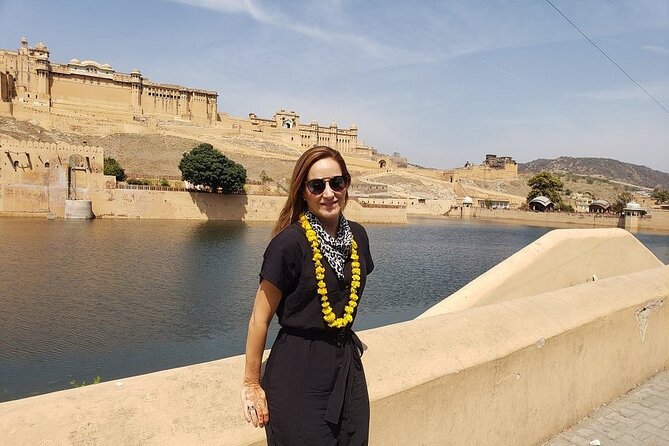
The day starts with Jal Mahal. Entry inside is completely restricted, but you can still view the palace’s beauty. This works well early because you can catch the lake setting without spending your whole morning inside a building.
It’s marked free for this tour, with about 30 minutes here—just enough time to see it, then move on.
Amber Fort (Amer Palace Fort): The Big One on Day 2
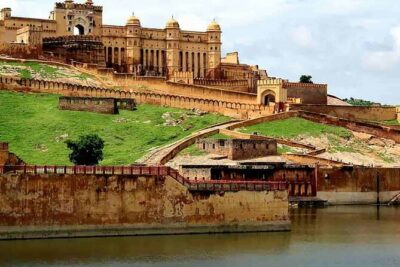
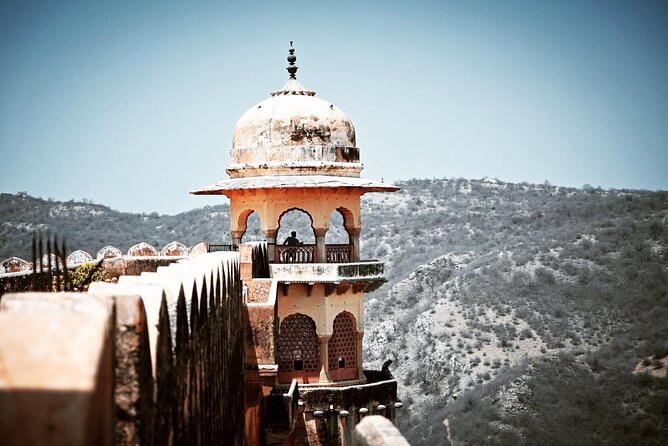
Next is Amber Fort, also called Amer Palace Fort. This is the star attraction of the surrounding hills area. You’ll spend about 2 hours here, and entrance is not included.
Amber Fort is a complex palace-fort setup on a hill, and it’s the kind of place that feels better with a guide explaining how different sections connect to the royal story.
Tip that matters: wear comfortable shoes. Fort complexes have uneven surfaces, lots of stairs, and long walk distances.
Panna Meena Ka Kund: The Stepwell Under the Fortress Shadow
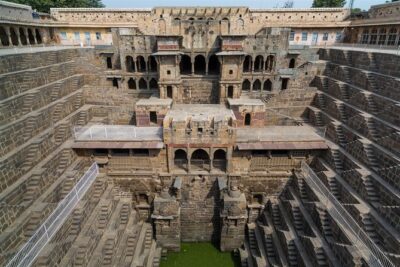
Right near Amer Fort is Panna Meena ka Kund, a mesmerizing 16th-century stepwell. It’s about 30 minutes, and it’s free on this tour. The key detail is its relationship to the fortress—it’s under the shadow of Amer Fort, so it feels like part of the same built environment.
This stop is small in time but meaningful if you want something different from the usual palace-and-temple loop.
Jaigarh Fort: Artillery, Jaivana, and the Cannon on Wheels
Then you move to Jaigarh Fort for about 1 hour. This fort is known as a Rajput center of artillery production. It also houses Jaivana, a cannon that was the world’s largest cannon on wheels at the time of its manufacture in 1720.
If you like military history or engineering, this is one of the most interesting stops on the entire route. Entrance fees apply.
Nahargarh Fort: Ghost Story and a Temple Connection
After Jaigarh comes Nahargarh Fort, about 1 hour. There’s a legend tied to the site: “Nahar” refers to Nahar Singh Bhomia, whose spirit haunted the place and allegedly obstructed construction. The spirit was pacified by building a temple in his memory.
It’s ticketed here. Even if you don’t care about legends, the story adds a human layer to a stone site.
Royal Gaitor Tumbas: Quiet Tombs Away From the Rush
Finally, you visit Royal Gaitor Tumbas for about 30 minutes. This stop is marked free and it’s described as serene and quiet, away from the busier parts of town. If you want a slower finish after forts, this is a good place to exhale.
The Real Value: What’s Included vs. What You’ll Still Pay
This tour includes a lot that usually adds up fast when you plan on your own:
- Hotel/Airport/Railway Station pickup and drop-off
- A chauffeur driven A/C private vehicle for sightseeing
- Fuel, parking charges, toll taxes, and GST
You’ll still need to budget for:
- Accommodation (not included)
- Monument entrance fees / camera fees
- Personal expenses
- Any transport to/from Jaipur before the tour starts
It’s useful to understand the free/ticket mix, because it changes the final cost. For example, Birla Mandir is free, while major stops like Hawa Mahal (ticket not included), City Palace (ticket not included), Jantar Mantar (ticket not included), and Amber Fort (ticket not included) are all paid. On Day 2, Panna Meena ka Kund and Royal Gaitor Tumbas are free, while Amber Fort plus Jaigarh and Nahargarh are not.
If you’re trying to keep spending controlled, this free/ticket pattern helps you plan. If you love monuments and photos, you’ll likely pay the entrances anyway—which is why having a guide who can explain what you’re seeing makes the extra cost feel worth it.
Timing and Comfort: How This Two-Day Flow Works
The itinerary isn’t just about where you go—it’s about when. Starting Day 1 with major landmarks helps you build orientation early. Ending Day 1 with markets gives you a practical payoff: once you’ve seen the city’s royal symbols, the bazaars start to feel like the everyday engine of Jaipur.
Day 2 is structured to move through the fort area step by step:
- view at Jal Mahal
- fortress focus at Amber Fort
- supporting sites like the stepwell
- forts that add different flavors: artillery at Jaigarh, legend and views at Nahargarh
- a quieter tomb finale
That rhythm matters because forts and hills wear you out. A plan that groups the sights geographically is the difference between a good day and a painful one.
Who This Tour Suits Best
This private Jaipur plan is a strong match if you:
- Want a 2-day schedule that covers the big-ticket monuments plus meaningful extras
- Prefer a dedicated guide who explains what you’re looking at at each stop
- Would rather pay a little for comfort and organization than gamble on timing and transport
It’s also ideal for first-timers who want a “great hits” route without feeling like they’re racing. If you’re a traveler who dislikes long drives or tight group pacing, the private format is a big advantage.
Should You Book This 2-Day Private Jaipur Tour?
I’d book it if you want an organized, guide-led introduction to Jaipur that hits the core monuments and the fort zone in just two days. The big win is the combination of private A/C transport, a professional guide, and a route that doesn’t jump randomly around the city.
Skip or rethink it only if you’re determined to DIY everything and you’re also trying to minimize paid entrances. Since many monument tickets aren’t included, your final cost will rise with your entry choices.
If you’re visiting for a short stay and you want to leave with a real understanding of Jaipur—palaces, astronomy, stepwells, forts, and market streets—this is a solid way to spend your time.
FAQ
Is this a private tour or shared?
This is a private tour/activity. Only your group participates.
How long is the Jaipur tour?
It runs for 2 days (approximately).
What time does Day 1 start?
Day 1 begins in the morning after breakfast, with the driver receiving you at 9:00 AM.
Are hotel pickup and drop-off included?
Yes, pickup and drop-off from hotels/airports/railway stations are included.
Do I need to pay monument entrance fees?
Yes. Monument entrance fees and camera fees are not included, even though some stops are marked free.
Is the car air-conditioned?
Yes. You get a chauffeur-driven A/C private vehicle for sightseeing.
Are meals included?
The tour details provided do not mention meals being included.
Is accommodation included?
No. Accommodation/hotels are not included.
Which sights are marked as free on this itinerary?
Birla Mandir, Albert Hall Museum is listed as ticket not included, but Birla Mandir is free. On Day 2, Jal Mahal is free to view, Panna Meena ka Kund is free, and Royal Gaitor Tumbas is free. (Other major sites are listed as ticket not included.)
Does the tour work in any weather?
The experience requires good weather. If it’s canceled due to poor weather, you’ll be offered a different date or a full refund.
Can I cancel for a full refund?
Yes. You can cancel up to 24 hours in advance for a full refund. If you cancel less than 24 hours before the start time, the amount paid is not refunded.