REVIEW · JAIPUR
Jaipur Private City Tour with a Women-Driven E-Rickshaw Ride
Book on GetYourGuide →Operated by Rajasthan India Tour Driver · Bookable on GetYourGuide
A Jaipur tour with women at the wheel. The big draw is the women-driven e-rickshaw experience, where you get around the walled city while supporting women earning a living. I also like how the route pairs classic stops with a few slower, off-the-main-track moments, so you get more than just quick sightseeing.
What I like most is the practical flow: Hawa Mahal, City Palace, Jantar Mantar, and then Amber Fort, all in one day without feeling rushed. One drawback to plan for is that entrance fees and meals are not included, and the day involves moderate walking, which may be a deal-breaker if you prefer very low walking.
In This Review
- Key moments worth knowing before you go
- A cause-driven Jaipur ride in a women-led e-rickshaw
- Women behind the handlebars: what the ride really changes
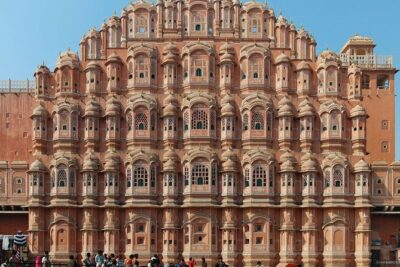
- Hawa Mahal first: where Jaipur starts and why it’s more than a postcard
- City Palace and the Kachwaha seat of power
- Jantar Mantar’s 1724 astronomy and a quick reality check
- Jal Mahal detour: a short look at a palace on the water
- Amber Fort from the hill: views, architecture, and the walking tradeoff
- Panna Meena ka Kund: the stepwell stop that slows the day down
- Albert Hall Museum: art and materials you can actually see
- The local market finish: shopping for crafts without losing the plot
- Price and what the $31 per group up to 3 actually covers
- Smart planning: what to bring, what to wear, and what’s not allowed
- Should you book this women-driven Jaipur e-rickshaw tour?
Key moments worth knowing before you go
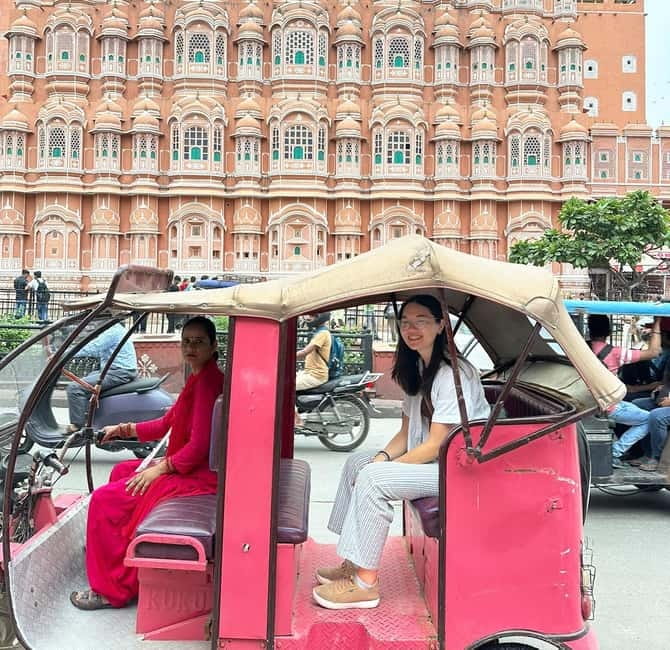
- Women drivers in a private e-rickshaw give you a calmer, more personal way to see Jaipur than hopping between crowded buses
- Hawa Mahal’s ventilation design (built without a foundation) makes the first stop more than a photo-op
- Jantar Mantar’s 1724 astronomy tools are a smart break from palace-only sightseeing
- Amber Fort from the hilltop delivers the views, but you’ll still need good walking shoes
- Panna Meena ka Kund stepwell adds a quieter, historical pause near Amber
- Albert Hall Museum’s collections round out the day with art, jewelry, sculptures, and crystal works
A cause-driven Jaipur ride in a women-led e-rickshaw
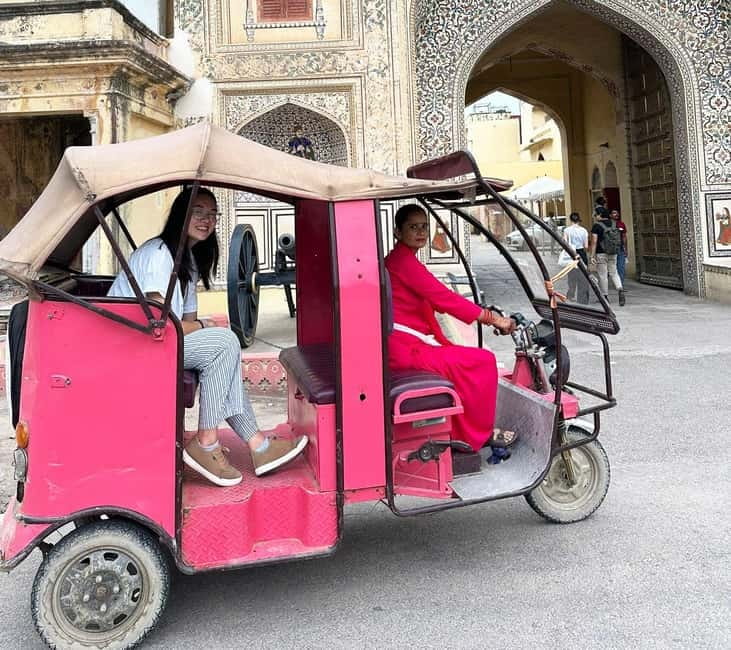
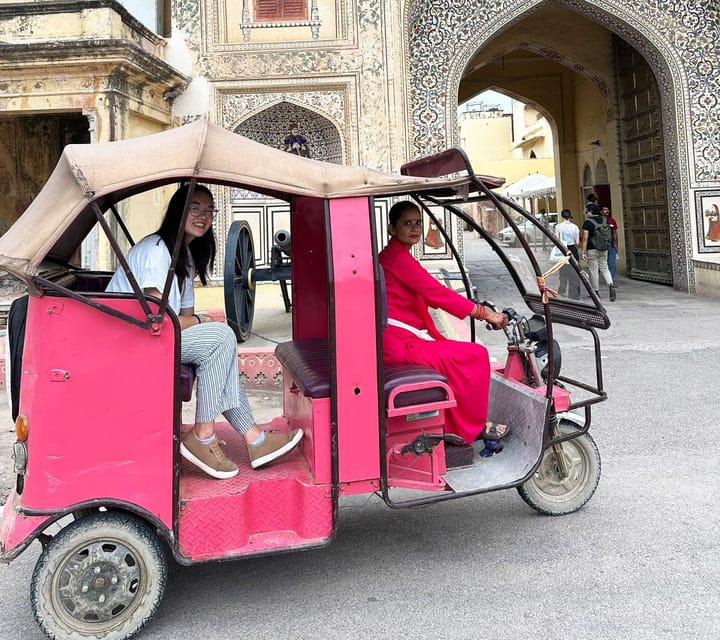
This is not a standard big-bus day. You’ll be in a private e-rickshaw for most of the route, designed to keep things simple and close to the sights. The driver is part of the point: these women are trained to guide you through the city while earning income that supports their families, including widows and women dealing with difficult home situations.
For you, that means the day feels grounded. You’re not just checking monuments off a list. You’re meeting someone doing real work in the city, moving you through Jaipur at a human pace, and letting you ask questions as you go.
Because it’s private (for up to 3 people per group), the timing works better than group tours. You can linger at a viewpoint, take a longer photo break at Hawa Mahal, or slow down for a museum moment without everyone waiting on the same rhythm.
You can also read our reviews of more city tours in Jaipur

Women behind the handlebars: what the ride really changes
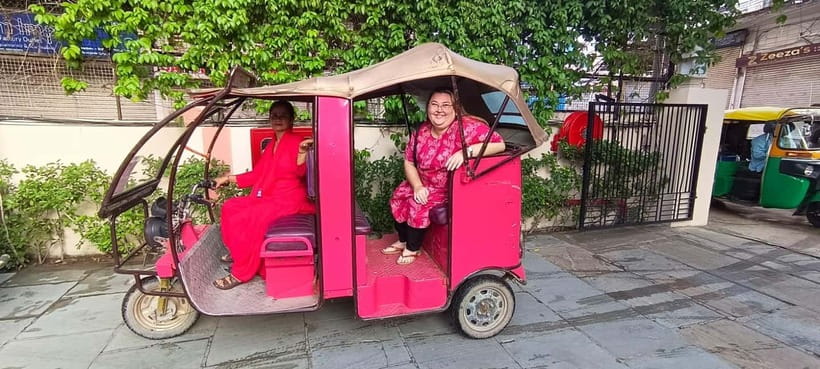
Jaipur can be chaotic, especially inside the walled city lanes. What I value here is the sense of control you get with a driver who knows the streets and knows how to manage a ride that feels comfortable, not stressful.
The names that show up in strong feedback are also telling. Some bookings highlight guides like K. K, who’s described as friendly and highly informed, while the women drivers include Bebi and Baby, known for being calm and professional. There are also instances where the women driver couldn’t make it, and a substitute driver like Abdula stepped in and still explained what you’re seeing.
So for you, the real takeaway is this: the tour is built around women’s employment, but it still stays flexible. If something changes on the day, the operator aims to keep the experience moving, not cancel the plan.
Hawa Mahal first: where Jaipur starts and why it’s more than a postcard
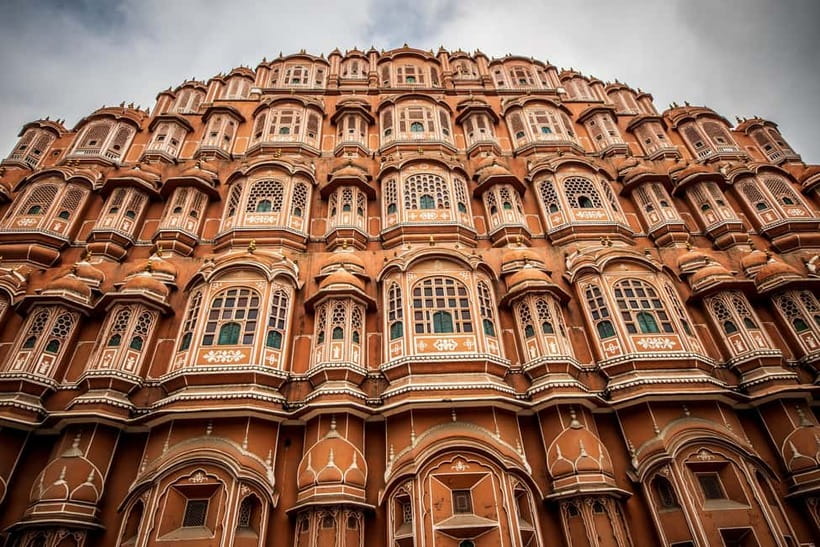
You begin with Hawa Mahal, the honeycomb-shaped palace famous for its many windows (jharokhas). The tour includes a photo stop and time to walk around, plus an inside visit with a guided tour. What makes this stop memorable is the architecture story: it was built without a foundation, and its design supports ventilation—so the name Palace of Winds makes practical sense, not just a poetic label.
For you, this is a smart opening because it sets the tone for the rest of the day. You’ll see the style of Jaipur’s royal architecture up close, and you’ll get a clearer idea of what you’re looking at when you hit City Palace and Amber Fort later.
If you’re thinking about timing, arrive ready for a short stretch of walking and standing for photos. The first hour is when you’ll feel the heat most in summer, so bring water even though it’s included.
City Palace and the Kachwaha seat of power
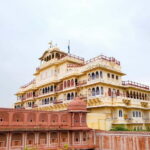
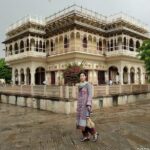
Next comes City Palace, located right in the heart of Jaipur. It’s the former residence of the Maharaja of Jaipur and served as the seat of power for the Kachwaha Rajput clan. Today, you’ll visit it as a museum, with a guided tour if you choose that option, plus time on your own.
What I like here is that City Palace gives you context. Hawa Mahal shows you the outside theatrical side of Jaipur’s royal era. City Palace shows you how the power center worked—rooms, layouts, and museum spaces that explain why Jaipur’s rulers mattered.
The stop runs about two hours, which is a good length for people who want real viewing time but don’t want to get stuck in one building for half the day. You’ll also get a natural rhythm here: guided explanation first, then space to wander at your own pace.
Jantar Mantar’s 1724 astronomy and a quick reality check
After City Palace, you move to Jantar Mantar, Jaipur’s famous astronomical observatory built in 1724 by Maharaja Jai Singh. This is one of the most interesting switches in the day because it’s not about palaces or forts. Instead, it’s about measuring time and tracking celestial movements with tools created long ago.
The visit is guided, and you’ll have time to walk around the complex. For most people, the first few minutes feel like a science lesson you didn’t know you needed. But the bigger win is that it changes your mental map of Jaipur: it’s not only royal architecture. It’s also planning, calculation, and skilled craftsmanship.
One consideration: the site is outdoor and involves walking, even if the stop is relatively short (around 45 minutes plus walking). If you’re sensitive to heat or prefer minimal sun exposure, plan your hydration and wear a hat or sunglasses even though those items aren’t listed.
You can also read our reviews of more private tours in Jaipur






Jal Mahal detour: a short look at a palace on the water
Before Amber Fort, you’ll take a quick detour to Jal Mahal, a palace located in Man Sagar Lake. It’s a short stop—about 15 minutes—with photo opportunities and a guided look.
This part is quick on purpose. It gives you a calm visual break before the hilltop fort. You’ll also appreciate it more if you’re paying attention to reflections and the setting, not only the building.
The only caution is that if you expect a long, deep visit, this won’t be that. It’s a scenic pause, not a full attraction.
Amber Fort from the hill: views, architecture, and the walking tradeoff
Then comes Amber Fort, perched on a hill. It’s one of Jaipur’s must-see sights, and you’ll spend roughly two hours here with time for viewing and a guided tour. The route itself includes scenic views on the way, so you’re rewarded before you even reach the main complex.
The architecture is the headline, but for you the real value is the combination of scale and viewpoint. From the hill, Jaipur looks different than it does in the walled city lanes. You get a sense of why forts were built where they were, and why the views were part of the defense strategy.
The drawback is physical. Amber Fort requires walking once you arrive, and there can be uneven surfaces and stairs depending on the exact routes. If you choose this tour, bring comfortable shoes and expect moderate walking as part of the deal.
Panna Meena ka Kund: the stepwell stop that slows the day down
Below Amber Fort is Panna Meena ka Kund, a 16th-century stepwell. It’s easy to overlook if your day is only forts and palaces, but it’s a powerful change of pace. You’ll have time for a photo stop, sightseeing, and a short walking segment, typically around half an hour.
For me, a stepwell works because it tells a story about daily life and water management, not only royal display. It’s a place where history feels practical: people needed water access, and the design reflects that.
This stop is also a useful breath between major sights. If you’re tired of crowds and want a calmer moment, this is where the day often feels more human.
Albert Hall Museum: art and materials you can actually see
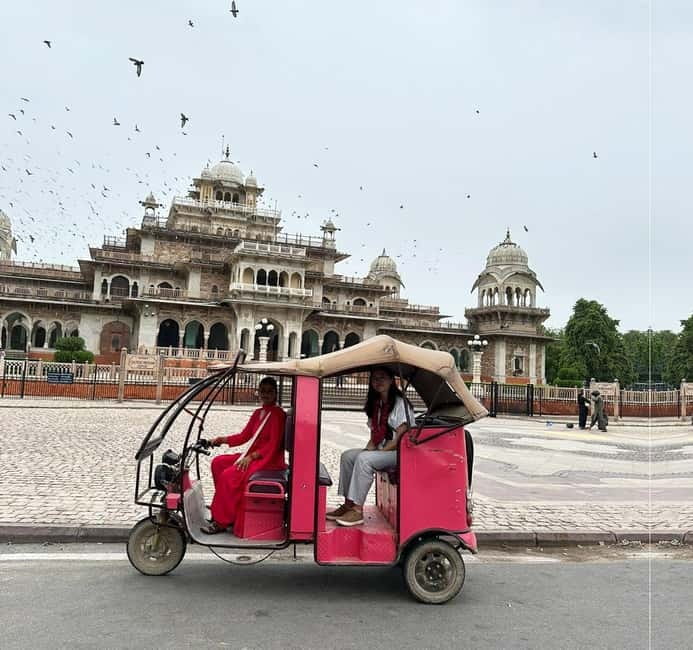
To end the sightseeing run, you’ll visit Albert Hall Museum, with about 1.5 hours of guided time and sightseeing. The museum has a wide range of collections, including paintings, jewelry, carpets, ivory, stone sculptures, metal sculptures, and works in crystal.
What I like about ending here is how it shifts from exterior architecture to objects you can look at slowly. Even if you’re not a museum person, the variety of materials helps. You’re seeing craftsmanship in different forms—texture, metalwork, glass or crystal pieces, and museum-grade displays.
One practical note: entrance fees are not included, so you’ll want to budget for museum admission separately. Also keep an eye on your energy level. By this point, you’ve already done multiple outdoor stops.
The local market finish: shopping for crafts without losing the plot
After the museum, your women driver brings you to a local market area for shopping. This is where you can browse for handicrafts, rugs and carpets, jewelry, fabrics, and other treasures.
I like market stops when they’re optional and paced. Here, you’re not stuck doing a sales route you didn’t ask for—you choose what to look at and how long you stay. If you want to buy something, start with smaller items first. That way you can learn pricing and quality before committing to something larger like a rug.
If you’re hoping for a strict shopping list, you might leave with more impressions than purchases. Still, it’s a good way to take something home that feels tied to Jaipur’s daily craft culture.
Price and what the $31 per group up to 3 actually covers
The headline price is $31 per group for up to 3 people, and the value is tied to what’s included. You get hotel pickup and drop-off, a private tour format, and transportation in a private e-rickshaw with a female-friendly driver. You also get bottled water and taxes, fees, and handling charges included.
You’ll often also get help from a professional tour guide for the sightseeing stops if you select that option. That matters because it changes the day from driving-by to understanding what you’re looking at.
What’s not included is also clear and important: monument entrance fees and meals. So your total day cost will be the tour price plus admissions you pay on-site, plus lunch if you decide to eat.
There’s also a line that matters for convenience: you get skip-the-ticket-line benefits. That helps your time, but it doesn’t replace entrance fees—it just saves time once you’re paying.
Smart planning: what to bring, what to wear, and what’s not allowed
Plan around walking and comfort. The tour involves moderate walking, so bring comfortable shoes. Dress code is smart casual. For temples, short shorts and sleeveless tops are not recommended, so you might want a light layer or scarf just in case.
Bring an ID or passport, and note that you may need passport details at booking. You’ll also want a current valid passport on the day of travel. If you’re packing, keep it light: luggage or large bags are not allowed, and pets are also not permitted.
If you have pre-existing medical conditions or you’re pregnant, this tour is listed as not suitable. That’s because the day includes walking and outdoor time.
Finally, make sure you’re comfortable with the vehicle capacity. The e-rickshaw can accommodate 3 to 4 people comfortably, and your group is private, so you’re not sharing the ride with strangers.
Should you book this women-driven Jaipur e-rickshaw tour?
Book it if you want a Jaipur day that’s practical, private, and anchored in women’s employment. The combination of major sights—Hawa Mahal, City Palace, Jantar Mantar, Amber Fort—plus quieter stops like Panna Meena ka Kund gives you variety without needing separate tickets or juggling multiple transport providers. It also helps that the tour is built for a full day (around 8 hours) with pickup included.
Skip or reconsider if you dislike walking, want zero outdoor time, or you need accessibility accommodations not listed here. Also budget for entrance fees and meals since they’re extra.
If your ideal Jaipur day includes photos, architecture, and a meaningful reason to support the people who guide you through the city streets, this is a strong choice.