REVIEW · JAIPUR
Jaipur City Tour with a Licensed Guide
Book on Viator →Operated by Rajasthan Incredible Tours · Bookable on Viator
Jaipur fits in one long day. This private city tour strings together major sights across and around Jaipur, with an A/C driver, bottled water, and hotel pickup and drop-off to keep your day painless. You’ll hit Amer Town, Panna Meena ka Kund, Jal Mahal, Royal Gaitor Tombs, Hawa Mahal, the City Palace, and Jantar Mantar, all in one structured route.
I especially like two things. First, the A/C sedan or SUV with a driver removes the usual hassle of figuring out transport between far-apart sights. Second, the stop mix makes sense: Jal Mahal for the big postcard moment, then forts/palaces and the UNESCO science site so the day covers Jaipur’s royal and cultural sides without feeling random.
One consideration: monument entry tickets are not included, so the true cost depends on what you pay once you’re on-site, and you should double-check the day’s real timing if you’re trying to squeeze in a lot.
In This Review
- Key things I’d plan around
- How the full-day route keeps Jaipur manageable
- Amer Town and the Amber Fort area: your first dose of royal Jaipur
- Panna Meena ka Kund stepwell: architecture you’ll actually remember
- Jal Mahal on Man Sagar Lake: the quick photo with a lesson
- Royal Gaitor Tombs: a quieter stop that adds depth
- Hawa Mahal: the facade you can read like a puzzle
- City Palace: where the day becomes slower and more meaningful
- Jantar Mantar UNESCO: seeing time made of stone
- Price and logistics: where the real value equation shows up
- What to pack and how to dress for forts and temple-adjacent stops
- Which type of traveler will love this tour most
- How the guide can change the whole experience
- Should you book this Jaipur highlights tour?
- FAQ
- What is the duration of the Jaipur City Tour?
- Does the tour include monument entry tickets?
- Is hotel pickup and drop-off included?
- What’s included in the tour price?
- Are food and drinks included?
- What is the dress code?
- Do I need to bring a passport?
- What if the tour is affected by weather or minimum travelers?
Key things I’d plan around
- Hotel pickup, bottled water, and A/C transport mean less stress and more sightseeing time
- Amer Town + Panna Meena ka Kund give you royal-and-water architecture in a compact stretch near each other
- Jal Mahal is a quick stop, but it’s built for photos and lake views
- Royal Gaitor Tombs, Hawa Mahal, City Palace, Jantar Mantar are the longer ticket-paying anchors
- Dress code matters at forts and temple-adjacent areas, so pack smart-casual and comfy shoes
How the full-day route keeps Jaipur manageable
Jaipur’s top sights are spread out. That’s the whole reason you’d do a guided route like this. Instead of bouncing between locations by taxi and losing time at junctions, you get a driver and a car plan from your hotel.
The itinerary is designed like a sweep: you start with Amer Town near Jaipur, then move into central highlights (Jal Mahal and the big downtown icons), and finish with the science-and-UNESCO stop at Jantar Mantar. That order matters because it helps you stack sights by region, not by guesswork.
Your pace will be set by a few things: how long you spend at each stop, site crowd levels, and how efficiently you move in the car between points. The tour is listed as about 8 hours, but I’d treat it as an approximation and plan your evening accordingly.
You can also read our reviews of more guided tours in Jaipur


Amer Town and the Amber Fort area: your first dose of royal Jaipur
Amer Town is a historic base just outside the city, tied to the old Rajput capital story. The highlight here is the royal-era setting—fort-town energy—where architecture and layout feel built for power, not convenience.
This stop is scheduled for about 2 hours, and that’s a good amount of time if you want more than a quick look. I like starting here because it gives context early. Once you’ve seen the fort-town world, the rest of Jaipur’s palaces and ceremonial buildings start to click into place.
Also, admission is listed as free for this stop, which helps your budget. Still, you’ll want comfortable shoes. Even if the guide controls the route, you’ll likely do some walking, plus stairs or uneven ground depending on exactly where you pause for photos.
Panna Meena ka Kund stepwell: architecture you’ll actually remember
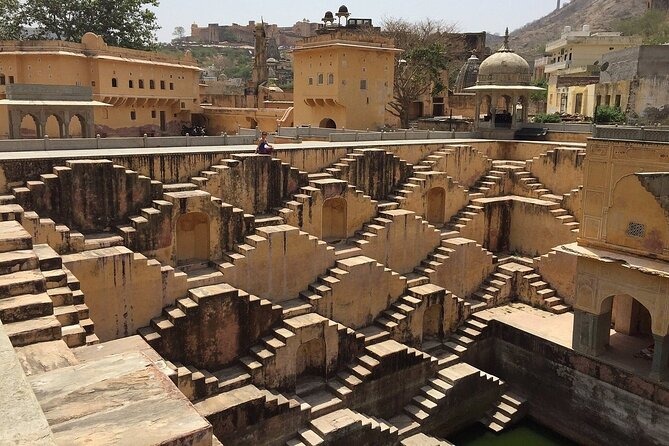
Right near the Amer/Amber zone, Panna Meena ka Kund is a 16th-century stepwell with symmetrical staircases and intricate carvings. It’s one of those places where the details reward patience. The design isn’t just decorative; it was meant to function as a water reservoir.
This is a shorter stop—about 30 minutes—but it’s the kind of site where 30 focused minutes can beat 90 rushed ones. If you like photos, bring your best calm pose and look for the symmetry from multiple angles. If you like stories, ask your guide what made this structure unusual for its time.
Admission is listed as free here too, which is a solid value boost on a day when several other monuments require paid entry.
Jal Mahal on Man Sagar Lake: the quick photo with a lesson
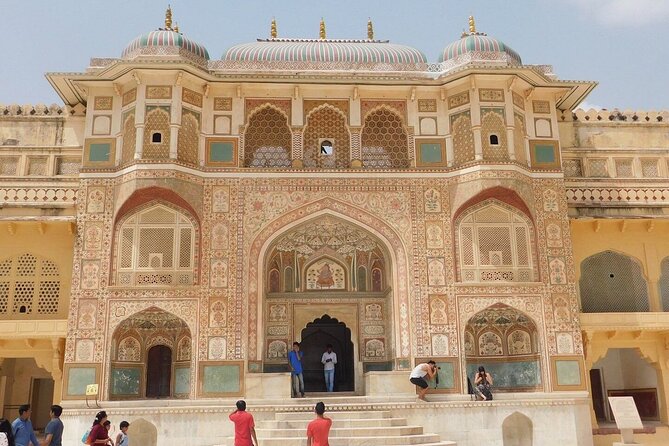
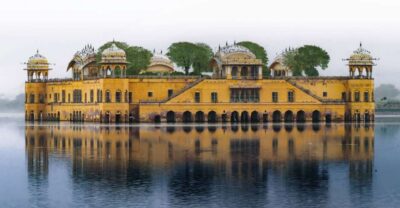
Jal Mahal is the famous water palace sitting in the middle of Man Sagar Lake. You’ll get a short stop of about 15 minutes, and that’s intentional. Most people come for the sightline and the idea: a palace tucked into water.
The palace and lake area were renovated and enlarged in the 18th century, and that time marker matters. It explains why what you see feels both historic and adapted—an evolving royal concept rather than a frozen snapshot.
What I’d do here: treat it like a reset button. Take your main photos, then use a few minutes to notice how the palace sits in relation to the shoreline. It helps the rest of the day, because later you’ll be looking at buildings built to impress from dry land—different performance, same goal.
Admission is listed as free for this stop, so you’re paying mostly for time and transport, not a ticket.
Royal Gaitor Tombs: a quieter stop that adds depth
Royal Gaitor Tombs are cenotaphs of Jaipur’s Maharajas, built as intricate marble and sandstone structures. The tone here shifts from flashy postcards to reflective architecture.
This stop is scheduled for about 45 minutes, which is long enough to actually notice carvings and materials. If you’ve been enjoying the royal fort vibe, this is where the day slows down a notch. It’s also a good contrast before you hit Hawa Mahal and the City Palace, where the buildings are more visually theatrical.
Admission is listed as not included here. So again, your final spend depends on the number of paid entries you choose to do that day.
Practical tip: bring your best “temple-and-fort” behavior. Smart-casual dress and respectful posture matter, and the sites are still places tied to memory.
You can also read our reviews of more city tours in Jaipur





Hawa Mahal: the facade you can read like a puzzle
Hawa Mahal, the Palace of Breeze, is one of Jaipur’s most recognizable silhouettes. It’s made of red and pink sandstone, built in 1799, and it extends into the zenana (women’s chambers) area.
This stop is about 45 minutes, and you’ll likely spend that time both taking photos and getting the main explanation: why a building like this exists, and what its design lets people do. Even if you only get outside views at first, ask your guide to point out how the structure functions as a viewing/ventilation idea.
Admission is listed as not included for this stop. Still, even the outside look is worth planning for. Hawa Mahal is essentially architecture as storytelling: it’s dramatic, but it’s also precise.
Dress code note: smart-casual is the rule, and short shorts or sleeveless tops are not recommended in temple settings. Hawa Mahal sits in the palace-complex area, so I’d err on the side of covering up a bit.
City Palace: where the day becomes slower and more meaningful
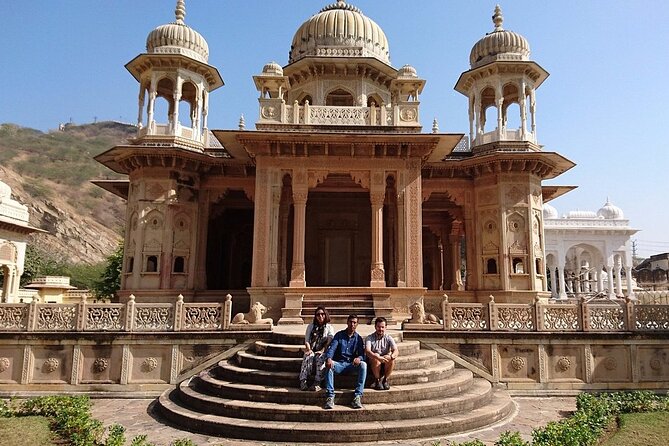
The City Palace is one of the anchors of central Jaipur. The palace complex is big, with separated gardens and courtyards, plus art and structural features that reward a slower pace.
This stop is about 2 hours, which is great. You’ll feel the difference between rushing and lingering. I love longer windows here because you can pause when you notice something interesting—materials, symmetry, courtyards—without feeling like you’re wasting time.
Admission is listed as not included, so this is one of the places where your budget will likely rise if you enter fully.
One practical mindset shift: at the City Palace, don’t force yourself to “see everything.” Instead, pick a few areas to focus on, then let the guide explain connections. That turns the complex from a checklist into a coherent story.
Jantar Mantar UNESCO: seeing time made of stone
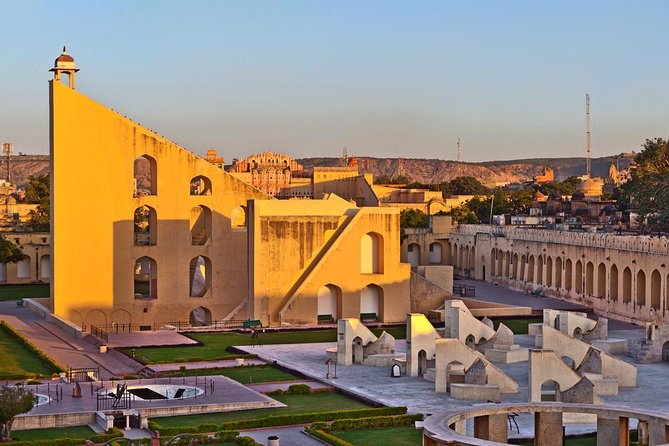
Jantar Mantar is the UNESCO-listed science complex tied to a different side of Jaipur: observation and measurement. The monument contains the largest stone sundial in the world and was built by Rajput ruler Sawai Jai Singh.
This stop is scheduled for about 45 minutes, which is enough time to understand the idea without getting lost. If you like astronomy or design, you’ll probably want a few extra minutes. If you’re less into it, still go with curiosity. This is not just old rocks; it’s a map for how people once studied the sky.
Admission is listed as not included. But it’s also the kind of place where one ticket can feel like a full cultural lesson, because you’re seeing how knowledge was built into public space.
Price and logistics: where the real value equation shows up
The posted price is very low for a private, full-day-style itinerary. But the important detail is also clear: monument entry tickets are not included. That means your final total is the tour price plus whatever paid admissions you choose during the day.
So how do you judge value quickly?
- If you enter multiple paid sites (and you probably will), the experience may feel pricier than the base fare.
- If you’re cost-conscious and selective, you can keep the day closer to budget while still seeing a lot from outside viewpoints and free segments.
- Because the day is listed as about 8 hours, check whether you’re actually getting that full window in practice. If your schedule ends up shorter, the value math shifts fast—especially for solo travelers.
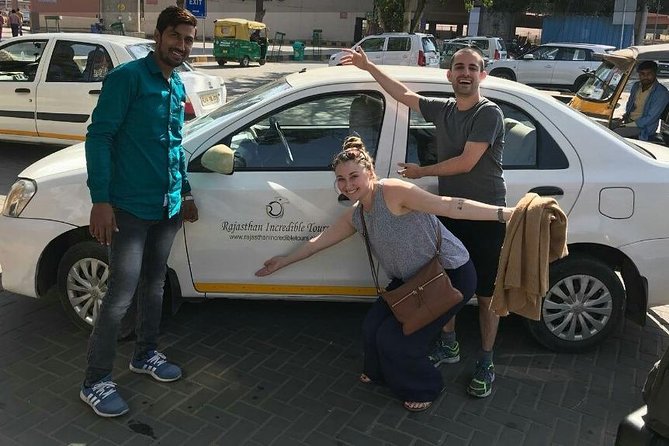
Transport is included: a private A/C vehicle, fuel, parking, and tolls. Hotel pickup and drop-off are included too. Bottled water is also included. That’s real cost coverage, and it’s part of why a guided route can be easier than planning your own taxi hopping.
Food and drinks are not included. That means you should plan on buying lunch or snacks separately, or have a strategy for timing with your guide before you start the day.
What to pack and how to dress for forts and temple-adjacent stops
This is a smart-casual kind of day. The guidance is simple: short shorts and sleeveless tops are not recommended in temple areas. Jaipur is hot, so I’d choose breathable layers that still feel respectful.
You’ll also do a moderate amount of walking, so wear comfortable shoes. No heroic flip-flops. Your feet will thank you later, and the day stays fun instead of turning into soreness.
One more item people can overlook: you’ll need a current valid passport on the day of travel.
Which type of traveler will love this tour most
This tour fits best when you want a one-day hits list with a driver handling the between-sight logistics. It’s also a good pick if you don’t want to coordinate transport while juggling multiple paid monuments.
I’d especially like it for:
- Solo travelers who want a private driver route rather than figuring out public transport between distant points
- Couples who want a smooth day with minimal hassle
- People who like clear guidance and short explanations at each stop, instead of wandering alone for hours trying to piece things together
If you hate walking or you want a very slow, deep study of one single monument, you may find the schedule more structured than you prefer. This is a “cover the main sights” format.
How the guide can change the whole experience
Because you have a private driver and an English-speaking guide setup, the storytelling is the multiplier. In the feedback from past days, names like Jone and Salman come up as people who were kind, helpful, and flexible with questions, plus guides like Dilip who helped partners enjoy the day without feeling rushed.
Even if the itinerary is fixed, the guide’s role is not just pointing. A good guide helps you:
- Understand what you’re looking at quickly
- Decide what’s worth your time inside the paid sites
- Ask better questions at each stop so you leave with more than photos
If you want extra time in one place or want to ask about nearby sights that fit your interests, it’s worth asking your guide early in the day. Flexibility depends on timing, but having a guide who can advise is a big part of why private tours feel different.
Should you book this Jaipur highlights tour?
I’d book it if your goal is a structured, low-hassle way to see Jaipur’s major sights in one day, with A/C transport, hotel pickup/drop-off, and bottled water making the logistics effortless. The free stops like Amer, Panna Meena ka Kund, and Jal Mahal also help you keep the day moving without constantly checking ticket counters.
I’d hesitate if your biggest priority is a tight budget and you don’t plan to pay for multiple paid monuments, because tickets are not included. Also confirm the timing with the operator or at least plan for the day to run closer to the itinerary than a strict schedule, especially if you’re traveling solo and watching costs.
If you want a practical one-day Jaipur plan, this is a solid option. Just go in knowing the entry tickets are on you, pack smart-casual gear, and keep your expectations aligned with a sightseeing sprint.
FAQ
What is the duration of the Jaipur City Tour?
The tour duration is listed as about 8 hours.
Does the tour include monument entry tickets?
No. Admission tickets are not included for the main monuments on the route.
Is hotel pickup and drop-off included?
Yes. Pickup and drop-off from your Jaipur hotel are included.
What’s included in the tour price?
Included are a private A/C vehicle with an English-speaking driver, hotel pickup/drop-off, bottled water, and costs like fuel, parking charges, and toll taxes.
Are food and drinks included?
No. Food and drinks are not included.
What is the dress code?
Smart casual is required. Short shorts or sleeveless tops are not recommended in temple areas.
Do I need to bring a passport?
Yes. A current valid passport is required on the day of travel for all participants.
What if the tour is affected by weather or minimum travelers?
The tour requires good weather. If canceled due to poor weather, you’ll be offered a different date or a full refund. It also requires a minimum number of travelers, and if that isn’t met you’ll be offered a different experience/date or a full refund.